
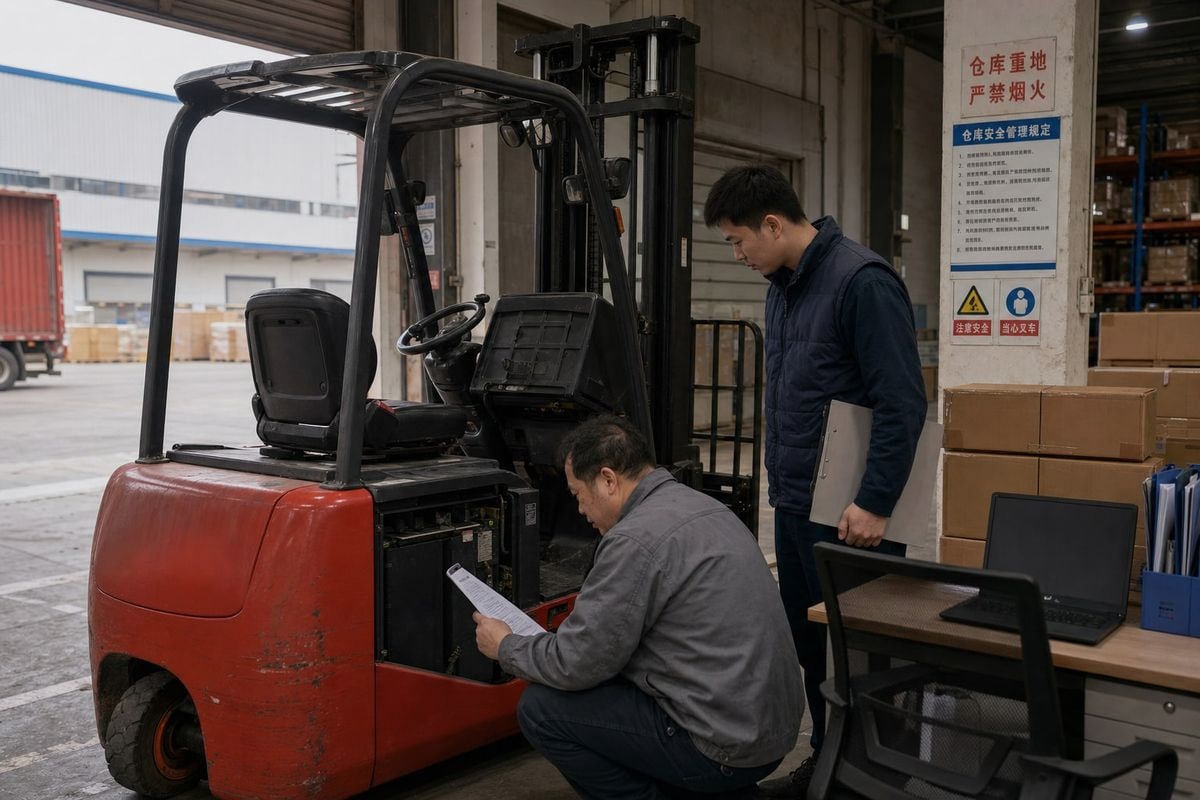
Käufer fragen mich oft, ob ein SDS erforderlich ist, um einen elektrischen Gabelstapler zu versenden. In unserem Logistikbüro in Zhengzhou kommt diese Frage vor fast jeder Gabelstaplerbuchung auf. Fehlt die Dokumentation, sitzt Ihr Container im Hafen und sammelt Gebühren.
Für den elektrischen Gabelstapler selbst benötigen Sie kein SDS, aber normalerweise benötigen Sie ein Sicherheitsdatenblatt für dessen Batterie. Lithium-Ionen- und Bleisäurebatterien werden als Gefahrgut reguliert, sodass Spediteure vor der Annahme der Sendung batteriespezifische Sicherheits- und Transportdokumente verlangen.
Diese kurze Antwort verbirgt mehrere wichtige Details. Die Batterietechnologie, die Versandart und das Zielland beeinflussen alle, welche Dokumente Sie benötigen. Lassen Sie mich Sie durch jeden Teil führen, basierend auf den Gabelstaplersendungen, die wir jede Woche aus China abwickeln.
Welche Dokumente muss mein Lieferant bereitstellen, bevor ein Gabelstapler mit Lithiumbatterie versendet wird?
Ein Versand, den wir letztes Jahr koordiniert haben, hat mir eine harte Lektion erteilt. Die Fabrik schickte einen schönen Gabelstapler, aber keine Batteriepapiere, und der Carrier wies die Buchung am Ladeterminal zurück.
Vor dem Versand eines Lithiumbatterie-Gabelstaplers sollte Ihr Lieferant ein Sicherheitsdatenblatt für die Batterie, eine UN38.3-Testzusammenfassung, Batteriespezifikationen und Verpackungsdetails bereitstellen. Der Spediteur bereitet dann die Gefahrengutdeklaration und die Buchungsunterlagen basierend auf diesen Informationen vor.
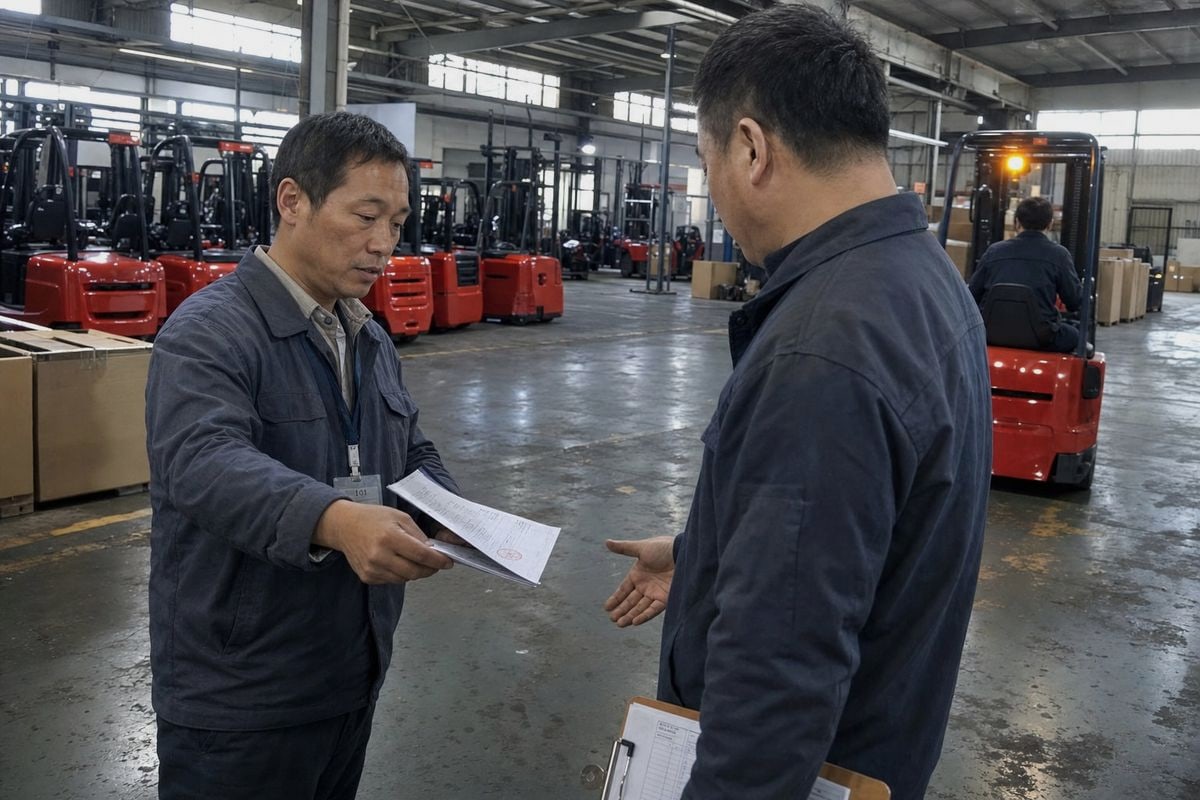
Der Lieferant verfügt über das technische Wissen bezüglich der Batterie. Der Spediteur besitzt das Wissen über die Anforderungen an Träger und Häfen. Beide Seiten müssen Dokumente beisteuern, und der Prozess funktioniert am besten, wenn sie frühzeitig damit beginnen.
Die zentrale Dokumenten-Checkliste
Hier ist der Dokumentensatz, den wir von chinesischen Gabelstaplerfabriken anfordern, bevor wir den Seefracht buchen:
| Dokumentieren | Wer stellt es bereit | Warum verlangen Spediteure es |
|---|---|---|
| Sicherheitsdatenblatt für Batterien (SDS/MSDS) | Batterie- oder Gabelstaplerfabrik | Bestätigt Gefahrklasse, Chemie und Handhabungsregeln |
| UN38.3 Testzusammenfassung | Batteriehersteller | Beweist die Lithiumbatterie 1 bestanden UN-Transportsicherheitstests |
| Batteriespezifikationsblatt | Fabrik | Zeigt Spannung, Wattstunden und Zellkonfiguration an |
| Kommerzielle Rechnung und Packliste | Fabrik oder Spediteur | Benötigt für Ausfuhranmeldung und Zollabfertigung |
| Gefahrgutdeklaration | Spediteur | Formale Erklärung erforderlich gemäß der IMDG-Code 2 für Seefracht |
Ein elektrischer Gabelstapler mit einer installierten Lithiumbatterie wird allgemein eingestuft unter UN3171, batteriegetriebenes Fahrzeug, als Gefahrgut der Klasse 9. Dies unterscheidet sich von UN3480 Lithium-Ionen-Batterien, die für Batterien gelten, die allein verschickt werden. Die UN-Nummer ist wichtig, da sie die Verpackungsanweisungen, Etiketten und Stauungsregeln bestimmt, die der Transporteur anwendet.
Wir prüfen auch, was ich als versteckte Gefahren bezeichne. Einige moderne Gabelstapler verfügen über kleine Feuerlöschkanister oder Telematik-Notstrombatterien. Jedes dieser Hilfsgeräte benötigt möglicherweise eigene SDS-Dokumentationen. Fabriken erwähnen diese selten, es sei denn, wir fragen direkt danach, deshalb senden wir jedem Lieferanten vor der Abholung eine Standardfragenliste.
Ein weiterer praktischer Punkt. Das SDS muss GHS-konform und aktuell sein. Transportdienstleister lehnen regelmäßig SDS-Dateien ab, die älter als ein paar Jahre sind oder in denen der Abschnitt über Transportinformationen fehlt. Wir überprüfen jedes SDS, bevor wir die Buchung einreichen, da es langsam und teuer ist, Probleme zu beheben, nachdem die Ladung den Hafen erreicht hat.
Wie kann ich feststellen, ob mein Elektro-Gabelstapler ein MSDS oder einen UN38.3-Testbericht benötigt?
Der Trade-off, den ich bei jeder Buchung eines Gabelstaplers abwäge, ist einfach: Überdokumentation und Verlangsamung der Fabrik oder Unterdokumentation und Risiko einer Ablehnung im Hafen. Die Batter chemie entscheidet, welche Dokumente tatsächlich wichtig sind.
Überprüfen Sie den Batterietyp. Lithium-Ionen-Gabelstapler benötigen sowohl ein SDS als auch eine UN38.3-Prüfz usammenfassung. Blei-Säure-Gabelstapler benötigen ein SDS, jedoch keinen UN38.3-Bericht. Luft- und Seefracht erfordern immer diese Dokumentation, während einige nationale Bodenbewegungen Ausnahmen zulassen.
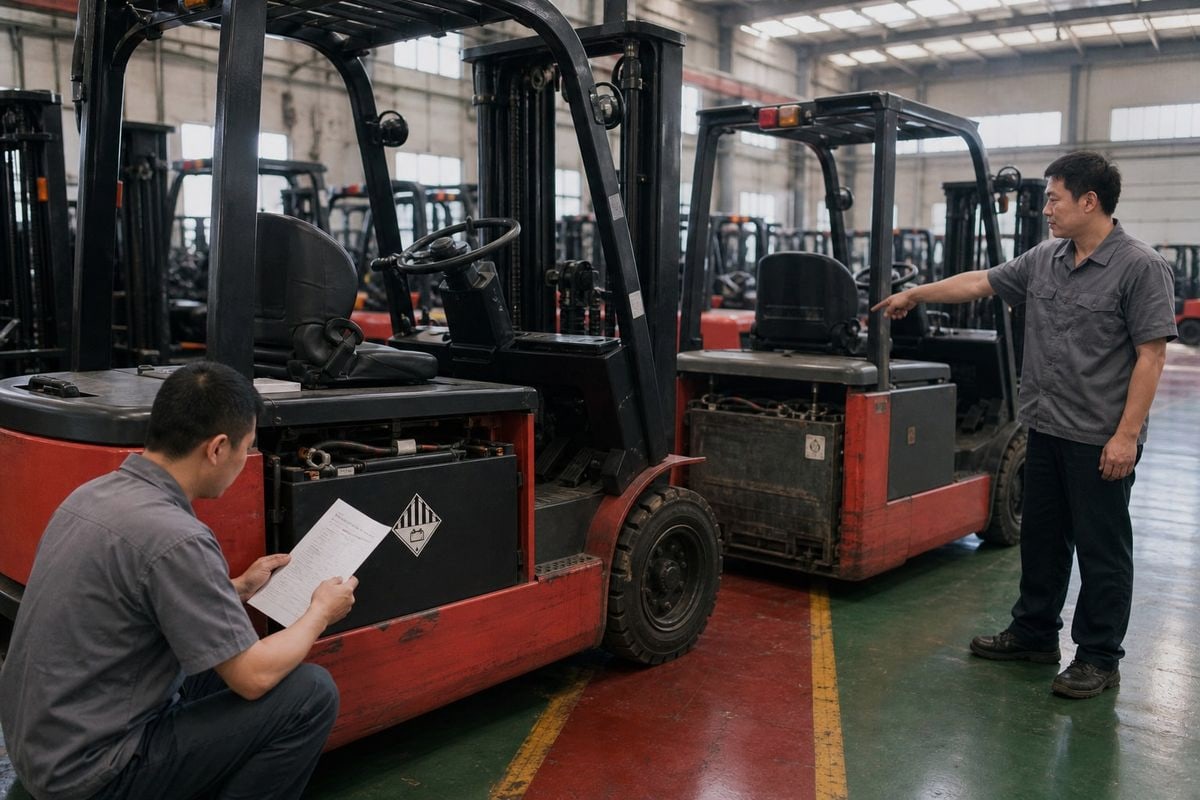
Das Versandrecht fragt nicht danach, ob die Maschine ein elektrischer Gabelstapler ist. Es fragt danach, welche gefährlichen Materialien an Bord sind, in welchem Zustand sie sich befinden und mit welchem Transportmittel sie befördert werden. Diese Formulierung macht die Antwort viel klarer.
Die Batterietechnologie bestimmt die Regeln
Die beiden häufigen Gabelstaplerbatterietypen unterliegen völlig unterschiedlichen Risiken. Blei-Säure-Batterien sind hinsichtlich ihrer Korrosivität reguliert. Lithium-Ionen-Batterien sind hinsichtlich thermischem Durchgehen und Feuer reguliert.
| Faktor | Blei-Säure-Gabelstaplerbatterie | Lithium-Ionen-Gabelstaplerbatterie |
|---|---|---|
| Typische Klassifizierung | UN 2794, Klasse 8 Korrosiv, Verpackungsgruppe III | Klasse 9 Gefährliche Güter (UN3171 wenn installiert) |
| SDS/MSDS erforderlich | Ja | Ja |
| UN38.3 Testzusammenfassung | Nicht anwendbar | Required |
| Non-spillable variant | May ship as UN 2800 | Nicht anwendbar |
| Main hazard | Acid leakage and corrosion | Fire and thermal runaway |
Wet lead-acid batteries covered by Lead-Acid Battery Shipping rules need secure packaging, upright positioning, and terminal protection. Lithium batteries add the UN38.3 layer, which proves the cells passed altitude, vibration, shock, and short-circuit testing.
Mode of transport changes the threshold
For domestic US ground transport, 49 CFR 173.220 under the Hazardous Materials Regulations provides broad exceptions. If the battery is securely installed and the terminals are protected against short circuits, formal hazmat labeling and placarding are often waived. Small non-spillable batteries may also benefit from Special Provision 188 when shipped separately.
International moves are stricter. Ocean freight under the IMDG Code and air freight under the IATA Dangerous Goods Regulations 3 do not recognize those domestic ground exceptions. They mandate a full SDS and a formal Dangerous Goods Declaration. Since almost all our forklift shipments from China to the US move by sea, we prepare the full IMDG document set every time. One emerging best practice we now recommend to factories: ship lithium forklift batteries at around 30% State of Charge, which significantly reduces fire intensity if an accident occurs.
Can I still ship my forklift if my factory can't provide an MSDS?
A US dealer once called me in a panic. His forklift supplier was a small workshop that had never exported and had no idea what an SDS was. We still got his container on the water.
Yes, you can usually still ship. The SDS normally comes from the battery manufacturer, not the forklift assembler. Your forwarder can request it from the battery brand directly, arrange third-party documentation support, or in some cases ship the forklift with the battery removed.
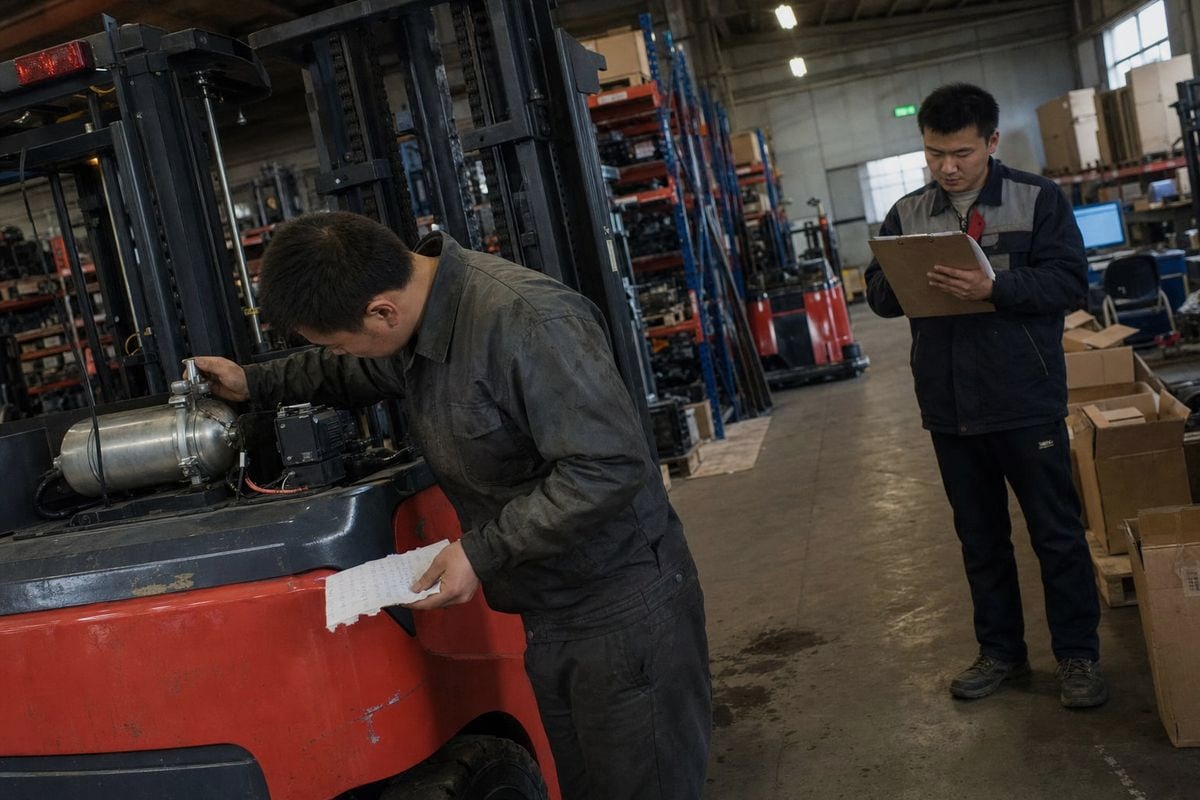
A missing MSDS is a solvable problem, not a dead end. But you need to solve it before the cargo reaches the port, not after. Here is how we approach it, step by step.
Our four-step recovery process
- Trace the battery brand. Most Chinese forklift factories buy batteries from specialized battery makers. Those battery makers almost always hold an SDS and a UN38.3 test summary. We contact them directly in Chinese, which usually resolves the issue within days.
- Verify the documents match the cargo. An SDS for a different battery model is worthless. We check that the model number, voltage, and capacity on the paperwork match the physical battery.
- Consider shipping the battery separately. If documentation truly cannot be obtained for an installed lithium pack, one option is shipping the forklift body as ordinary machinery and sourcing a documented battery separately. Documentation needs change materially when the battery is removed.
- Never ship undeclared. Some factories suggest simply not mentioning the battery. We refuse. Misdeclared dangerous goods can be seized, fined, or rejected at destination.
There is also a financial reason to insist on a proper Safety Data Sheet. Under maritime law, an accurate SDS serves as legal protection against General Average liability. If a vessel suffers an emergency and cargo must be jettisoned, shippers with misdeclared or undocumented dangerous goods face far greater financial exposure. For a container holding several forklifts, that risk is not theoretical money. It is your entire shipment value plus a share of the vessel's losses.
Wer sollte das MSDS und die Dokumentation zur Batterie vorbereiten, mein Lieferant oder mein Spediteur?
In our years moving electric forklifts from Chinese factories to US ports, the shipments that go smoothly share one trait: everyone knows exactly which documents they own.
The supplier and battery manufacturer prepare the SDS, UN38.3 test summary, and battery specifications, because only they hold the technical data. The freight forwarder prepares the Dangerous Goods Declaration, booking documents, and carrier submissions, and verifies the factory paperwork is compliant.

Think of it as two halves of one file. The factory half describes the product. The forwarder half describes the shipment. Neither party can complete the other's half properly.
Division of responsibility
| Task | Supplier / battery maker | Spediteur |
|---|---|---|
| Create the battery SDS | ✔ | Reviews for compliance |
| Provide UN38.3 test summary | ✔ | Verifies validity |
| State battery chemistry and watt-hours | ✔ | Cross-checks against SDS |
| Prepare Dangerous Goods Declaration | ✔ | |
| Book with a DG-approved carrier | ✔ | |
| Secure battery terminals 4 against short circuits | ✔ (at packing) | Supervises loading |
| Confirm destination-country rules | ✔ |
Federal regulations require that battery terminals be protected against short circuits and that the unit be securely fastened to prevent any movement in transit. We coordinate this physically at container loading, because paperwork alone does not stop a nine-hundred-kilogram machine from shifting at sea.
Why the forwarder must review, not just forward
A forwarder who simply passes factory documents to the carrier adds little value. We review every SDS for GHS compliance because commercial LTL carriers in the US require a GHS-compliant Safety Data Sheet to assign the correct National Motor Freight Classification. For cross-border logistics within the USMCA region, the SDS must also be provided in the official language of the destination country. A Chinese-only SDS will not satisfy a Mexican or Canadian carrier, and we have translated documents on short notice more than once to keep a delivery schedule alive.
Schlussfolgerung
You rarely need an MSDS for the forklift itself, but the battery almost always needs one. Prepare the SDS, UN38.3 summary, and Dangerous Goods Declaration before booking, and your shipment moves without surprises.
Fußnoten
1. Official EPA guidance on lithium-ion battery hazards and regulatory classifications. ↩︎
2. Official IMO resource for the International Maritime Dangerous Goods (IMDG) Code standards. ↩︎
3. Official IATA regulations for the safe transport of dangerous goods by air. ↩︎
4. US government regulations governing the safe packaging and transport of hazardous battery components. ↩︎




