- +8618603825129
- [email protected]


An electric forklift shipping checklist saved one of my clients from a rejected booking last year. At our Zhengzhou logistics base, I see the same avoidable mistakes repeat constantly. One missing battery document can strand a container at port, rack up storage fees, and wreck your delivery schedule. The fix is simple: prepare everything before the forklift leaves the factory.
An electric forklift shipping checklist covers four areas: export documents (commercial invoice, packing list, Bill of Lading), lithium battery compliance (UN38.3, MSDS, dangerous goods declaration, 30% state of charge), freight planning (FCL vs LCL, Incoterms), and customs preparation (correct HS code, matching paperwork, duty calculation).
Below, I walk through each part of that checklist in the order I use with my own clients. Follow the same sequence, and your shipment will move without surprises.
A buyer in Texas once sent me a supplier's invoice 1 that listed his forklift simply as "machinery." Our team caught it before export declaration. Customs would not have been so forgiving.
Before shipping an electric forklift from China, prepare a commercial invoice, packing list, Bill of Lading, and certificate of origin. Add battery documents: UN38.3 test report, Material Safety Data Sheet, and a dangerous goods declaration for sea freight. Confirm the HS code, typically 8427.10, with your broker.
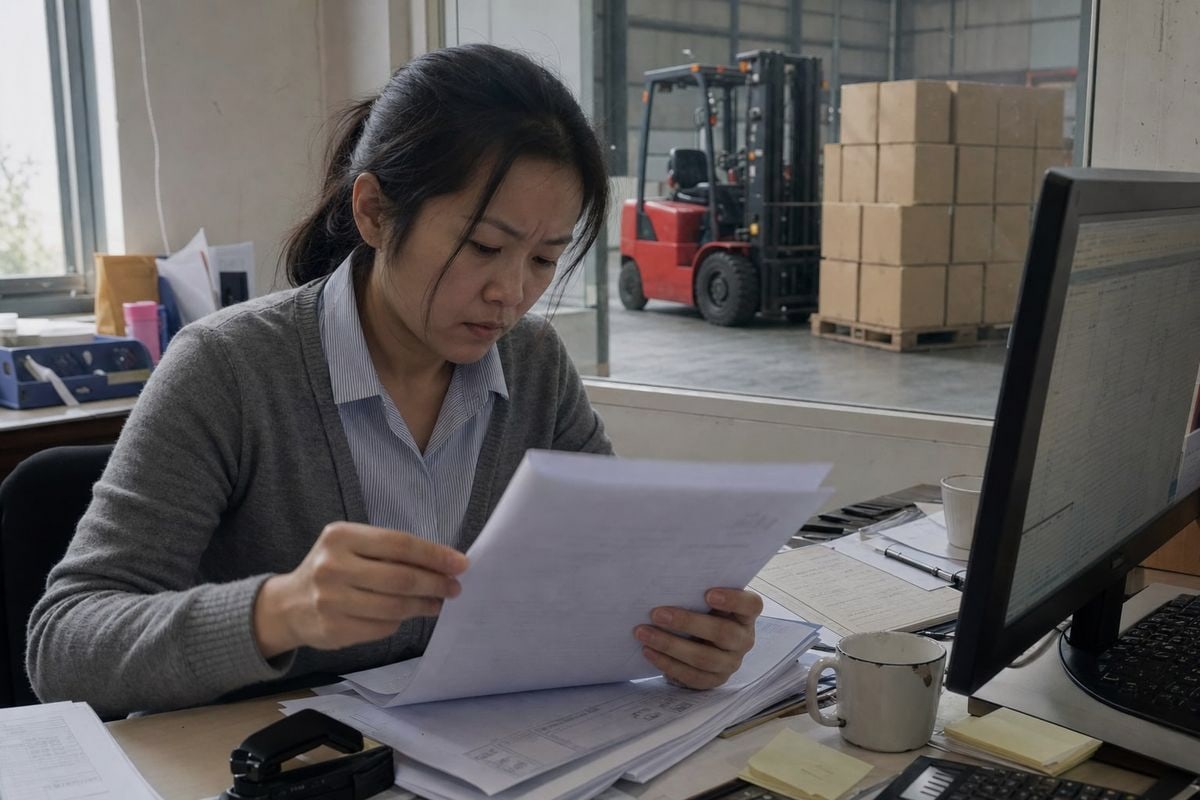
Documentation is the backbone of the whole shipment. In my experience coordinating forklift exports to the United States and Europe, most delays trace back to paperwork that was incomplete, inconsistent, or prepared too late.
Every electric forklift shipment needs a consistent set of files. The details on each document must match. If the invoice says one model number and the packing list says another, customs officers will stop the container and ask questions.
| Document | Purpose | Common Mistake |
|---|---|---|
| Commercial Invoice | Declares value and product details | Vague descriptions like "machinery" |
| Packing List | Lists dimensions, weights, quantities | Weights that differ from the B/L |
| Bill of Lading | Contract of carriage and title document | Consignee details entered incorrectly |
| Certificate of Origin | Supports duty treatment | Missing when a trade agreement applies |
| UN38.3 Test Report | Proves battery transport safety testing | Supplier cannot provide it at all |
| MSDS / SDS | Chemical safety data for the battery | Outdated version or wrong battery model |
Your destination market adds its own layer. EU-bound forklifts generally need a CE Declaration of Conformity. US-bound units should have UL certification for the charger. I always ask suppliers for these technical files before my client pays the final balance, because chasing certificates after production is far harder.
One item importers often forget: any wooden crate, pallet, or bracing material must meet ISPM 15 heat-treatment standards 2 and carry the stamp. Non-compliant wood can trigger mandatory fumigation or outright rejection at the destination port. We inspect this during container loading, but you should confirm it with your supplier in writing beforehand.
Here is the trade-off I explain to every new client: lithium batteries make forklifts efficient to operate, but they make them harder to ship. You cannot avoid the extra steps, only prepare for them.
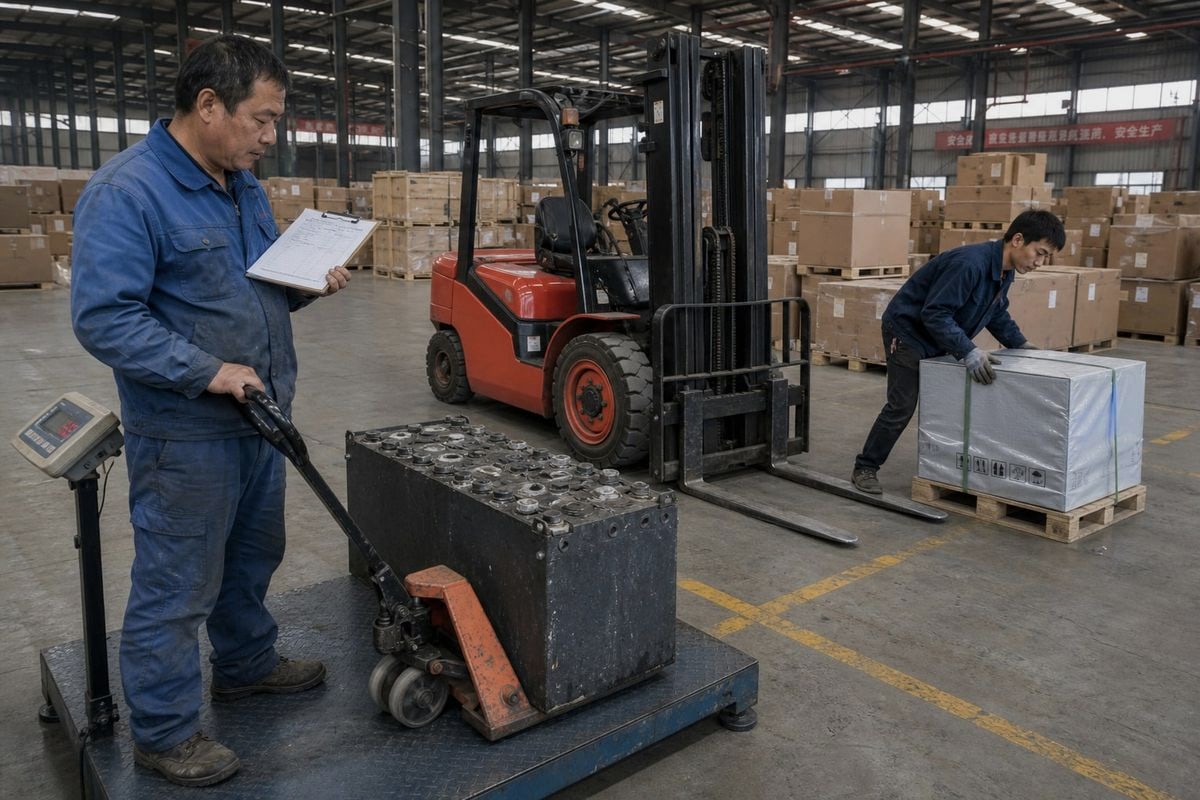
Handle lithium battery requirements by obtaining the UN38.3 test report and Material Safety Data Sheet from your supplier, filing an IMDG dangerous goods declaration for sea freight, and reducing the battery to 30% state of charge or below at loading. Document the charge level with photos and written confirmation.
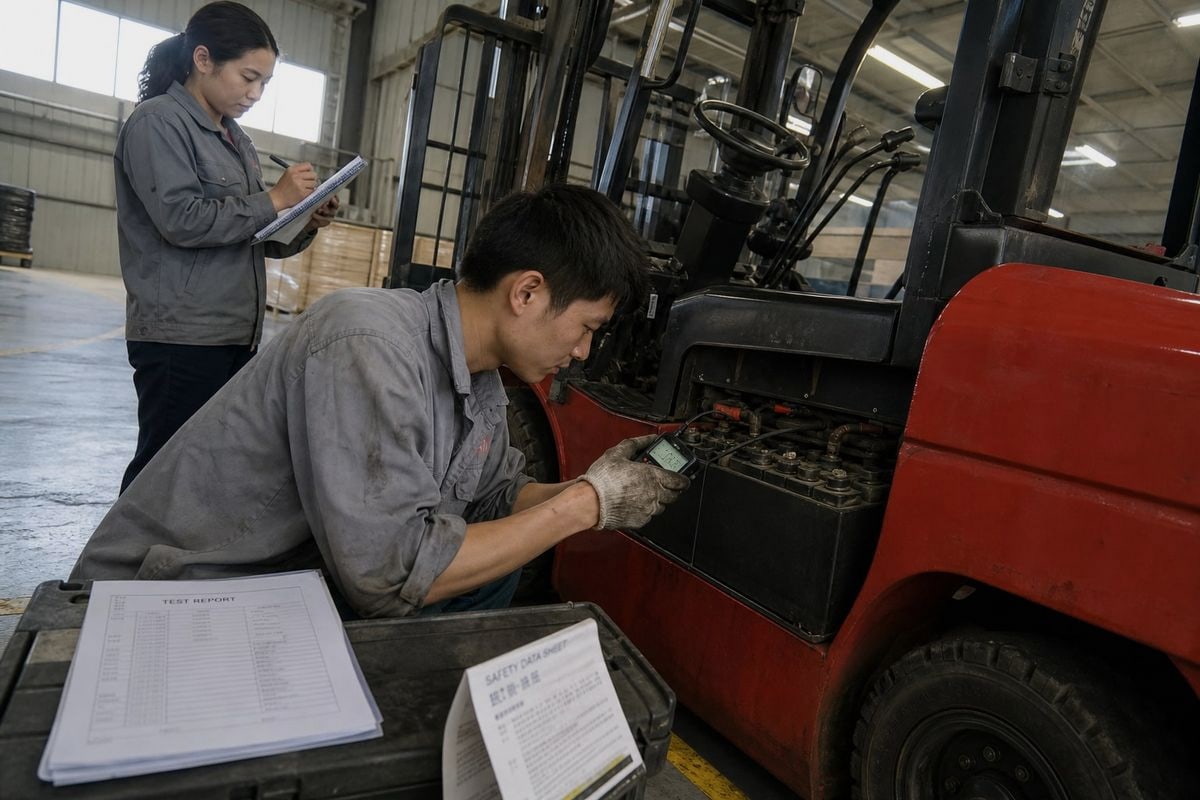
Lithium-ion battery regulations are the single biggest source of avoidable delays in this trade. Carriers treat lithium batteries as Class 9 dangerous goods under the IMDG Code, and hazardous materials shipping rules apply even when the battery is installed inside the forklift.
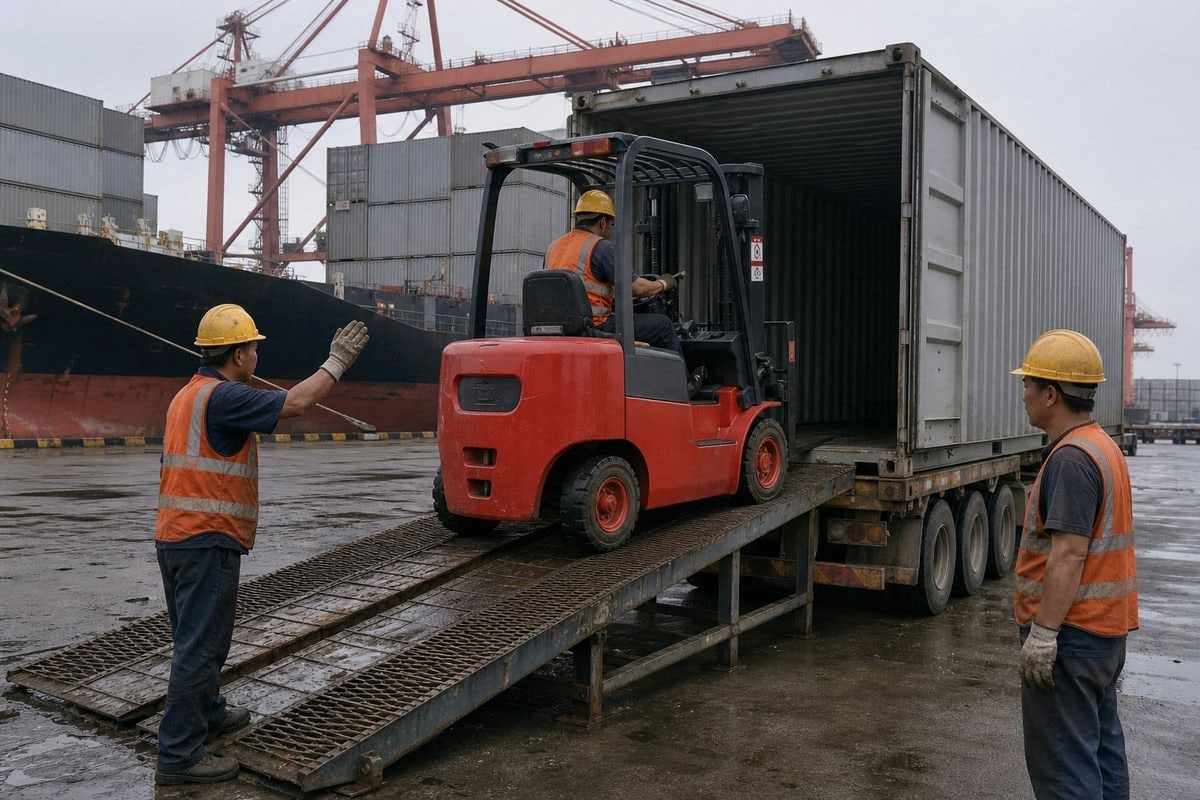
Ocean carriers have become strict because thermal incidents at sea are catastrophic. When we book space for a lithium battery forklift, the carrier reviews the dangerous goods declaration 3 before accepting the cargo. If the paperwork is weak, the booking gets rejected. I have seen importers lose two weeks of transit time simply because their forwarder submitted the DG declaration late or with the wrong battery specifications.
Work through these steps in order:
Lead-acid battery forklifts face lighter requirements, but they still need an SDS and proper securing. Never assume battery type without checking the specification sheet.
The question I hear most from forklift dealers is not about documents. It is about container math: how many units fit, and which container size makes each forklift cheapest to land.
Before choosing FCL or LCL, check the forklift's dimensions with mast lowered, total weight including battery, quantity ordered, and whether spare parts or chargers can fill remaining space. One or two forklifts may suit LCL; three or more usually justify a dedicated FCL container.
Ocean freight logistics for forklifts is a volume-and-weight puzzle. Get it right and your per-unit landed cost drops sharply. Get it wrong and you pay for air inside a container.
| Factor | FCL (Full Container) | LCL (Consolidation) |
|---|---|---|
| Best for | 3+ forklifts or forklift + parts loads | 1–2 compact units or pallet trucks |
| Cost structure | Flat container rate | Charged by volume/weight |
| Handling risk | Loaded once, sealed once | Multiple handling points |
| DG acceptance | Easier for Class 9 cargo | Some consolidators refuse lithium cargo |
| Transit control | More predictable | Depends on consolidation schedule |
One point deserves emphasis: many LCL consolidators refuse Class 9 dangerous goods entirely. If your forklift runs on lithium batteries, confirm consolidator acceptance before assuming LCL is an option. This alone pushes many battery-powered forklift shipments into FCL.
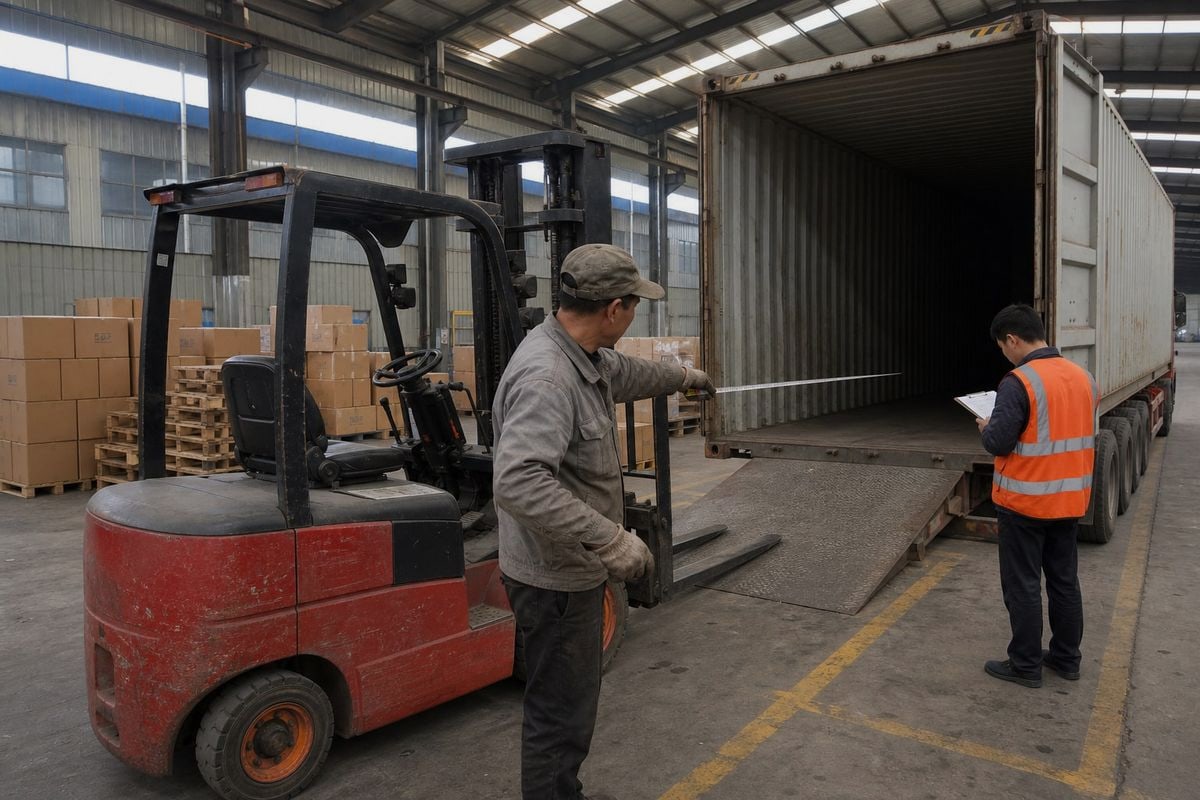
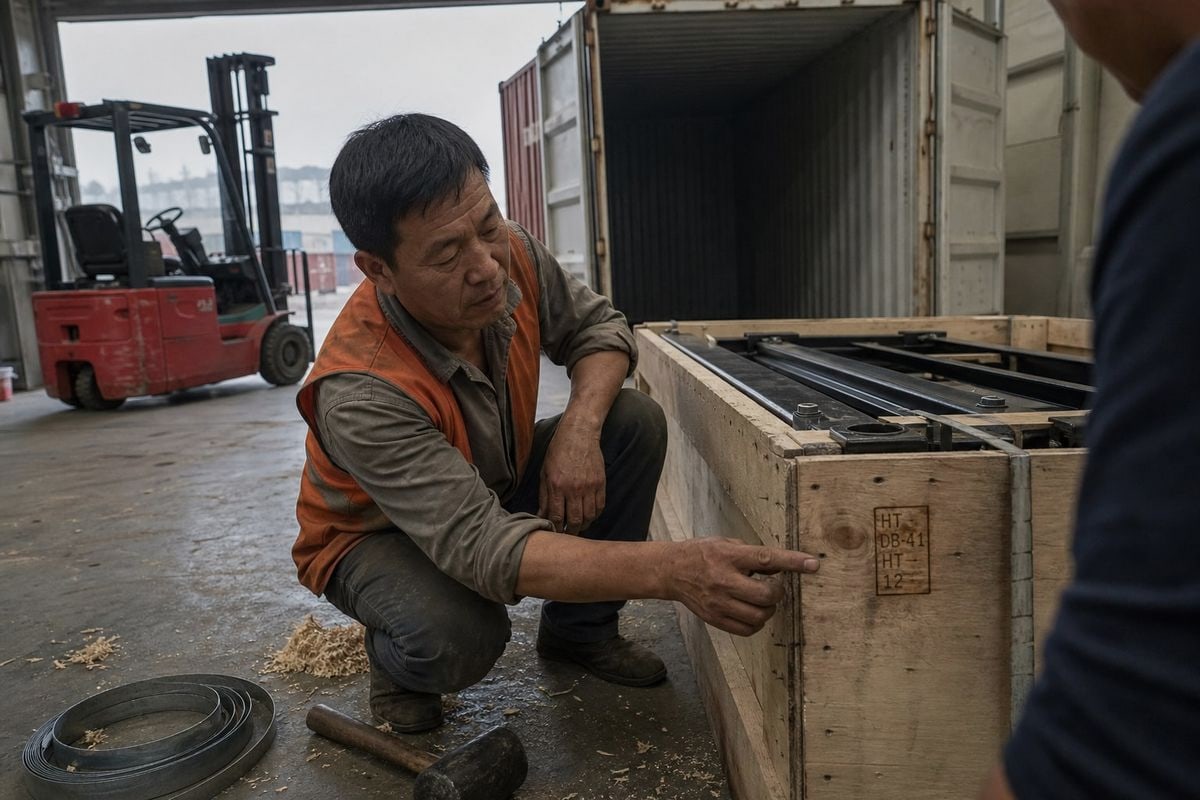
Standard container door height is the constraint that surprises importers. A forklift with the mast raised will not fit. Check the lowered mast height, and ask whether the overhead guard or mast needs partial disassembly. We routinely coordinate this with factories: the mast ships lowered or detached, wrapped, and braced beside the chassis.
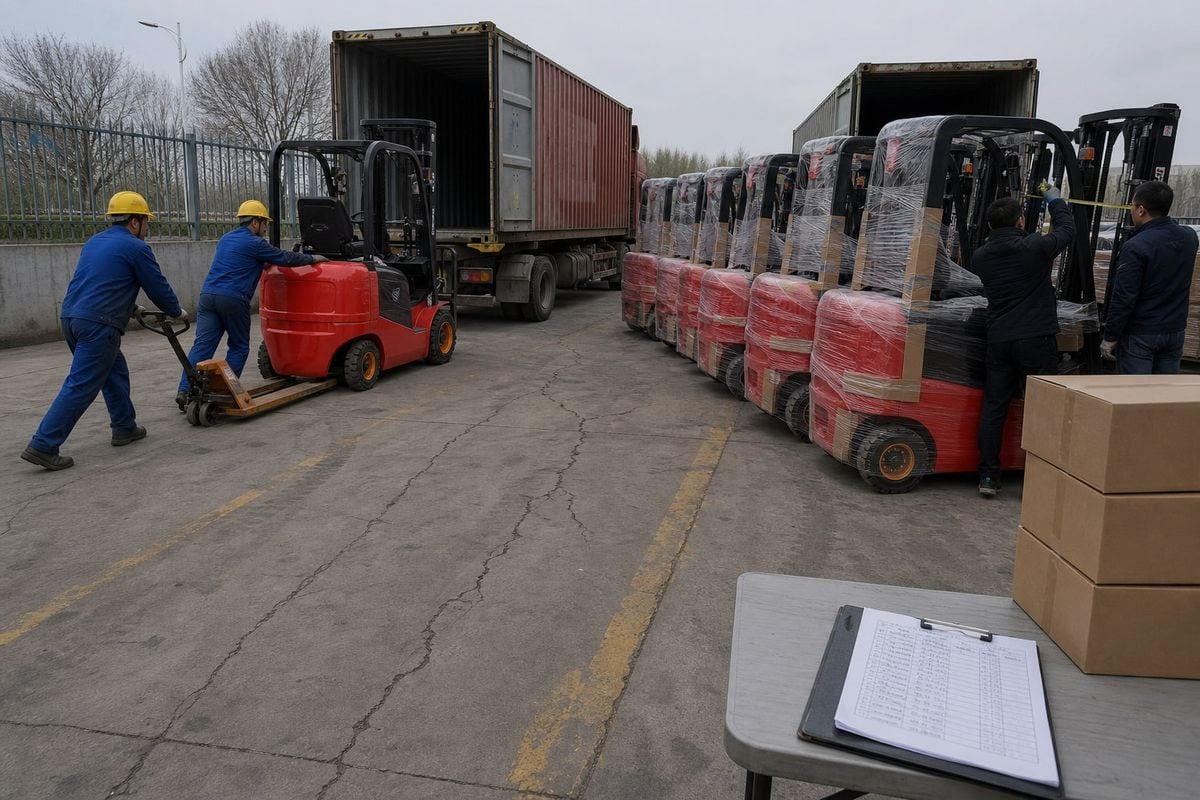
An FCL container rarely maxes out on weight with forklifts alone. This is where multi-supplier consolidation earns its keep. My clients often buy forklifts from one factory, chargers from another, and spare parts from a third. We collect everything at our warehouse, run a container loading inspection, and fill unused space with parts cartons. Protective crating and lashing keep heavy units from shifting: wheels chocked, chassis blocked and braced against the floor, and lashing points tensioned. Photograph everything before sealing. Those photos are your evidence if damage appears at destination.
A hard lesson from my early years in this business: a container is cheapest while it moves and most expensive while it sits. Demurrage at a US port can erase the savings from a good factory price in under two weeks.
Avoid customs delays by confirming the HS code before shipment, ensuring the invoice, packing list, and Bill of Lading match exactly, pre-filing entry documents with your broker, and choosing Incoterms deliberately. Verify duty rates, possible AD/CVD exposure on battery cells, and destination unloading capability in advance.
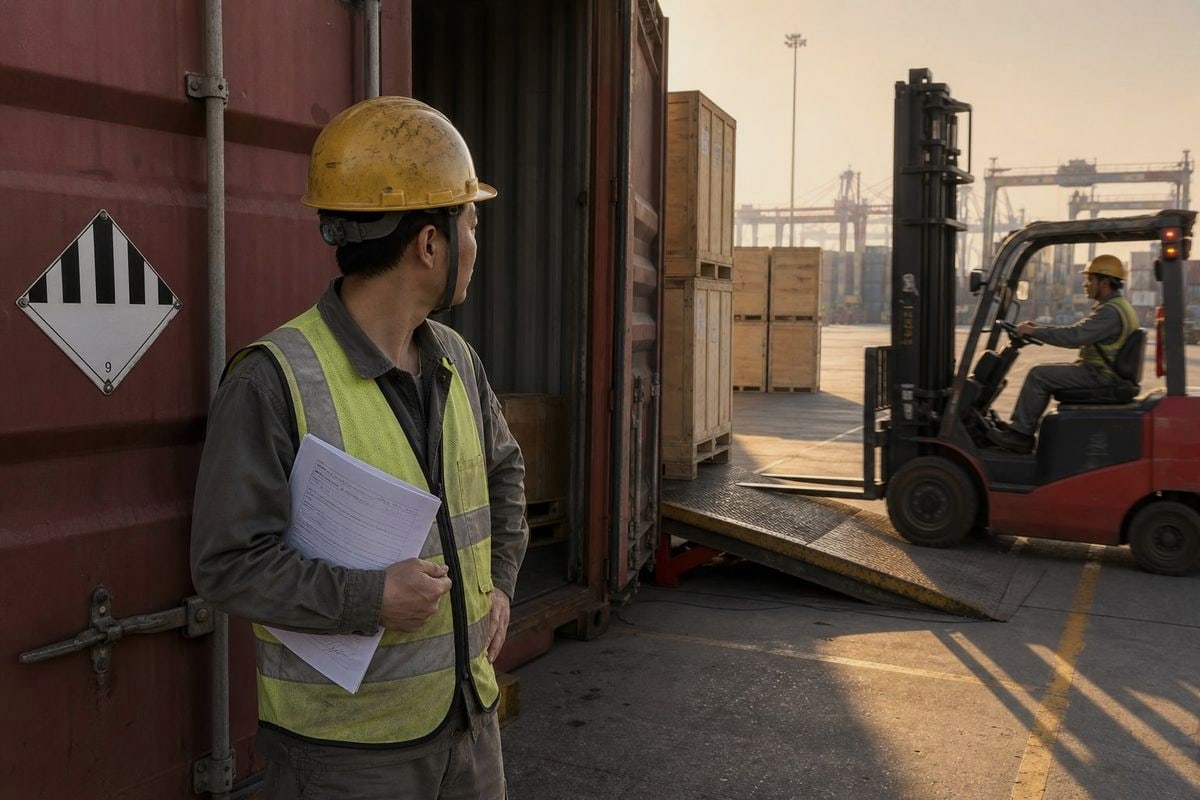
The customs clearance process rewards preparation and punishes inconsistency. Everything customs sees must tell the same story: same model number, same weights, same values, same battery description across every document.
Incoterms 2020 terms decide who arranges what and who absorbs risk at each stage. Here is a practical tension I discuss openly with buyers. DDP is convenient because the seller handles everything through final delivery, including import duties 4 and taxes. But when the seller controls the entire chain, you lose visibility into the real freight cost and the compliance quality. Some importers have discovered problems only after cargo arrived. FOB or EXW gives you control: you appoint the forwarder, you see every charge, and you verify the battery documents yourself. My honest advice: DDP works well when your logistics partner is transparent about the cost breakdown; FOB suits importers who want line-item control. Either way, get every included and excluded charge in writing before booking.
| Cost Item | What to Verify |
|---|---|
| Import duty | Rate for HS 8427.10 in your country |
| AD/CVD exposure | Whether battery cells face separate anti-dumping or countervailing duties from the chassis |
| EPR / battery levies | Some regions require importer registration for battery recycling fees at entry |
| Destination handling | Port fees, chassis fees, drayage often excluded from cheap quotes |
| Demurrage/detention | Free days at destination and daily rates after |
Confirm your customs broker has the full document pack before the vessel arrives so entry can be pre-filed. Then confirm the receiving site can physically unload a multi-ton machine: a loading dock, ramp, crane, or another forklift. If your forklift has onboard telematics, also check that its connectivity works with local 4G/5G bands and complies with local data rules. I send clients proactive milestone updates precisely so they can arrange trucking and unloading before the container hits the port, not after.
Shipping an electric forklift is risk management, not just transport. Verify specs, secure battery compliance, choose freight terms deliberately, and align every document. Prepare before booking, and your forklift arrives without costly surprises.
1. Authoritative government source for international trade and export documentation requirements. ↩︎
2. Official site for the IPPC, the organization that established the ISPM 15 international standard. ↩︎
3. The IMO oversees the IMDG Code which governs dangerous goods declarations for maritime transport. ↩︎
4. The ICC defines Incoterms like DDP which determine responsibility for import duties. ↩︎