- +8618603825129
- [email protected]


Electric forklifts can absolutely be shipped by sea, yet many buyers I work with at our Zhengzhou forwarding office almost lose bookings because nobody warned them about battery rules.
Yes, electric forklifts can be shipped by sea. Lithium battery models are usually declared as Class 9 dangerous goods under UN3171 and the IMDG Code, requiring UN38.3 test reports, a Dangerous Goods Declaration, carrier approval, and a battery state of charge at or below 30%.
The real question is not whether it is possible. The real question is what classification, paperwork, and shipping mode your specific forklift needs. Let me walk you through it.
Last year, our team handled a container of lithium forklifts that a previous forwarder had booked as general cargo. The carrier rejected it at the port. That mistake cost the buyer two weeks.
Lithium batteries usually trigger Class 9 hazardous materials classification under the IMDG Code, typically declared as UN3171 for battery-powered vehicles. Carriers require a UN38.3 Test Summary Report, a Dangerous Goods Declaration, hazard labeling, and a battery state of charge kept at or below 30% before loading.
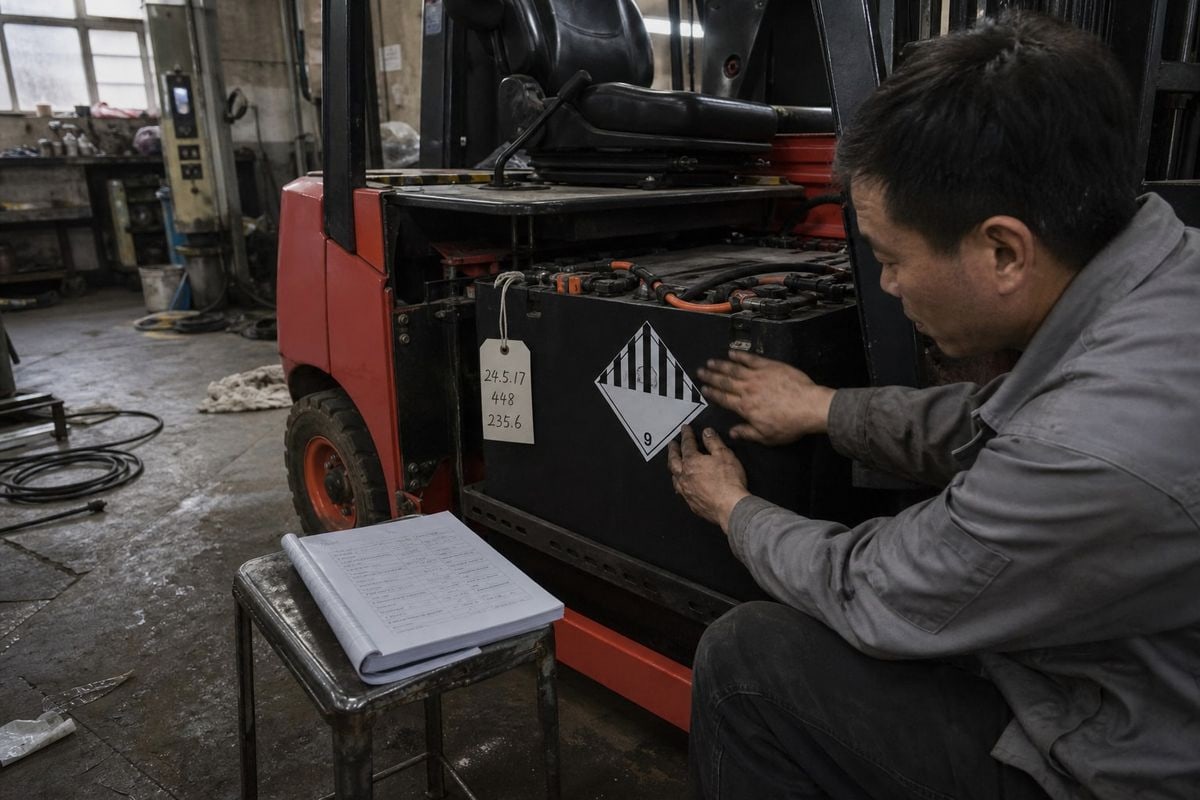
The battery is the single biggest factor in your shipment. A lead-acid electric forklift and a lithium-ion electric forklift look similar on the warehouse floor. At the port, carriers treat them very differently. Lithium-ion battery transport is regulated because these cells can enter thermal runaway 1 if they are damaged, overcharged, or short-circuited. On a vessel at sea, a battery fire is extremely hard to fight, even with modern fire suppression systems on board. That is why the IMDG Code 2 regulations exist, and why carriers enforce them strictly.
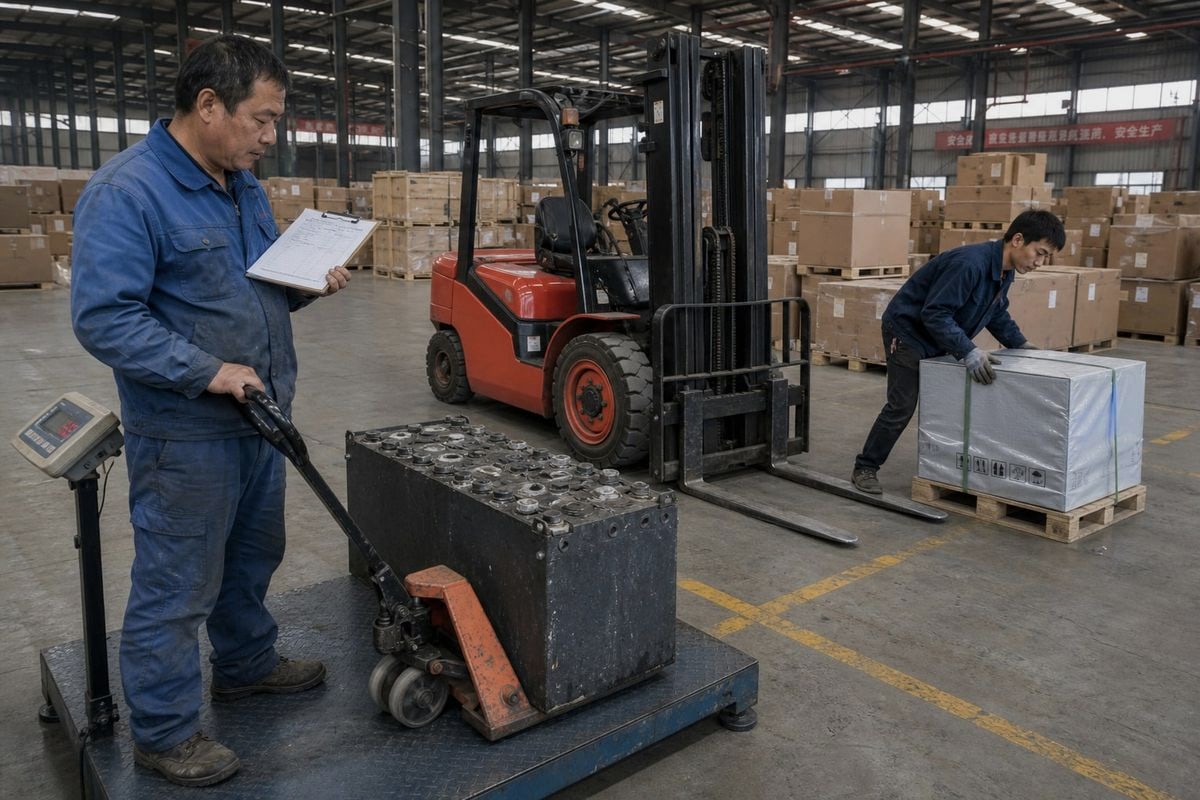
Before we book any lithium forklift, we collect three things from the factory. First, the UN38.3 Test Summary. This proves the battery passed international tests for altitude, thermal cycling, and vibration. Second, the Material Safety Data Sheet for the battery. Third, the exact battery specifications: chemistry, watt-hour rating, and whether the battery is installed or shipped separately.
One point confuses many buyers. Some websites claim every lithium forklift is automatically dangerous goods. Others claim electric vehicles are exempt. Neither is fully correct. Maersk, for example, declares lithium-powered e-vehicles under UN3171 Class 9 unless they meet specific IMDG Special Provision 961 criteria. Batteries shipped alone as spares fall under separate rules such as UN3480 certification requirements. The answer depends on your exact setup and the carrier's acceptance policy.
| Battery Type | Typical Classification | Key Documents Needed |
|---|---|---|
| Lithium-ion (installed) | UN3171, Class 9 DG | UN38.3, DGD, SDS, carrier approval |
| Lithium-ion (shipped separately) | UN3480/UN3481 | UN38.3, DGD, DG packaging certificate |
| Lead-acid (installed, secured) | Often non-DG or exempted | SDS, battery declaration |
We also confirm the battery state of charge is reduced to 30% or below before container loading. Most major ocean carriers now mandate this SoC limit because a lower charge sharply reduces the energy available in a thermal runaway event.
A US distributor once asked me why his forklift sat in customs for nine days. The factory invoice listed the wrong HS code 3 and no battery paperwork existed. We rebuilt the file from scratch.
You need a commercial invoice, packing list, bill of lading, UN38.3 Test Summary, Safety Data Sheet, Dangerous Goods Declaration for lithium models, and a battery transport certificate. US imports also require an ISF filing and correct HS code classification for customs clearance.

Documentation is where most forklift shipments succeed or fail. In our experience exporting electric forklifts to the United States, the physical cargo is rarely the problem. Paperwork gaps cause the delays. Chinese factories build excellent machines, but many smaller factories have never exported a lithium unit before. They may not hold current UN38.3 reports 4, or their Material Safety Data Sheet may be outdated. We always audit the document set before the container leaves the factory.
Here is the full set we prepare for a typical China-to-USA electric forklift shipment:
| Document | Purpose | Who Provides It |
|---|---|---|
| Commercial Invoice | Customs valuation and duty calculation | Factory / seller |
| Packing List | Cargo verification and container loading | Factory / forwarder |
| Bill of Lading | Contract of carriage and cargo release | Carrier / forwarder |
| UN38.3 Test Summary | Proves battery safety compliance | Battery maker |
| SDS / MSDS | Chemical hazard information for the battery | Battery maker |
| Dangerous Goods Declaration | Legal DG declaration to the carrier | Shipper / forwarder |
| ISF (10+2) Filing | US Customs pre-arrival security filing | Importer / forwarder |
Port authorities and customs officers cross-check documents. If your invoice says one battery model and your UN38.3 report shows another, expect questions. If the DGD lists a watt-hour rating that does not match the SDS, the carrier can pull the booking. We review every file line by line before export declaration in China. That habit came from painful lessons, not theory. Incomplete paperwork does not just delay cargo. It creates demurrage, storage charges, and sometimes forced re-inspection at the destination port. Freight forwarder services that specialize in battery-powered equipment will catch these mismatches early, before your forklift is sitting at a terminal accruing fees.
The trade-off I weigh most often for buyers is simple: one forklift rarely fills a container, but sharing space with unknown cargo creates handling risk for heavy lift cargo like this.
Choose FCL if you ship two or more forklifts or can fill unused space with batteries, chargers, and spare parts. Choose LCL only for a single compact unit when speed matters less, because dangerous goods LCL acceptance is limited and handling risk is higher.
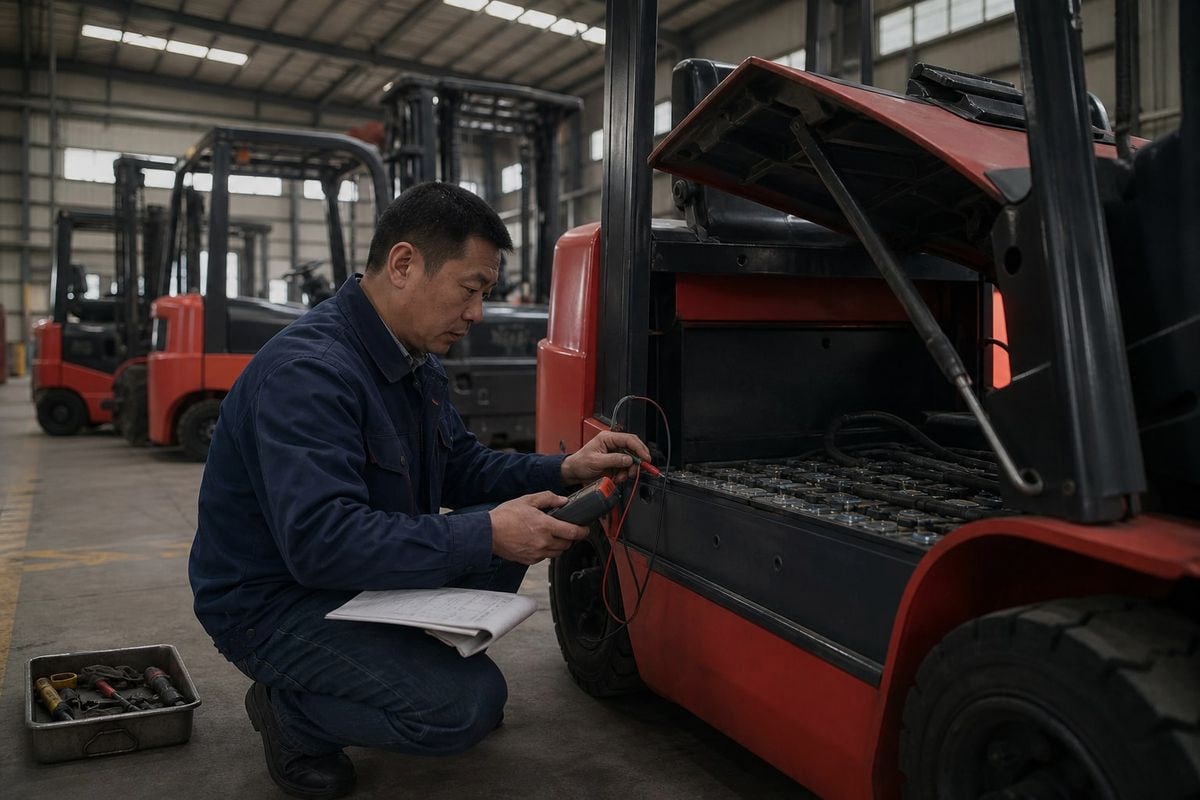
Here is a quick comparison before we go deeper:
| Factor | FCL (Full Container) | LCL (Consolidation) |
|---|---|---|
| Best for | 2+ forklifts, or forklift + parts | Single small unit, no urgency |
| Cost logic | Flat container rate, lower cost per unit | Pay per cubic meter |
| DG acceptance | Easier to book as declared DG | Many consolidators refuse Class 9 |
| Handling risk | Loaded once, sealed until arrival | Multiple touchpoints, shared cargo |
| Securing control | Full control of blocking and bracing | Limited control |
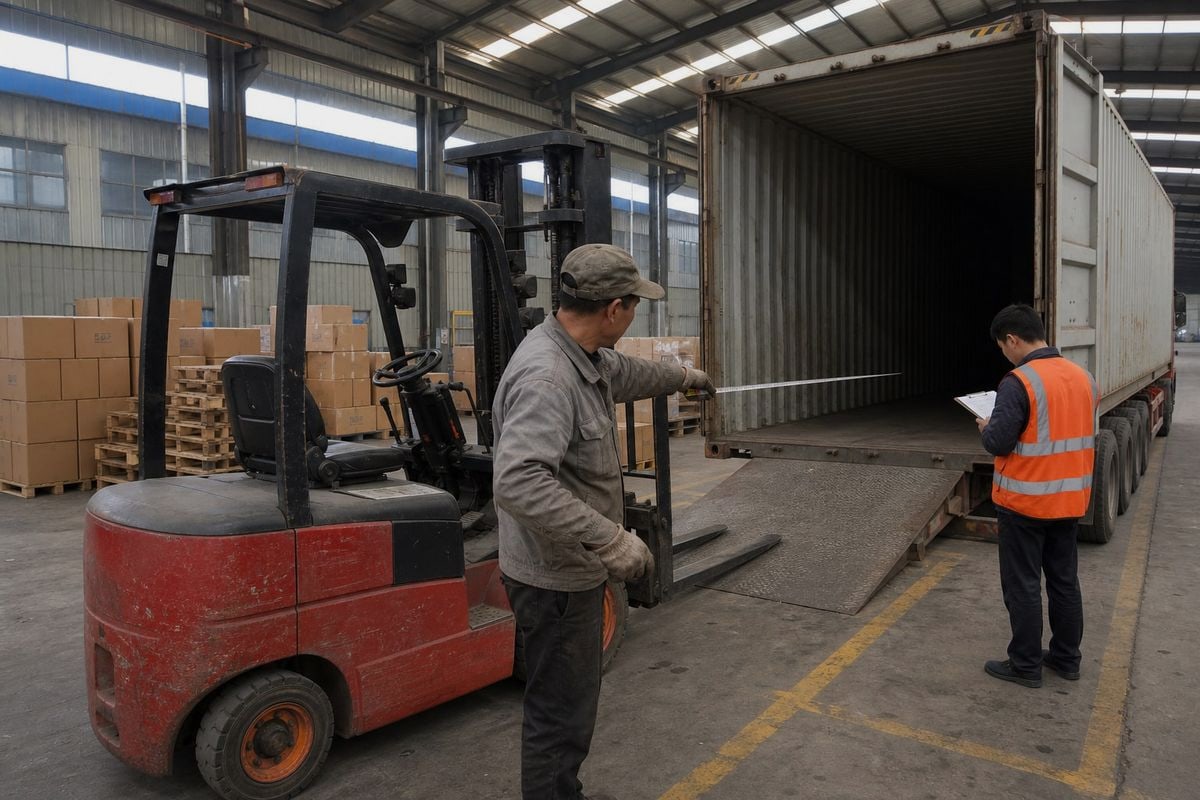
A standard counterbalance electric forklift weighs two to four tons. It has a high density and a low center of gravity. That sounds stable, but during heavy seas, an unsecured forklift becomes a battering ram. It needs industrial-grade blocking and bracing so it cannot shift and puncture its own battery casing or crush neighboring cargo. In FCL, we control the entire loading plan. We position the counterweight correctly, distribute axle weight across the container floor, and lash the unit to rated anchor points.
With containerized freight in LCL, your forklift shares space with other shippers' goods. Many consolidation services simply refuse Class 9 lithium cargo, which shrinks your options. And every extra handling step adds damage risk to an expensive machine.
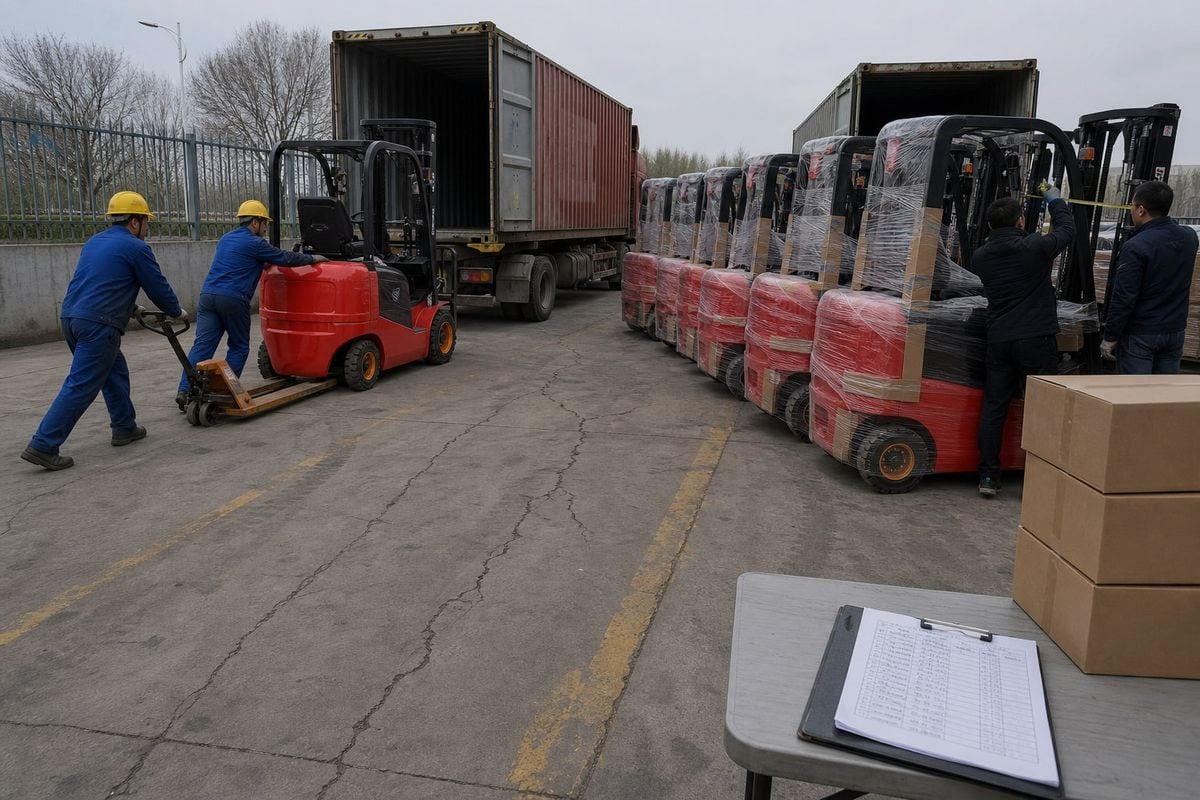
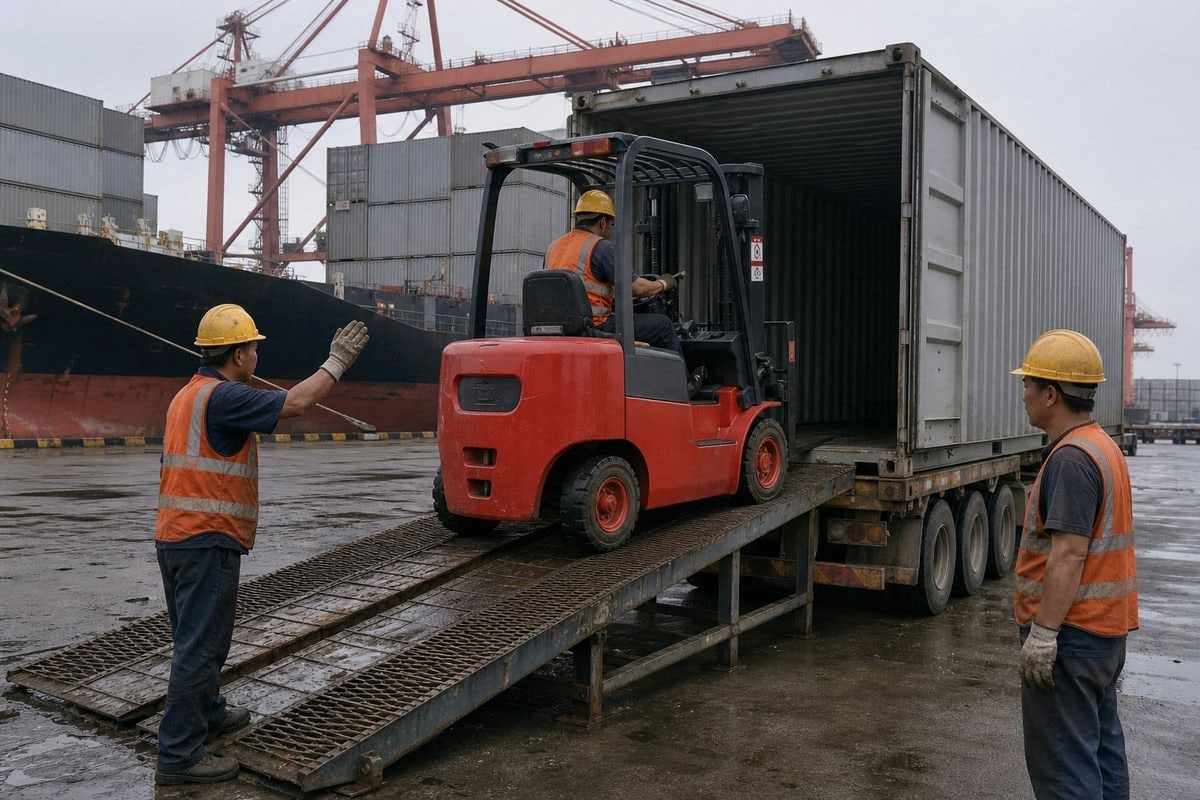
We often help buyers turn one forklift into an efficient FCL shipment. A 20FT container fits one to two counterbalance forklifts depending on mast height. The remaining space can hold chargers, spare batteries, forks, attachments, and parts from other suppliers. We consolidate cargo from multiple Chinese factories into one container at our warehouse. This drops the average logistics cost per forklift significantly. It also means one bill of lading, one customs entry, and one delivery. RoRo shipping is a third option for complete self-propelled machines, and IMDG Special Provision 961 can exempt some vehicles from hazardous cargo treatment on RoRo vessels. But that exemption is vessel-specific and setup-specific, not a blanket rule for electric forklifts, so we evaluate it case by case with the carrier.
One lesson I learned early: buyers do not just want fast transit. They want predictable transit, because their warehouse projects and rental customers are scheduled around arrival dates.
Sea freight from China to the US West Coast typically takes 14 to 20 days port-to-port, and 28 to 35 days to the East Coast. Door-to-door delivery usually adds 7 to 14 more days for customs clearance, deconsolidation, and inland trucking.
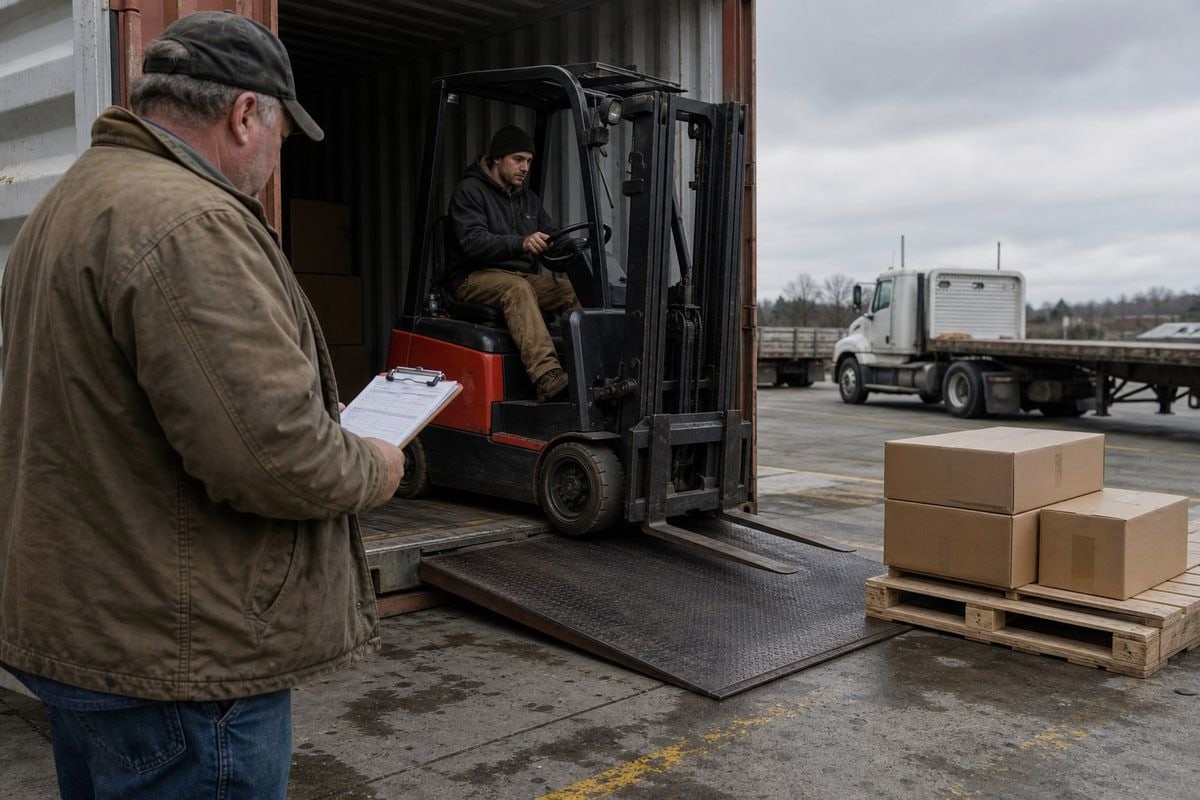
Port-to-port time is only one slice of the total timeline. When we quote door-to-door DDP shipments for electric forklifts, we map the entire chain. Factory pickup and export declaration in China take three to five days. Dangerous goods bookings can add lead time, because carriers review DG applications before confirming space. Some vessels have limited Class 9 slots, so lithium forklift bookings should be made earlier than general cargo bookings, ideally two to three weeks before the target sailing date.
Here is the sequence we plan for a typical China-to-USA lithium forklift shipment:
Three things stretch these numbers. First, incomplete battery documentation, which can hold cargo at origin or destination. Second, port congestion, which fluctuates seasonally, especially before Chinese New Year and during peak season from August to October. Third, DG re-inspection if the declaration looks inconsistent. Ocean freight insurance is worth adding for equipment of this value, since a forklift is expensive to repair and even more expensive to replace mid-project. One more emerging point worth knowing: some carriers are piloting smart container technology that monitors thermal spikes and electrolyte off-gassing in real time during the voyage. It does not shorten transit, but it improves safety margins for lithium cargo on long-haul routes.
Electric forklifts can be shipped by sea safely and routinely. Battery classification, documents, container choice, and carrier rules decide whether your shipment runs smoothly or gets stuck.
1. Scientific explanation of the thermal runaway process in batteries, which necessitates strict shipping safety regulations. ↩︎
2. Official IMO page for the IMDG Code which regulates the sea transport of dangerous goods like batteries. ↩︎
3. Official U.S. government guide to the Harmonized System codes used for classifying traded products for customs. ↩︎
4. Overview of the international testing standards required for lithium batteries to be cleared for transport. ↩︎