
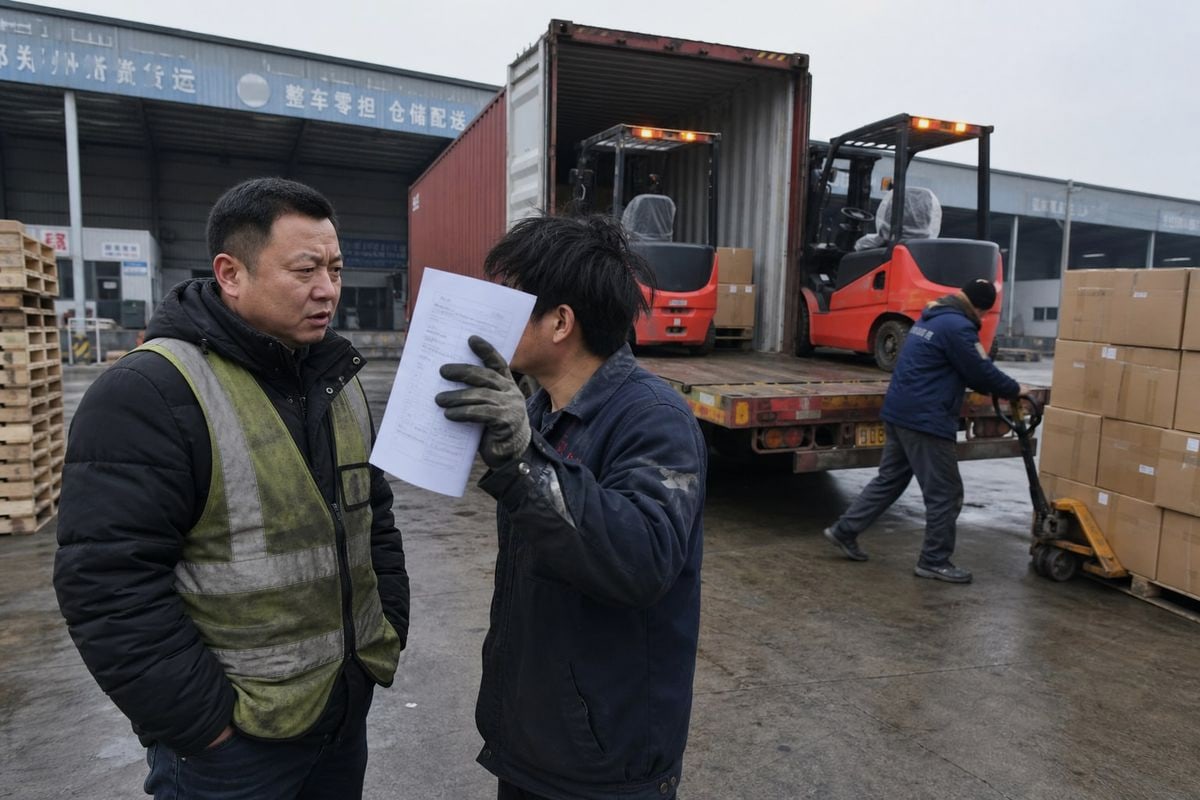
Las normas de mercancías peligrosas de 2026 cambiaron el envío de carretillas elevadoras eléctricas de la noche a la mañana. En nuestros muelles de carga en Zhengzhou, vi cómo las reservas conformes se convirtieron en reservas rechazadas dentro de una semana de enero.
Las normas de mercancías peligrosas de 2026 hacen que el envío de carretillas elevadoras eléctricas sea más estricto, pero no imposible. La 67ª edición del IATA DGR y la edición 2024 del Código IMDG entraron en vigor el 1 de enero de 2026, añadiendo un límite de 30% para el estado de carga en el aire, nuevas entradas de la ONU, y documentación más estricta de la Clase 9 para el transporte marítimo.
Los cambios provienen de dos reglamentos, no de una sola ley. El aire y el mar ahora siguen requisitos diferentes. A continuación, desgloso lo que ha cambiado, lo que cuesta y cómo prepararse.
¿Cómo impactarán las nuevas regulaciones de baterías de litio mis envíos de carretillas elevadoras eléctricas desde China?
El diciembre pasado, un distribuidor de EE. UU. me preguntó por qué su reserva habitual de carretillas elevadoras necesitaba de repente una revisión de batería. La respuesta se encuentra en dos reglamentos que ambos entraron en vigor el 1 de enero de 2026.
Las regulaciones actualizadas de baterías de litio significan que las carretillas elevadoras eléctricas ya no se tratan como carga genérica. Los transportistas deben confirmar ahora la química de la batería, la clasificación de vatios-hora, el número de la ONU correcto y el modo de transporte antes de reservar, porque las carretillas elevadoras a batería de litio comúnmente desencadenan el manejo de mercancías peligrosas de Clase 9 bajo el Código IMDG y las reglas de IATA.
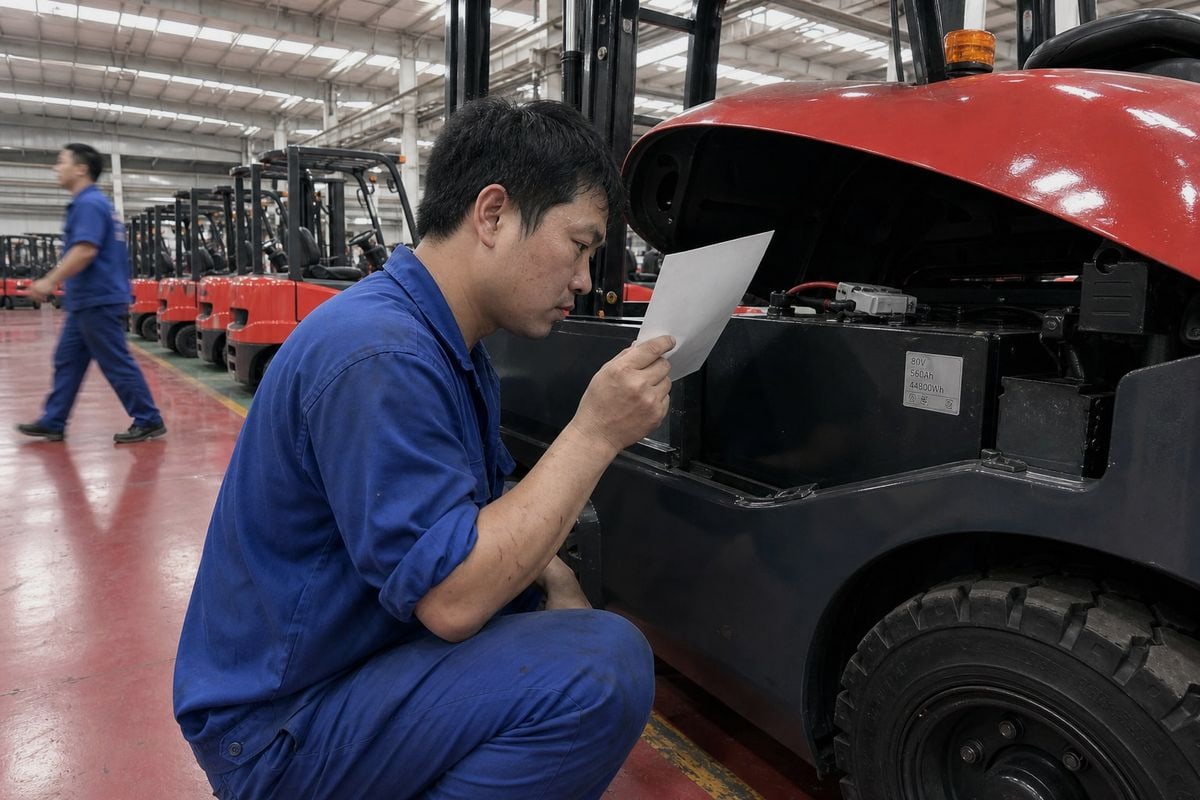
El punto clave que explico a cada comprador es el siguiente: los cambios de 2026 no son una ley específica para montacargas. Son actualizaciones superpuestas de la IATA para el transporte aéreo y de la IMO/IMDG para el transporte marítimo. El Reglamento de Mercancías Peligrosas de la IATA 1 la 67ª Edición entró en vigor el 1 de enero de 2026. La edición 2024 del Código IMDG se volvió obligatoria en la misma fecha, después de un período de transición voluntario.
¿Qué cambió realmente para los vehículos de batería?
La batería de su montacargas lo decide todo. Las unidades de plomo-ácido siguen un camino. Los montacargas de batería de litio siguen uno mucho más estricto. La edición de IATA de 2026 introdujo nuevas entradas de la ONU relacionadas con vehículos, incluyendo ONU 3556 para vehículos propulsados por baterías de iones de litio 2 y UN 3558 para vehículos alimentados por baterías de sodio. Los envíos por mar han utilizado durante mucho tiempo UN3171 vehículos alimentados por baterías como clasificación, y el cumplimiento del Código IMDG ahora se verifica de manera más estricta al hacer la reserva.
Aquí se compara cómo se relacionan los dos modos:
| Factor | Transporte Aéreo (IATA DGR 67ª Ed.) | Transporte Marítimo (IMDG 2024) |
|---|---|---|
| Fecha de entrada en vigor | 1 de enero de 2026 | 1 de enero de 2026 (obligatorio) |
| Clasificación típica | UN 3556 vehículos de iones de litio | UN3171 / Clase 9 |
| Límite de SoC | 30% para muchos envíos de iones de litio | Dependiente del transportista; a menudo solicitado |
| Documentos clave | Resumen de prueba UN38.3 3, declaración DG | Declaración DG, SDS/MSDS, UN38.3 |
| Aceptación del transportista | Muy restrictivo | Aprobación ruta por ruta |
En nuestro trabajo diario manejando carga de baterías de litio 4 de fábricas de carretillas elevadoras en China, el cambio práctico es el tiempo. Las decisiones de cumplimiento que antes se tomaban en la terminal ahora deben tomarse antes de la reserva. Ese es el verdadero impacto: el proceso se ha adelantado.
¿Qué nueva documentación necesitaré para cumplir con las normas de envío de mercancías peligrosas de 2026?
Un resumen de prueba UN38.3 faltante mantuvo una vez el contenedor de un cliente en Qingdao durante once días. Esa única hoja de papel costó más en tarifas de almacenamiento de lo que la documentación nunca habría costado.
Para el cumplimiento de 2026, los transportistas generalmente necesitan un resumen de prueba UN38.3, una SDS o MSDS para la batería, una Declaración de Mercancías Peligrosas firmada, hojas de especificación de batería que muestren la química y vatios-hora, etiquetas de peligro de Clase 9 correctas, y aceptación por escrito del transportista antes de cargar la carretilla elevadora.

La documentación ahora es el guardián, no un pensamiento posterior. Cuando preparamos la documentación de envío para carretillas elevadoras eléctricas, construimos el archivo antes de que la fábrica termine la producción. Ese orden importa, porque un Declaración de Mercancías Peligrosas cannot be drafted properly without accurate battery data from the manufacturer.
The Core Document Checklist
| Documento | ¿Quién lo proporciona? | Why Carriers Demand It |
|---|---|---|
| Resumen de prueba UN38.3 | Battery maker / forklift factory | Proves the cells passed UN transport testing |
| SDS / MSDS | Battery maker | Details chemistry and emergency response info |
| Declaración de Mercancías Peligrosas | Expedidor / transitario | Legally declares Class 9 hazardous materials |
| Hoja de especificaciones de batería | Fábrica | Confirms watt-hours, voltage, and configuration |
| Aprobación de DG del transportista | Forwarder secures it | Confirms the line accepts the cargo on that route |
Newer Requirements to Watch
The trend is toward digital verification. Some carriers now expect UN38.3 test summaries to be digitally accessible and verifiable, and mandatory lithium-ion declarations feed automated risk assessment software that shipping lines use for cargo holds. Emerging Digital Battery Passport initiatives may soon add State of Health data and chemical composition disclosure for ocean freight. Enhanced labeling for large-format industrial batteries also separates forklift packs from small consumer cells.
My advice is simple. Ask your factory for the UN38.3 test summary and SDS at the deposit stage, not at the shipping stage. If the supplier cannot produce them, you have a sourcing problem, not just a shipping problem.
¿Aumentarán los cambios en las regulaciones de 2026 mis costos de envío para carretillas elevadoras a batería?
Cost is the first question every dealer asks me, and I understand why. Freight already shapes the landed cost of a forklift more than most buyers expect.
Yes, costs generally rise, but moderately for ocean freight. Expect carrier DG surcharges, documentation and inspection fees, and possible packaging upgrades. Air freight costs climb more sharply due to the 30% State of Charge limit and restrictive acceptance, which is why most complete forklifts move by sea.
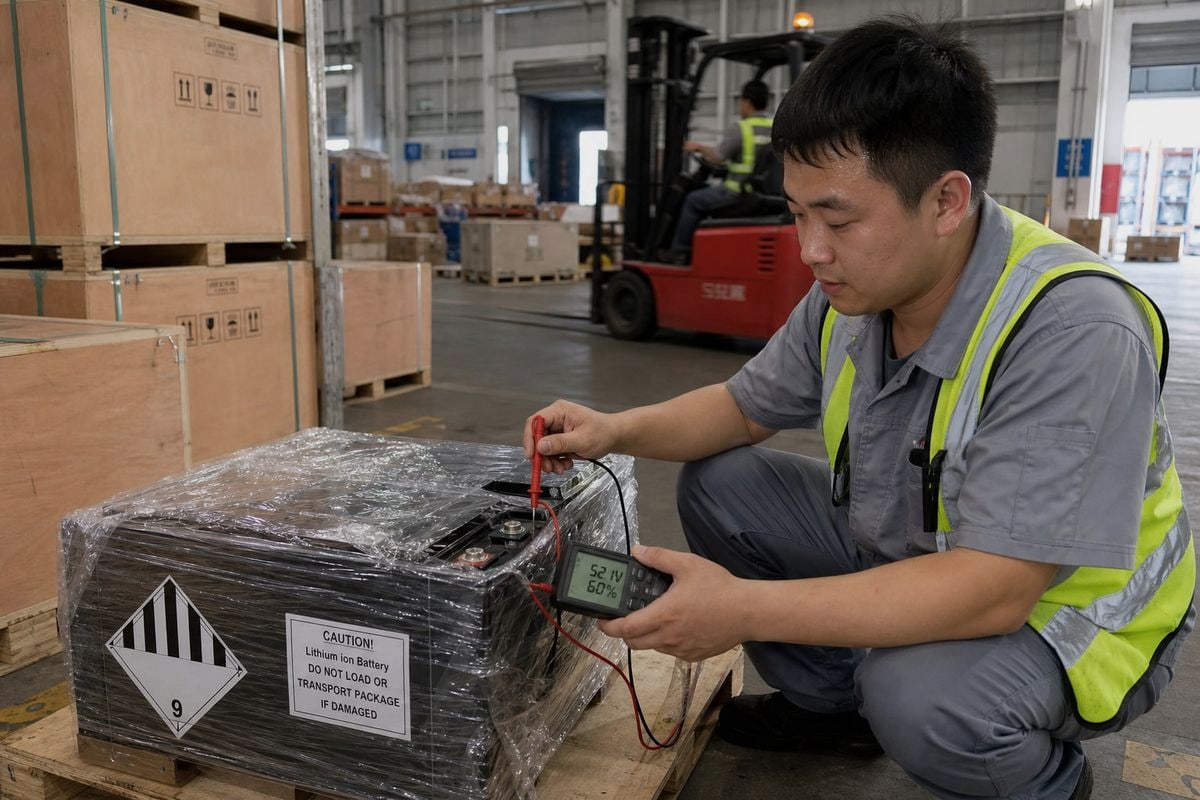
Let me be honest about the objection I hear most: mid-sized importers feel these rules are operationally burdensome for what is ordinary commercial equipment. That frustration is fair. But the safety logic is also real. Thermal runaway prevention in an enclosed ocean container or an aircraft hold is not theoretical; lithium battery fire suppression is genuinely difficult mid-voyage. The rules raise the compliance threshold rather than blocking trade, and the cost impact is manageable when planned early.
Where the New Costs Come From
- Carrier DG surcharges. Shipping lines apply lithium-ion cargo surcharges and run automated risk screening on Class 9 bookings.
- Documentation fees. DG declaration preparation, review, and DG-certified handling add line items.
- Packaging and securing. Some consignments with multiple electric units face requirements for fire-resistant containers or thermal-wrap materials, plus proper blocking and bracing.
- Trained personnel. Ports and warehouses increasingly require staff with DG certification for EV-scale battery handling, and that labor costs more.
- Routing constraints. If your preferred carrier declines lithium DG cargo on a route, the alternative may cost more or sail less often.
How We Keep Costs Down
Container utilization is the biggest lever. In our loading plans, we routinely fit forklifts, chargers, batteries, and spare parts from multiple suppliers into one 40HQ container. Spreading a DG surcharge across three forklifts instead of one changes the math significantly. Consolidation does not remove the 2026 costs, but it dilutes them per unit. One caution: end-of-life forklifts shipped for recycling may fall under a restrictive waste battery classification, which carries far higher documentation costs than new equipment.
¿Cómo puedo preparar mi cadena de suministro ahora para evitar retrasos bajo las nuevas normas de mercancías peligrosas?
The lesson I keep relearning is that delays under the new rules almost never happen at sea. They happen weeks earlier, in emails nobody sent.
Prepare by confirming battery chemistry and watt-hours at purchase order stage, collecting UN38.3 and SDS documents from the factory early, verifying State of Charge at loading, securing written DG booking approval from the carrier, and applying the correct UN number and Class 9 label before tendering cargo.

Preparation is a sequence, not a scramble. When we coordinate electric forklift shipments from Chinese factories, we follow a fixed order of steps, because doing them out of order creates the exact delays buyers fear.
A Practical Pre-Shipment Workflow
| Step | Action | Momento |
|---|---|---|
| 1 | Confirm battery chemistry and watt-hour rating | At purchase order |
| 2 | Request UN38.3 test summary and SDS/MSDS | With the deposit |
| 3 | Assign the correct UN number (e.g., UN3171, UN 3556) | Before booking |
| 4 | Secure carrier DG acceptance in writing | Before cargo leaves the factory |
| 5 | Verify SoC restrictions are met at loading | At container stuffing |
| 6 | Apply Class 9 labels and finalize the DG declaration | Before port delivery |
Common Mistakes That Cause Delays
The failures I see repeat themselves. Wrong UN number on the declaration. Missing UN38.3 test summary. No DG booking approval, just an assumption the carrier will accept. Batteries charged above the SoC restrictions at loading. And the costliest one: assuming every shipping line accepts lithium Class 9 cargo on every route. Carrier acceptance is uneven, so booking confirmation is a separate compliance step, not a formality.
Two forward-looking items are worth tracking. Some carriers are piloting IoT thermal monitoring sensors inside containers that sync with vessel systems, and Battery Management System safety data may increasingly support acceptance decisions. Early adopters testing solid-state batteries hint at a future with lighter restrictions, but that future is not 2026. For now, front-load your compliance work and build extra lead time for DG review into every order.
Conclusión
The 2026 dangerous goods rules did not stop electric forklift shipping. They front-loaded it. Confirm chemistry, gather documents, verify SoC, and secure carrier approval early — then ship with confidence.
Notas al pie
1. Official IATA resource for the 67th Edition Dangerous Goods Regulations governing air transport of lithium batteries. ↩︎
2. Technical overview of lithium-ion battery chemistry and safety standards for electric vehicle applications. ↩︎
3. Authoritative UNECE page for dangerous goods transport regulations, including the UN38.3 lithium battery testing standards. ↩︎
4. Official IMO page detailing the IMDG Code and safety requirements for shipping dangerous goods by sea. ↩︎




