- +8618603825129
- [email protected]

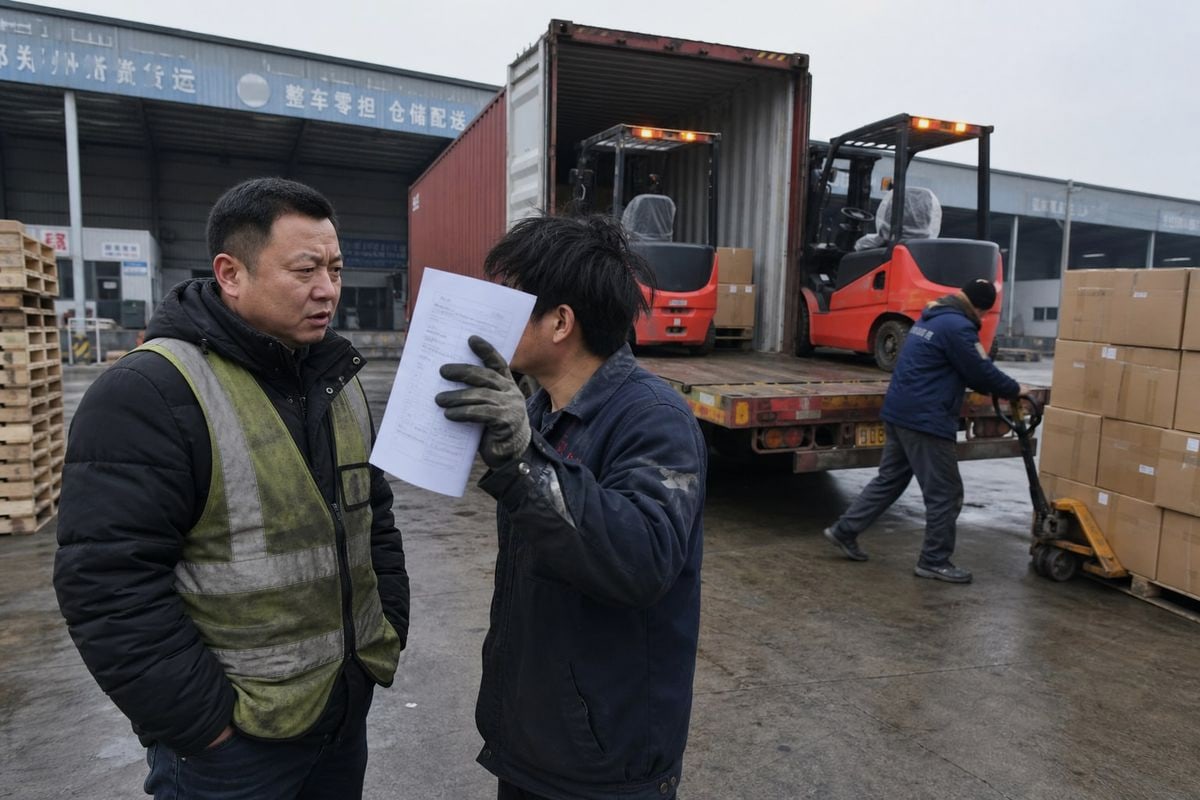
The 2026 dangerous goods rules changed electric forklift shipping overnight. On our loading docks in Zhengzhou, I watched compliant bookings become rejected bookings within one week of January.
The 2026 dangerous goods rules make electric forklift shipping stricter, not impossible. The IATA DGR 67th Edition and the IMDG Code 2024 edition both took effect January 1, 2026, adding a 30% State of Charge limit for air, new UN entries, and tighter Class 9 documentation for ocean freight.
The changes come from two rulebooks, not one law. Air and sea now follow different requirements. Below, I break down what changed, what it costs, and how to prepare.
Last December, a US dealer asked me why his usual forklift booking suddenly needed a battery review. The answer sits in two rulebooks that both switched on January 1, 2026.
Updated lithium battery regulations mean electric forklifts are no longer treated as generic cargo. Shippers must now confirm battery chemistry, watt-hour rating, the correct UN number, and transport mode before booking, because lithium-powered forklifts commonly trigger Class 9 dangerous goods handling under the IMDG Code and IATA rules.
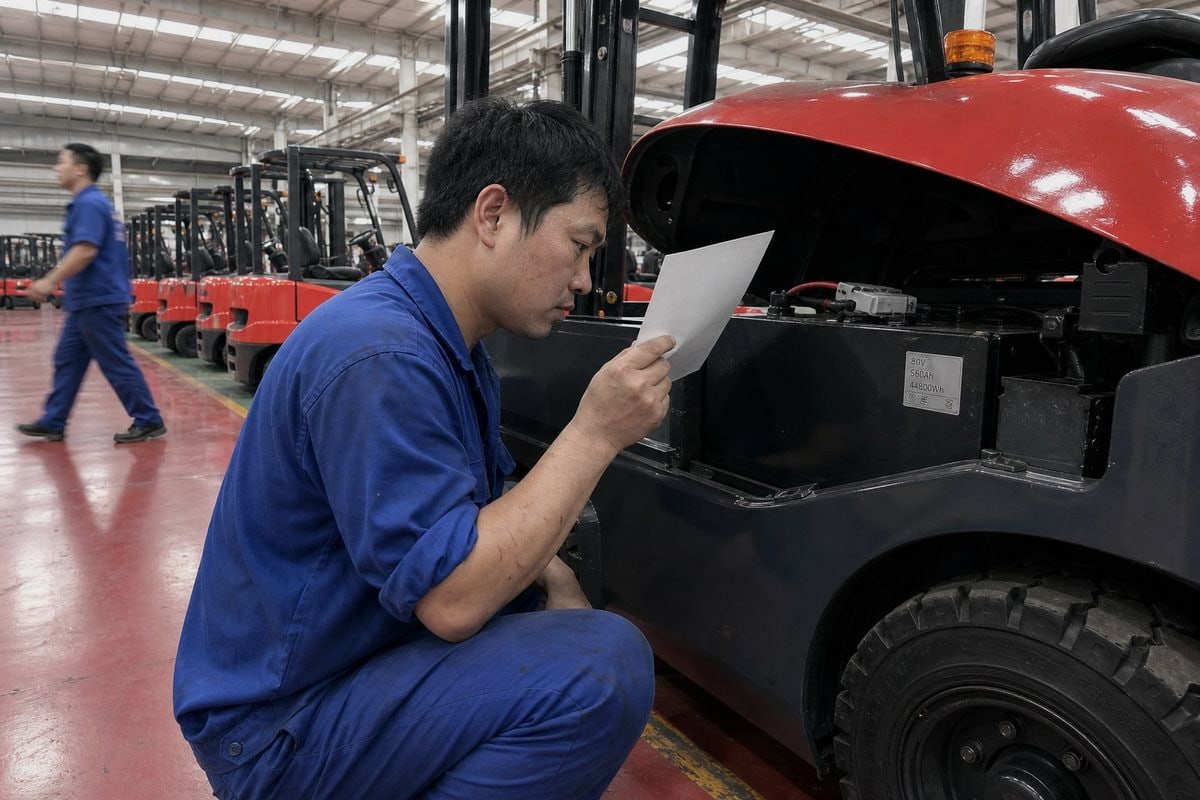
The key point I explain to every buyer is this: the 2026 changes are not one forklift-specific law. They are overlapping updates from IATA for air transport and IMO/IMDG for sea transport. The IATA Dangerous Goods Regulations 1 67th Edition became effective on January 1, 2026. The IMDG Code 2024 edition became mandatory on the same date, after a voluntary transition period.
Your forklift's battery decides everything. Lead-acid units follow one path. Lithium battery forklifts follow a much stricter one. The 2026 IATA edition introduced new vehicle-related UN entries, including UN 3556 for lithium-ion battery-powered vehicles 2 and UN 3558 for sodium-ion battery-powered vehicles. Ocean shipments have long used UN3171 battery-powered vehicles as the classification, and IMDG Code compliance now gets checked more strictly at booking.
Here is how the two modes compare:
| Factor | Air Freight (IATA DGR 67th Ed.) | Ocean Freight (IMDG 2024) |
|---|---|---|
| Effective date | January 1, 2026 | January 1, 2026 (mandatory) |
| Typical classification | UN 3556 lithium-ion vehicles | UN3171 / Class 9 |
| SoC limit | 30% for many lithium-ion shipments | Carrier-dependent; often requested |
| Key documents | UN38.3 test summary 3, DG declaration | DG declaration, SDS/MSDS, UN38.3 |
| Carrier acceptance | Very restrictive | Route-by-route approval |
In our daily work handling lithium battery cargo 4 from Chinese forklift factories, the practical shift is timing. Compliance decisions that once happened at the terminal now must happen before booking. That is the real impact: the process is front-loaded.
A missing UN38.3 test summary once held a customer's container at Qingdao for eleven days. That single sheet of paper cost more in storage fees than the paperwork ever would have.
For 2026 compliance, shippers typically need a UN38.3 test summary, an SDS or MSDS for the battery, a signed Dangerous Goods Declaration, battery specification sheets showing chemistry and watt-hours, correct Class 9 hazard labels, and written carrier acceptance before the forklift is loaded.
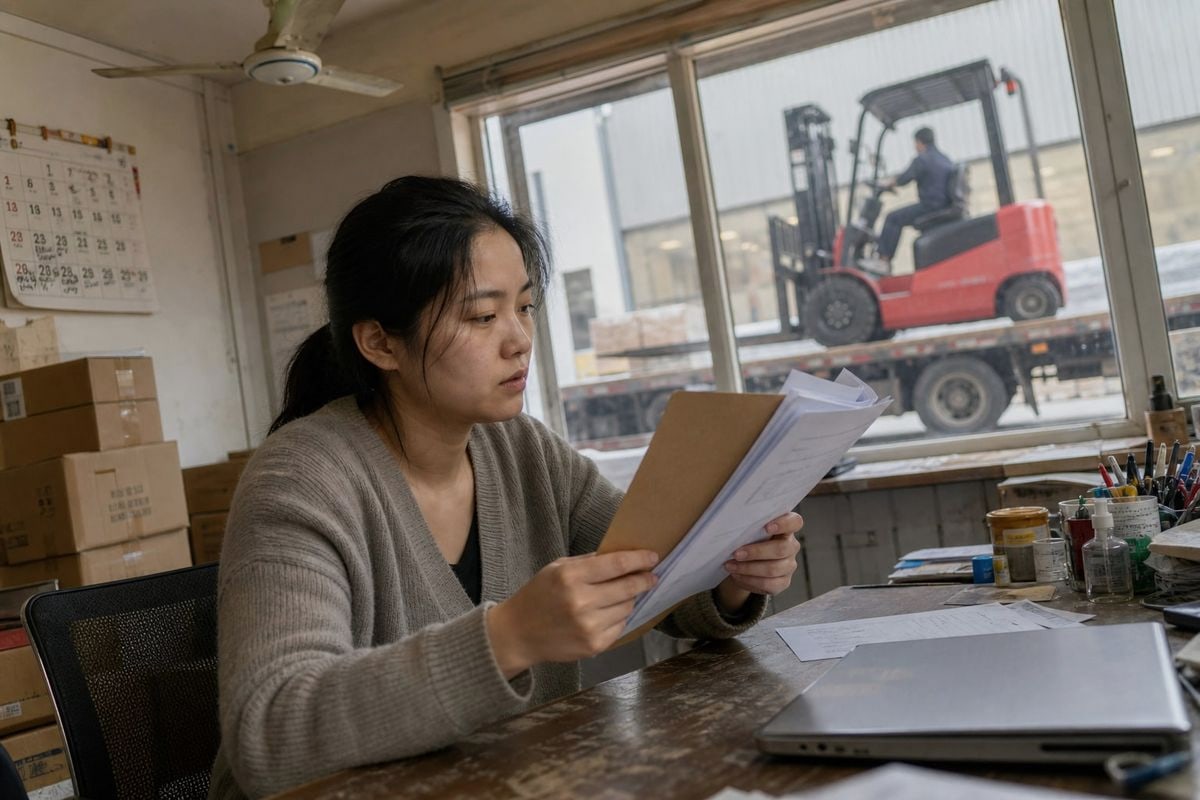
Paperwork is now the gatekeeper, not an afterthought. When we prepare shipping documentation for electric forklifts, we build the file before the factory finishes production. That order matters, because a Dangerous Goods Declaration cannot be drafted properly without accurate battery data from the manufacturer.
| Document | Who Provides It | Why Carriers Demand It |
|---|---|---|
| UN38.3 test summary | Battery maker / forklift factory | Proves the cells passed UN transport testing |
| SDS / MSDS | Battery maker | Details chemistry and emergency response info |
| Dangerous Goods Declaration | Shipper / forwarder | Legally declares Class 9 hazardous materials |
| Battery specification sheet | Factory | Confirms watt-hours, voltage, and configuration |
| Carrier DG approval | Forwarder secures it | Confirms the line accepts the cargo on that route |
The trend is toward digital verification. Some carriers now expect UN38.3 test summaries to be digitally accessible and verifiable, and mandatory lithium-ion declarations feed automated risk assessment software that shipping lines use for cargo holds. Emerging Digital Battery Passport initiatives may soon add State of Health data and chemical composition disclosure for ocean freight. Enhanced labeling for large-format industrial batteries also separates forklift packs from small consumer cells.
My advice is simple. Ask your factory for the UN38.3 test summary and SDS at the deposit stage, not at the shipping stage. If the supplier cannot produce them, you have a sourcing problem, not just a shipping problem.
Cost is the first question every dealer asks me, and I understand why. Freight already shapes the landed cost of a forklift more than most buyers expect.
Yes, costs generally rise, but moderately for ocean freight. Expect carrier DG surcharges, documentation and inspection fees, and possible packaging upgrades. Air freight costs climb more sharply due to the 30% State of Charge limit and restrictive acceptance, which is why most complete forklifts move by sea.
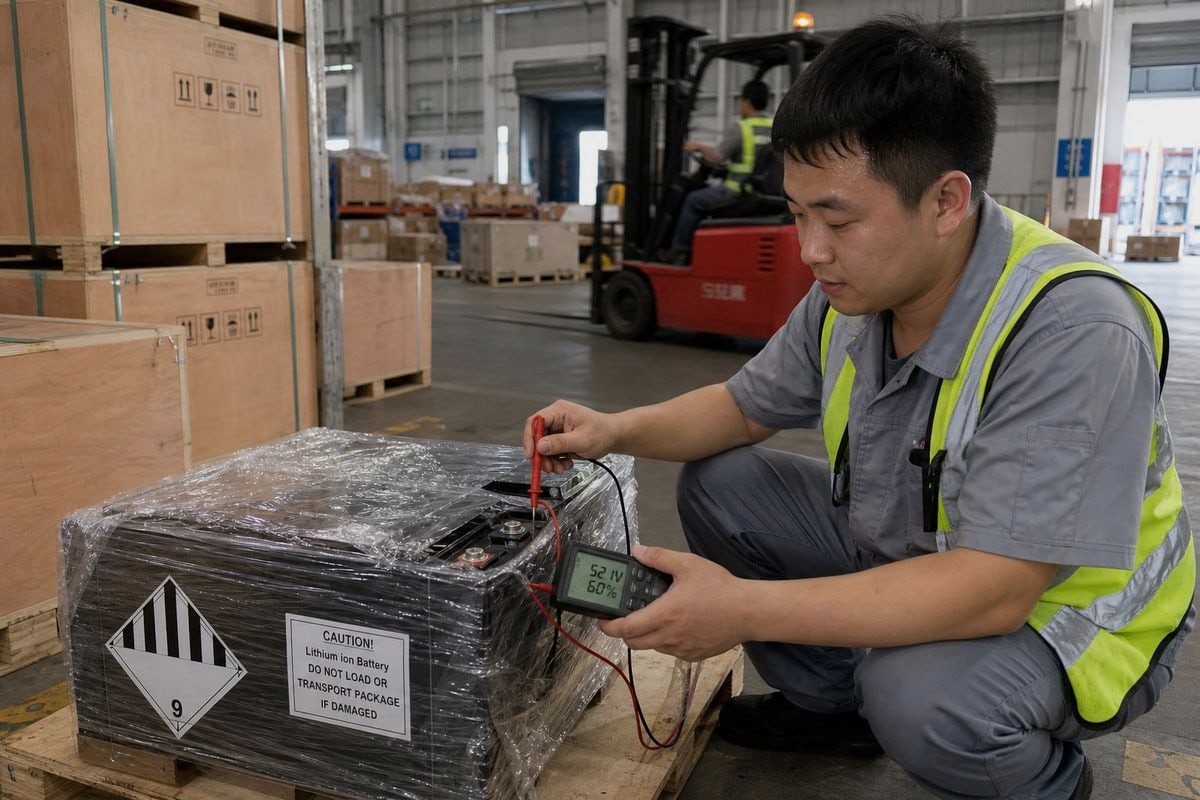
Let me be honest about the objection I hear most: mid-sized importers feel these rules are operationally burdensome for what is ordinary commercial equipment. That frustration is fair. But the safety logic is also real. Thermal runaway prevention in an enclosed ocean container or an aircraft hold is not theoretical; lithium battery fire suppression is genuinely difficult mid-voyage. The rules raise the compliance threshold rather than blocking trade, and the cost impact is manageable when planned early.
Container utilization is the biggest lever. In our loading plans, we routinely fit forklifts, chargers, batteries, and spare parts from multiple suppliers into one 40HQ container. Spreading a DG surcharge across three forklifts instead of one changes the math significantly. Consolidation does not remove the 2026 costs, but it dilutes them per unit. One caution: end-of-life forklifts shipped for recycling may fall under a restrictive waste battery classification, which carries far higher documentation costs than new equipment.
The lesson I keep relearning is that delays under the new rules almost never happen at sea. They happen weeks earlier, in emails nobody sent.
Prepare by confirming battery chemistry and watt-hours at purchase order stage, collecting UN38.3 and SDS documents from the factory early, verifying State of Charge at loading, securing written DG booking approval from the carrier, and applying the correct UN number and Class 9 label before tendering cargo.

Preparation is a sequence, not a scramble. When we coordinate electric forklift shipments from Chinese factories, we follow a fixed order of steps, because doing them out of order creates the exact delays buyers fear.
| Step | Action | Timing |
|---|---|---|
| 1 | Confirm battery chemistry and watt-hour rating | At purchase order |
| 2 | Request UN38.3 test summary and SDS/MSDS | With the deposit |
| 3 | Assign the correct UN number (e.g., UN3171, UN 3556) | Before booking |
| 4 | Secure carrier DG acceptance in writing | Before cargo leaves the factory |
| 5 | Verify SoC restrictions are met at loading | At container stuffing |
| 6 | Apply Class 9 labels and finalize the DG declaration | Before port delivery |
The failures I see repeat themselves. Wrong UN number on the declaration. Missing UN38.3 test summary. No DG booking approval, just an assumption the carrier will accept. Batteries charged above the SoC restrictions at loading. And the costliest one: assuming every shipping line accepts lithium Class 9 cargo on every route. Carrier acceptance is uneven, so booking confirmation is a separate compliance step, not a formality.
Two forward-looking items are worth tracking. Some carriers are piloting IoT thermal monitoring sensors inside containers that sync with vessel systems, and Battery Management System safety data may increasingly support acceptance decisions. Early adopters testing solid-state batteries hint at a future with lighter restrictions, but that future is not 2026. For now, front-load your compliance work and build extra lead time for DG review into every order.
The 2026 dangerous goods rules did not stop electric forklift shipping. They front-loaded it. Confirm chemistry, gather documents, verify SoC, and secure carrier approval early — then ship with confidence.
1. Official IATA resource for the 67th Edition Dangerous Goods Regulations governing air transport of lithium batteries. ↩︎
2. Technical overview of lithium-ion battery chemistry and safety standards for electric vehicle applications. ↩︎
3. Authoritative UNECE page for dangerous goods transport regulations, including the UN38.3 lithium battery testing standards. ↩︎
4. Official IMO page detailing the IMDG Code and safety requirements for shipping dangerous goods by sea. ↩︎