- +8618603825129
- [email protected]

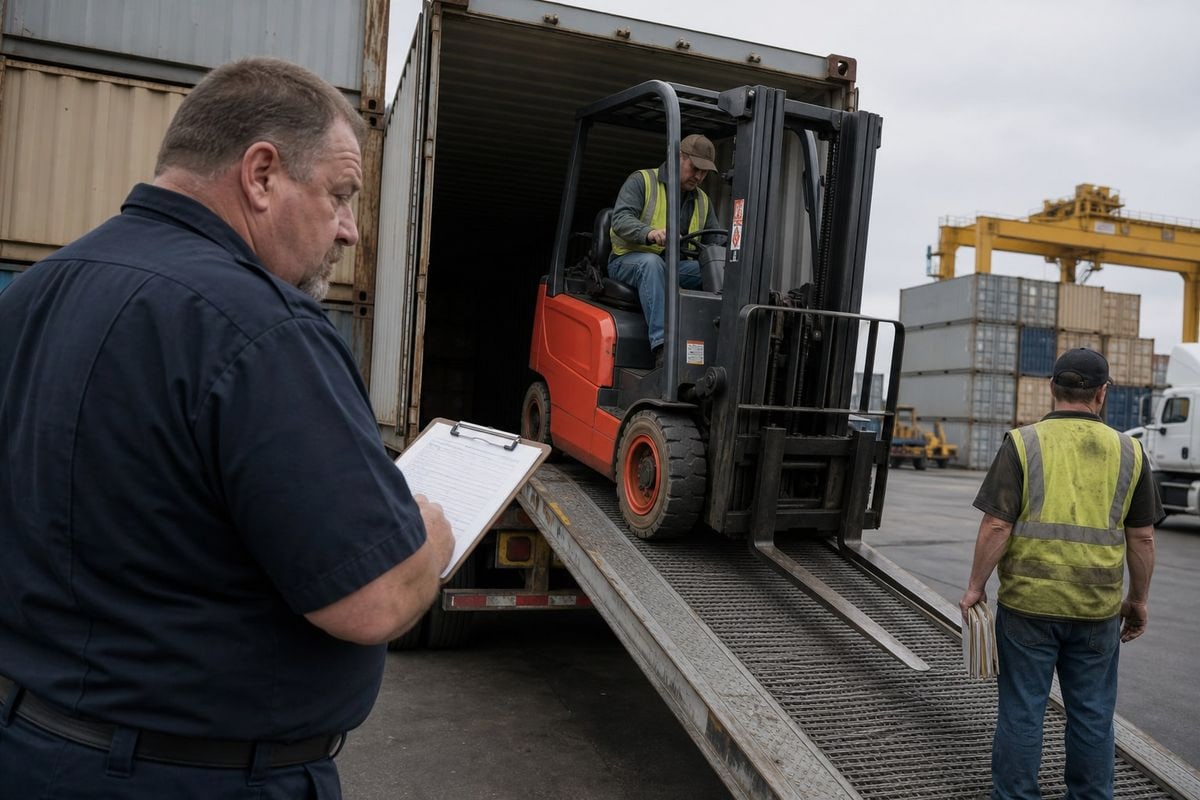
Clearing electric forklifts through U.S. customs looks simple until one missing battery document freezes your container at the port. On our shipping lanes from China, I have watched a single paperwork mismatch turn a routine entry into weeks of demurrage. It does not have to happen to you.
To clear electric forklifts through U.S. customs, classify them under HTS Code 8427.10, file the Importer Security Filing 24 hours before vessel departure, secure a Customs Bond, and submit a detailed Commercial Invoice, Bill of Lading, and lithium battery documents such as UN38.3 test summaries.
That is the short version. The details matter more. Below, I walk through the documents, the battery rules, the tariff codes, and the mistakes that cause delays. Each section builds on the last, so you can follow the whole clearance process from factory floor to U.S. warehouse.
Last year, our team in Zhengzhou pre-checked a document set for a Texas dealer and caught an invoice that just said "forklift." Fixing that one line before departure saved his entry from a review hold.
You need a detailed Commercial Invoice, packing list, Bill of Lading, certificate of origin, Customs Bond, Entry Summary Form 7501, and Importer Security Filing. Electric forklifts with lithium batteries also require UN38.3 test summaries and MSDS/SDS documents in the customs packet.
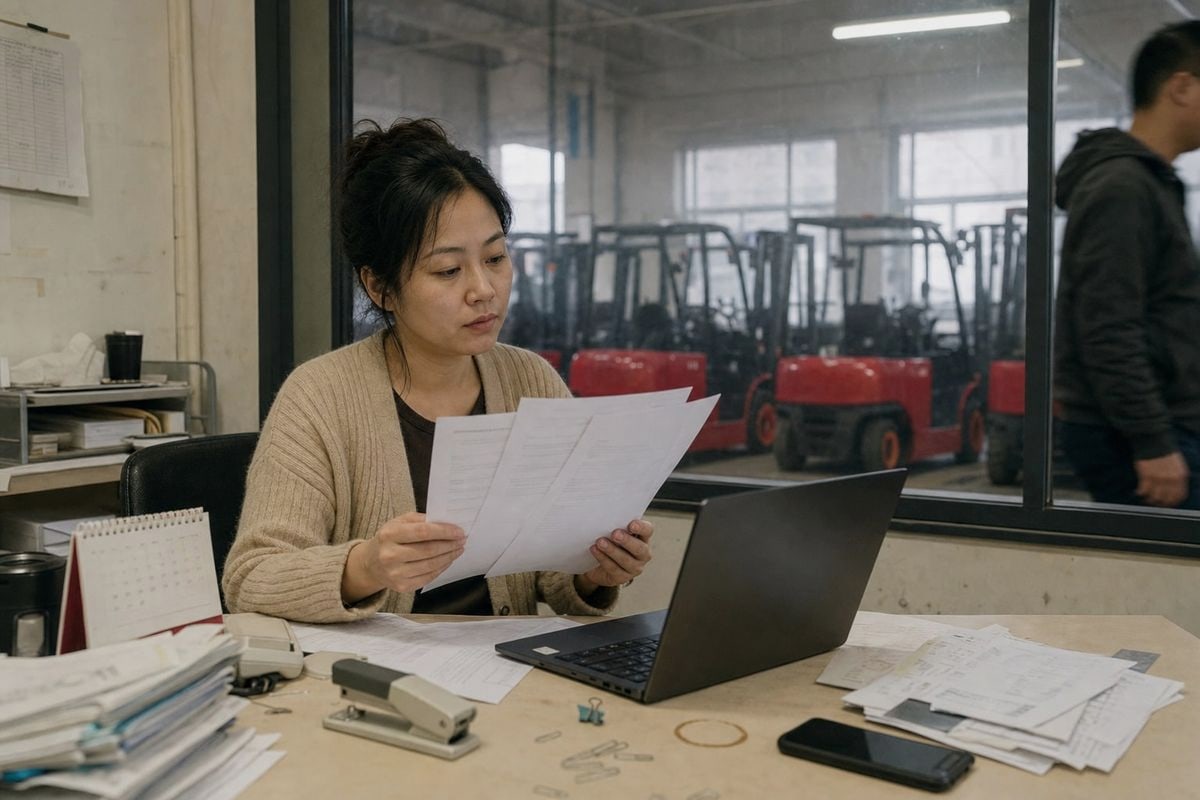
Customs clearance is not a single event at the port. It is a document-preparation process that starts before your forklift leaves the supplier's factory. CBP's own importer guidance stresses that invoices must be detailed, legible, and consistent with the packing information, including package marks and a full description of the merchandise. In our experience coordinating electric forklift shipments to the United States, the entries that clear fastest are the ones where every document tells the same story.
Here is the standard file we help importers assemble for material handling equipment:
| Documento | Objetivo | Error común |
|---|---|---|
| Factura comercial 1 | Declares value, description, and terms | Vague description like "forklift" only |
| Lista de embalaje | Confirms weights, dimensions, marks | Numbers that conflict with the invoice |
| Conocimiento de embarque | Contract of carriage and cargo receipt | Consignee details that do not match the entry |
| Certificado de origen | Confirms country of origin for duty | Missing when Section 301 review applies |
| Fianza aduanera 2 | Required for formal entry | Assuming informal entry is allowed |
| Entry Summary Form 7501 | Files duty and classification with CBP | Wrong HTS code or valuation |
| ISF (10+2) | Pre-arrival security data | Filed late or with inaccurate data |
Your Commercial Invoice should identify the model, power source, battery type, weight, dimensions, rated lifting capacity, and any included accessories. A strong SERP-level tip we follow: break down the value of the forklift, the battery, and the charger separately, because these components can carry different secondary HTS implications. Chargers and spare batteries are not always classified with the truck itself.
Also remember two rules that surprise first-time importers. First, any shipment valued over $2,500 requires a formal entry with a Fianza aduanera, because forklifts count as commercial industrial machinery. Second, imported goods must be marked conspicuously with the country of origin unless exempt. We verify both points with the factory before loading, not after arrival.
The hardest trade-off I weigh on every lithium-powered shipment is speed versus carrier acceptance. Booking the fastest vessel means nothing if the carrier rejects the cargo at origin because the battery file is incomplete.
Lithium batteries add a second compliance layer to forklift imports. You need UN38.3 test summaries, MSDS/SDS documentation, and Dangerous Goods declarations for carrier acceptance, and CBP may coordinate with the DOT to inspect large-format lithium power systems for safety compliance.
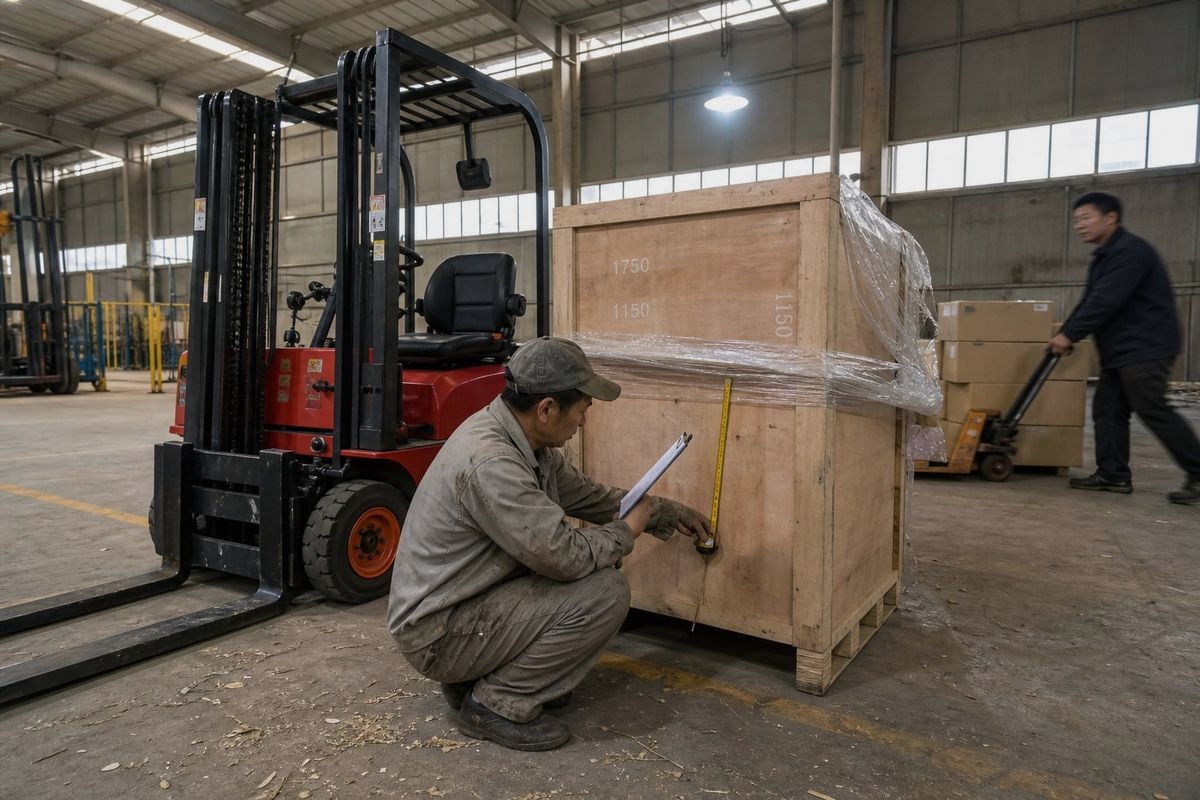
There is a distinction here that many importers miss. Customs clearance and transportation compliance are two different gates. CBP may be satisfied with proper entry data, but the ocean carrier and freight forwarder will still demand lithium-ion battery certification documents, DG declarations, and packaging paperwork before they accept the cargo at all. In our lithium battery cargo handling work, we treat the battery file as its own project, running parallel to the customs file.
| Requisito | Who Demands It | When It Is Checked |
|---|---|---|
| UN38.3 test summary | Carrier, and potentially CBP/DOT | Before booking and at entry review |
| MSDS/SDS | Carrier and forwarder | Before cargo acceptance at origin |
| DG declaration | Ocean carrier | At booking and container loading |
| Battery packaging compliance | Carrier and port authority | During loading and inspection |
Here is the nuance that trips up experienced buyers. A CBP ruling classified complete lithium-ion forklifts as electric forklifts, while detachable battery modules 3 shipped separately were classified under 8507.60 as lithium-ion accumulators. That means your forklift and its spare batteries may not be treated as one customs item. If your Chinese supplier ships two spare battery packs in the same container, those packs may need their own line on the entry, their own value, and their own duty rate. We flag this configuration question with every factory during pickup coordination, because it changes the entry structure before the container is even loaded.
The practical takeaway: confirm whether the battery is integrated or detachable, and whether spares are included, before the goods leave the factory.
A distributor in Ohio once asked me why his broker quoted two different duty rates for identical-looking trucks. The answer was simple: one was electric, one was LPG, and the tariff schedule treats them differently.
Use HTS Code 8427.10 for electric self-propelled forklifts, specifically 8427.10.4000 for rider-type counterbalanced trucks. Non-electric self-propelled forklifts fall under 8427.20. Chinese-origin electric forklifts may also face Section 301 Tariffs adding 25% ad valorem duty.
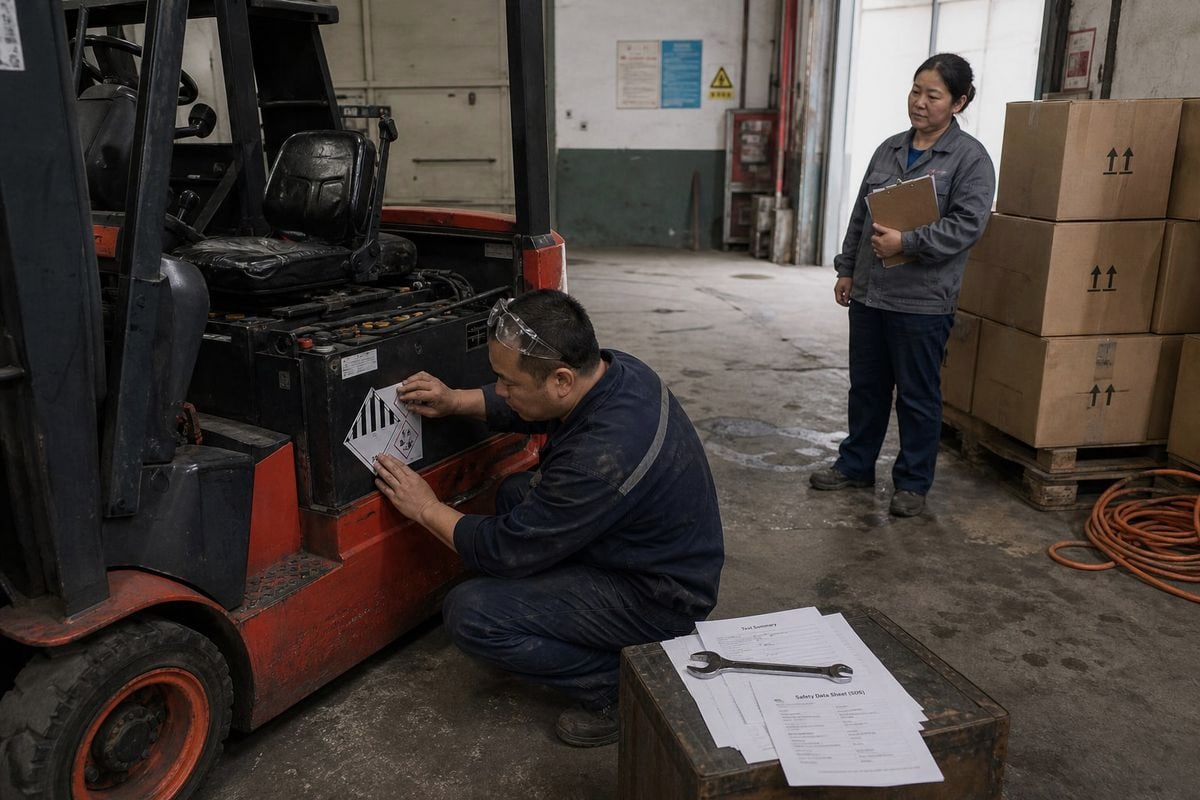
Classification drives everything downstream: your duty rates, your entry data, and how the shipment is described to CBP. Get it wrong and you risk misclassification penalties 4, retroactive duty bills, or an exam hold. Multiple importer guides and a CBP ruling point to the same structure, and we apply it on every electric forklift entry we coordinate.
| Equipment Type | HTS Code | Notas |
|---|---|---|
| Electric rider-type counterbalanced forklift | 8427.10.4000 | Most common code for warehouse electric trucks |
| Other electric self-propelled works trucks | 8427.10 (other subheadings) | Depends on configuration |
| Non-electric self-propelled forklift (diesel/LPG) | 8427.20 | Different duty and EPA treatment |
| Detachable lithium-ion battery modules | 8507.60 | Classified as accumulators when shipped separately |
Here is the objection I hear most often: "The base duty rate looks low, so why is my landed cost so high?" The answer is usually Tarifas de la Sección 301. Electric forklifts of Chinese origin can carry an additional 25% ad valorem duty on top of the standard rate. That is not a rounding error. On a container of four counterbalanced trucks, it materially changes the resale margin. We always tell buyers to calculate landed cost with Section 301 included before confirming the purchase order, not after the vessel sails.
One more note on classification accuracy: the code depends on the machine's design, not its marketing description. A "compact warehouse truck" in the brochure may be a rider-type counterbalanced electric truck to CBP. Confirm the exact configuration, including whether it is rider-type and whether attachments are included, before your broker files.
The most expensive lesson our team ever absorbed came from a late Importer Security Filing on a consolidated shipment. Since then, we file ISF data early and audit every document set against the others before departure.
Avoid delays by filing the ISF 24 hours before vessel departure, matching all documents to one consistent story, labeling the unit clearly as electric, using ISPM 15 heat-treated wood packaging, screening the battery supply chain for UFLPA, and working with experienced customs brokerage services.
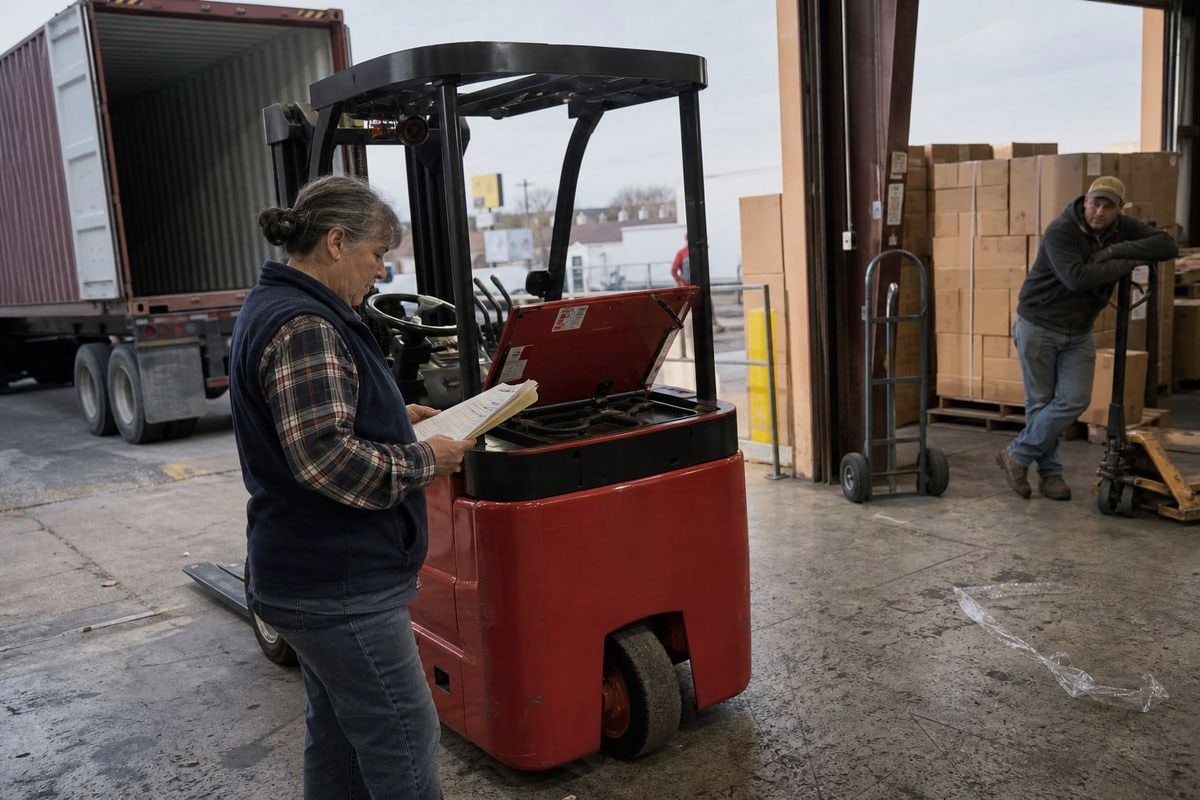
Most clearance problems come from documentation mismatch, not from the forklift being electric. If the invoice, packing list, battery documents, and tariff classification do not all agree, CBP or your broker may stop the entry for review. Here is the pre-departure sequence we run for every U.S.-bound forklift container.
Electric forklifts clear U.S. customs smoothly when the HTS Code 8427.10 classification, battery paperwork, and entry documents all match. Prepare the file before departure, and the port becomes a formality.
1. Official CBP guide detailing the fundamental requirements and documentation for importing goods into the United States. ↩︎
2. CBP resource explaining the purpose and requirements for securing a Customs Bond for formal entries. ↩︎
3. Official portal for the Harmonized Tariff Schedule used to classify detachable battery modules and other imported goods. ↩︎
4. Official CBP documentation regarding trade penalties and enforcement for non-compliance with import regulations. ↩︎