- +8618603825129
- [email protected]


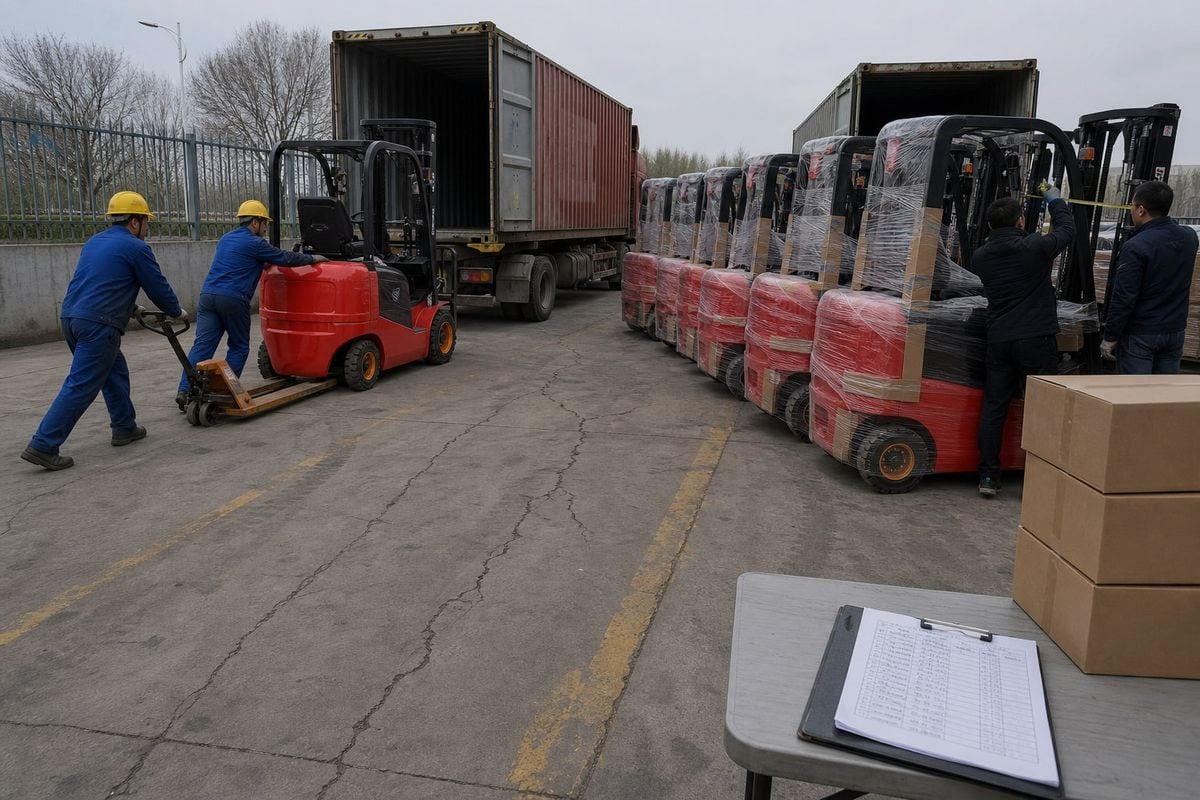
Importing electric forklifts into the UK looks simple until a container gets stuck at Felixstowe. I have watched it happen from our loading warehouse in Zhengzhou, and it always hurts.
To import electric forklifts into the UK, you need a GB EORI number, correct commodity code classification under 8427 10 10, a customs declaration through CDS, payment of import VAT and duty, UKCA or CE compliance documents, and safe lithium battery handling during shipping.
That is the short answer. The full picture covers cost, taxes, battery safety, and shipping methods. Let me walk you through each part, step by step.
Last year, a UK dealer asked me for a quote after a supplier told him shipping would be "cheap." We rebuilt his landed cost line by line, and the real number surprised him.
Importing an electric forklift into the UK typically costs between £800 and £3,000 in logistics charges per unit, plus import VAT at 20% and any applicable duty. The total depends on forklift size, container utilization, shipping method, and destination port charges.
The biggest mistake I see buyers make is comparing forklift prices from Chinese factories without calculating the full landed cost. The factory price is only the starting point. Freight forwarding charges, port fees, customs costs, and UK delivery all stack on top.
Here is how a typical China-to-UK electric forklift shipment breaks down:
| Cost Item | Typical Range | Notas |
|---|---|---|
| Factory pickup in China | £100–£400 | Depends on distance to port |
| Ocean freight (per container) | £1,500–£4,000 | Varies with season and route |
| Export declaration and handling | £100–£250 | Handled on the China side |
| UK port and terminal charges | £200–£500 | Often excluded from cheap quotes |
| UK customs clearance | £50–£150 | Broker or forwarder fee |
| Import VAT | 20% of value + freight + duty | Recoverable if VAT registered |
| Derechos de importación | 0%–4.5% under UK Global Tariff | Depends on classification |
| UK inland delivery | £200–£600 | Depends on final address |
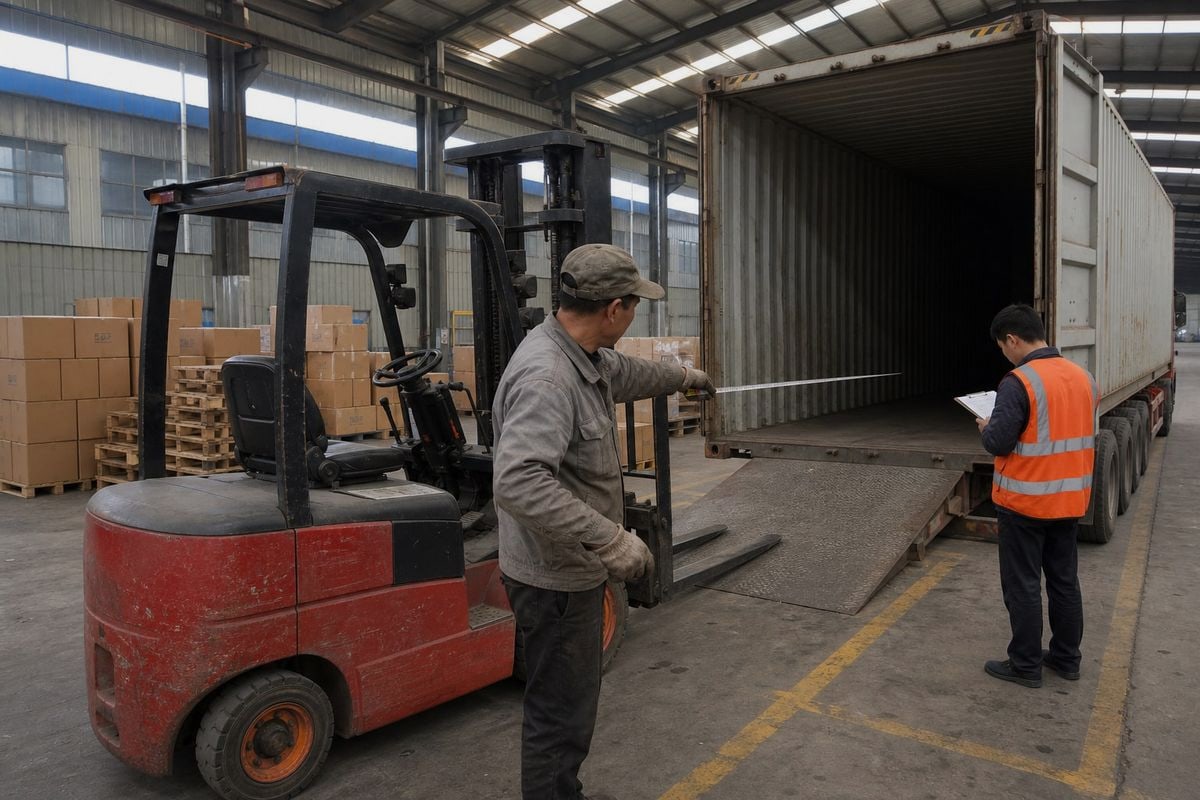
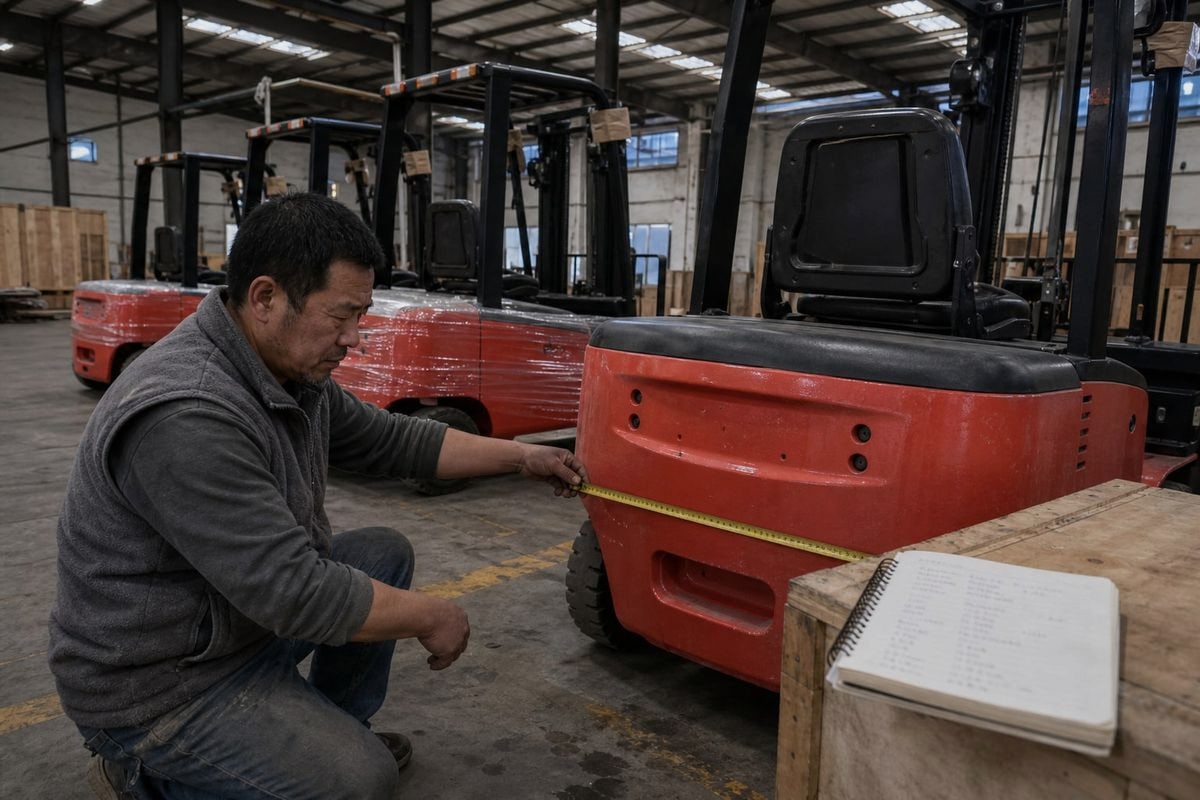
Container utilization changes everything. If you fit three compact electric forklifts into one 40HQ container instead of two, your freight cost per unit drops by a third. At our consolidation warehouse, we measure mast height, counterweight width, and fork length before we ever quote, because a folded-mast unit sometimes fits where a fixed-mast unit does not.
One more point that ranking guides rarely mention: UK businesses can claim Full Expensing capital allowances on new electric forklifts. That gives a 100% tax deduction on the purchase cost in the year of purchase. It does not reduce your freight bill, but it meaningfully reduces the effective cost of the whole import.
Also budget for the receiving side. Some UK importers now need a site power audit before a fleet arrives, and high-kVA charging loads may require a G99/G100 connection agreement with the local Distribution Network Operator. That is not a shipping cost, but it is part of the real project budget.
A lesson I learned early in freight forwarding: customs never argues about your intentions, only about your paperwork. One wrong commodity code on a UK-bound forklift shipment taught our documentation team to triple-check every declaration.
Electric forklifts imported into the UK are classified under commodity code 8427 10 10 and attract import duty of 0%–4.5% under the UK Global Tariff, plus 20% import VAT. VAT-registered businesses can use Postponed VAT Accounting to avoid paying VAT upfront at the border.

Before anything ships, you need three things in place on the UK side. First, a GB-prefixed EORI number. EU-prefixed EORI numbers are no longer valid for UK imports, so if your old number starts with anything other than GB, apply for a new one. Second, an agreement on who files the import declaration. Third, a plan for how VAT will be paid.
Commodity code classification determines your duty rate. Electric forklifts fall under HS heading 8427, and self-propelled electric trucks are commonly declared under 8427 10 10. Check the exact code in the UK Integrated Online Tariff 1, because attachments, separately shipped batteries, and spare parts can shift classification in edge cases. When we ship a forklift together with spare batteries and chargers, we list each item under its own code on the packing list. Mixed declarations under one code are a common cause of inspection delays.
All UK import declarations now go through the Customs Declaration Service, which replaced the older CHIEF system. In practice, your freight forwarder or customs broker submits this for you. Here is the sequence we follow for UK-bound clients:
Two extra points matter beyond customs. If the forklift will ever run on public roads, HMRC must be notified within 14 days of permanent import, and DVLA registration follows, with a £55 registration fee mentioned in DVLA forklift guidance. Electric forklifts fall in the Electric Vehicle taxation class, which is VED exempt, but annual licensing still applies. Warehouse-only trucks skip the road steps but never skip product compliance: UKCA marking (with CE accepted only in transitional contexts), English-language manuals, importer contact details on the product or documents, and retention of the Declaration of Conformity and technical documentation for 10 years.
The trade-off we weigh on every lithium battery forklift booking is speed versus carrier acceptance. The fastest vessel is useless if the shipping line rejects your dangerous goods declaration 3 two days before cutoff.
To ship lithium battery forklifts safely to the UK, confirm the battery has UN38.3 test certification, declare the cargo correctly under IMDG rules, use compliant packaging and securing, and prepare the MSDS and dangerous goods documents before booking. Carrier acceptance must be confirmed in advance.
Lithium-ion battery safety standards are the single biggest difference between shipping an electric forklift and shipping ordinary machinery. A lead-acid forklift is heavy cargo. A lithium forklift is heavy cargo plus regulated dangerous goods, and every party in the chain treats it that way.
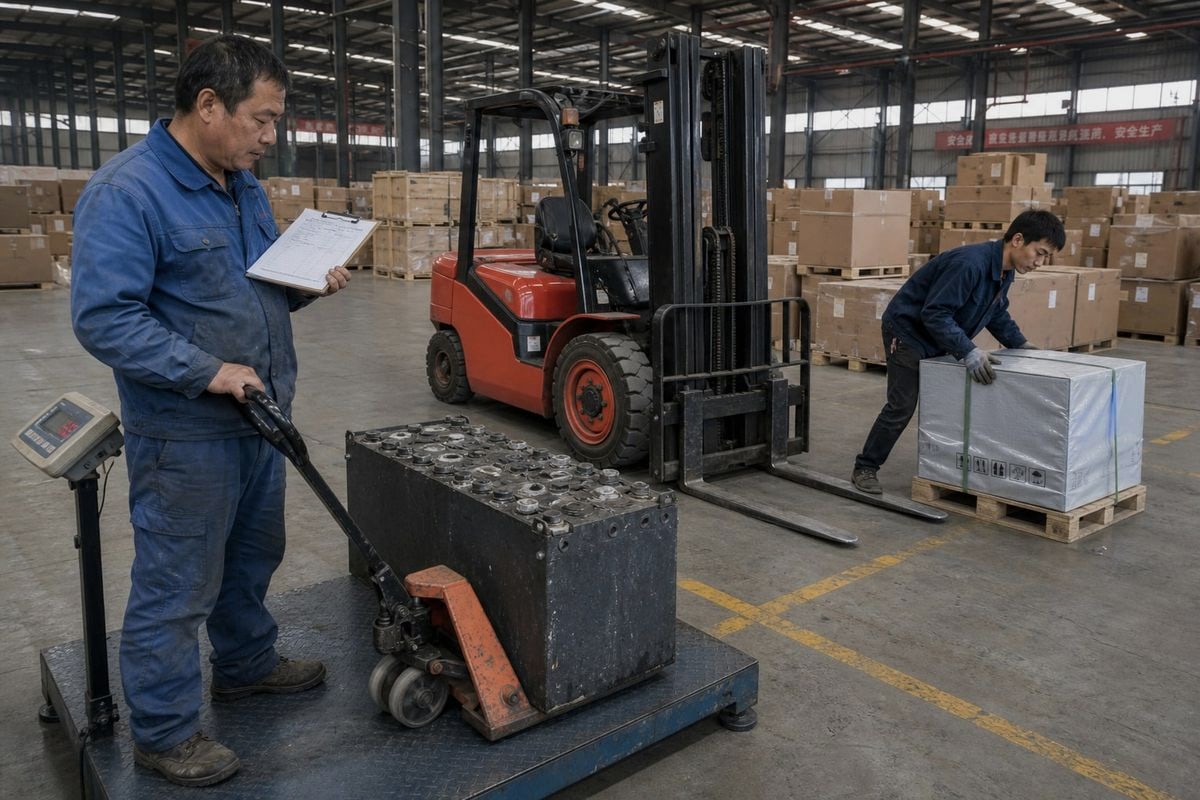
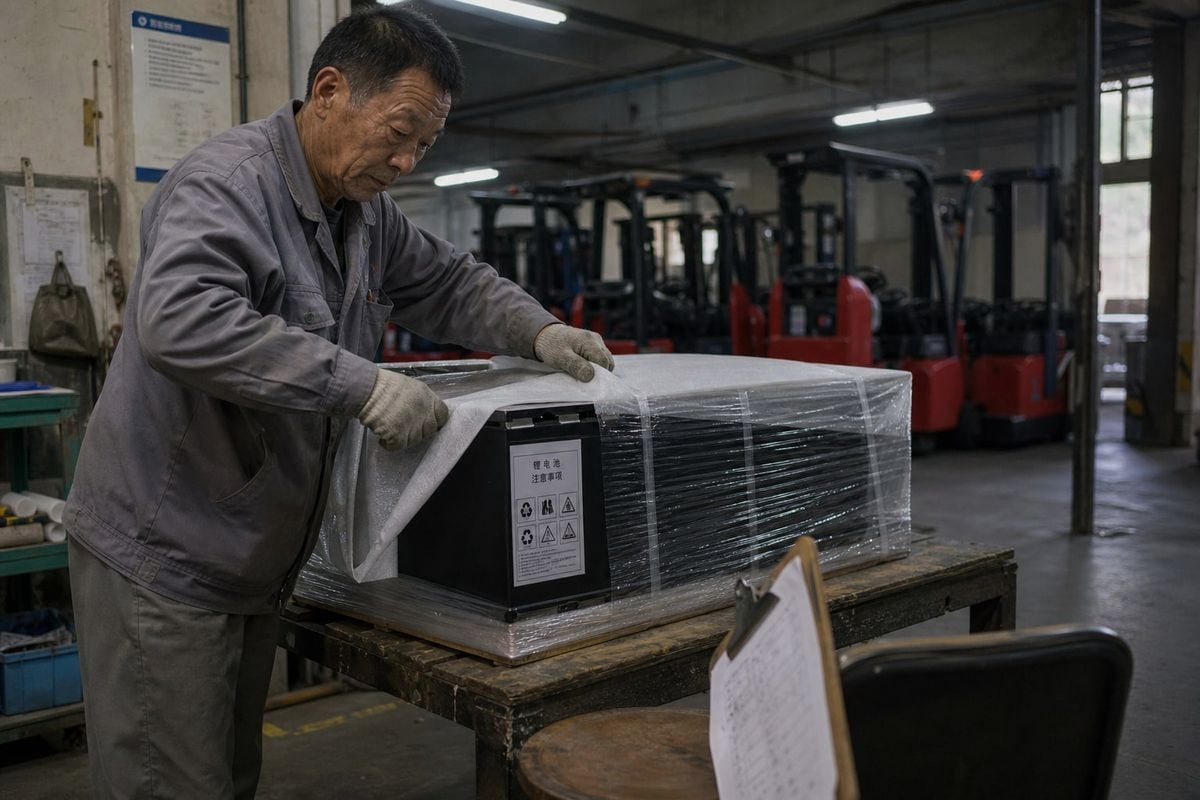
At our warehouse, we collect battery paperwork from the factory before the truck is even booked. Chasing documents after cargo reaches the port is how shipments miss vessels. The core set looks like this:
| Documento | Objetivo | ¿Quién lo proporciona? |
|---|---|---|
| UN38.3 test summary | Proves the battery passed transport safety tests | Battery manufacturer |
| MSDS / SDS | Chemical safety data for the battery | Battery or forklift factory |
| Dangerous goods declaration | Required for IMDG-classified sea cargo | Shipper / forwarder |
| Battery specification sheet | Confirms capacity, chemistry, watt-hours | Fábrica |
| Packing certificate | Confirms compliant packaging and securing | Loading warehouse |
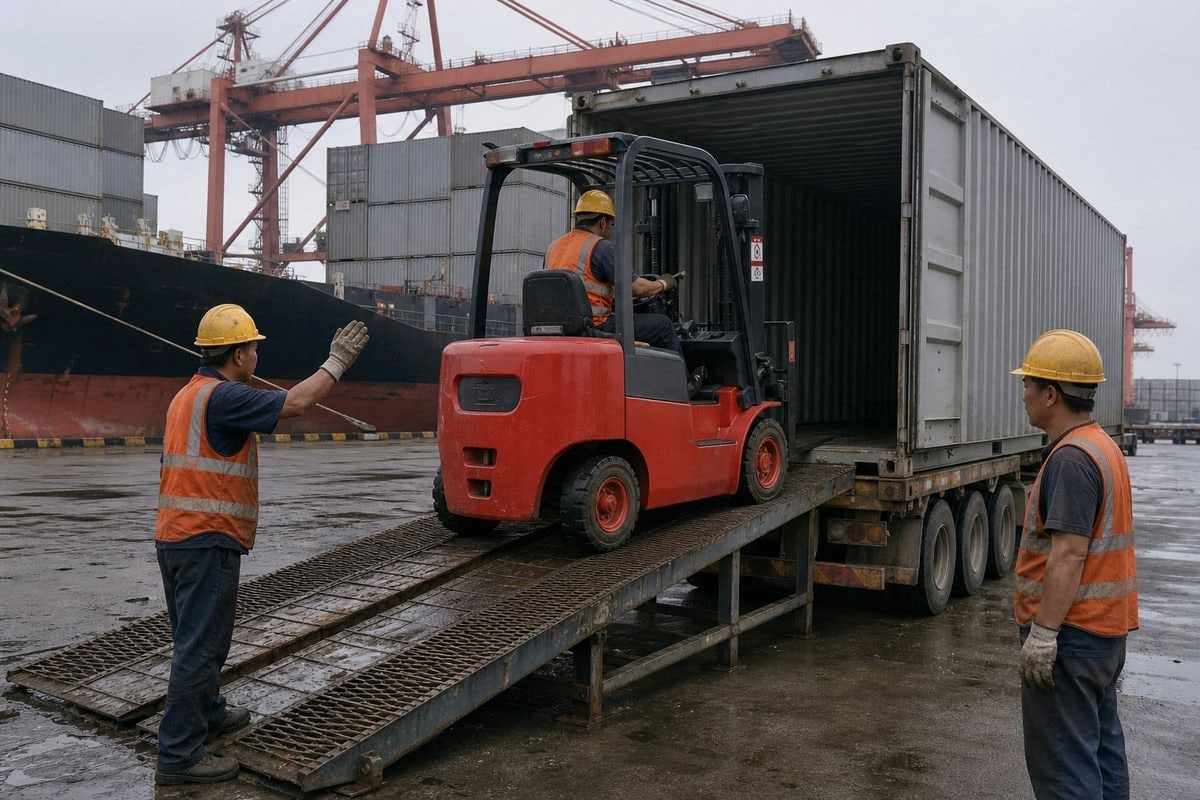
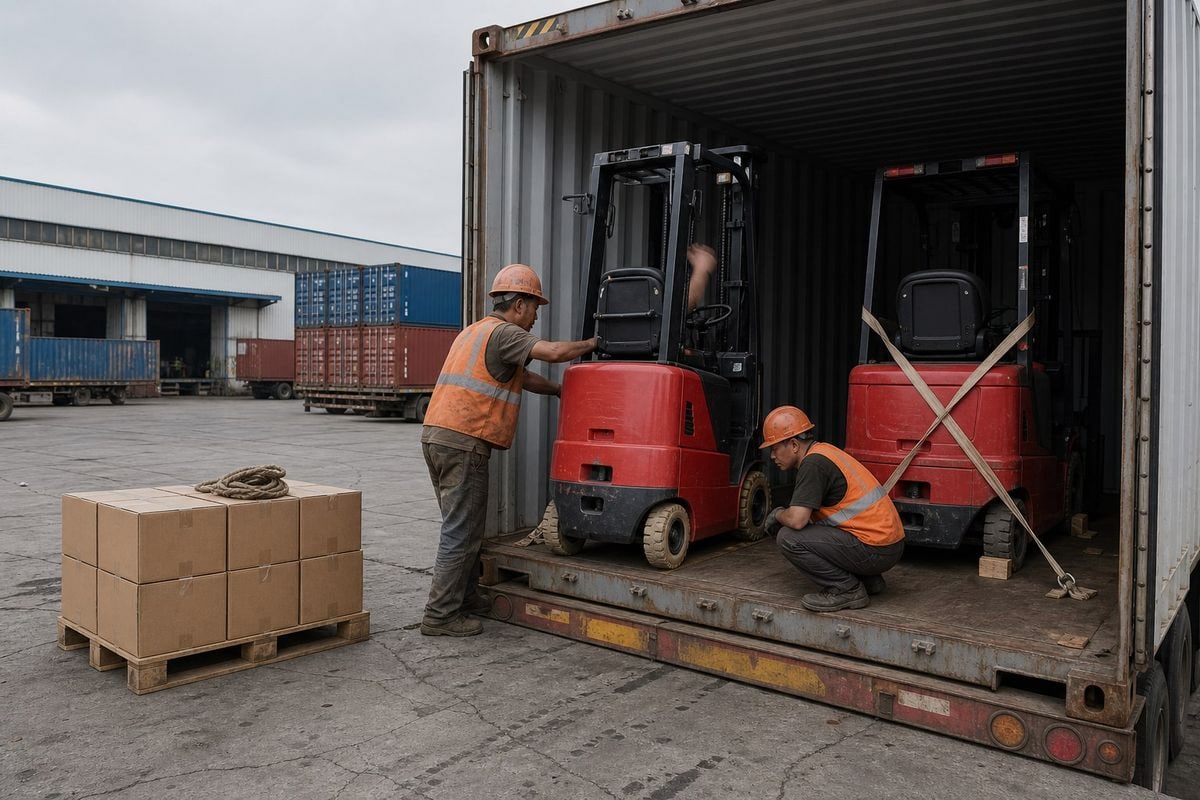
Forklifts must be blocked, braced, and lashed inside the container so they cannot shift in heavy seas. Batteries should be protected against short circuit, and terminals insulated where required. When batteries ship separately from the trucks, we treat them as their own dangerous goods consignment with their own documentation. We photograph every lashing point before the container doors close, because photos settle insurance questions faster than any email chain.
Two UK requirements catch first-time importers. Under the Waste Batteries and Accumulators Regulations, importers of electric forklifts are legally classified as industrial battery producers and must register with the Office for Product Safety and Standards. And UK commercial insurers increasingly mandate specific Li-ion fire safety protocols for imported units, including 60-minute fire-rated charging zones and thermal imaging monitoring. These differ sharply from traditional lead-acid requirements, so check your policy wording before the fleet lands, not after.
A UK distributor once asked us to quote the same three forklifts by FCL, LCL, and RoRo so he could compare. That exercise became our standard advice framework, and I will share the logic here.
Choose FCL container shipping for two or more forklifts, LCL consolidation for a single compact unit or parts, and RoRo only for large drivable machines. FCL usually gives the best cost per forklift, cargo protection, and lithium battery handling flexibility on China-to-UK routes.
There is no single right answer here. The right method depends on quantity, dimensions, battery type, and how much control you want over handling. Here is the comparison at a glance:
| Método | Lo mejor para | Transit Time (China–UK) | Cargo Protection | Eficiencia de costes |
|---|---|---|---|---|
| FCL (20FT/40FT/40HQ) | 1–6 forklifts plus parts | 30–40 days | High — sealed container | Best per unit at volume |
| LCL consolidation | Single small unit, batteries, chargers, spares | 35–45 days | Medium — shared container | Good for small shipments |
| RoRo | Very large or oversized machines | 30-45 días | Lower — open deck exposure | Good for oversized only |
| Transporte aéreo | Urgent spare parts only | 5-10 días | Alta | Poor for whole forklifts |
For most UK importers, FCL wins. A 20FT container fits one or two compact electric forklifts. A 40HQ can take three to four, depending on mast height and counterweight width. The unused floor and overhead space then absorbs chargers, spare forks, batteries, and attachments, which drives the average logistics cost per forklift down. We regularly consolidate cargo from multiple suppliers — forklifts from one factory, batteries from another, chargers from a third — into one container, which cuts both cost and coordination headaches.
LCL makes sense for a single pallet truck or stacker, or for spare parts between fleet orders. But shared containers mean more handling touches, so we crate and shrink-wrap LCL machinery more heavily.
One reminder for arrival planning: once the forklifts are in service, PUWER regulations govern safe use of the equipment and LOLER inspection requirements apply to the lifting functions. Neither affects the shipping method, but your UK customers will ask, so keep the Certificate of Conformity and manuals accessible from day one.
Importing electric forklifts into the UK works smoothly when you separate customs, compliance, battery safety, and shipping method early. Plan each track before booking, and your landed cost stays predictable.
1. Official UK government tool for checking commodity codes and duty rates for imports. ↩︎
2. Official guidance on managing import VAT for UK businesses to improve cash flow. ↩︎
3. International Maritime Organization standards for shipping hazardous materials like lithium batteries. ↩︎