- +8618603825129
- [email protected]

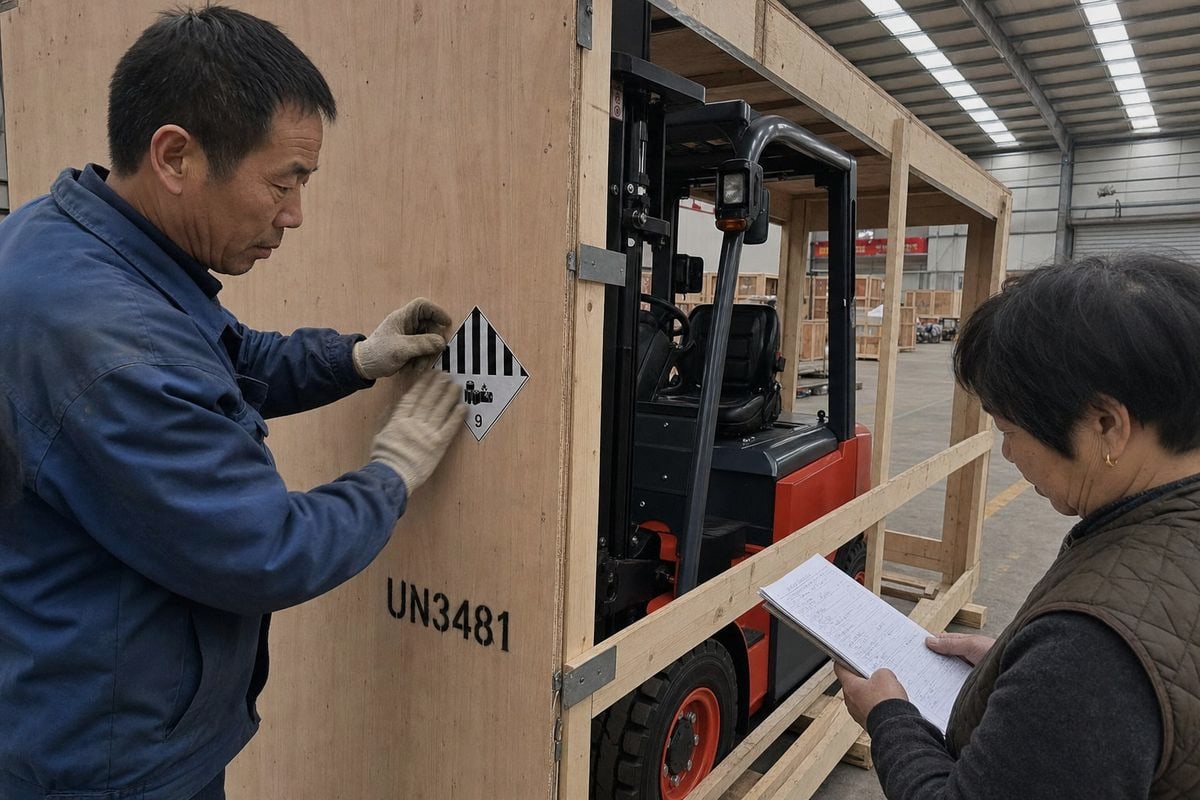
Dangerous goods labels for lithium-powered forklifts confuse many importers I work with. One missing mark can hold a whole container at the port. That risk is completely avoidable with preparation.
Lithium-powered forklifts require Class 9 dangerous goods labels on the outer packaging or transport unit, not on the forklift itself. Forklifts shipped with installed batteries typically fall under UN3171, while spare lithium-ion batteries need UN3480 or UN3481 marks plus the lithium battery handling mark.
Let me break down exactly which labels apply to your shipment, how to identify the right UN number, and how to get everything ready before your forklift reaches the port.
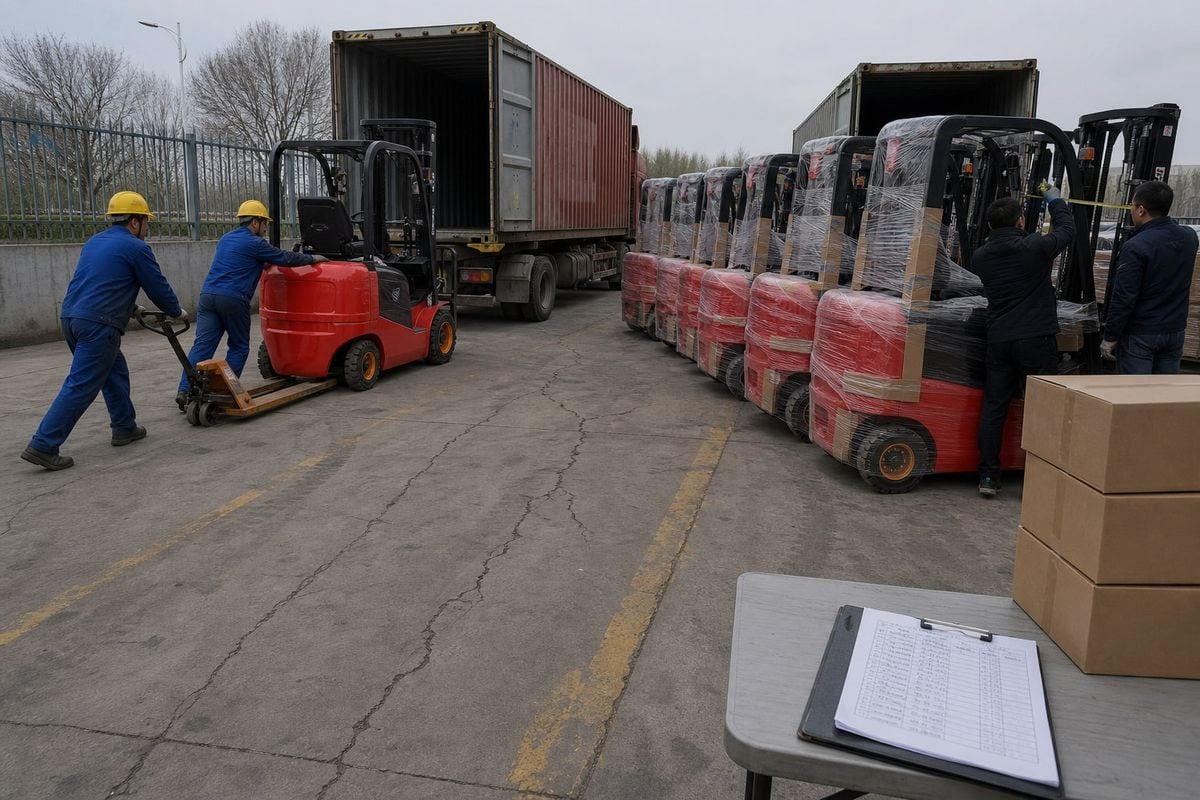
Last quarter, our team in Zhengzhou re-labeled an entire container of lithium forklifts because the factory had stuck Class 9 diamonds on the machines instead of the crates. The port rejected the booking.
You need the Class 9 Hazard Label on the outer package, crate, or overpack. Spare lithium-ion batteries also require the Lithium Battery Handling Mark with the UN number. Damaged batteries need "Damaged/Defective Lithium Ion Batteries" text markings, and air shipments may need a Cargo Aircraft Only label.
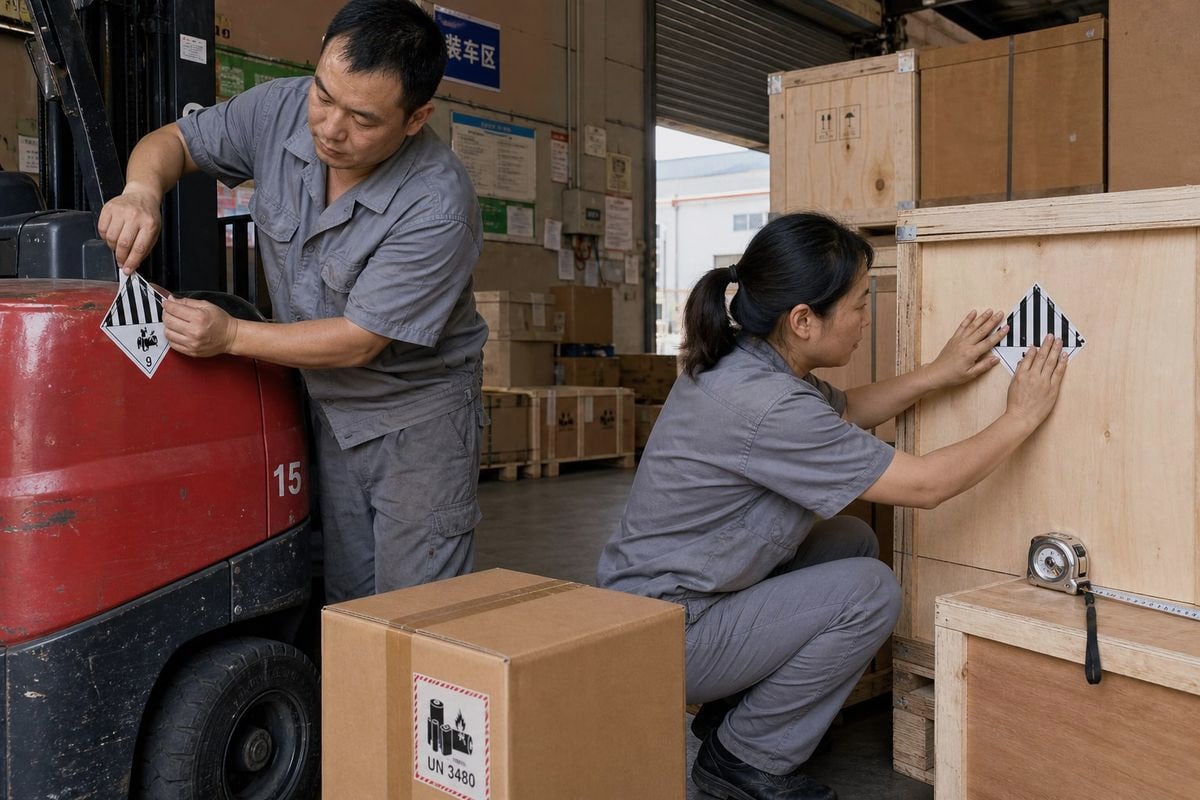
The most important point is one that trips up almost every first-time forklift importer. The forklift itself is not labeled like a consumer product. The dangerous goods marks go on the means of containment. That means the crate, the overpack, or in some cases the container itself.
There are two Class 9 graphics, and they are not the same thing. The Class 9 Hazard Label is the diamond with seven vertical black stripes on top. The newer lithium battery version adds a battery symbol at the bottom. Separately, the Lithium Battery Handling Mark has a red hatched border and displays the relevant UN number. Fully regulated shipments generally need the diamond. Smaller battery shipments under certain packing sections may only need the handling mark.
| Label / Mark | Appearance | When It Applies |
|---|---|---|
| Class 9 Hazard Label | Diamond, seven black stripes, battery symbol | Fully regulated lithium battery and vehicle shipments |
| Lithium Battery Handling Mark | Red hatched border with UN number | Smaller lithium battery packages under simplified provisions |
| Damaged/Defective marking | Text marking on high-integrity packaging | Damaged, defective, or recalled batteries |
| Cargo Aircraft Only label | Orange CAO label | Certain air freight lithium battery shipments |
Standardized labels must meet a minimum size of 100mm x 100mm so emergency responders and handlers can spot them fast. The Proper Shipping Name, such as "Lithium ion batteries," must be marked adjacent to the UN number on the outer packaging. We check both points during our pre-loading inspection because carriers and port authorities check them too.
Placards are a separate matter. Hazardous materials placarding applies to the transport unit, such as the truck or container, and rules differ by jurisdiction. Some U.S. interpretations do not require placards domestically for Class 9, but ocean carriers operating under the IMDG Code 1 follow their own requirements.
A distributor in Texas once asked me why his supplier's invoice said UN3480 while his forwarder's paperwork said UN3171. Both were partly right. The shipment mixed installed and spare batteries.
Forklifts shipped with the lithium battery installed are classified as UN3171, Battery-Powered Vehicle. Standalone lithium-ion batteries are UN3480. Batteries packed with or contained in equipment are UN3481. All fall under Class 9 miscellaneous dangerous goods, but each UN number carries different labeling requirements.
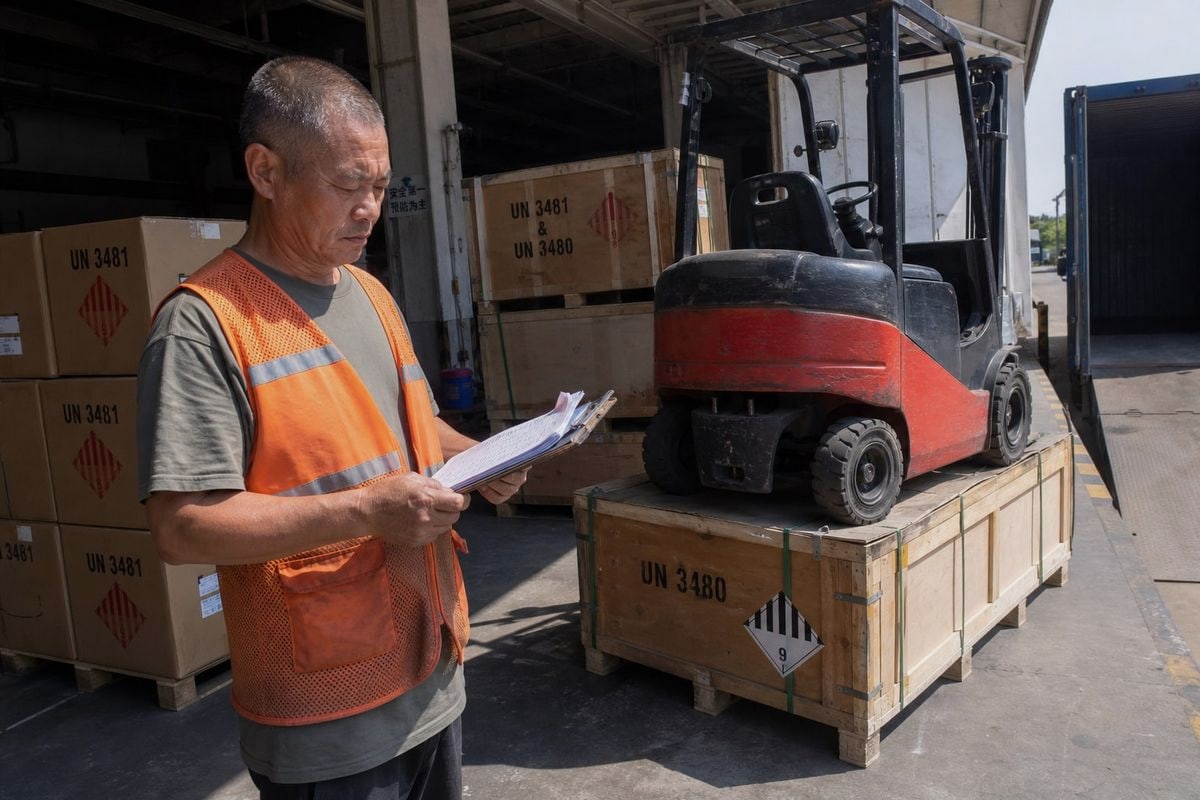
The UN number is the starting point for every labeling decision. Get it wrong, and every downstream document is wrong too. Here is how the classification paths break down for a typical lithium forklift shipment from China.
| UN Number | Proper Shipping Name | Typical Forklift Scenario |
|---|---|---|
| UN3171 | Battery-powered vehicle | Complete forklift with battery installed |
| UN3480 | Lithium ion batteries | Spare batteries shipped alone |
| UN3481 | Lithium ion batteries packed with/contained in equipment | Batteries crated with chargers or equipment |
| UN3090/UN3091 | Lithium metal batteries | Rare for forklifts, mostly small backup cells |
UN3171 is often the most favorable path. Fully assembled forklifts classified as battery-powered vehicles carry different labeling exemptions than shipping the battery as a separate component. That is one reason we usually advise customers to ship batteries installed where the carrier accepts it.
The battery casing must have the Watt-hour rating permanently marked. This number determines which section of the transport regulations applies and whether simplified provisions are available. Forklift traction batteries are large, so they almost always sit in the fully regulated category. Under the IATA Dangerous Goods Regulations, standalone UN3480 batteries 2 are prohibited on passenger aircraft, which is why they typically require a Cargo Aircraft Only label when they fly at all. For sea freight under the IMDG Code, and for European road legs under ADR Regulations 3, the classification stays the same but the documentation and placarding details shift. I always confirm the Wh rating against the factory's battery nameplate before booking, because a mismatch between the label and the paperwork is a classic cause of carrier rejection.
Here is a trade-off we weigh on every booking: rushing cargo to port saves a few days, but incomplete battery paperwork can cost weeks. Our Zhengzhou team now front-loads all documentation checks before pickup.
Yes, and you should. Prepare the UN 38.3 Test Summary, Safety Data Sheet, dangerous goods declaration, and battery specification sheet before cargo leaves the factory. Carriers review these documents at booking, so early preparation prevents port storage charges and missed sailings.

Documentation and labeling are two halves of the same compliance job. A perfectly labeled crate still gets rejected if the paperwork behind it is missing or inconsistent. Based on the shipments we handle from Chinese forklift factories, here is the preparation sequence that works.
One emerging trend worth adopting: some suppliers now apply QR-coded labels on battery crates that link directly to the UN 38.3 Test Summary 4 and Safety Data Sheet. Handlers and inspectors get instant digital access, which speeds up checks at transshipment points. We encourage factories we work with to use this approach on higher-volume shipments. It costs almost nothing and removes a common friction point when documents get separated from cargo.
A buyer's purchasing manager once emailed me photos of crates his factory had labeled. Three of the four marks were wrong. That exchange convinced me pre-shipment label verification should be standard, not optional.
A China-based freight forwarder experienced in lithium battery cargo handling, like our team at MBMLOG, can verify battery specifications with the factory, apply the correct Class 9 labels and UN markings to crates and overpacks, and confirm carrier acceptance before the forklift leaves the supplier.
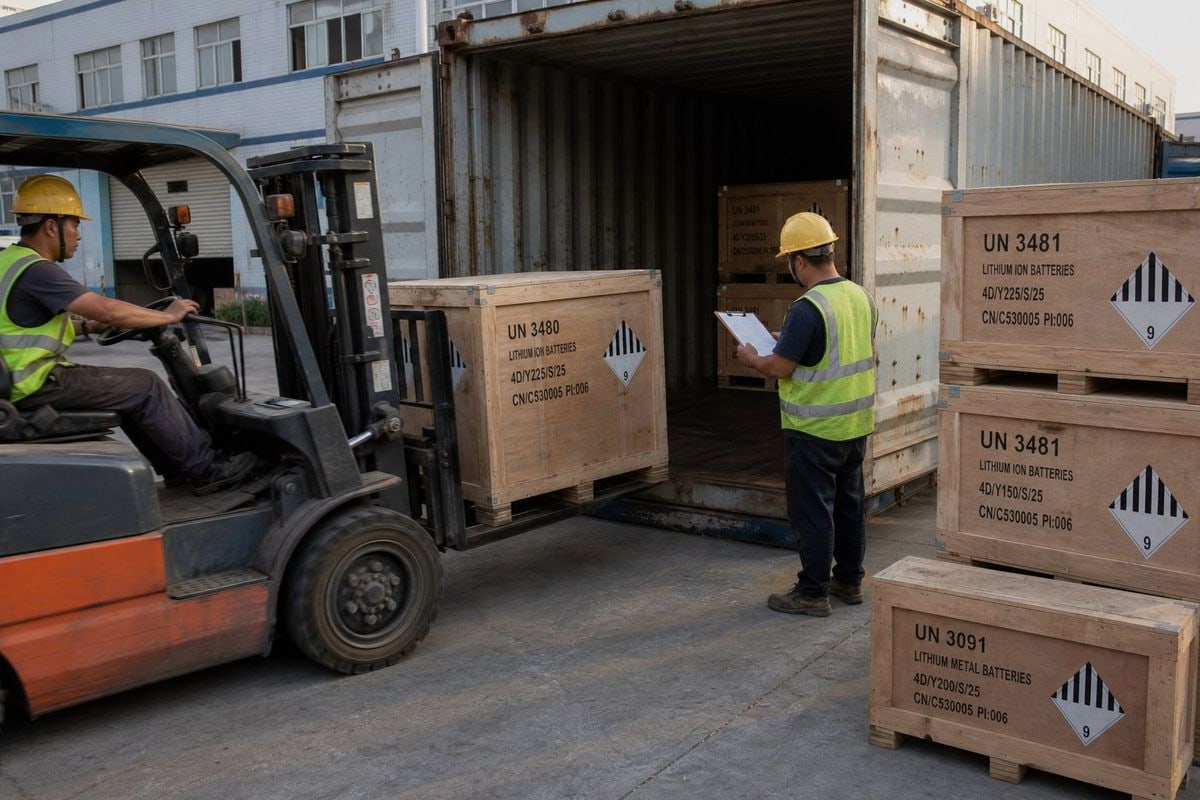
Most Chinese forklift factories build excellent machines, but export labeling is not their core skill. Some paste consumer-style warning stickers on the machine. Others reuse old label stock with outdated graphics. The importer only discovers the problem when the container is stopped, and by then storage and demurrage fees are already running.
| Mistake | Consequence | How It Gets Fixed |
|---|---|---|
| Labeling the forklift instead of the outer crate | Carrier or port rejection | Re-apply marks on the means of containment |
| Using the old Class 9 graphic without the battery symbol | Non-compliance under current rules | Replace with the current Class 9 lithium battery label |
| Missing UN number or Proper Shipping Name | Documentation mismatch, customs holds | Add UN number and shipping name adjacent to each other |
| Labels smaller than 100mm x 100mm | Failed inspection | Reprint at compliant size |
| Assuming ground rules cover air freight | Rejected air booking | Apply IATA marks and CAO label where required |
Our coordination process starts at the factory. When we arrange pickup, we confirm the battery chemistry, the Watt-hour rating, whether batteries are installed or spare, and whether any unit is damaged or defective. We then match the labels to the correct UN number and transport mode before loading. For consolidated shipments, where a customer buys forklifts from one factory and spare batteries or chargers from another, we make sure each package in the container carries its own correct marks, because mixed cargo is exactly where labeling errors multiply.
For US-bound and European shipments, we also align the paperwork with destination requirements, since ADR road rules in Europe and domestic US interpretations treat Class 9 placarding differently. One China-side check prevents problems on two continents.
Wrong labels stop containers and drain budgets. Classify your forklift correctly, label the outer packaging, prepare documents early, and let an experienced China-side partner verify everything before export.
1. IMO's primary regulatory framework for shipping dangerous goods by sea. ↩︎
2. Official IATA resource for the transport of lithium batteries by air. ↩︎
3. UNECE's official page for the international carriage of dangerous goods by road. ↩︎
4. PHMSA's official guide on the requirements for shipping lithium batteries safely. ↩︎