- +8618603825129
- [email protected]


Deciding whether a forklift should be shipped assembled or disassembled confuses many importers. Choose wrong, and our loading team in Zhengzhou has seen buyers lose thousands in avoidable freight charges.
A forklift should be shipped as assembled as possible, with only selective disassembly when needed. Remove the mast, forks, or overhead guard only if the unit exceeds container height, legal road dimensions, or weight limits. Full disassembly is rarely worth the reassembly cost and risk.
That short answer hides a real trade-off. The right choice depends on dimensions, route, cost, and who will rebuild the machine at destination. Let me walk you through each factor.
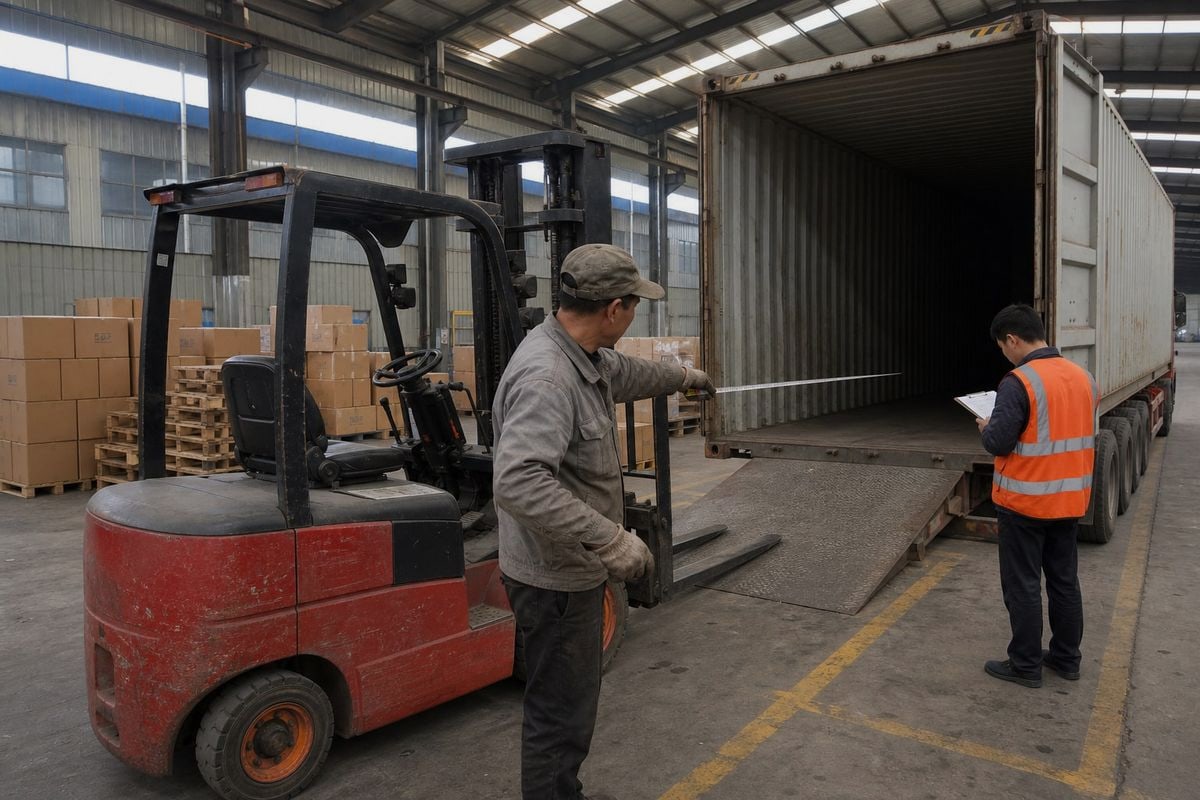
Last month, our team measured a counterbalance forklift at a factory in Hebei. The lowered mast was 8 centimeters too tall for a standard container. That 8 centimeters changed the whole plan.
Base the decision on four checks: packed shipping dimensions versus container or trailer limits, total weight versus handling equipment capacity, the route (domestic road versus ocean container), and whether qualified technicians can reassemble the forklift at destination. If the unit fits assembled, ship it assembled.
The question is rarely a pure either-or choice. In our daily work coordinating forklift exports 1 from Chinese factories, the real question is how much disassembly is worth it. The more complete the machine stays, the faster it goes to work when it lands at your warehouse. Every part you remove adds labor twice: once in China, once at your dock.
Measure the forklift with the mast fully lowered. Compare that against your transport mode. A standard 40ft container 2 has a door height of about 2.28 meters. Many 3-ton forklifts with two-stage masts fit through with room to spare. Taller triplex masts often do not. That is when we talk to the factory about tilting the mast back, laying it flat, or detaching it.
Domestic road moves and international ocean moves follow different rules:
| Facteur | Assembled shipping favored | Disassembly favored |
|---|---|---|
| Mast height clearance | Lowered mast fits container or trailer | Mast exceeds door or legal height limits |
| Weight | Within crane and trailer capacity | Triggers overweight axle permits |
| Destination | Buyer has dock and technicians | Limited unloading or lifting equipment |
| Distance | Short, simple routing | Multi-modal with tight constraints |
| Reassembly skill | Not needed | Factory-certified support available |
A mast is not a bolt-on accessory. It carries hydraulic lines 3, lift chains, and load-bearing pins. If your destination has no field reassembly service or trained technician, keeping the forklift intact matters more than squeezing out marginal freight savings. We always ask buyers this question before we quote, because a cheap freight bill means nothing if the machine sits in pieces for two weeks.
A US distributor once asked me why his quote dropped 30% after we proposed detaching the mast on two reach trucks. The answer was simple: containerized shipping replaced expensive flat rack space.
Disassembly can cut ocean freight 20–40% by fitting units into standard containers instead of flat rack or RoRo, and can avoid oversized load permits on road legs. But packing, labor, crating, reassembly, and commissioning costs often erase those savings on smaller or standard-height forklifts.
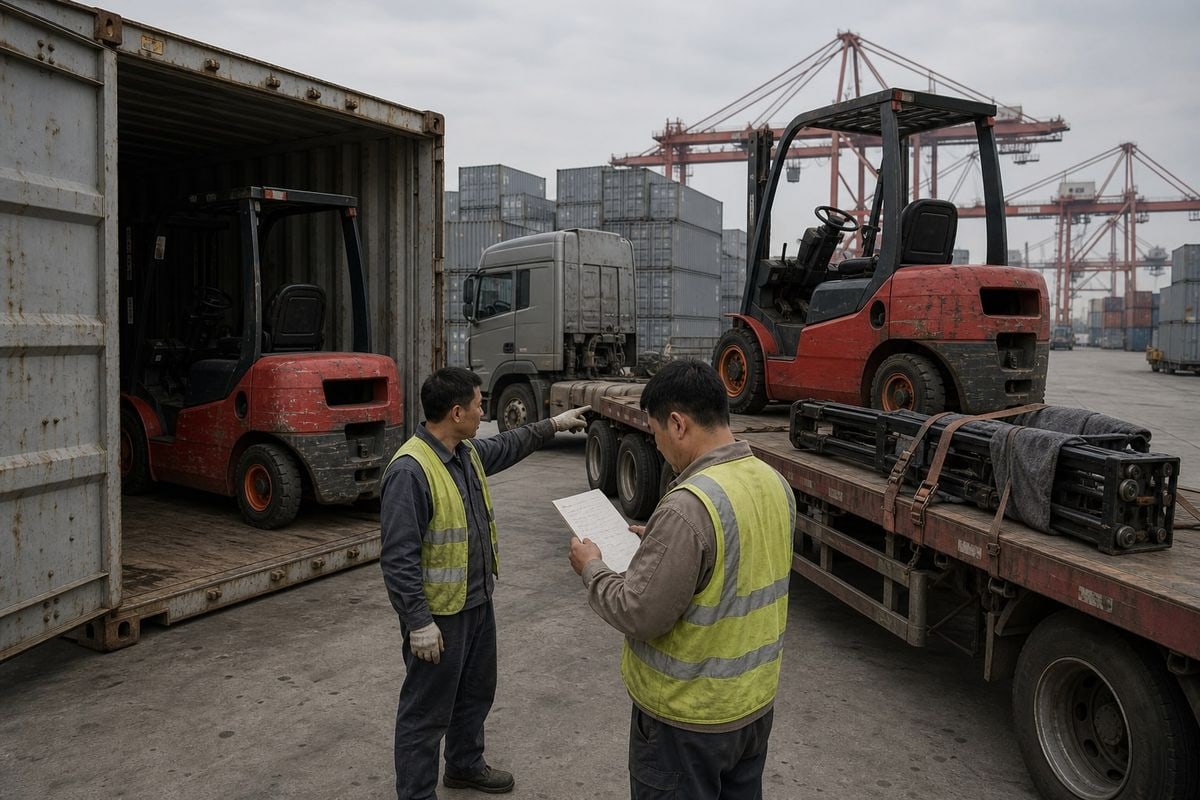
Freight cost is only one bucket. When we build quotes for forklift shipments from China to the US, we look at total landed cost. Here is how the buckets typically compare:
| Cost bucket | Assembled shipment | Partially disassembled shipment |
|---|---|---|
| fret maritime | Higher if flat rack or RoRo needed | Lower with standard FCL container |
| Road transport | May need oversized load permits and pilot cars | Fits standard flatbed trailer transport |
| Packing and crating | Minimal | Separate crates for mast, forks, guard |
| Loading labor | Drive-on or single lift | Multiple lifts and heavy equipment rigging |
| Destination reassembly | None | Technician time, tools, possible travel fees |
| Risk allowance | Transit shifting damage | Missing parts, hydraulic contamination |
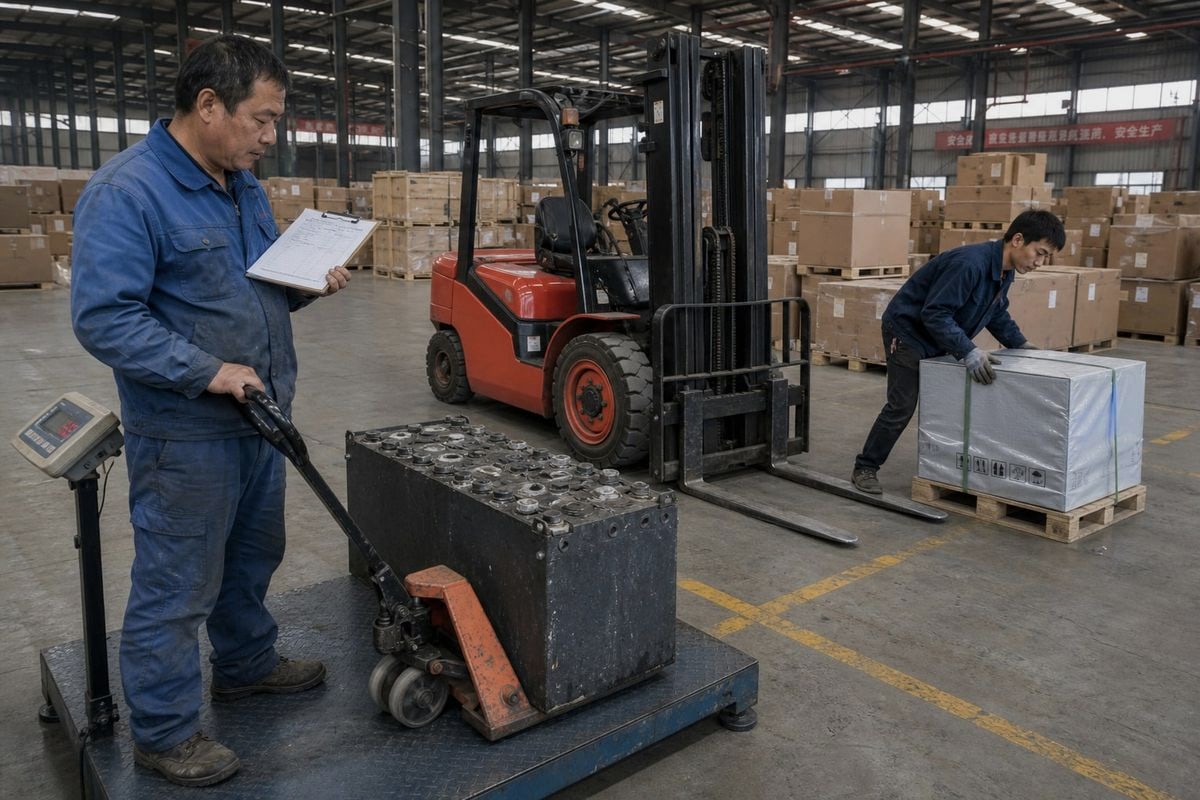
Removing or lowering the mast is often the difference between a standard 40HQ container and a flat rack. Flat rack space costs a premium and exposes the machine to weather. On road legs, staying inside legal height avoids oversize permits and escort vehicles, which can add hundreds of dollars per state crossed. For electric models, removing a heavy lead-acid battery for separate transport can also eliminate overweight axle permits, since the battery alone may weigh over a ton.
For a compact 2–3.5 ton electric forklift with a lowered two-stage mast, the unit usually fits a container assembled. In that case, disassembly only adds cost. There is also a customs nuance worth knowing: under essential-character rules 4, a forklift shipped in pieces together in one shipment is generally still classified as a complete forklift, not as loose machinery parts. So do not count on a tariff windfall from teardown alone. Freight class rating and duty treatment should be confirmed shipment by shipment, which is part of the documentation review we run before departure.
One lesson we learned early: a buyer's local shop reassembled a mast without bleeding the hydraulic circuit properly. The lift was jerky for weeks. The factory then questioned the warranty claim.
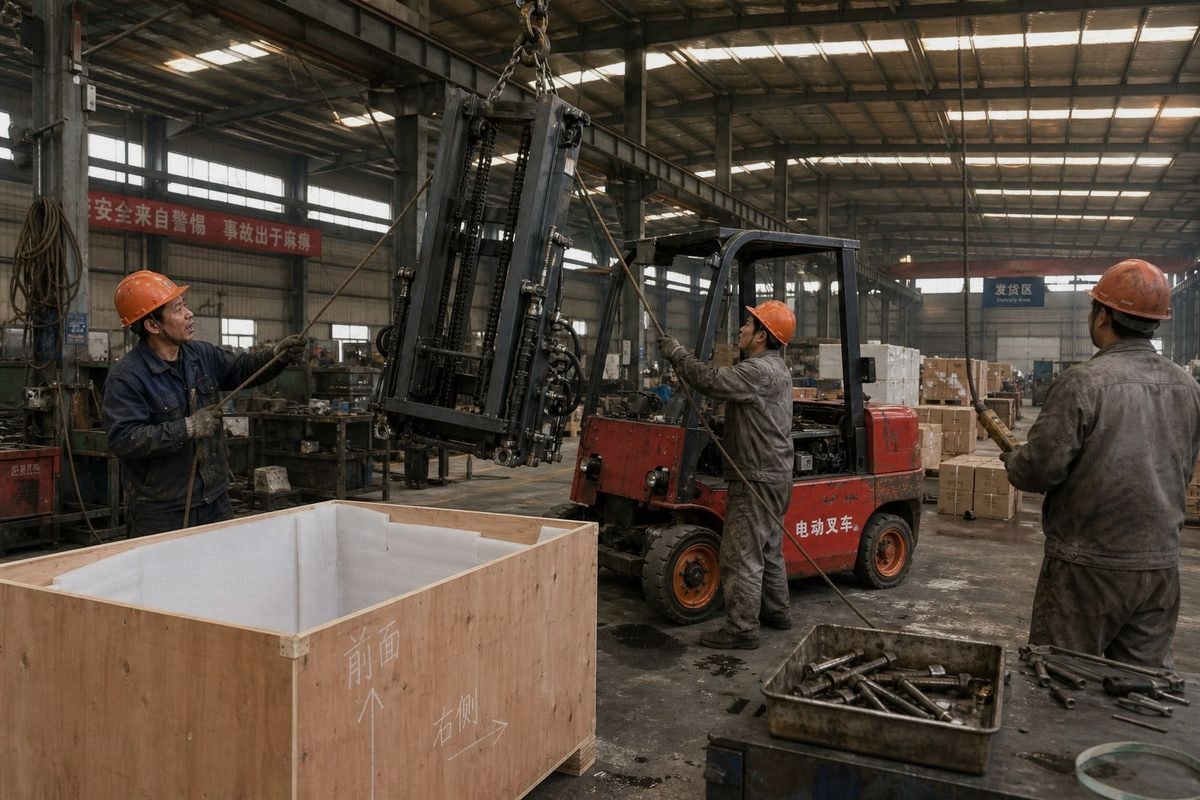
Disassembly can affect warranty and performance if reassembly is done by unqualified technicians. Manufacturer warranties may exclude damage from improper field reassembly, and hydraulic systems risk air-locks or contamination. Keep the factory informed, use certified technicians, and document the process to protect coverage.
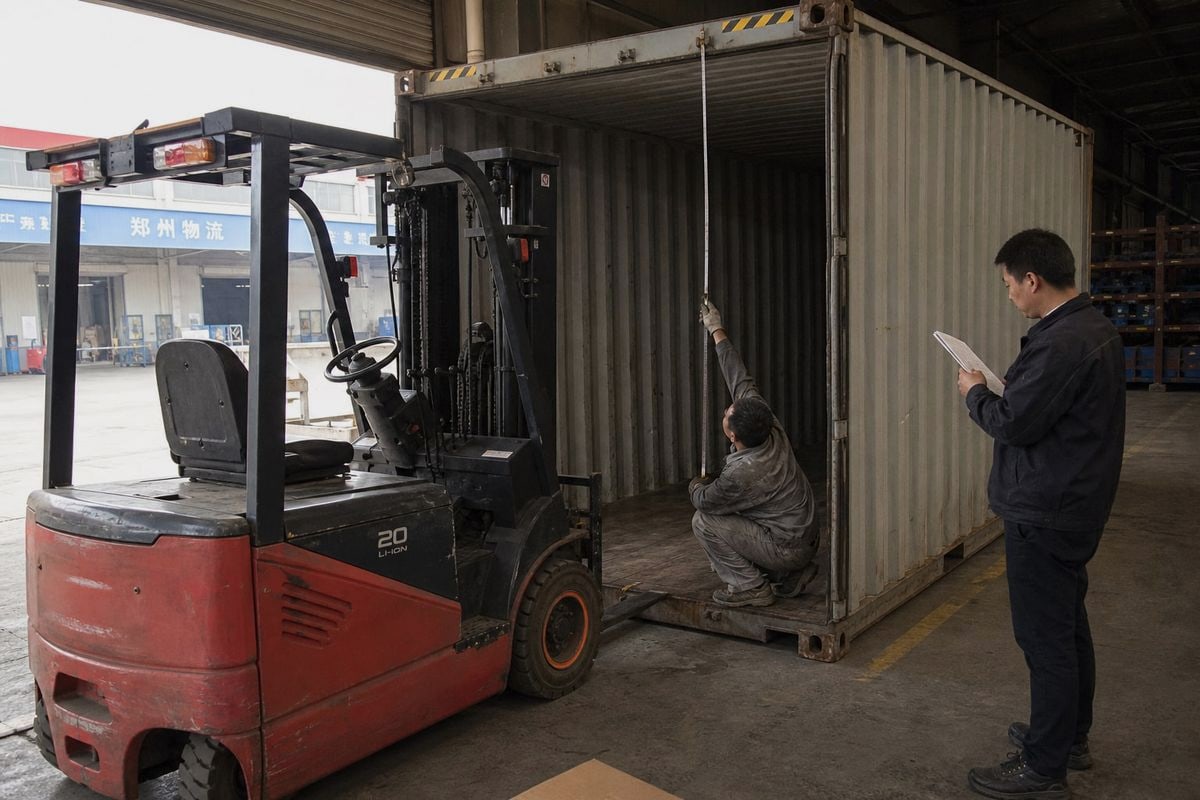
This is the risk side of the trade-off, and it deserves honest treatment. Buyers often focus on freight savings and forget that a forklift is a calibrated machine, not flat-pack furniture.
Manufacturer warranties and safety certifications can be compromised if reassembly is performed by a general logistics crew rather than qualified technicians. Before we disassemble anything for a customer, we coordinate with the Chinese factory in writing. We ask three things: what may be removed without voiding coverage, what reassembly documentation they require, and whether they can supply torque specs and a reassembly guide in English. Most factories cooperate readily, because they want the machine working too. We also photograph every removed component and label every fastener bag, so nothing goes missing between the factory floor and your dock.
Weight distribution is the detail buyers underestimate. A counterbalance forklift concentrates several tons over a small footprint, and our loading teams plan every container floor before the truck arrives.
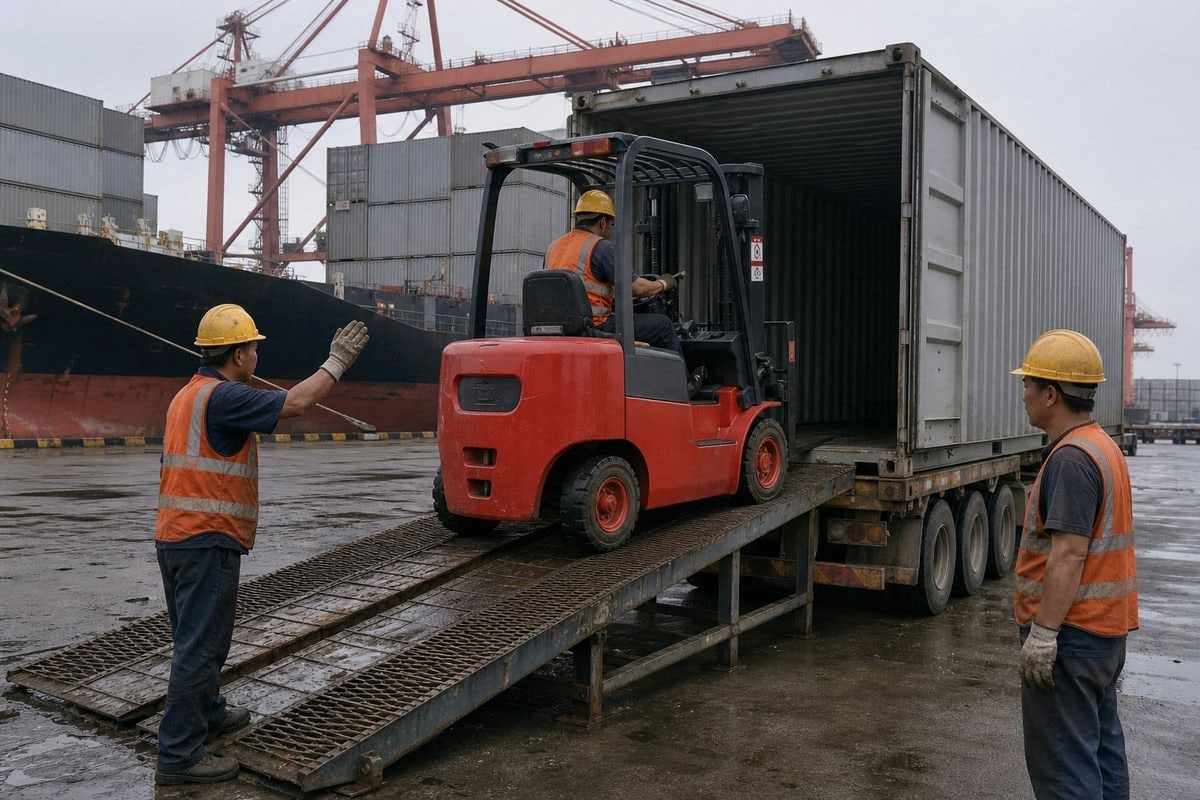
Position the forklift over the container's strongest floor points, chock all wheels, and lash it with chains or heavy-duty straps at four or more anchor points following load securement guidelines. Lower the mast fully, set the parking brake, isolate the battery, and crate any removed parts separately.
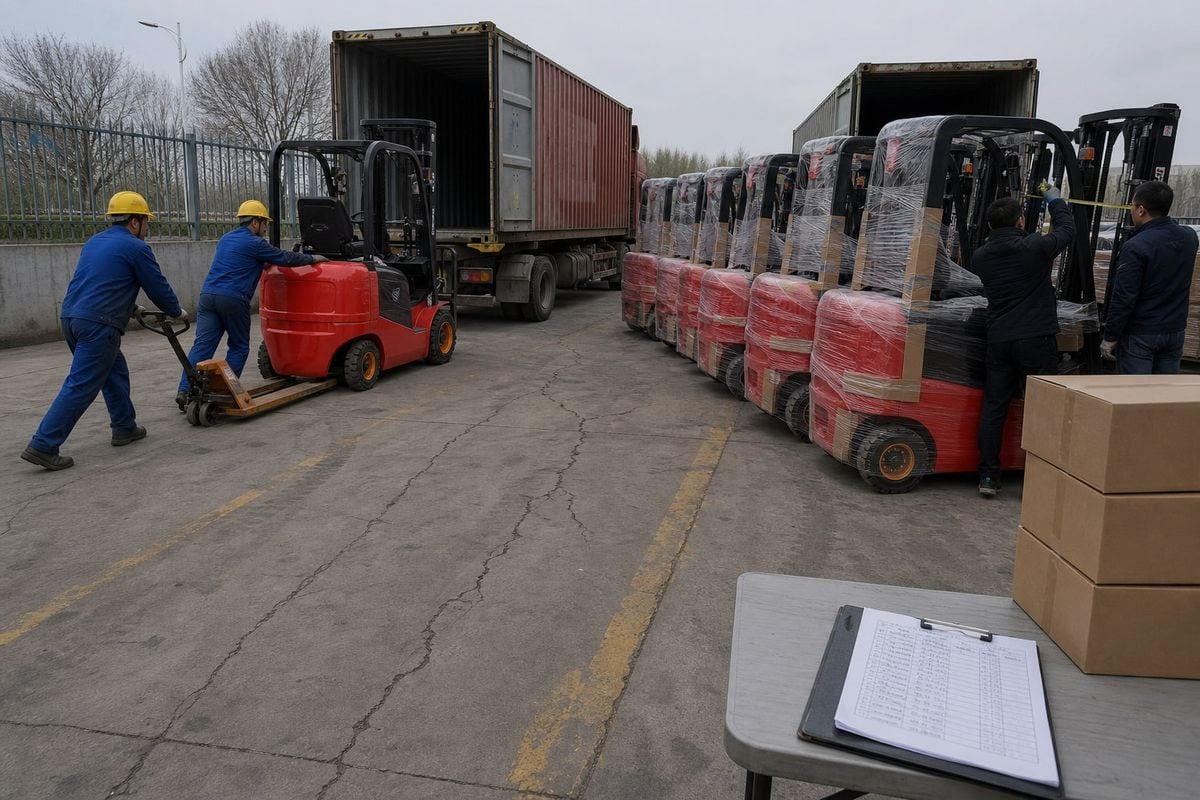
Whether the machine ships assembled or partially broken down, securing is where damage is prevented or invited. Forklifts have a high center of gravity and low ground clearance, which makes them prone to shifting if lashings loosen at sea. Here is the process our team follows when loading forklifts into containers in China:
For open-air legs on a flatbed trailer, add weather protection and re-check lashings after the first miles of road transport. Photograph everything before sealing. Those photos protect you in any insurance claim.
Ship your forklift as assembled as dimensions allow, disassemble selectively when freight math demands it, and never skip proper securing. Get this balance right, and landed cost stays predictable.
1. The International Trade Administration provides resources and data to help businesses navigate global export markets. ↩︎
2. ISO 668 defines the classification, dimensions, and ratings for series 1 freight containers. ↩︎
3. ISO 4413 provides safety requirements and general rules for hydraulic systems and their components. ↩︎
4. Official World Customs Organization (WCO) portal detailing the General Rules for the Interpretation of the Harmonized System. ↩︎