
- +8618603825129
- [email protected]


Tracking an electric forklift shipment from China confuses many first-time importers. I hear the same worried question every week at our Zhengzhou office: "Max, where is my forklift right now?" Buyers paste an invoice number into a parcel tracker, see nothing, and panic. That silence feels like a lost machine worth thousands of dollars. The good news is that freight tracking works differently, not badly — and once you know which numbers and portals to use, you gain full visibility from factory floor to your warehouse door.
To track an electric forklift shipment from China, get the Bill of Lading number, container number, or booking number from your freight forwarder, then enter it on the ocean carrier's website or a container tracking portal. Cross-check milestones with your forwarder's updates for end-to-end visibility.
Let me break this down step by step. I will show you which numbers matter, what each shipment stage means, why tracking sometimes goes quiet, and who to call when it does.
One buyer from Texas once sent me a screenshot of a blank parcel-tracker page and asked if his two forklifts were lost. They were fine — he was simply using the wrong tool for freight cargo.
Track your forklift shipment in real time by entering the Master or House Bill of Lading number on the ocean carrier's website, checking the 11-character container number on aggregators like SeaRates, and following the vessel's live position on AIS platforms such as MarineTraffic.

The first thing to understand is that an electric forklift ships as freight, not as a parcel. There is no single barcode scanned at every stop. Instead, tracking is tied to shipping documents and equipment identifiers. When we book a container for a customer, we send them a Shipping Advice right after vessel departure. That document confirms the vessel name, voyage number, container number, and שטר מטען 1 number. Those are your tracking keys.
Different identifiers unlock different tracking tools. Here is how I explain it to our customers:
| Identifier | Format Example | Where to Track | הטוב ביותר עבור |
|---|---|---|---|
| Master Bill of Lading (MBL) | Carrier prefix + digits | Ocean carrier's official website | Direct carrier milestones |
| House Bill of Lading (HBL) | Forwarder reference | Freight forwarder portal | Consolidated LCL shipments |
| Container number | COSU1234567 (11 characters) | SeaRates, Track-Trace aggregators | Container number lookup at any point |
| Booking number | Carrier booking reference | Carrier website | Pre-departure status |
| Vessel name + voyage | e.g., vessel + voyage code | MarineTraffic, VesselFinder | Vessel AIS tracking 2 at sea |
I recommend a three-layer approach. First, use the carrier's official site with your Bill of Lading tracking number — this is the authoritative source for ocean freight status. Second, use a container aggregator for convenience and alerts. Third, watch the vessel itself on an AIS platform when the ship is mid-ocean and milestone scans go quiet. Some of our larger dealer customers even add a fourth layer: predictive AI logistics tools that analyze historical port congestion at hubs like Ningbo or Long Beach to sharpen the estimated time of arrival beyond the carrier's standard figure.
Finally, treat your freight forwarder's dashboard and updates as the operational source of truth. Carrier portals show scans. We show context — why the container gated in late, or when the vessel actually confirmed departure.
When we plan a door-to-door shipment, I always walk the buyer through the full milestone map before the forklift even leaves the factory. Knowing the stages in advance removes most of the anxiety later.
A forklift container shipment from China moves through eight trackable stages: factory pickup, container loading, export customs declaration, port departure, ocean transit, arrival at the port of discharge, import customs clearance, and final trucking to your warehouse or dealership.
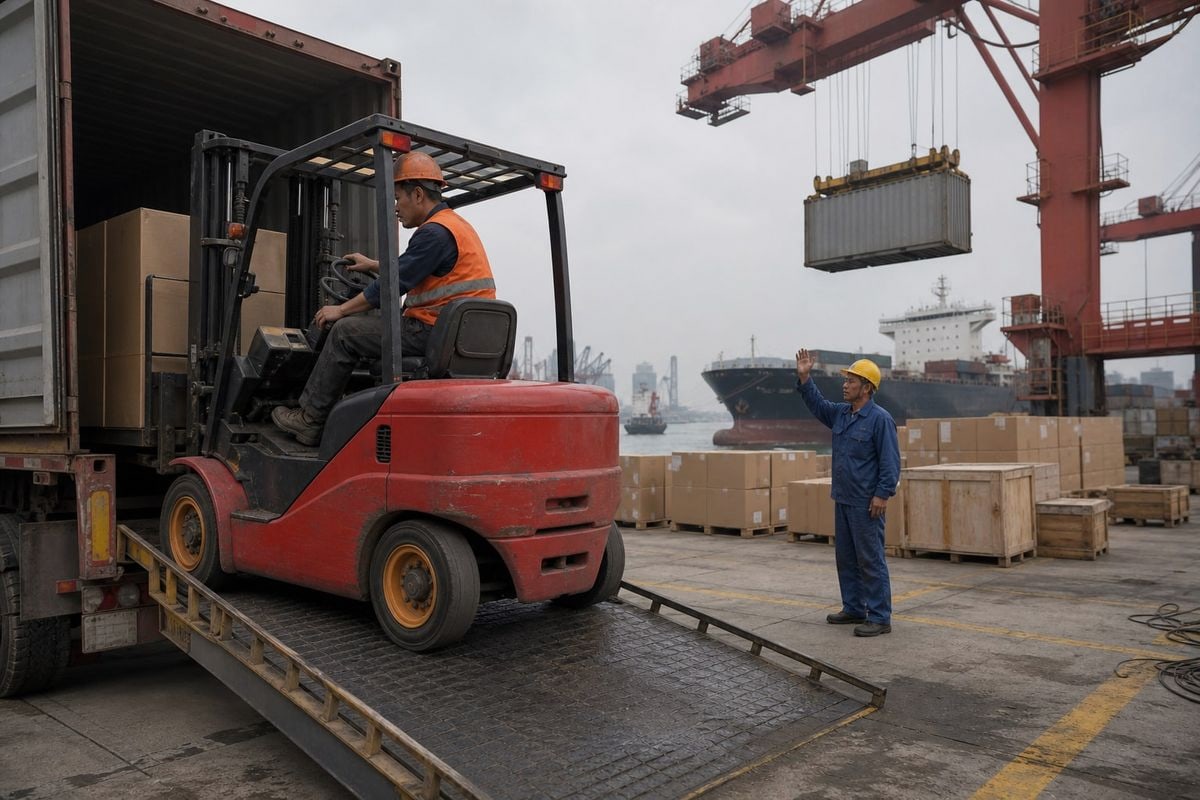
Each stage produces its own status label, and the labels vary slightly between carriers. But the underlying sequence is remarkably consistent. Here is the milestone map we share with every customer, along with what you can actually see at each point:
| Stage | Typical Status Label | Who Provides Visibility |
|---|---|---|
| 1. Factory pickup | Cargo received / picked up | Freight forwarder update |
| 2. Container loading & securing | Gate-in / received at terminal | Forwarder + carrier portal |
| 3. Export customs declaration | Customs released (export) | Forwarder update |
| 4. Vessel departure | Loaded on vessel / departed | Carrier portal + Shipping Advice |
| 5. Ocean transit | In transit / transshipment | Vessel AIS tracking |
| 6. Arrival at destination | Arrived at port of discharge | Carrier portal |
| 7. Import customs clearance | Customs hold or released | Customs broker / forwarder |
| 8. Final delivery | Out for delivery / delivered | Destination trucking partner |
In our experience shipping forklifts from Chinese factories, the pre-departure phase moves quickly once cargo is ready. We coordinate pickup, verify dimensions and battery specifications, secure the forklift inside the container with proper blocking and lashing, and file the export declaration 3 with the correct HS code for forklifts. A wrong HS code here creates problems later, so we check documents before the container gates in.
Between departure and the port of discharge, expect few updates. The container is on the water. This is when vessel AIS tracking earns its keep — you can see the ship's actual position even when the carrier portal shows nothing new. Watch for "transshipment" status too; some routes swap vessels at an intermediate port, which adds a milestone and a few days.
Under Incoterms 2020, your visibility at destination depends on who controls clearance. On a DDP shipment, we manage the customs clearance process and import duties and taxes, so our updates continue to the door. On FOB terms, your own broker takes over, and the carrier portal typically stops at "discharged."
A dealer in Ohio once called me at 2 a.m. China time because his tracking had shown "in transit" for eleven straight days. Nothing was wrong. The vessel was simply crossing the Pacific, and freight only gets scanned at milestones.
Forklift shipment tracking stalls because freight is scanned only at major milestones, not continuously. Common causes include normal ocean transit gaps, port congestion, transshipment waits, Class 9 dangerous goods checks on lithium battery forklifts, or documentation reviews during customs clearance.
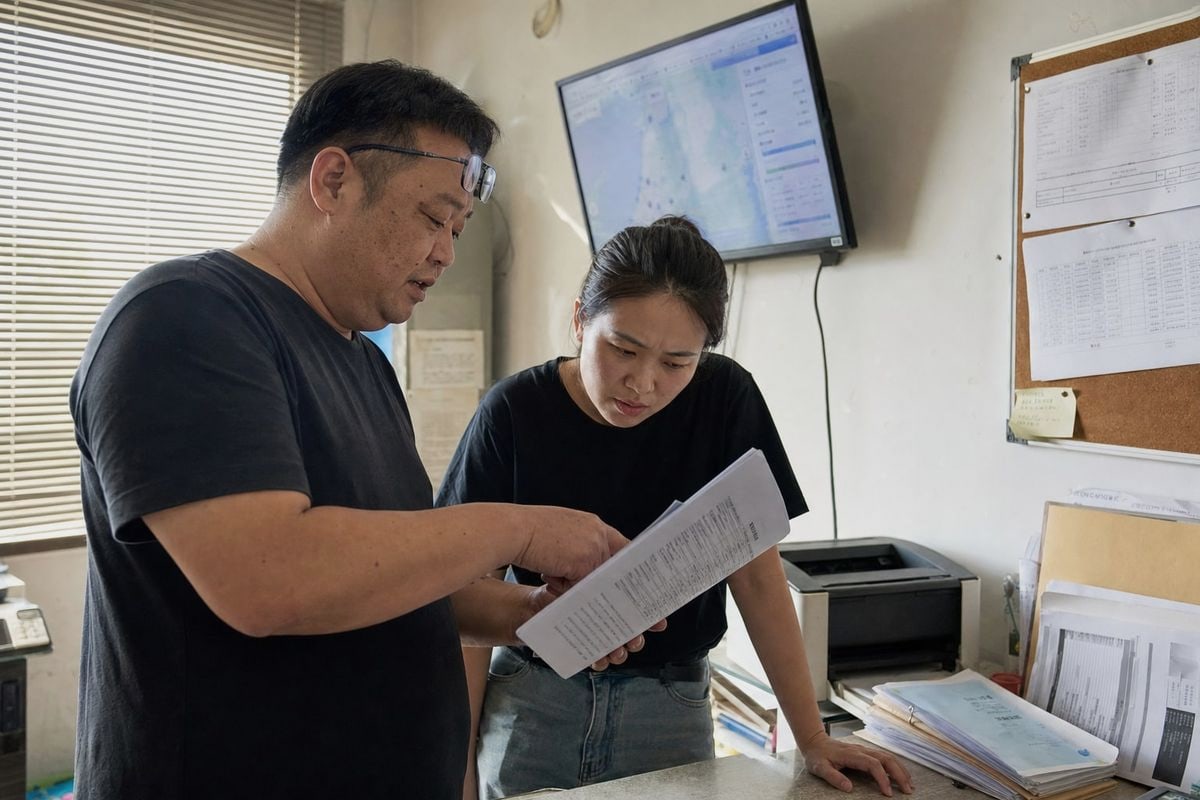
Let me separate normal quiet periods from genuine delays, because they look identical on a tracking screen but require very different responses.
Ocean freight status only updates at events: gate-in, loading, departure, transshipment, arrival, discharge. Between events, silence is expected. A trans-Pacific voyage can run several weeks with zero new scans. That is not a delay. It is simply how containerized freight reporting works.
Electric forklifts carry a complication that ordinary machinery does not: the battery. Lithium battery forklifts are often classified as Class 9 Dangerous Goods 4, which means the booking needs DG acceptance from the carrier, plus UN38.3 test reports and SDS documentation. When we handle lithium battery cargo, we confirm carrier acceptance and compile the battery paperwork before the container ever reaches the port. If a forwarder skips this, the shipment can face compliance holds mid-route — and the tracking screen just shows an unexplained pause. Understanding lithium battery shipping regulations is the difference between a smooth voyage and a mystery delay.
| Tracking Symptom | Likely Cause | What To Do |
|---|---|---|
| No updates for 2–4 weeks mid-voyage | Normal ocean transit | Check vessel position on AIS; do nothing |
| "Number not found" error | Wrong or mistyped identifier | Verify the exact B/L or container number with your forwarder |
| Stuck at "received at terminal" | Waiting for vessel loading or rolled booking | Ask forwarder to confirm the vessel and voyage |
| Long hold at transshipment port | Hub congestion or vessel schedule | Request revised ETA from forwarder |
| Stuck after arrival | Customs exam, DG documentation review, or unpaid duties | Contact broker or forwarder immediately |
A surprising share of "missing shipments" are typing mistakes. The container number format is strict: four letters plus seven digits, eleven characters total. One wrong digit returns nothing. I always tell buyers to copy the number directly from the Shipping Advice rather than retyping it from an email thread.
Something I have learned over years of coordinating forklift exports from Zhengzhou: the buyers who suffer least during a confusing shipment are the ones who know exactly which party to call for which question.
Contact your China-based freight forwarder first — they hold the booking and can query the carrier directly. For destination issues, contact your customs broker. Only contact the ocean carrier or supplier when the forwarder confirms the question falls outside their control.
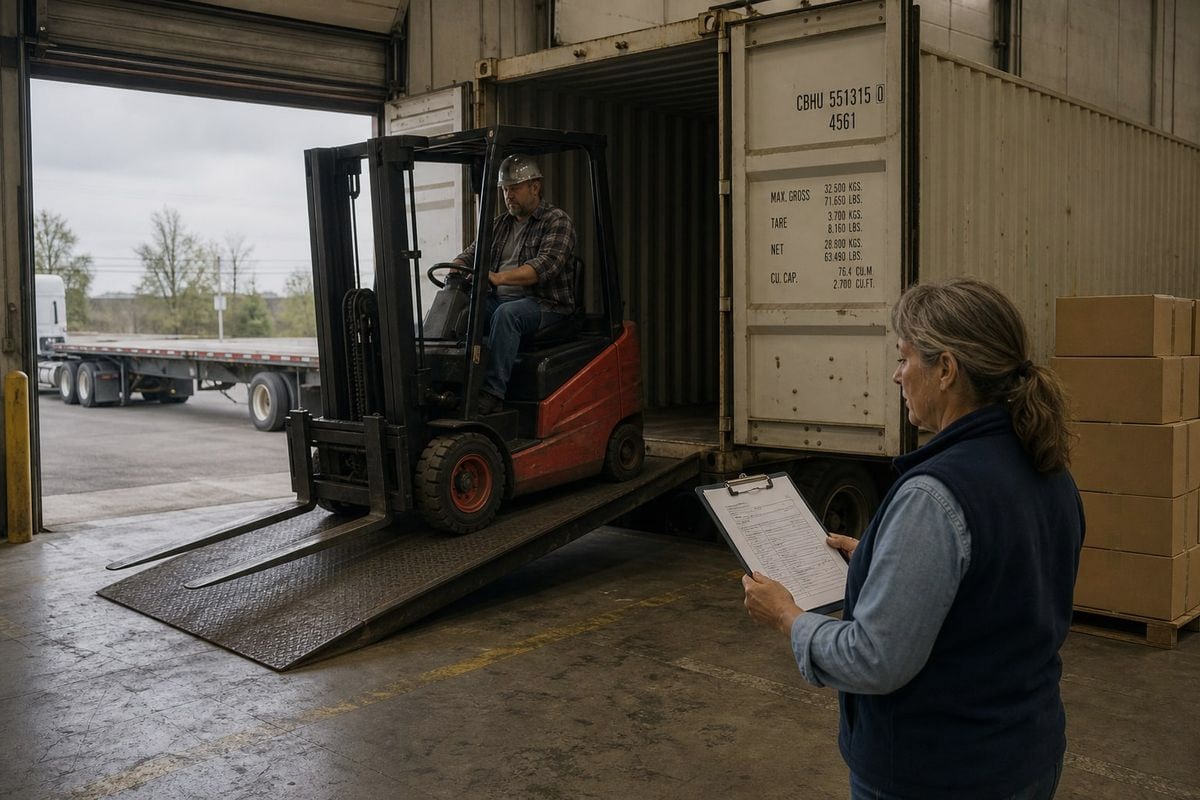
Escalation order matters. Calling the wrong party wastes days across time zones. Here is the contact chain I recommend, based on how responsibilities actually divide on a real shipment:
Support moves faster when you provide the House or Master Bill of Lading number, container number, vessel name and voyage, and your Shipping Advice. A vague "where is my forklift?" forces the support team to reconstruct the shipment from scratch. A precise reference gets an answer in hours.
One more habit worth building: ask your forwarder for proactive milestone updates at booking time, not after problems appear. At MBMLOG we send progress updates at each major stage precisely so customers never need to chase us. If your current forwarder only responds when pushed, that is a service gap worth fixing before your next container ships.
Get the right identifiers, know the eight milestones, expect quiet ocean gaps, and lean on your forwarder. Do that, and tracking your electric forklift shipment from China becomes routine, not stressful.
1. Updated authoritative trade.gov resource for shipping documentation and Bill of Lading details. ↩︎
2. The U.S. Coast Guard provides technical overviews of the Automatic Identification System used for tracking vessels globally. ↩︎
3. Official government resource for filing Electronic Export Information (EEI), the standard export declaration. ↩︎
4. The International Maritime Organization sets the global standards for the safe transport of dangerous goods by sea. ↩︎
5. U.S. Customs and Border Protection outlines the official requirements and procedures for the import clearance process. ↩︎



