- +8618603825129
- [email protected]


Electric forklift logistics can go wrong at a dozen points between the Chinese factory floor and your warehouse. I have seen it happen from our Zhengzhou operations more times than I can count.
Managing electric forklift logistics means coordinating factory pickup, verifying lithium battery documentation, securing units inside containers, consolidating multi-supplier cargo, and pre-checking customs paperwork before departure. Buyers who plan battery compliance, container loading, and clearance documents in advance avoid most delays, damage, and surprise charges.
A forklift is not ordinary freight. It is a heavy, battery-powered, high-value industrial asset. Below, I walk through each stage of the journey and show you where the risks hide.
Last spring, our team drove three hours to a factory in Anhui only to find the forklifts had no charge left for self-loading. That wasted day taught us to verify readiness first.
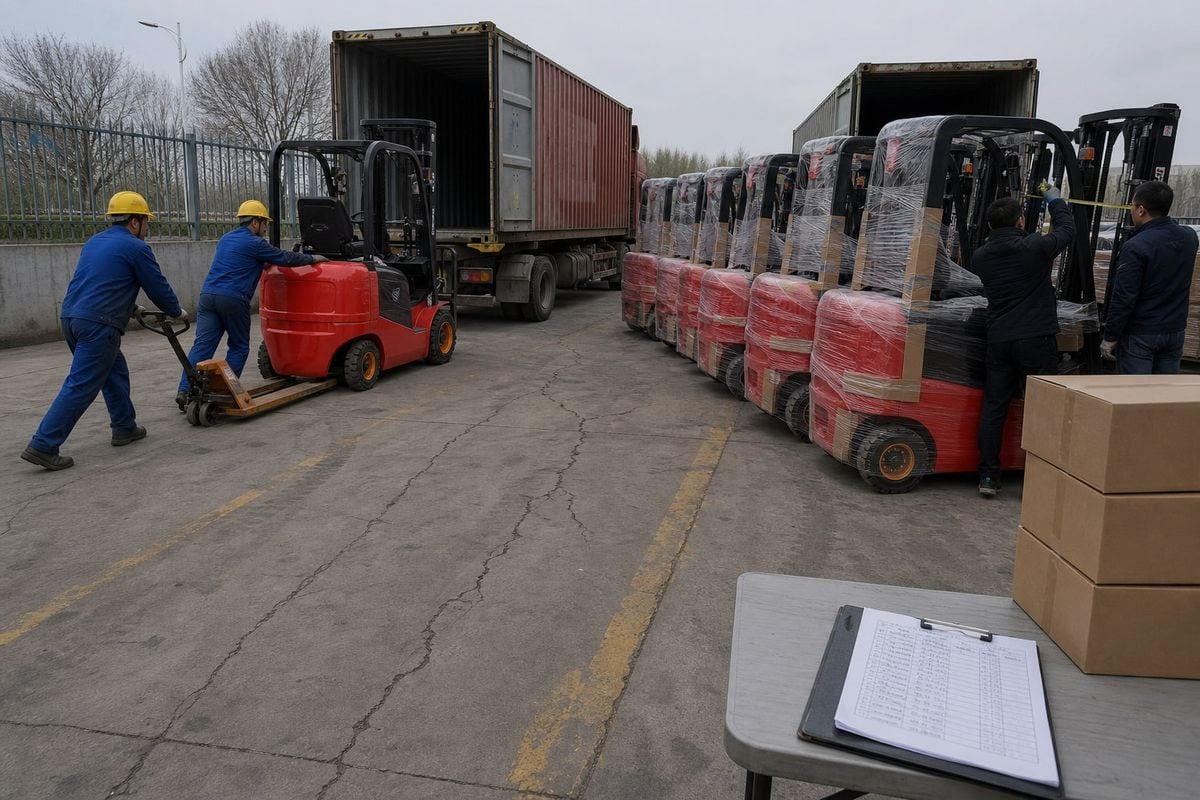
Coordinate factory pickup by confirming production completion, verifying unit dimensions and weight, checking battery charge status, agreeing on who loads the cargo, and scheduling trucking with heavy machinery logistics experience. Confirm all specifications in writing before the truck is dispatched to the factory.
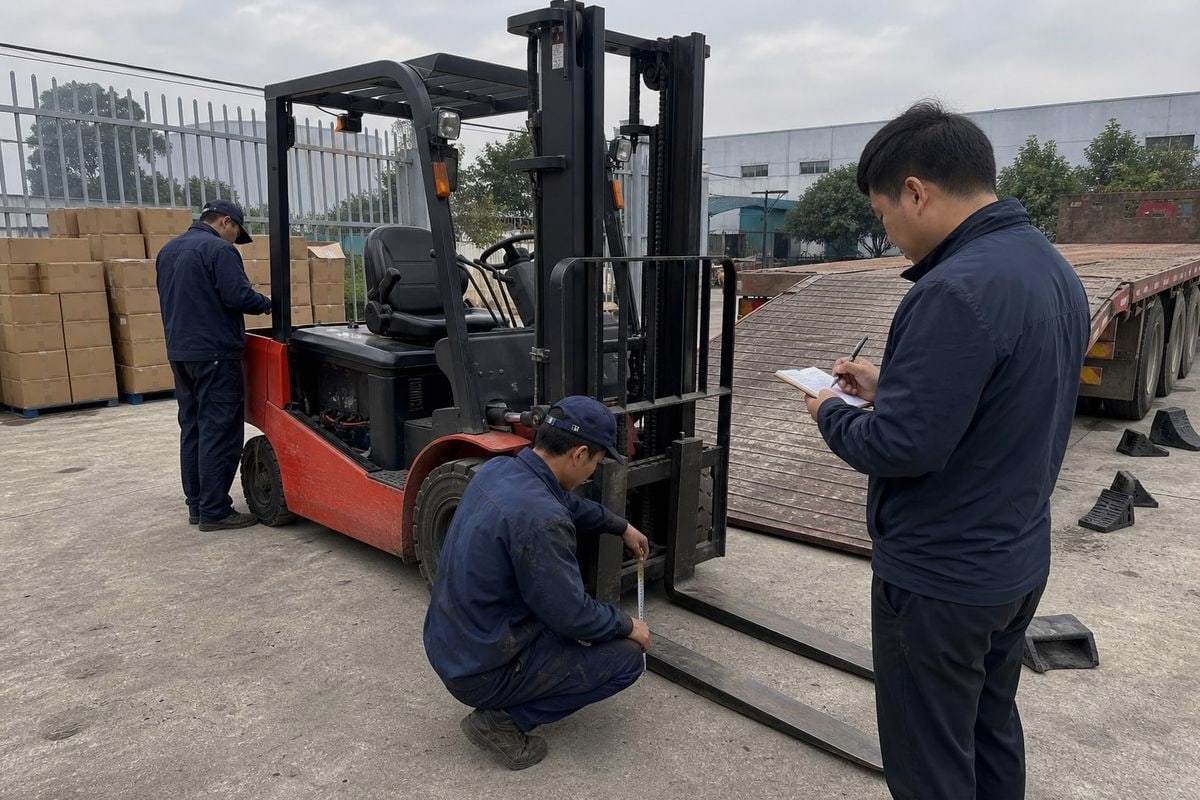
Factory pickup sounds simple. It rarely is. Most electric forklift manufacturers in China quote a production lead time of 15 to 30 days depending on the model. That is build time, not shipping time. Many buyers confuse the two and promise delivery dates to their own customers that cannot be met. I always tell clients to separate four clocks: build time, pickup scheduling, ocean transit, and final delivery setup.
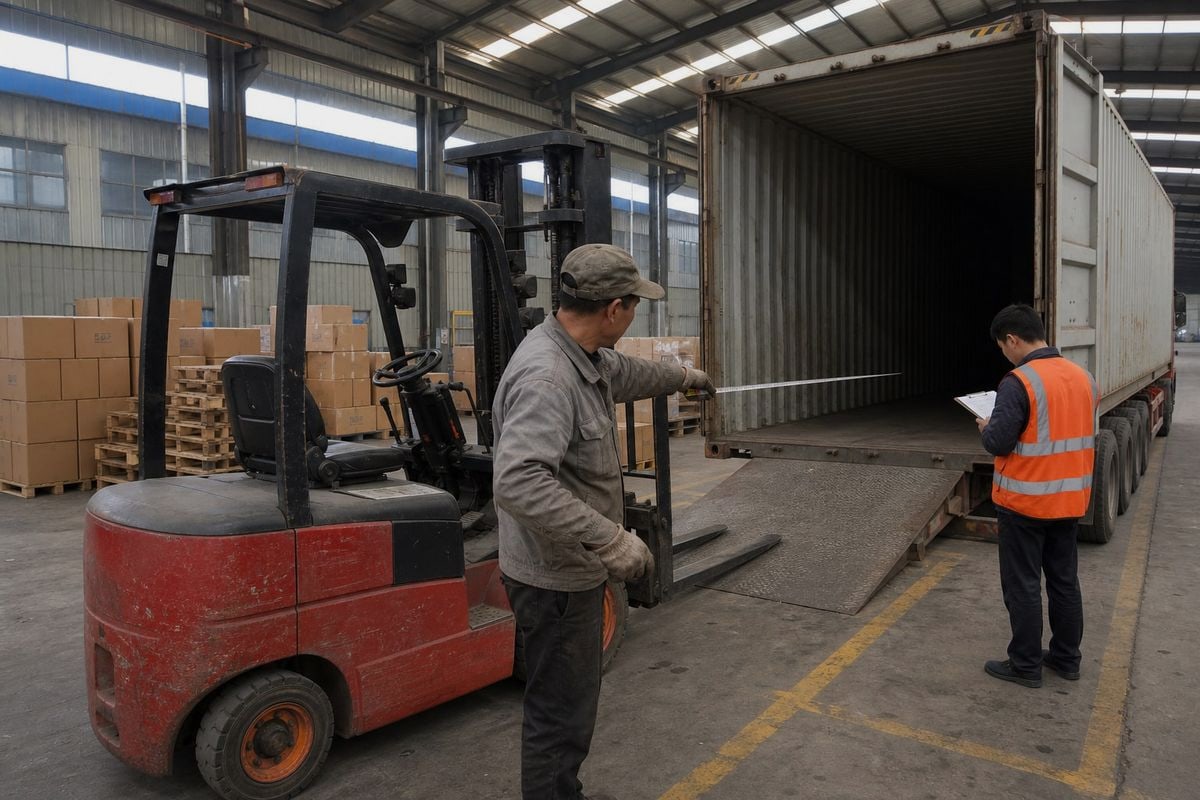
Before we dispatch any vehicle, we collect the exact machine weight, dimensions, mast height, battery type, and attachment list from the supplier. These numbers decide the trailer type, the loading method, and even the route. A documented mast-down height verification at the factory is essential. It confirms the unit clears bridge restrictions and warehouse entrances. We also confirm whether the factory can load the forklift onto the truck, or whether we need rigging and hauling support.
Here is the checklist we run through with every Chinese supplier before pickup day:
| Item | Why It Matters |
|---|---|
| Production complete + pre-delivery inspection done | Prevents shipping a defective unit |
| Battery at 30%–50% state of charge | Enough power for loading, stable for transit |
| Mast-down height measured and documented | Confirms route and container clearance |
| Keys, manuals, charger included | Avoids missing-item disputes later |
| Loading method agreed (ramp, crane, dock) | Prevents wasted trucking trips |
| Packing photos taken before departure | Creates a condition record for insurance |
We also ask the factory to disconnect and insulate the battery terminals before long-haul transit. This prevents parasitic drain and reduces electrical fire risk on the road. Small steps like these are why buyers use a China-based freight forwarding partner instead of coordinating pickups across time zones themselves.
A buyer in Texas once came to us after his previous forwarder had a container rejected at port. The reason? Missing lithium battery declarations. The cargo sat for three weeks.
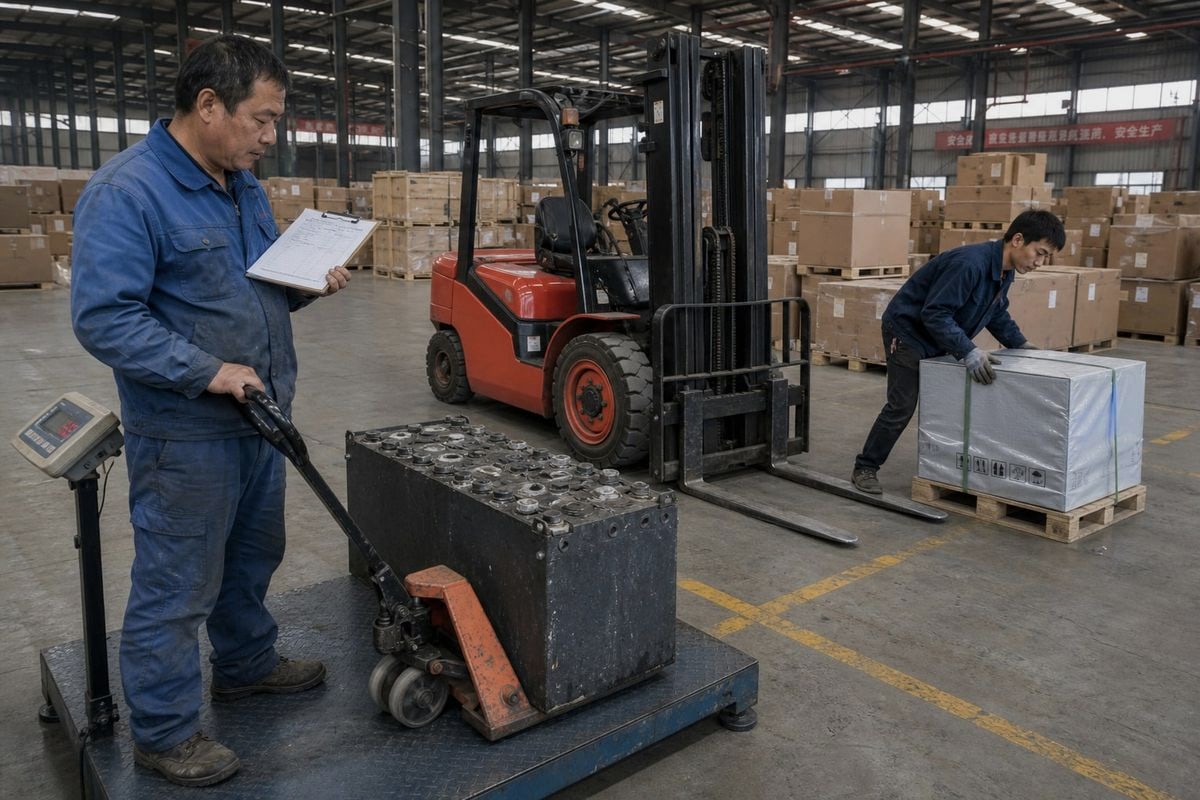
Lithium battery forklifts require UN3480 or UN3481 declarations, MSDS documentation, and carrier pre-approval before booking. Batteries should ship at 30%–50% state of charge with insulated terminals. Confirm whether the battery ships installed or separately, because this changes classification and paperwork.
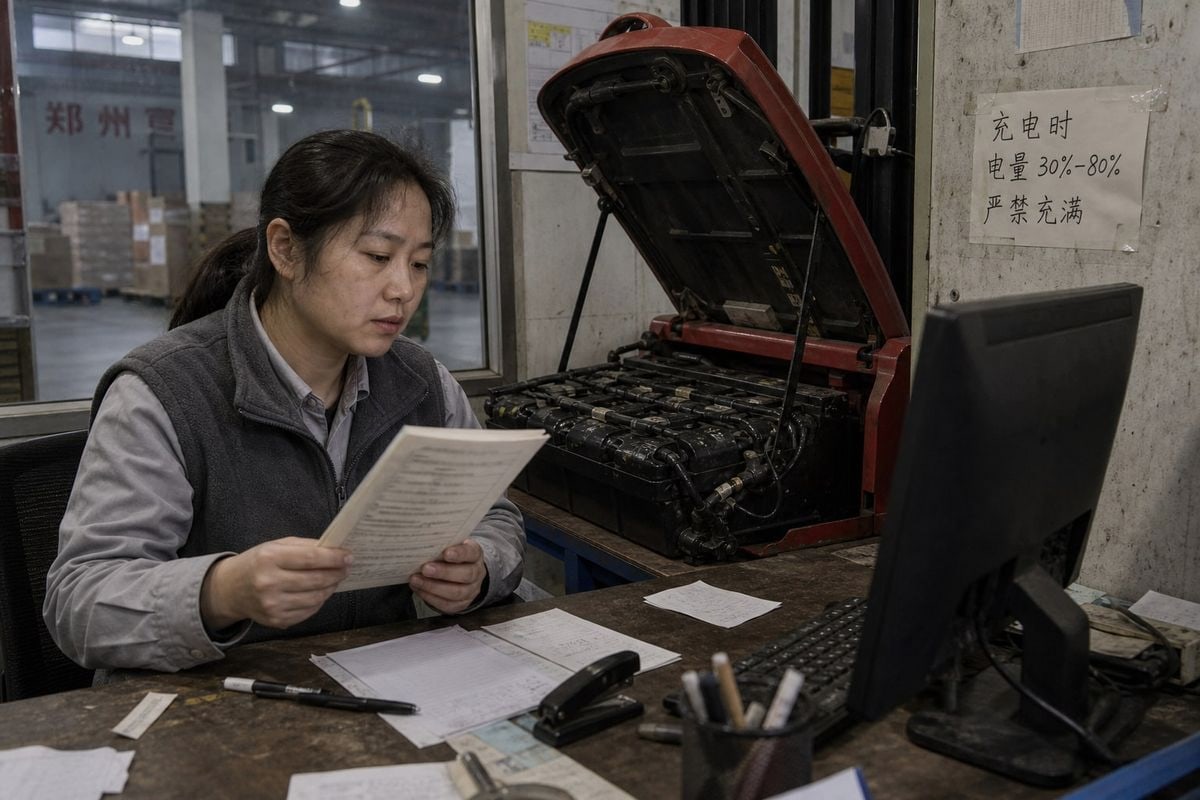
This is the single biggest difference between electric forklift logistics and shipping a diesel machine. Lithium-ion battery shipping falls under international hazardous material regulations 1, and carriers will refuse cargo with incomplete paperwork. In our experience exporting to the US, the classification depends on how the battery travels.
| Classification | When It Applies | Documentation Impact |
|---|---|---|
| UN3481 | Lithium battery installed in or packed with the forklift | Most common for complete units; declaration on shipping manifest |
| UN3480 | Lithium battery shipped standalone (spare or replacement) | Stricter rules, tighter state-of-charge limits, more carrier restrictions |
We handle this before the cargo ever reaches the port. Our team collects the battery specification sheet, MSDS, and UN38.3 test summary 2 from the manufacturer, then confirms carrier acceptance during booking. Fixing this after arrival at port means rolled sailings, storage fees, and angry downstream customers.
Some buyers assume lithium is always the better choice. From a pure logistics view, lead-acid units are simpler to ship because they avoid lithium declarations. But lithium forklifts can deliver up to two full shifts of runtime on a single charge, which is why most of our clients still choose them. The tradeoff is paperwork, not feasibility. We also remind buyers to check destination readiness: many forklift chargers require 480-volt, 3-phase electrical service and can draw 10–30 amps at peak demand. A forklift delivered to a warehouse without proper power is delivered but not operational. Plan the electrical side while the cargo is still on the water.
The hardest quotation I ever built involved five suppliers: forklifts from Anhui, batteries from Guangdong, chargers from Zhejiang, attachments from Jiangsu, and spare parts from Shandong. One container. One bill of lading.
Consolidate multi-supplier shipments by routing all cargo to one China warehouse, verifying each supplier's dimensions and weights in advance, building a single loading plan, and shipping under one bill of lading. A China-based forwarder coordinates pickups so suppliers never need to talk to each other.
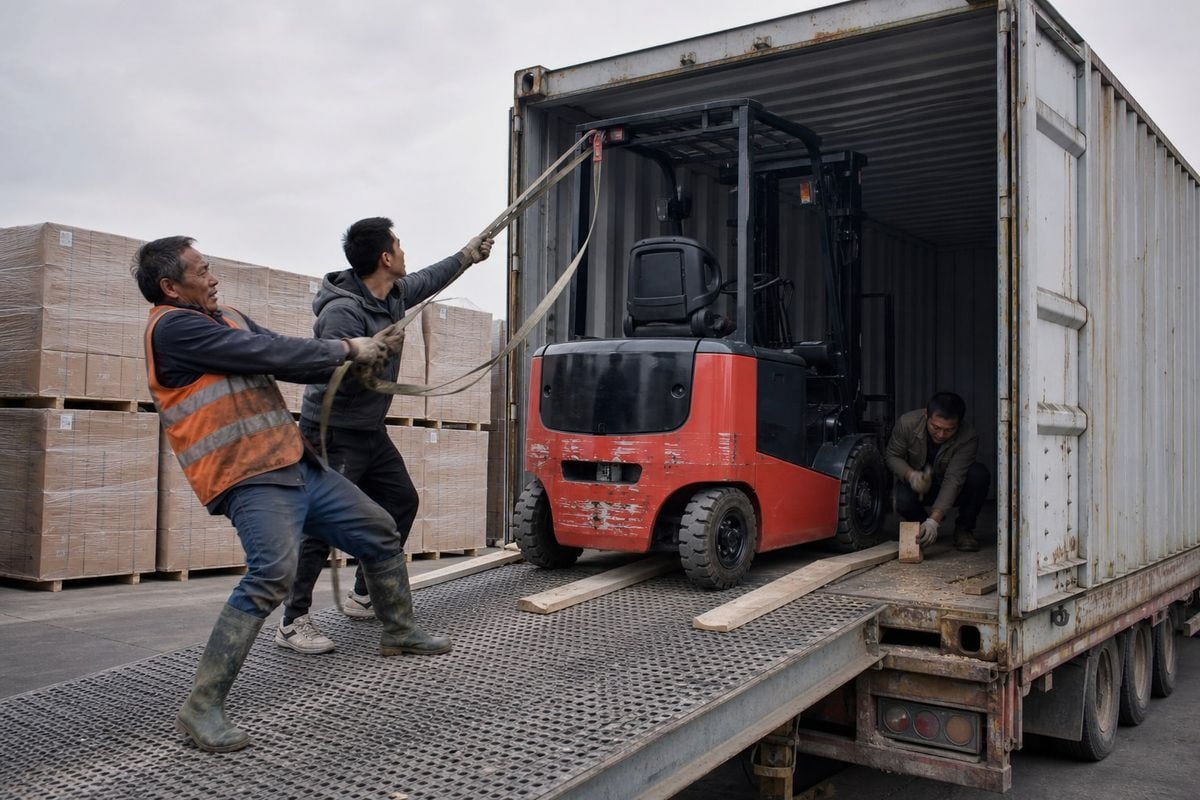
Consolidation is where buyers save the most money in electric forklift logistics. Shipping five separate LCL consignments means five sets of handling fees, five documentation charges, and five chances for something to go wrong. One consolidated container cuts cost and complexity at the same time.
| Container | Typical Fit | Best For |
|---|---|---|
| 20FT | 1–2 compact electric forklifts | Single-unit orders plus spares |
| 40FT | 2–4 forklifts depending on size | Mixed forklift and accessory loads |
| 40HQ | 3–4 forklifts plus stackers or pallet trucks | Maximum consolidation value |
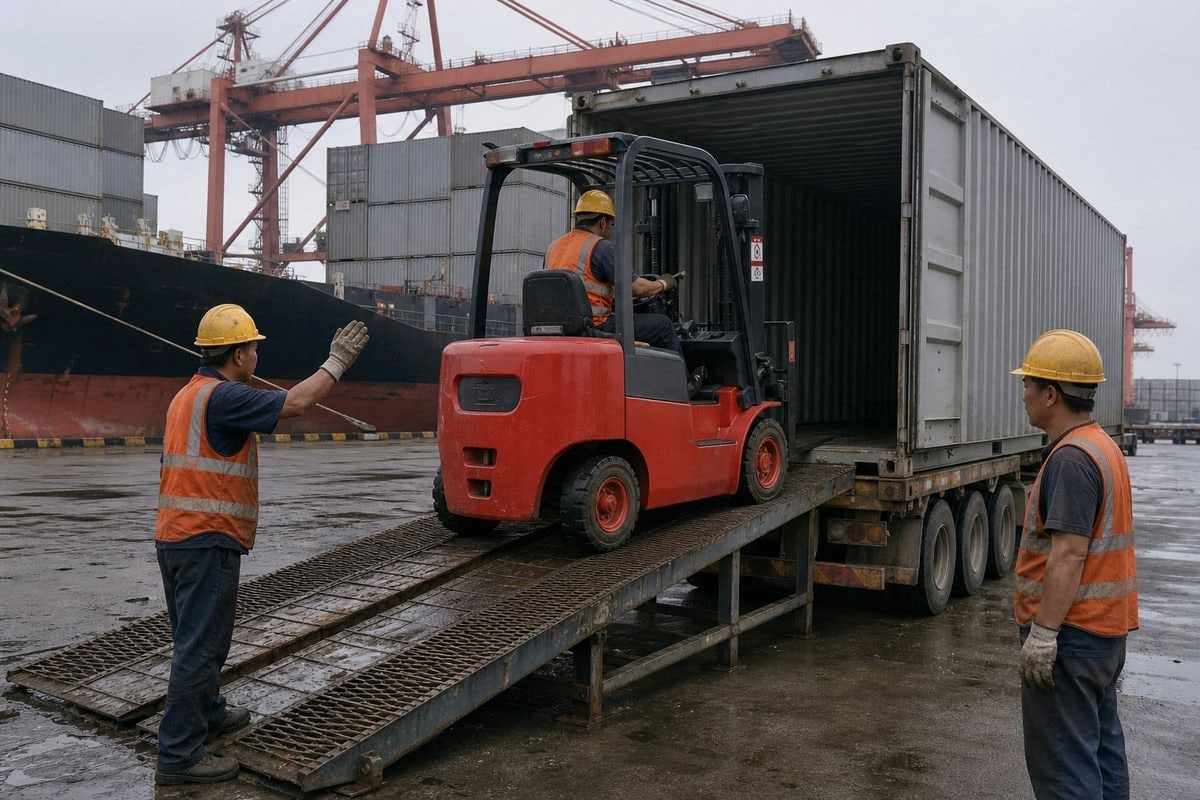
Securing inside the container matters as much as fitting the cargo in. We use a four-point tie-down system with grade-70 chains because the dense rear counterweight will shift lighter lashings during rough seas. Wheels get chocked, masts are lowered and blocked, and battery compartments are protected from contact with other cargo. We also center heavy units over the container floor's strong points to keep weight distribution 3 safe for road transport at both ends. Poor container utilization and poor securement are the two most expensive mistakes I see buyers make when they manage consolidation without a partner on the ground in China.
There is a tradeoff I discuss with almost every US client: a DDP door-to-door price looks higher upfront, but it removes the risk of surprise destination charges that wreck landed-cost calculations.
Ensure smooth clearance by verifying HS codes, commercial invoices, packing lists, and battery declarations before vessel departure, choosing clear international incoterms like DDP or DAP, pre-paying duties where applicable, and scheduling final delivery with liftgate or flatbed trailer transport matched to your warehouse access.

Customs clearance procedures fail for boring reasons: an HS code that does not match the invoice description, a missing battery declaration, or a packing list that contradicts the bill of lading. None of these are hard to fix in China before departure. All of them are expensive to fix at a US port, where storage and demurrage charges 4 accumulate daily. That is why we audit every document set before the container is gated in.
Clearance is not the finish line. The last mile is where many shipments stumble. Before the container or truck arrives, confirm three things at your warehouse. First, unloading capability: do you have a dock, a ramp, or another forklift? If not, we arrange flatbed trailer transport with liftgate service or on-site rigging and hauling support. Second, receiving space: a clear, level area for the unit to roll into. Third, electrical readiness: the charger must match your site power before the forklift can enter service. We also recommend cargo transit insurance on every forklift shipment. These are expensive machines, and a modest premium protects against the rare but real risk of transit damage. Finally, do a documented pre-delivery inspection on arrival: check the battery condition, verify accessories against the packing list, and photograph everything before signing the delivery receipt. Regional trucking from a US port typically takes 2–7 days, so build that window into your installation schedule.
Electric forklift logistics is a supply-chain project, not just shipping. Plan pickup, battery compliance, consolidation, and clearance early, and your forklifts arrive safely, on time, and ready to work.