- +8618603825129
- [email protected]


Buyers ask me how to ship electric forklifts from China, and then the battery paperwork stalls everything. At our Zhengzhou logistics office, we untangle these shipments every week.
To ship electric forklifts from China in 2026, book FCL sea freight, prepare UN38.3 certification, MSDS documentation, and a DG declaration for lithium batteries, keep battery charge at 30% or below, confirm HS Code 842710, and secure the forklift with blocking and bracing inside the container.
That sounds simple in one sentence. In practice, it involves three problems at once: battery regulations 1, physical transport, and customs classification. Let me walk you through each one.
A distributor in Texas once told me his forklift quote looked great until the freight invoice arrived. Our team now builds landed-cost estimates before customers even sign a purchase order.
Shipping one electric forklift from China in 2026 typically costs $1,500–$4,500 by FCL sea freight depending on the route, plus destination charges, customs clearance fees, and import duties of roughly 0–4% in some markets and 5–8% in others under HS 8427.10.00.
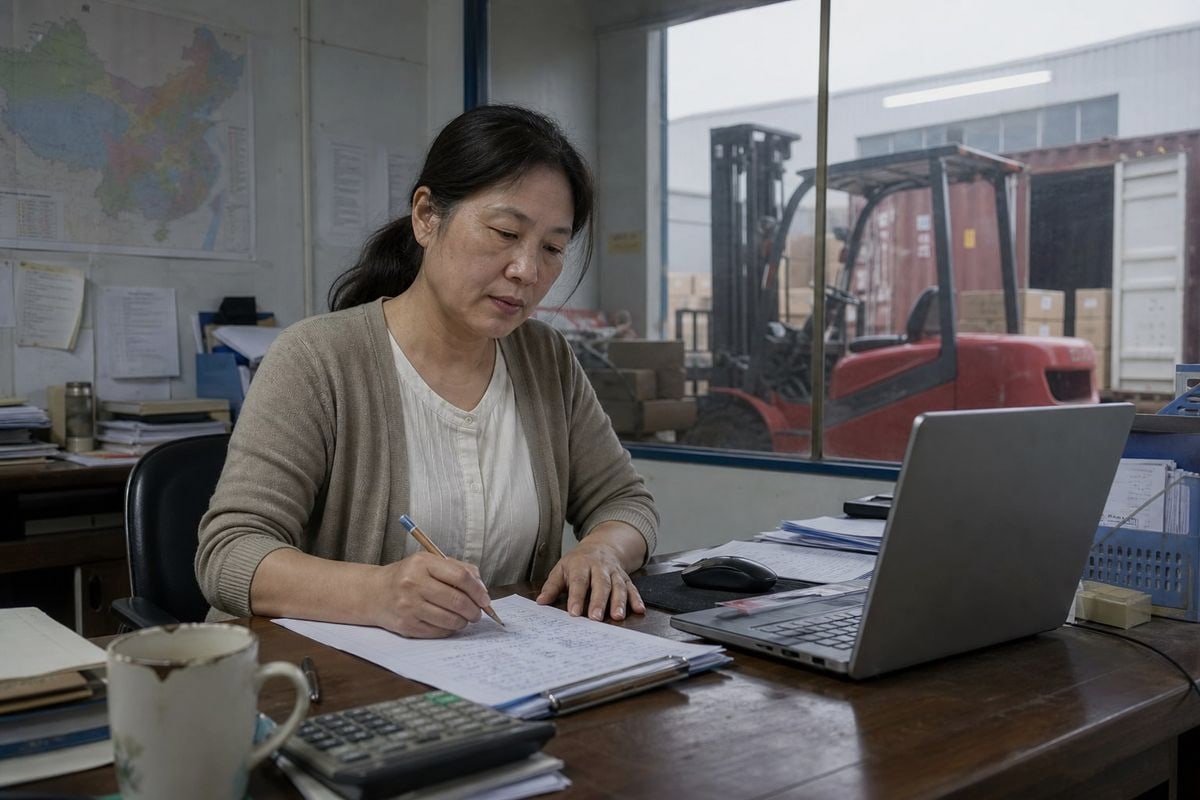
The freight rate itself is only one line on the invoice. When we prepare quotations for forklift importers, we break the total into five buckets. Missing any one of them is how buyers end up with "surprise" charges at the destination port.
| Cost Bucket | What It Covers | Typical Range |
|---|---|---|
| China-side charges | Factory pickup, trucking to port, export declaration, loading | $300–$800 |
| Ocean freight | Port-to-port FCL container rate | $1,200–$3,500 |
| DG handling surcharge | Class 9 lithium battery acceptance and documentation | $150–$500 |
| Destination charges | Port handling, customs clearance process, broker fees | $400–$900 |
| Duties and taxes | Import duties and taxes based on HS code and value | 0–8% of cargo value |
A lithium battery forklift is usually treated as Class 9 dangerous goods 2 at sea. That means DG booking approval, special labeling, and a surcharge from the carrier. Diesel forklift rates do not apply. I always warn buyers not to compare quotes from a forwarder who priced the unit as general cargo. That quote will fail at booking.
Electric forklifts generally fall under HS Code 842710 3, specifically 8427.10.00 for self-propelled trucks powered by an electric motor. Estimated duties run 0–4% in some markets and 5–8% in others. We confirm the code with a customs broker early because misclassification triggers reassessment, penalties, and storage fees. Marine cargo insurance, usually a small percentage of cargo value, is cheap protection for equipment worth $8,000–$30,000 per unit. I never let a customer skip it.
Last spring, our operations team caught a shipment where the factory sent a UN38.3 report for a different battery model. Catching that before booking saved the customer three weeks of port delay.
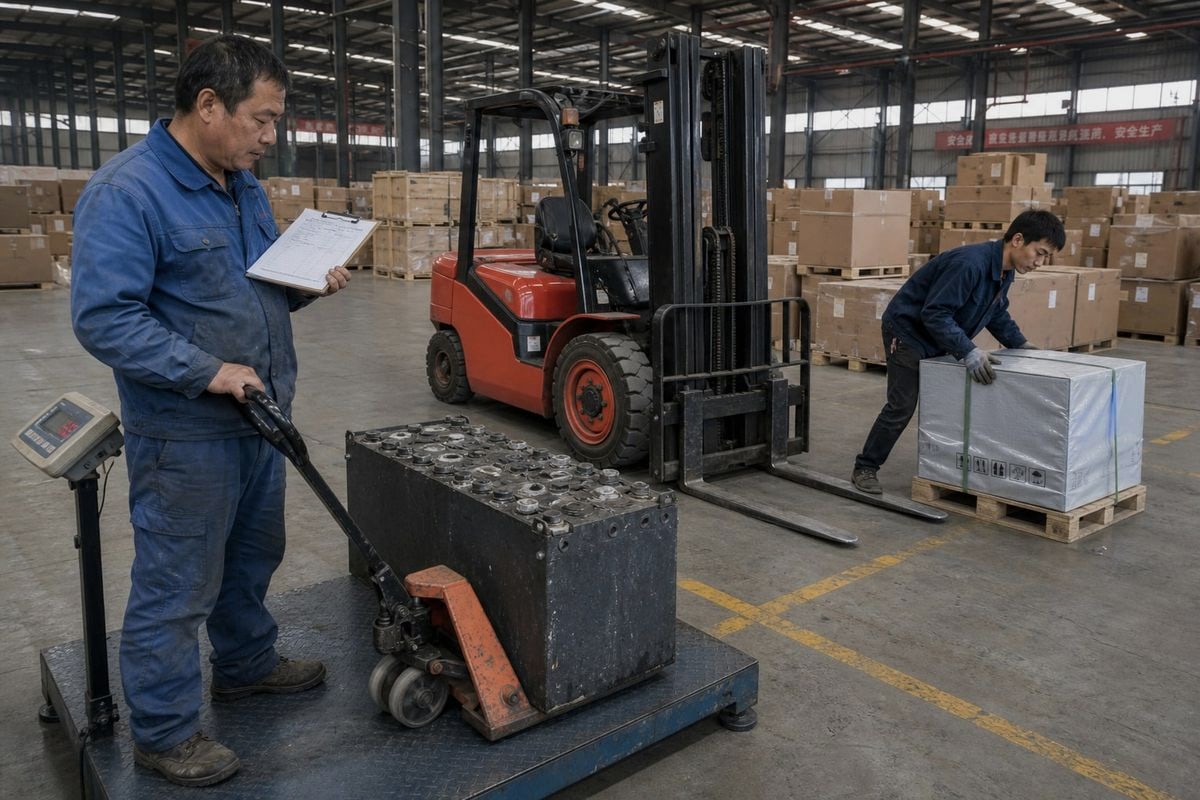
You need a UN38.3 test report, MSDS documentation, and a dangerous goods declaration from the battery manufacturer, plus a commercial invoice, packing list, bill of lading, and certificate of origin. The battery must be loaded at 30% state of charge or below, and this must be documented.
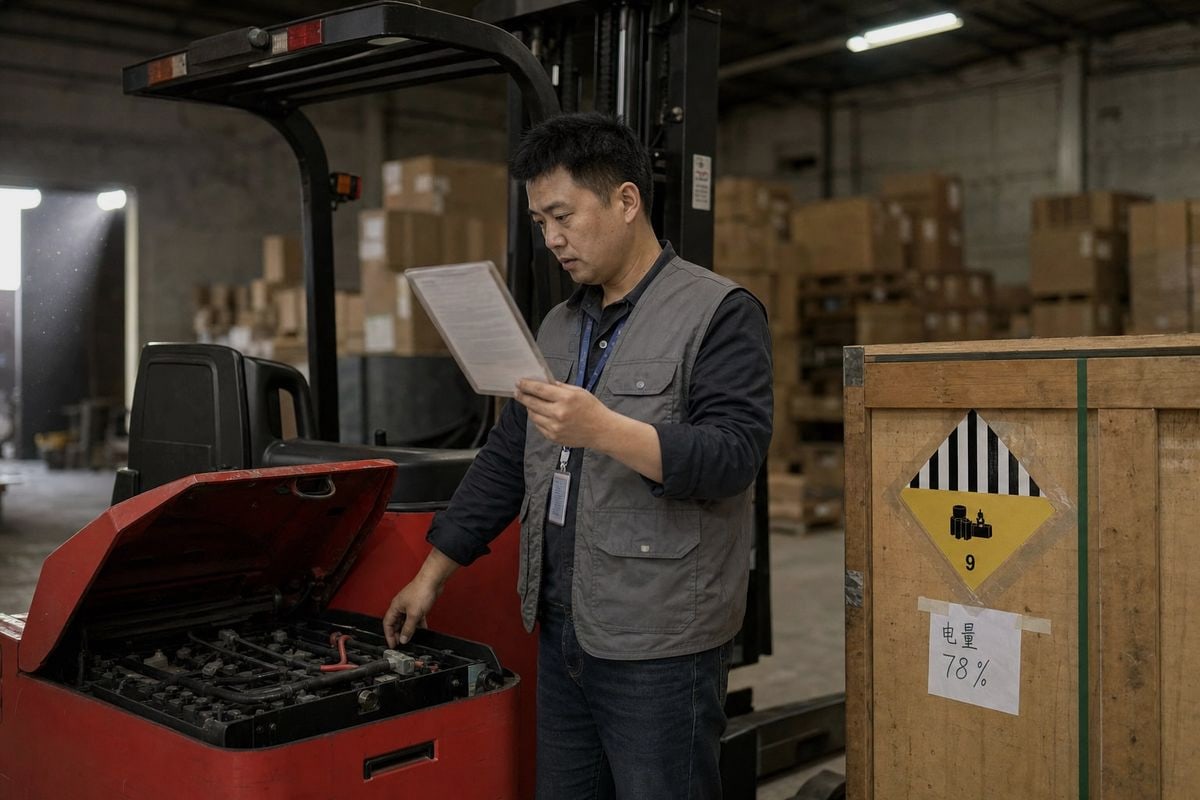
The 2026 trend is clear: lithium-ion battery regulations are now the central compliance issue in forklift shipping, not an optional add-on. Carriers reject bookings without complete paperwork, and customs officers check it again at the destination. Here is how I organize the document set for our customers.
Three documents form the core, and they must come from the battery manufacturer — not just the forklift assembler:
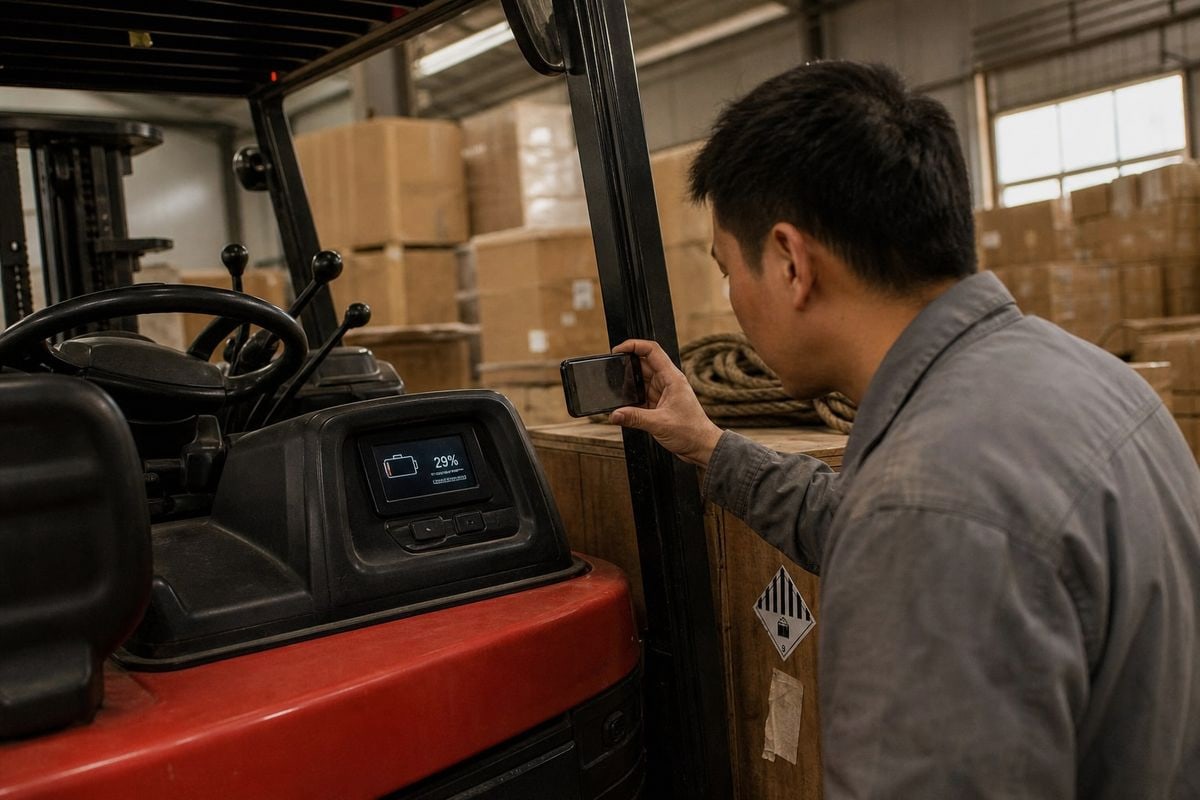
On top of that, 2026 international safety rules require lithium batteries packed with or contained in equipment to ship at a maximum 30% state of charge. We ask factories to photograph the charge display at loading and keep it on file.
The commercial invoice, packing list, bill of lading, and certificate of origin must all match. Model numbers, battery specifications, and declared values need to be consistent across every page. Small mismatches are the most common cause of customs holds we see.
EU-bound forklifts need a CE Declaration of Conformity. The forklifts we handle usually carry a visible CE label on the body panel, and customs may ask for the matching declaration. US-bound units may require UL-certified chargers, and the charger voltage must match the destination grid. A 380V Chinese charger is useless in a US warehouse. I tell every buyer: confirm the charger spec before the factory dispatches, because fixing it afterward means air freighting a replacement.
Container math is where I spend the most time with new importers. Every extra unit you fit safely into a box directly cuts your per-forklift landed cost.
A 20FT container typically fits one 3-ton electric forklift or two compact units, a 40FT fits two to three standard units, and a 40HQ fits two to four depending on mast height. Compact models like a 1-ton unit allow tighter loading with partial mast disassembly.
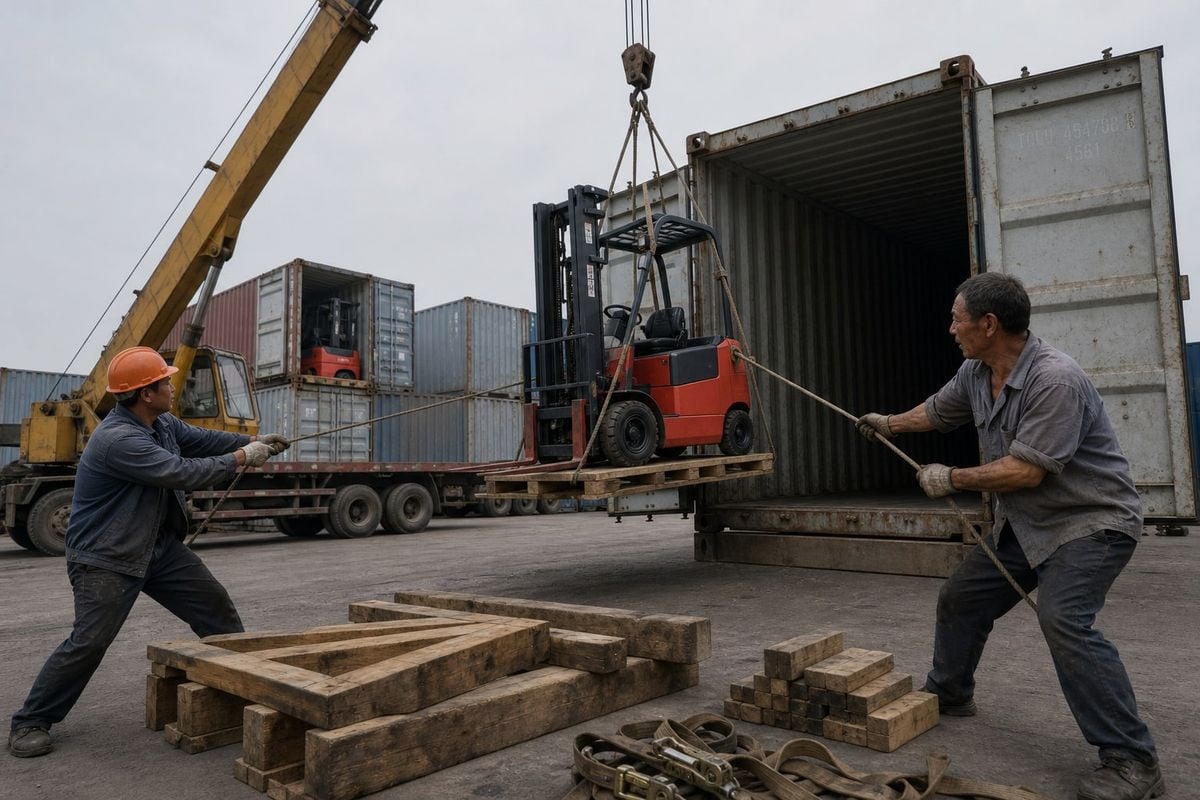
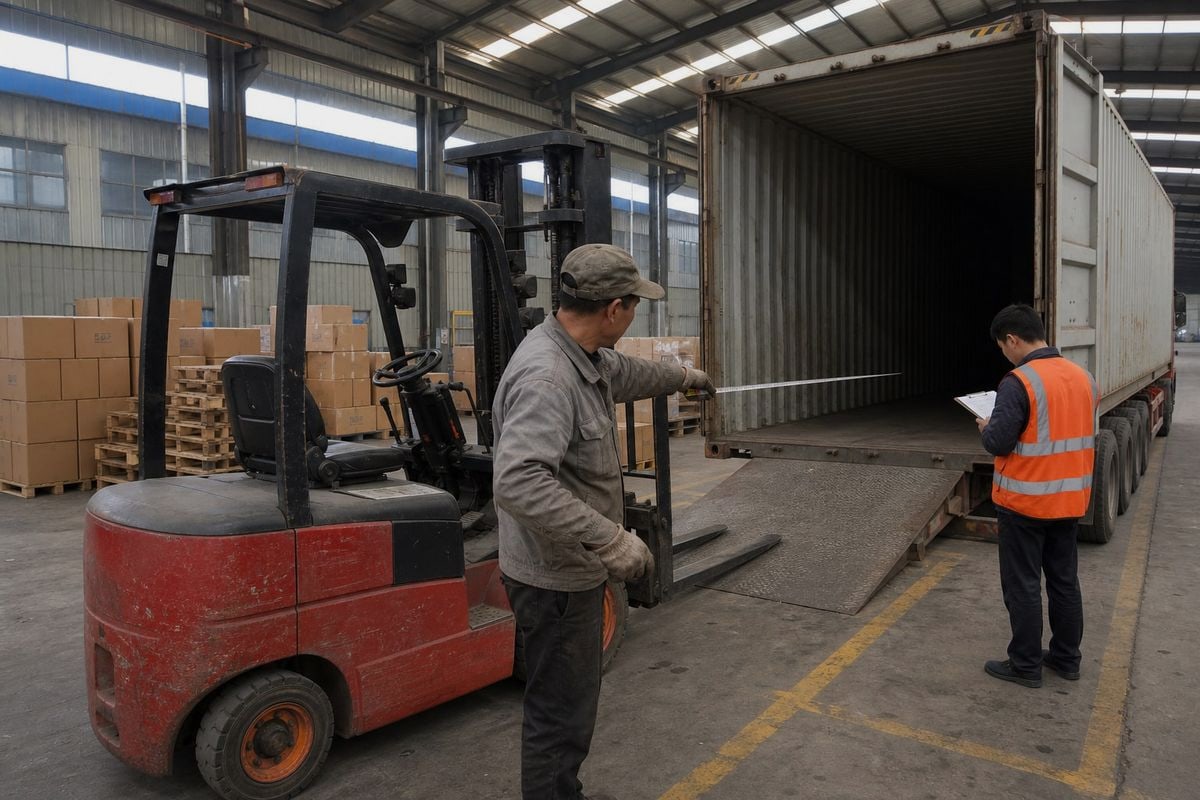
Forklift loading is never just about floor space. Weight distribution, door clearance, and mast height decide the real capacity. Our loading team measures every unit before we commit to a container plan, because factory spec sheets sometimes list dimensions without the overhead guard.
| Container | Internal Dimensions (L×W×H) | Compact 1–1.5T Units | Standard 2–3T Units |
|---|---|---|---|
| 20FT | 5.9m × 2.35m × 2.39m | 2 | 1 |
| 40FT | 12.03m × 2.35m × 2.39m | 3–4 | 2–3 |
| 40HQ | 12.03m × 2.35m × 2.69m | 4 | 2–3 |
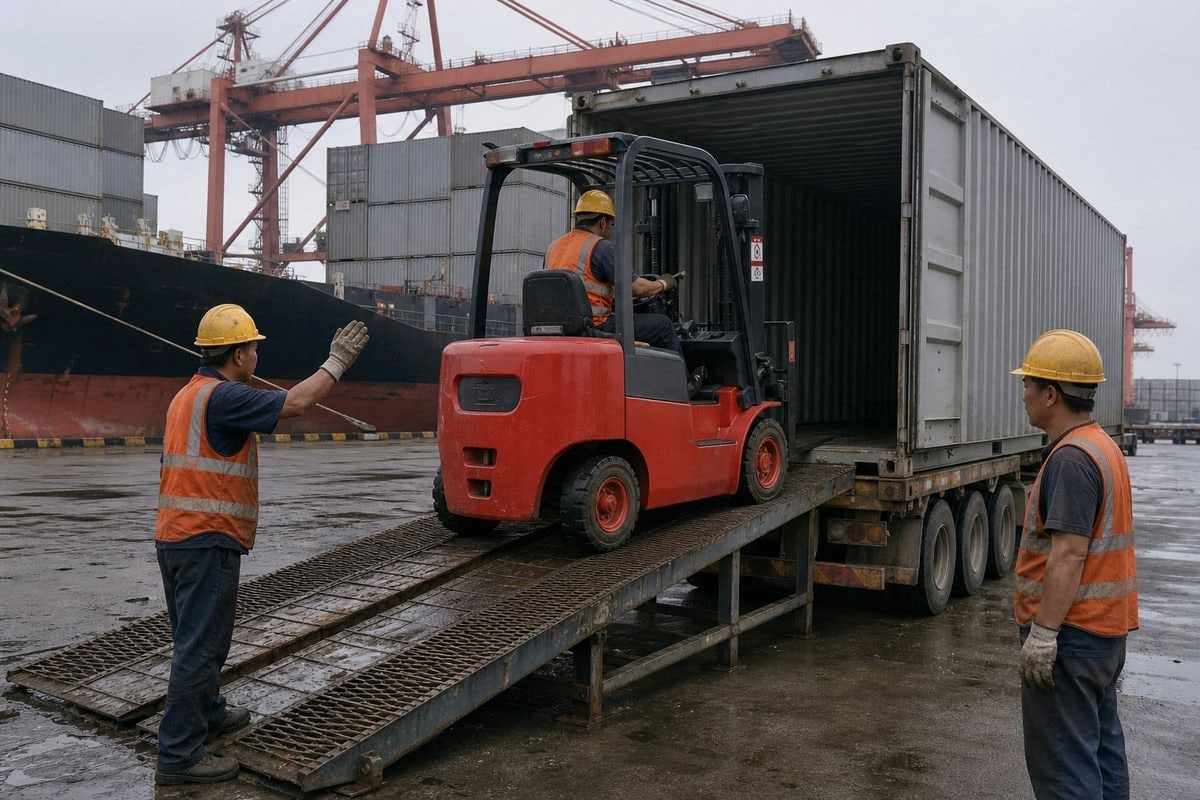
Standard container doors open to about 2.28 meters. Many forklifts exceed that at the overhead guard or mast. The solutions, in order of preference:
Here is where consolidation pays off. When a customer buys forklifts from Factory A and chargers, spare parts, or batteries from Factories B and C, we pick up from all suppliers, consolidate at our warehouse, and pack the accessories into the unused container space. One buyer of ours shipped two 3-ton units plus a full pallet of spare forks and two chargers in a single 40HQ. The accessories traveled almost free.
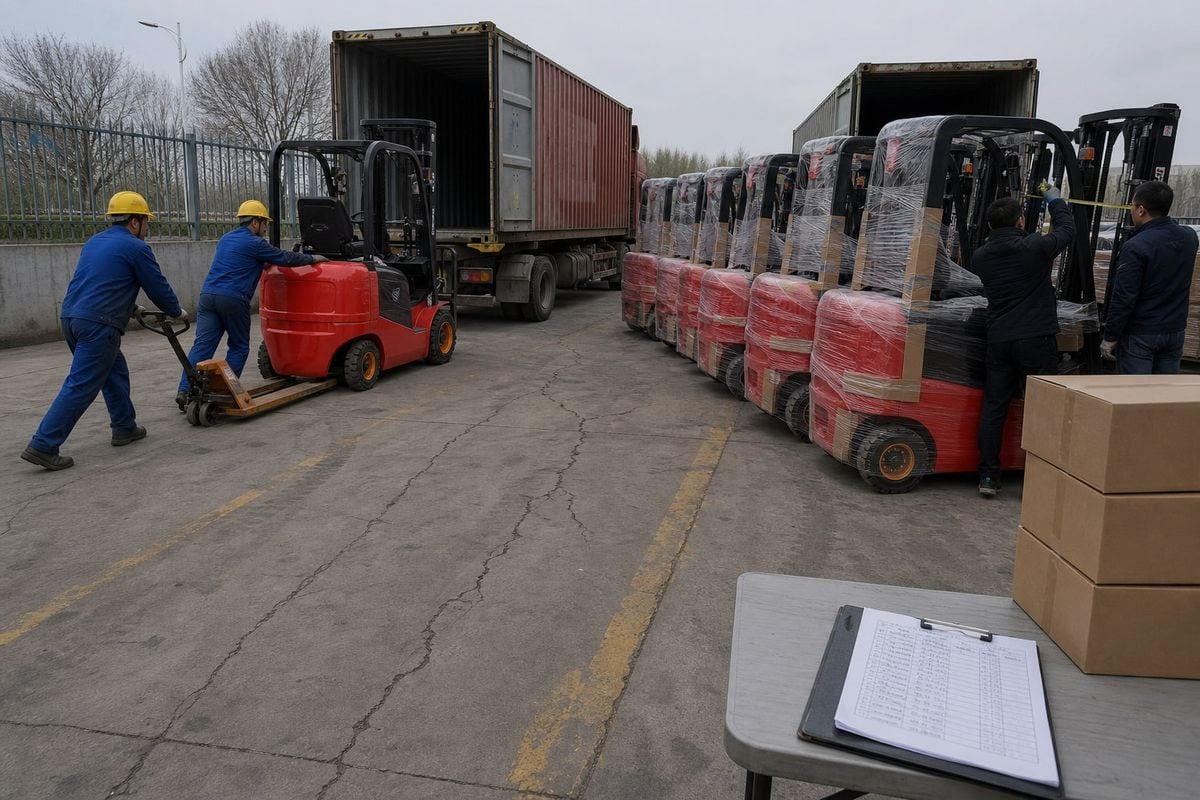
Blocking, bracing, and securement are non-negotiable. A 3-ton forklift that shifts in heavy seas will destroy itself and the container. We use wooden chocks, steel strapping to lashing points, and wheel blocks on every unit.
A first-time importer from Ohio recently asked me whether LCL would save him money on a single unit. My honest answer surprised him: usually not, once you count the risk.
Choose FCL for one to four forklifts because it offers the best cost control and lowest damage risk. Use LCL only for single compact units on tight budgets, and choose door-to-door DDP shipping if you want one provider managing everything from the Chinese factory to your warehouse.
The FCL vs LCL shipping decision is the fork in the road for every forklift importer. Some guides frame FOB plus FCL as the default for experienced buyers, while others push DDP for first-timers. Both views are right — for different buyers. Here is how I frame the trade-off.
| Method | Best For | Main Advantage | Main Drawback |
|---|---|---|---|
| FCL sea freight | 1–4 forklifts | Cost control, exclusive container, low damage risk | Requires loading and container planning |
| LCL consolidation | Single compact unit | Lower entry cost | Higher damage risk from shared handling; DG cargo often refused |
| Flat rack container | Oversized or overheight units | Fits out-of-gauge cargo | Higher surcharges |
| RORO shipping services | Self-driving equipment on limited routes | No container needed | Not available on most China routes for forklifts |
| Air freight | Urgent compact parts and chargers | Fastest transit | Highest cost; battery restrictions |
| Door-to-door DDP | First-time importers | One quote, one partner, managed handoff | Less visibility into component costs |
LCL means your forklift shares a container with strangers' cargo. It gets handled at consolidation warehouses on both ends, and each touch is a damage opportunity. Worse, many consolidators refuse Class 9 lithium battery cargo entirely, so a lithium forklift may not even qualify. For lead-acid compact units it can work, but I quote it honestly: the savings are often smaller than buyers expect.
Experienced importers with their own customs broker usually buy FOB and let a freight forwarder in China like us handle ocean freight onward. First-time buyers without a broker or local trucking network lean on DDP shipping terms 4, where we manage duties, clearance, and final delivery in one price. Neither is wrong. The right choice depends on how much of the customs clearance process you want to own. Either way, book carrier DG acceptance before the cargo leaves the factory — that single habit prevents most port-side disasters.
Shipping electric forklifts from China in 2026 means solving battery compliance, container planning, and customs classification together. Get the paperwork right early, and the rest follows smoothly.
1. Official IMO page detailing international maritime standards for transporting hazardous materials like lithium batteries. ↩︎
2. Provides a comprehensive overview of the classification system for hazardous materials in international transport. ↩︎
3. Authoritative source explaining the Harmonized System used by customs to classify international trade products. ↩︎
4. Official ICC resource defining Incoterms, including DDP, which governs responsibilities in international shipping. ↩︎