- +8618603825129
- [email protected]

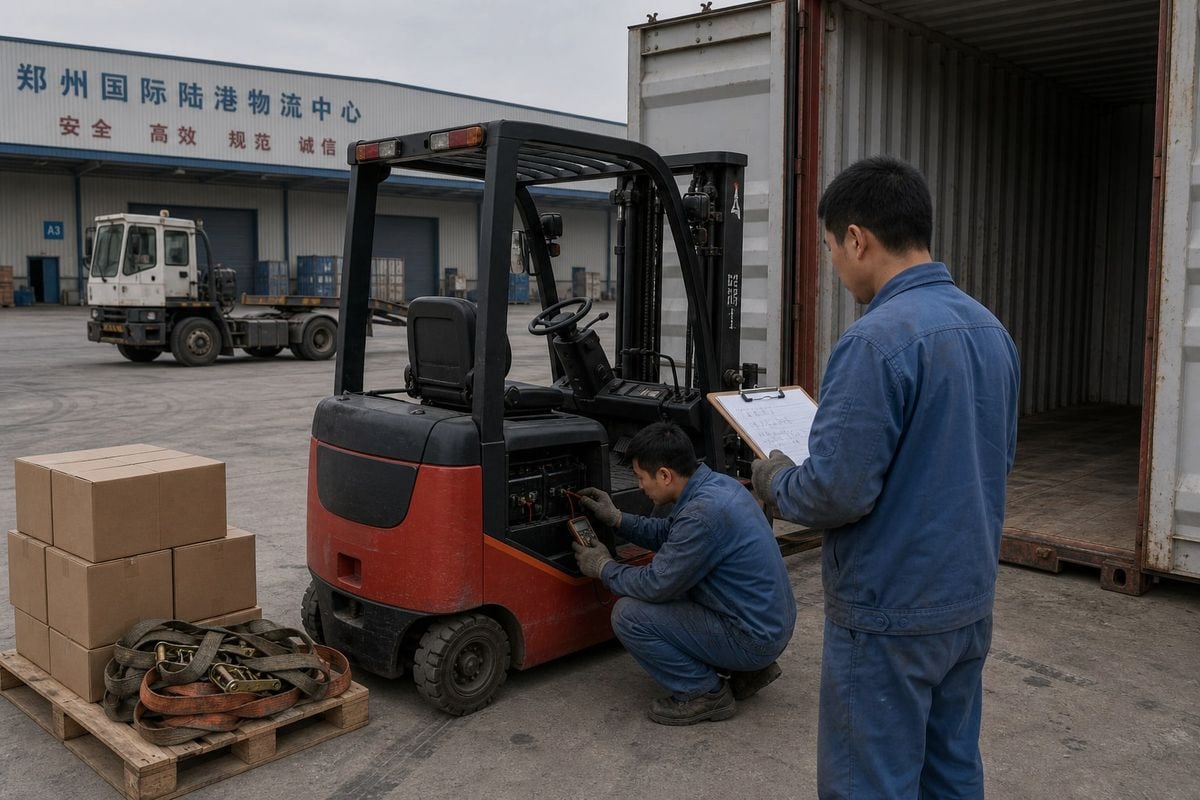
Last month, our Zhengzhou team watched a buyer's forklift shipment stall at port over one missing battery report. Shipping electric forklifts FCL from China fails on details, not distance. That is exactly why we built our forklift shipping workflow around compliance first.
To ship electric forklifts FCL from China, confirm the forklift and battery specifications, prepare UN38.3 and MSDS documents for lithium units, book a suitable container (often a 40HQ), secure the forklifts with lashing and chocks, clear China export customs, and arrange destination clearance and delivery.
That is the short answer. Now let me walk you through each decision, because container choice, battery paperwork, and quoting all carry traps that can cost you weeks and thousands of dollars.
A distributor in Texas once asked me to fit four 3-ton forklifts into a 20FT container. Our loading team had to explain, with a tape measure, why physics disagreed.
A 20FT container typically fits one 2–3 ton electric forklift, a 40FT fits two to three units, and a 40ft High Cube container fits three to four compact units loaded nose-to-tail, depending on mast height, counterweight length, and whether the mast is lowered or partially disassembled.
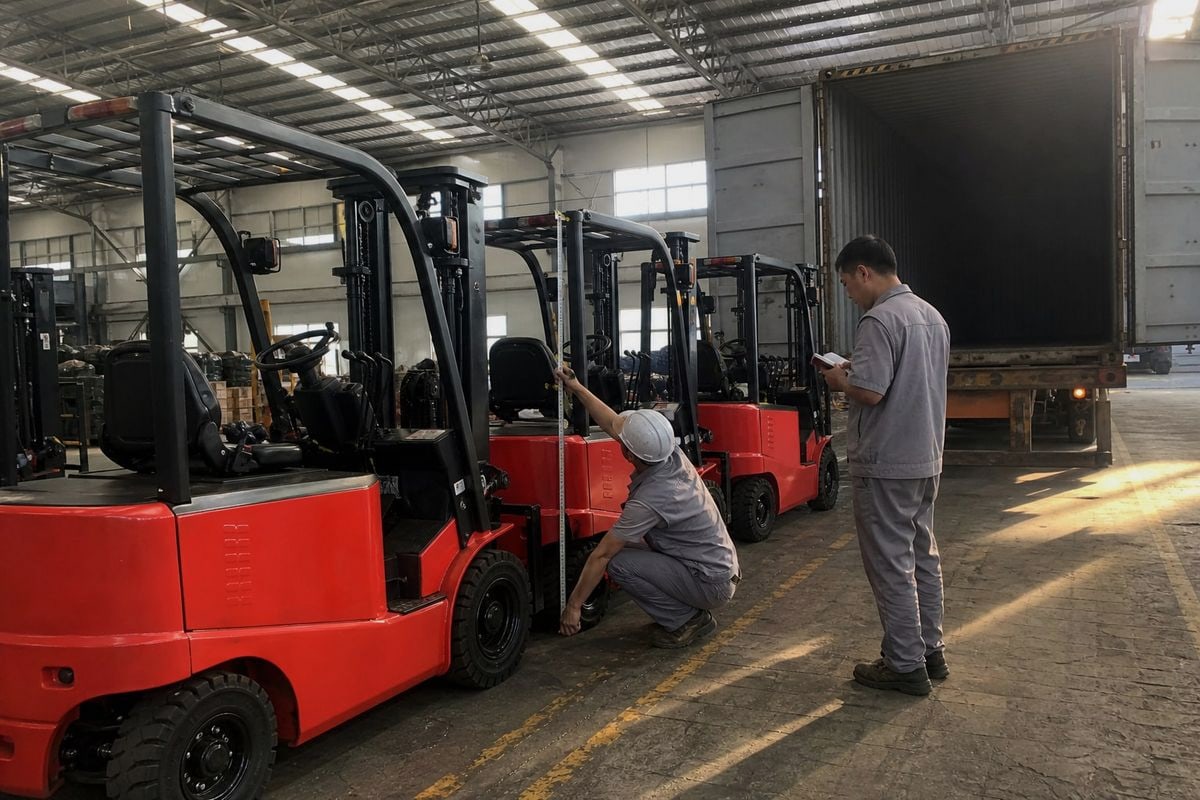
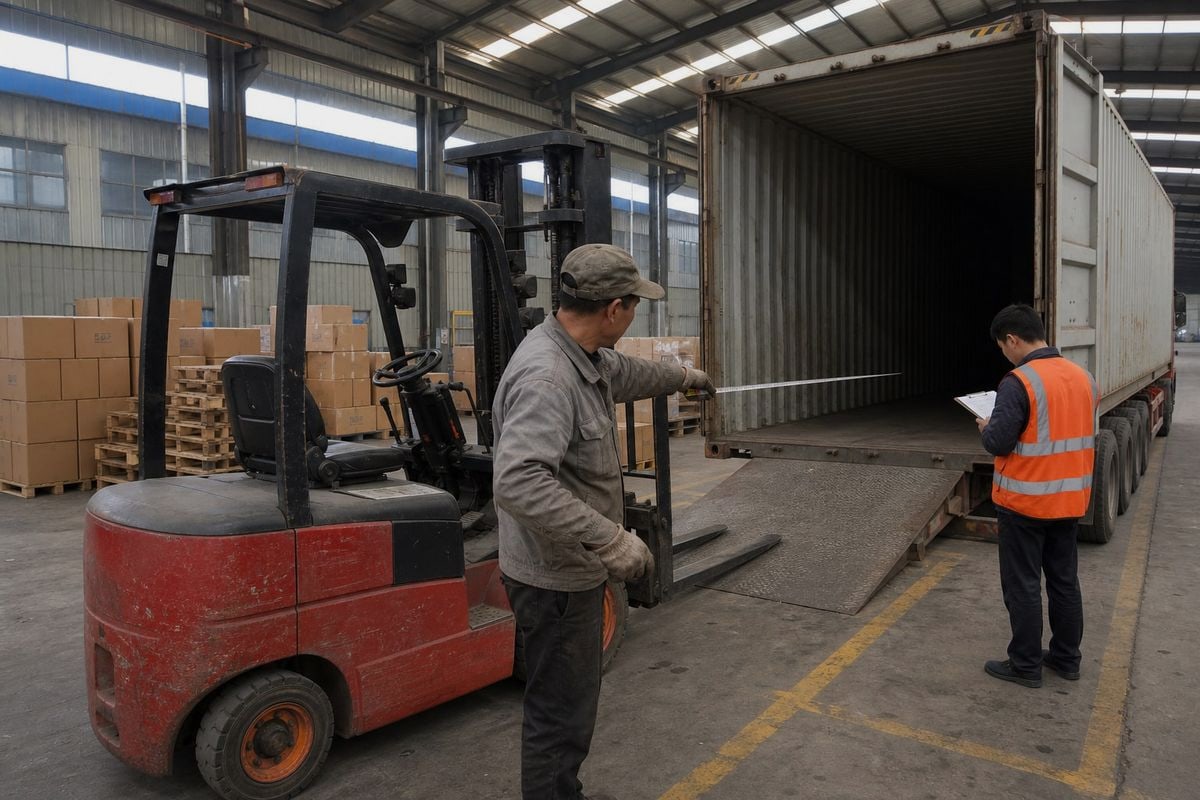
Fit depends on the exact model, not the nominal capacity. Two "3-ton" forklifts from different Chinese factories can differ by 300mm in overall length and 200mm in mast height. Before we book any container, we collect the real loading dimensions from the factory: overall length with forks, width, lowered mast height, service weight, and turning clearance. We have seen buyers lose an entire container slot because they trusted a brochure spec sheet instead of measured dimensions.
| Container | Internal Dimensions (approx.) | Typical Forklift Capacity | Best Use Case |
|---|---|---|---|
| 20FT | 5.9m x 2.35m x 2.39m | 1 unit (2–3 ton class) | Single forklift plus spare parts |
| 40FT | 12.03m x 2.35m x 2.39m | 2–3 units | Mixed sizes, forklifts plus chargers |
| 40HQ | 12.03m x 2.35m x 2.69m | 3–4 compact units nose-to-tail | Maximum utilization, taller masts |
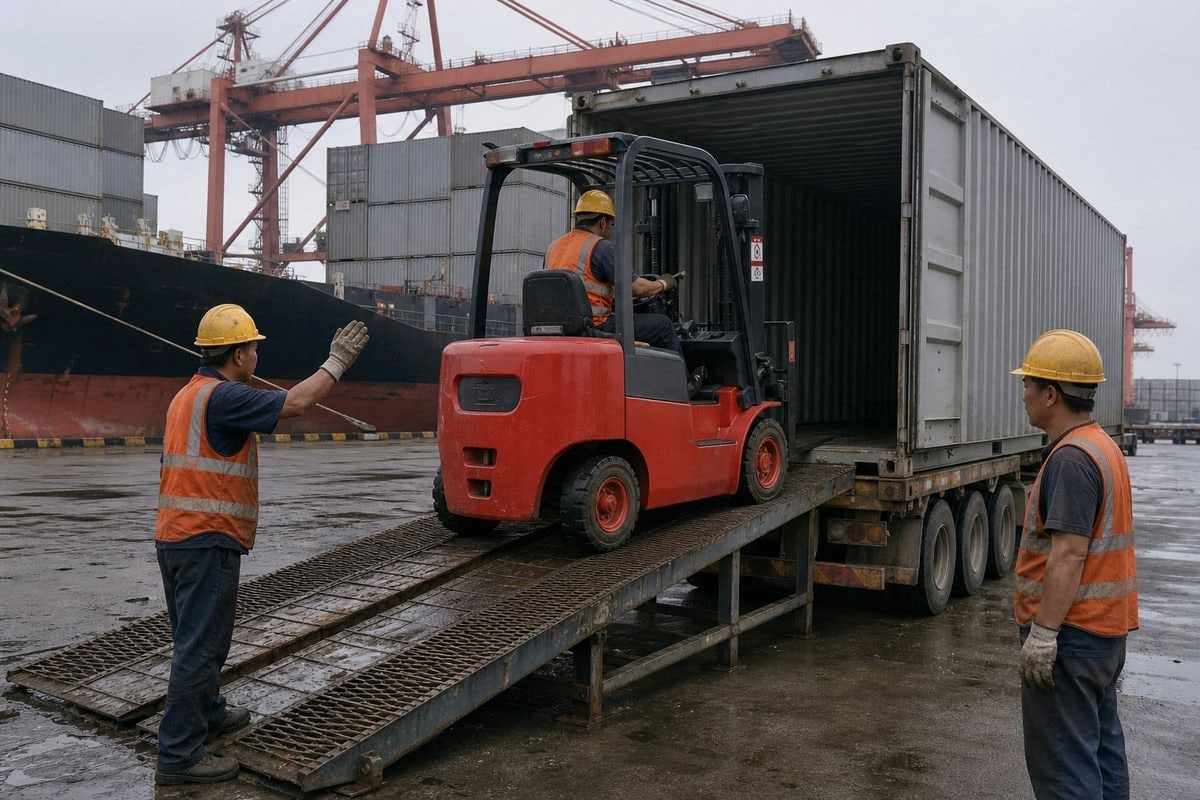
Three factors decide the final number. First, mast height: the mast must clear the container door opening, which is lower than the internal height. Some units need mast removal or tilt-down. Second, weight: a loaded 40HQ must respect road weight limits 1 at destination, and three counterbalance forklifts can approach 12–15 tons of cargo. Third, unloading access: forklifts loaded nose-to-tail must be drivable or towable out at your warehouse, so we always confirm the batteries hold enough charge for self-unloading or that a ramp and towing plan exists.
We also fill dead space with chargers, spare forks, and parts cartons from other suppliers. That consolidation is often where the per-unit freight cost drops the most.
The trade-off we weigh on every booking is simple: a bigger container costs more per box but usually far less per forklift, if you can fill it safely.
Choose a 20FT for a single forklift, a 40FT for two to three standard units, and a 40HQ when mast height is tight or you want maximum multi-unit loading. The 40ft High Cube is the preferred FCL choice for most electric forklift shipments because of its extra vertical clearance.
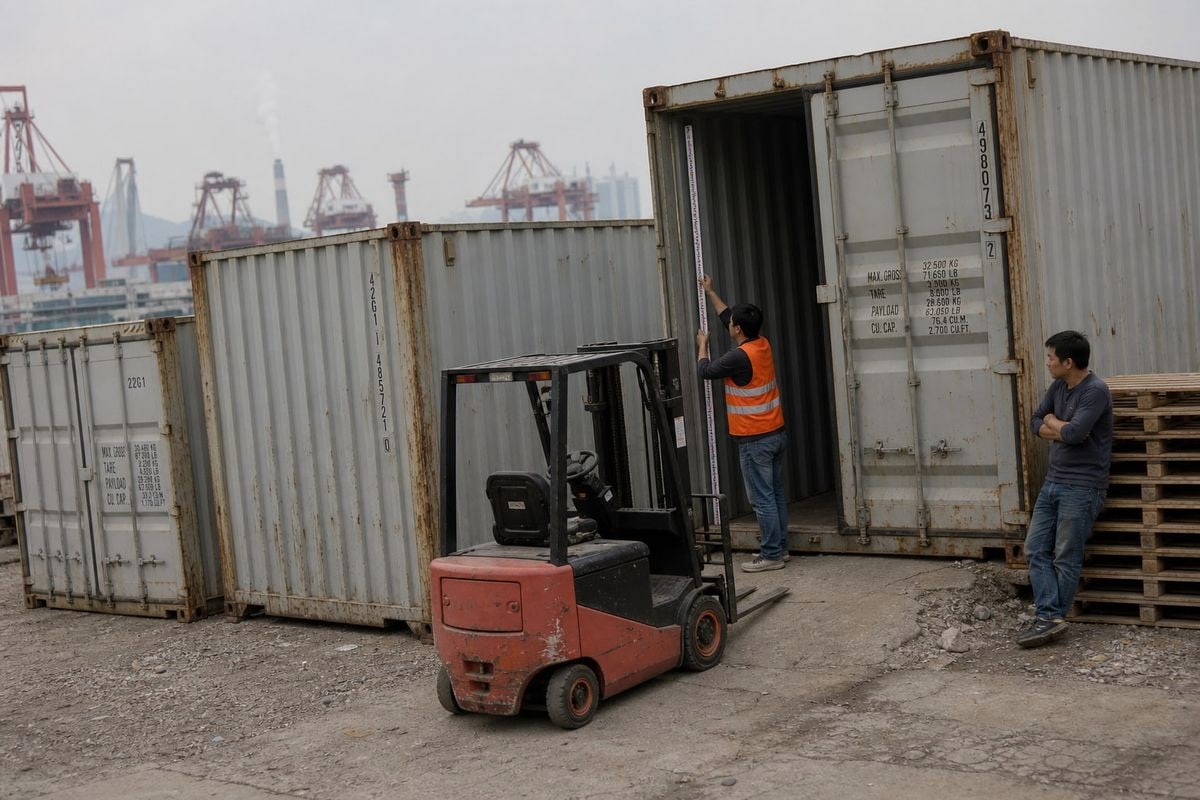
In our experience shipping forklifts from China to the US, the decision is rarely about ocean freight rate alone. It is about landed cost per unit and safe loading. Here is how we break it down for buyers.
A 40HQ costs perhaps 15–25% more than a 20FT on many China–US lanes, but it can carry three to four times the cargo. If you are a dealer buying multiple units, the 40HQ almost always wins. Broad market ranges for machinery FCL run roughly $2,000–$5,500 per container depending on lane and season, so spreading that across four units instead of one changes your resale margin significantly.
Forklifts are dense and top-heavy. A single counterbalance unit concentrates 3–5 tons on a small footprint. We position units over the container's strongest floor sections and distribute weight evenly along the length. Overloading one end can cause chassis handling problems and crane refusal at the terminal.
| Factor | 20FT | 40FT | 40HQ |
|---|---|---|---|
| Best for | 1 forklift + parts | 2–3 units | 3–4 units, tall masts |
| Door height clearance | Standard | Standard | Extra ~30cm |
| Cost per unit (multi-unit order) | Highest | Medium | Usually lowest |
| Weight limit risk | Low | Medium | Medium–High |
| Consolidation space for chargers/parts | Limited | Good | Best |
If the forklift cannot pass the container door even with the mast removed, a flat rack or open-top container becomes the fallback. RoRo exists on limited routes but offers less protection. We treat those as exceptions; most warehouse-class electric forklifts containerize fine after partial disassembly.
Documentation is where most delays are born. Our team starts collecting battery paperwork while the forklift is still on the production line, not after it reaches our warehouse.
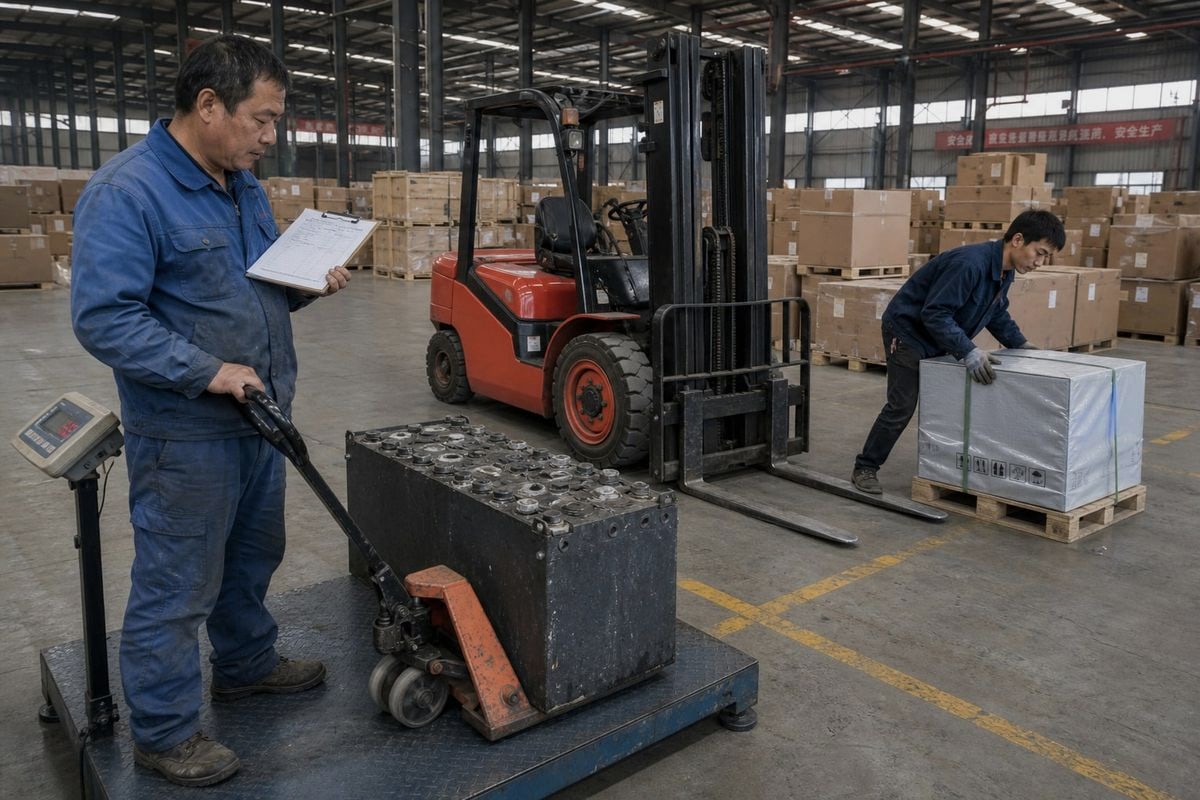
Lithium battery forklifts require a UN38.3 test report, a Material Safety Data Sheet, a Dangerous Goods Declaration under UN3481 Class 9, plus the commercial invoice, packing list, bill of lading, certificate of origin, and China export declaration. Carriers must grant DG booking acceptance before loading.
Lithium-ion battery regulations are the single biggest difference between shipping an electric forklift and shipping ordinary machinery. Under the IMDG Code 2 compliance framework, a lithium-powered forklift is classified as Class 9 dangerous goods under UN3481 (lithium ion batteries contained in equipment). That classification triggers a chain of requirements, and missing any link stops the shipment.
For US-bound units, confirm the charger carries appropriate certification and the correct voltage (110V/60Hz markets differ from China's 220V). HS Code 8427.10 may also trigger Section 301 additional duties 3 in the US, so verify your duty rate before pricing your resale. EU-bound units need CE marking. Wooden crates or dunnage must carry ISPM 15 heat-treatment stamps.
One practical tip we give every buyer: request all battery documents at the time you place the purchase order. Factories respond much faster before final payment than after.
A buyer once forwarded me a quote that was $900 cheaper than ours. It excluded destination handling, DG surcharges, and chassis fees. His "cheap" quote ended up $1,400 more expensive.
To get an accurate FCL quote, provide the forklift model, quantity, dimensions, weight, battery type, origin factory location, destination address, and Incoterms. A complete quote must show ocean freight, DG surcharges, inland trucking, export clearance, destination charges, duties, and final delivery — not just the port-to-port rate.
Quoting accuracy starts with the information you give the forwarder. When buyers send us only "one 3-ton electric forklift to Los Angeles," we cannot quote responsibly. Battery chemistry alone can swing the cost, because a lead-acid unit ships as general cargo while a lithium unit requires DG handling.
Understanding Incoterms FOB vs CIF matters here. Under FOB, you control ocean freight and destination costs 4, which experienced importers prefer. Under CIF, the seller books freight but you still handle destination charges — often where hidden fees hide. First-time importers frequently choose DDP so one party manages everything through to the warehouse door.
| Incoterm | Who Books Freight | Who Handles Import | Best For |
|---|---|---|---|
| EXW | Buyer (from factory gate) | Buyer | Buyers with a China forwarder |
| FOB | Buyer | Buyer | Experienced importers |
| CIF | Seller | Buyer | Buyers who accept less cost control |
| DDP | Seller/forwarder | Seller/forwarder | First-time importers |
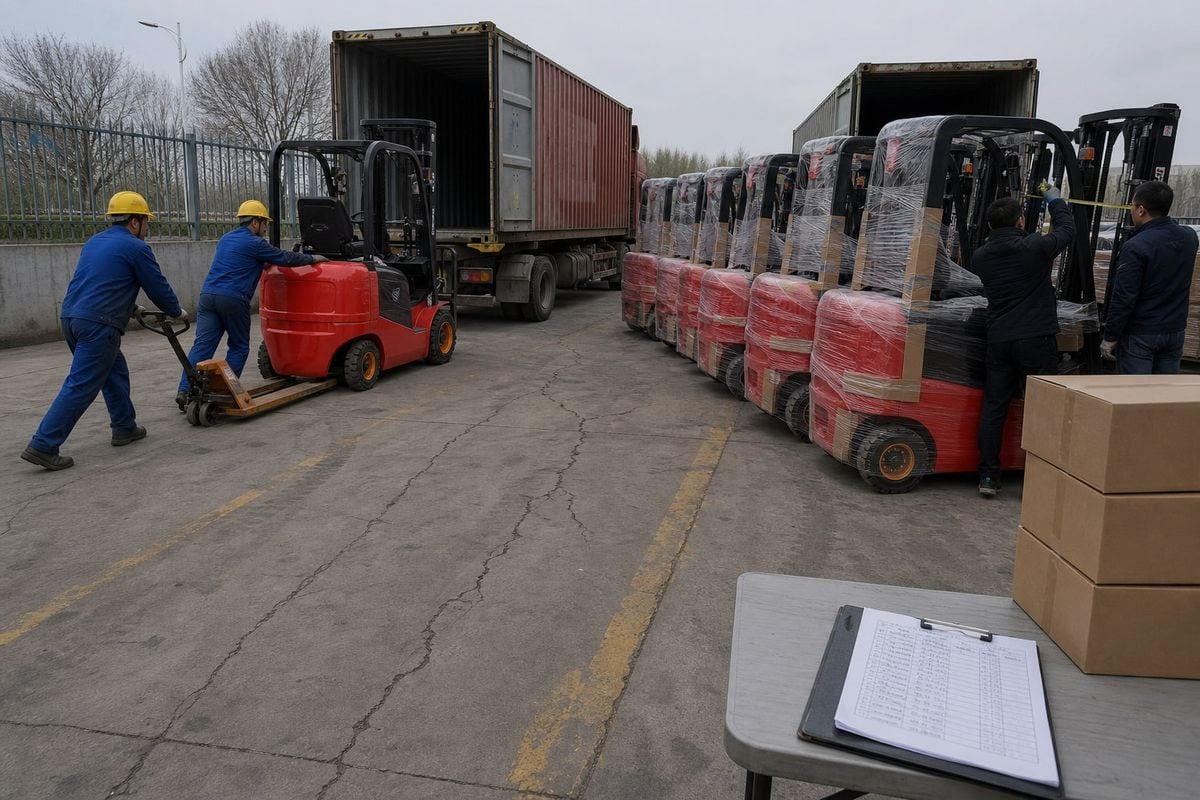
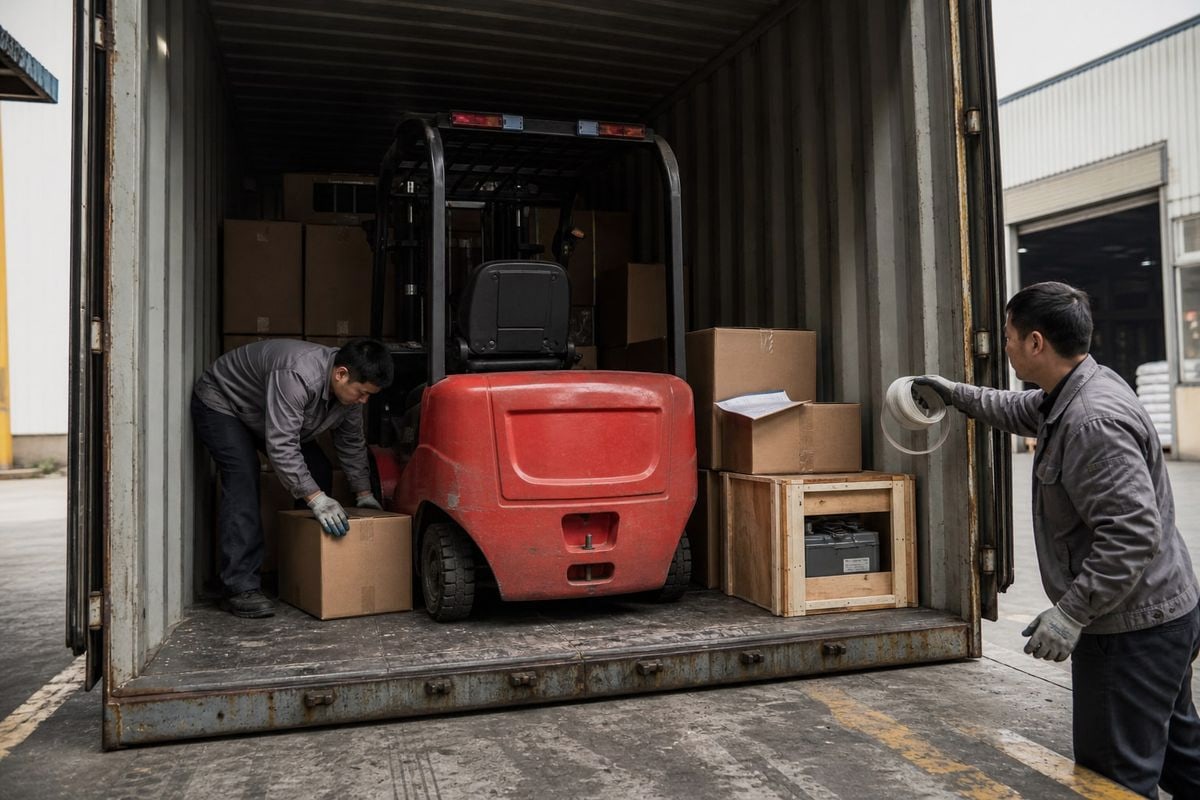
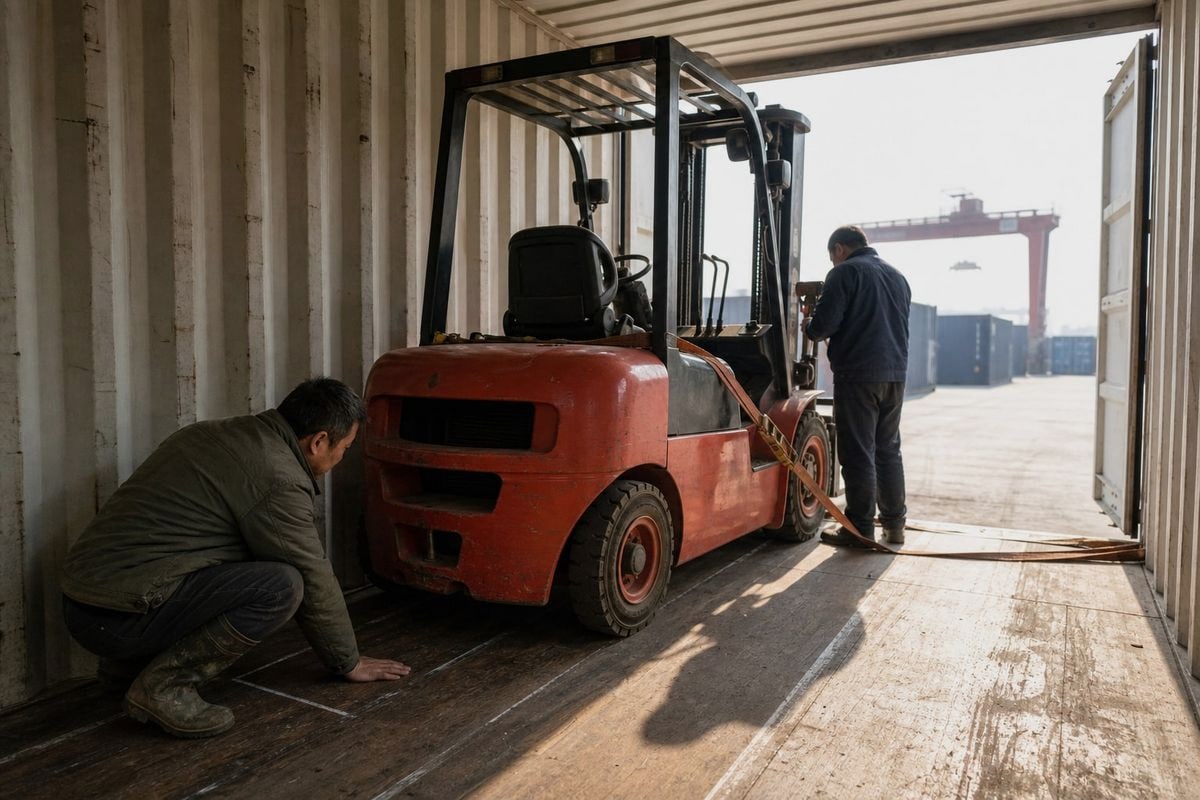
Plan for 25–40 days of ocean transit on most China–US and China–Europe lanes, or 5–7 weeks door-to-door once trucking and customs clearance documentation processing are included. DG cargo needs earlier booking than the standard few days' lead time. Container lashing and securing — steel wires, wheel chocks, and blocking against the concentrated counterweight — should appear as a line item, not an afterthought. We photograph every load from all angles before sealing, so you have evidence for insurance if anything shifts during vessel pitch and roll.
Finally, insure the cargo. Forklifts are high-value, and marine insurance is cheap relative to a bent mast.
Shipping electric forklifts FCL from China succeeds on preparation: verified dimensions, the right container, complete battery documents, and a transparent quote. Get those four right, and delivery becomes predictable.
1. Official US Department of Transportation site providing guidance on federal road weight limits and regulations. ↩︎
2. Official IMO resource for the International Maritime Dangerous Goods Code governing sea transport of hazardous materials. ↩︎
3. Official USTR documentation regarding Section 301 tariffs applied to goods imported from China. ↩︎
4. The ICC defines Incoterms which determine who is responsible for ocean freight and destination costs. ↩︎