- +8618603825129
- [email protected]


Every week, our logistics team in Zhengzhou handles dozens of LCL shipments 1 where clients worry about their goods being crushed under heavier cargo inside shared containers.
To prevent cargo stacking in traditional LCL shipping, shippers must combine strong palletization, clear "Do Not Stack" labeling, pre-loading instructions to the consolidation warehouse, and a reliable freight partner who enforces load-planning discipline at every handling stage from origin to destination.
Stacking damage in LCL is not one single mistake heavy-duty plastic pallet 2. It is a chain of failures across packaging, labeling, communication, and warehouse handling. Below, we break down the exact steps you can take to protect your freight at every stage of the journey.
When we consolidate cargo at our Zhengzhou warehouse, we see firsthand how easily fragile goods get damaged when shippers skip basic packaging and labeling steps.
To protect fragile LCL cargo from crushing, use load-bearing pallets, reinforce cartons with double-walled construction, apply clear "Do Not Stack" and "Fragile" labels on all sides, and send written non-stackable instructions to your freight forwarder before the container is loaded.
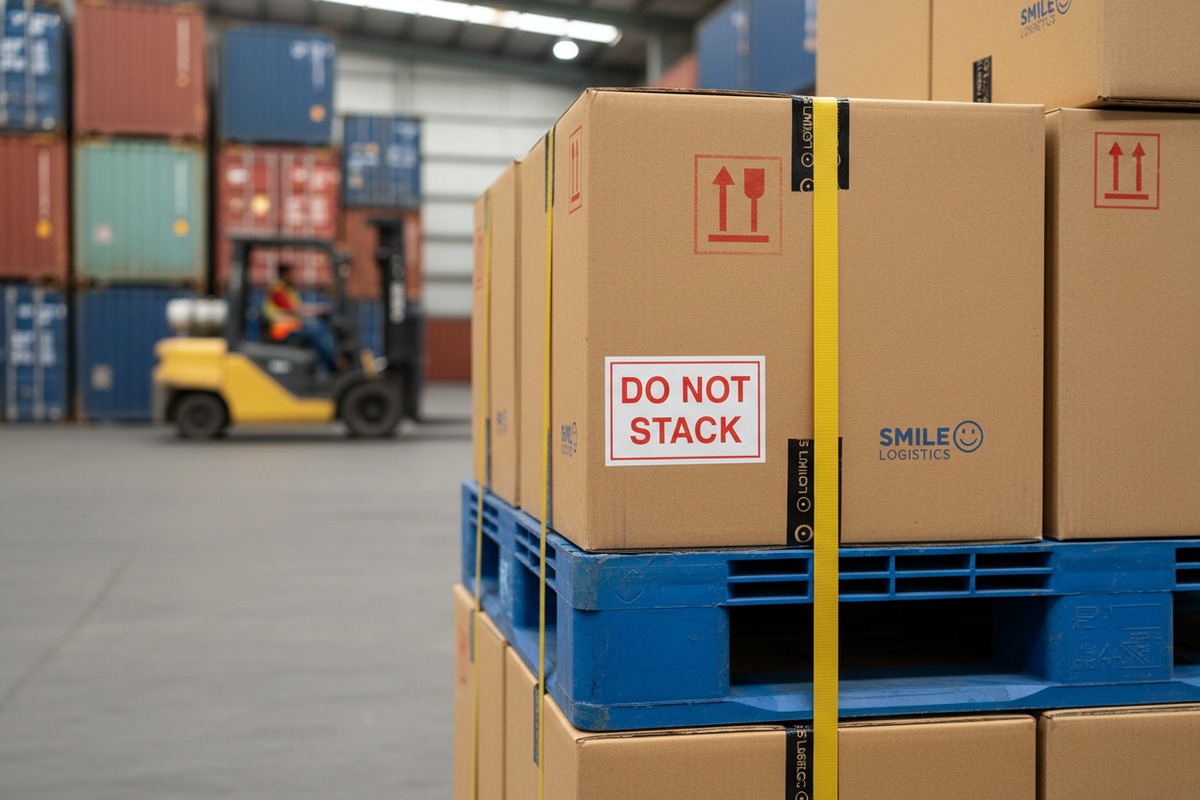
Be Full Container Load (FCL) shipping 3, you control the entire container. You decide what goes where. In LCL, your cargo shares space with goods from multiple shippers. The consolidation warehouse decides placement. Your fragile electronics might end up under someone else's heavy machinery parts. You have no say unless you communicate clearly before loading.
The problem gets worse at transshipment hubs. Your cargo may be unloaded, stored, and reloaded at intermediate ports. Each handling point introduces a new stacking risk.
Most crushing damage comes from a combination of these factors:
Your first line of defense is packaging. If your cartons can handle some top load, the risk drops significantly. Here is a quick comparison of packaging approaches:
| Packaging Method | Crush Resistance | Költség | Legjobb |
|---|---|---|---|
| Single-wall carton, no pallet | Very low | Lowest | Non-fragile, lightweight goods |
| Double-wall carton on wooden pallet | Közepes | Moderate | Semi-fragile goods under 30 kg per carton |
| Wooden crate with internal cushioning | Magas | Higher | Electronics, glass, precision instruments |
| Custom foam-lined carton on heavy-duty pallet | Very high | Highest | High-value fragile items |
Labels must be visible from every angle. Place "Do Not Stack" symbols and "Fragile" warnings on all four sides and the top of each pallet or carton. Use the international ISO 780 symbol 4 — the crossed-out stacked boxes icon. Warehouse workers in any country recognize it instantly.
But labels alone are not enough. Some warehouse staff ignore labels when they are under pressure to fill containers quickly. That is why written instructions to your forwarder matter just as much.
Based on our experience handling fragile LCL shipments, we follow a specific protocol. When a client flags their cargo as non-stackable, we position the pallets against the container wall or near the container door. We use the corner positions of the container, which naturally limit what can be placed on top. We then place inflatable dunnage bags 5 above the cargo to fill the gap between the freight and the container ceiling. This prevents other cargo from shifting or sliding onto fragile goods during transit.
One of our clients from Toronto, Canada shipped a single pallet of sensitive goods. The client required that absolutely nothing be placed on top of the pallet — during loading, warehouse storage, and ocean transit. We developed a custom loading plan, placed the pallet in a corner position against the container wall, secured it with dunnage bags overhead, and confirmed the arrangement with photographic proof before the container was sealed. The client approved the plan before we executed it, and the shipment arrived without any damage.
Our operations team coordinates directly with Chinese factories every day, and we know that unclear export packaging instructions are one of the biggest causes of stacking damage in LCL.
Give your Chinese supplier written instructions specifying pallet dimensions, carton stacking strength, maximum stack height, shrink wrap requirements, "Do Not Stack" label placement, and a clear statement that the pallet top must remain flat with no overhang — then confirm compliance with photos before shipment leaves the factory.
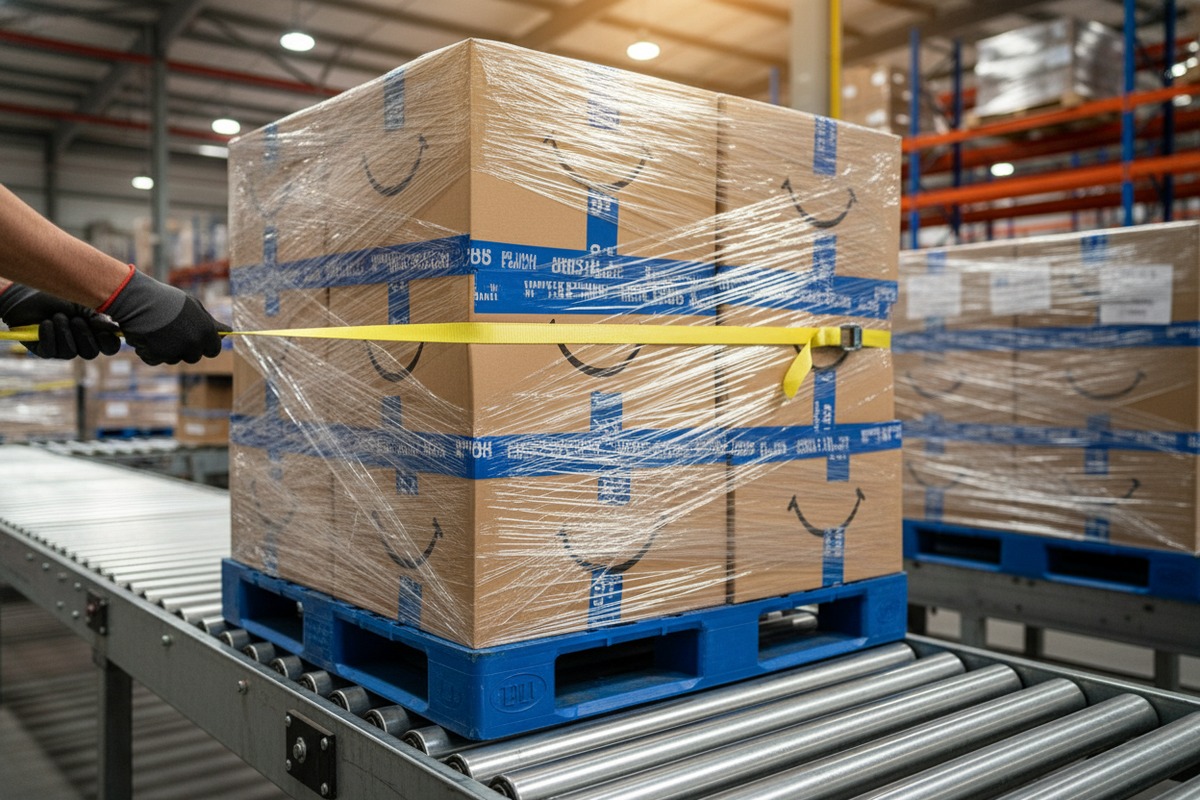
By the time your cargo reaches the consolidation warehouse, the packaging is already set. If your supplier packed goods in weak cartons, skipped palletization, or created an uneven top surface, the warehouse has no practical way to fix it. Prevention must start at the factory.
Here is a checklist of instructions to send to your supplier:
| Mistake | Why It Causes Stacking Damage | How to Prevent It |
|---|---|---|
| Cartons overhang pallet edges | Creates instability; warehouse staff may stack on uneven surface | Specify exact carton dimensions matching pallet footprint |
| Pyramid-style stacking on pallet | Leaves no flat top; other cargo slides onto lower cartons | Require flat, uniform top layer |
| No shrink wrap or loose wrap | Cartons shift during transport to warehouse | Require minimum 3 layers of stretch wrap |
| Missing handling labels | Warehouse treats cargo as stackable by default | Provide label templates to supplier |
| Single-wall cartons for heavy goods | Cartons collapse under any top load | Specify double-wall or triple-wall cartons |
Do not rely on verbal instructions alone. Send a written packaging specification document — ideally with diagrams or reference photos. Many Chinese factories are experienced with export packaging, but they default to whatever is cheapest unless the buyer specifies otherwise.
At MBMLOG, we help our clients draft these specifications. We also review supplier packaging photos before the goods leave the factory. If something does not meet the standard, we flag it immediately so the supplier can repack before the cargo enters our consolidation warehouse.
Once goods leave your supplier and arrive at the consolidation facility, your forwarder takes over handling responsibility. This is where a second layer of instructions matters. You should send your forwarder:
This two-stage instruction approach — first to the supplier, then to the forwarder — closes the gap where most stacking damage occurs.
When we quote LCL rates for Amazon FBA sellers, one of the most common questions is whether non-stackable handling costs extra — and the honest answer is that it depends on how it is handled.
Yes, requesting a "do not stack" policy may result in additional fees because non-stackable cargo occupies more effective space in a shared container, and the consolidator cannot place other freight above your pallet — but proper palletization and smart positioning can minimize or eliminate the surcharge.
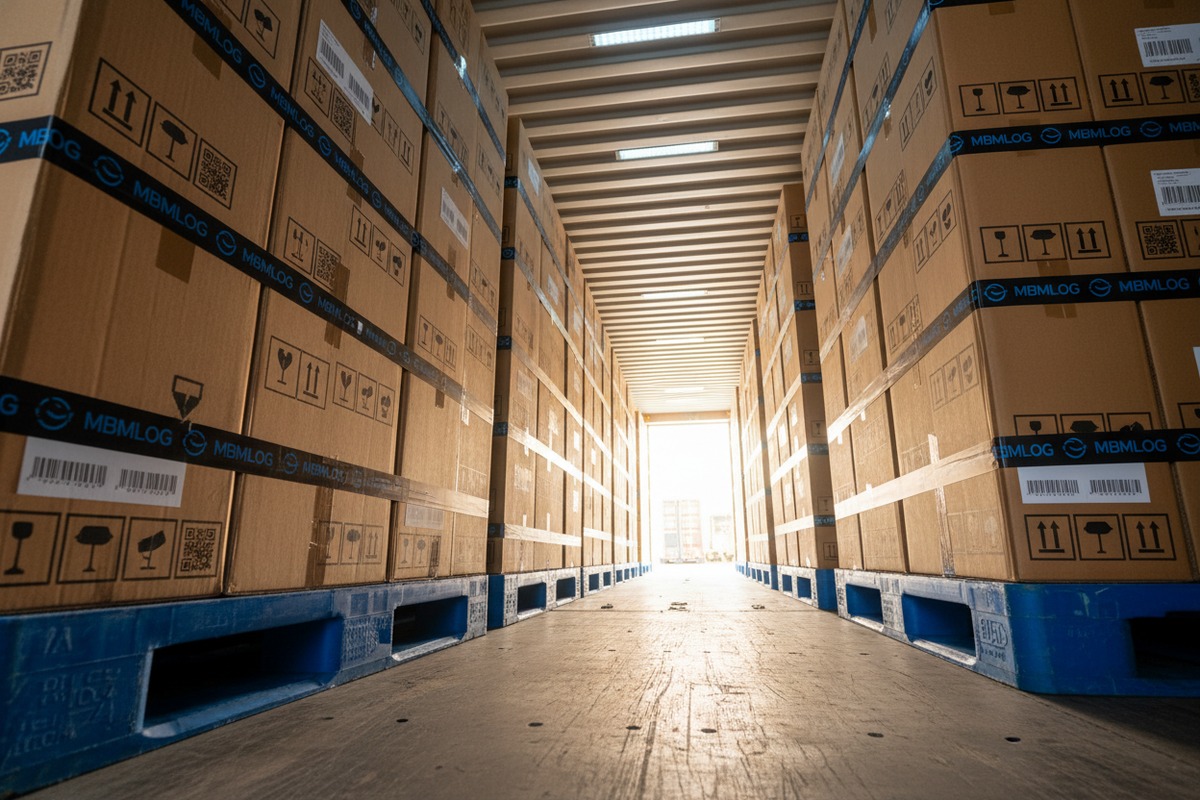
LCL pricing is based on volume (CBM) 7 or weight, whichever is greater. When your cargo is marked non-stackable, the consolidator loses usable space above your shipment. That dead space cannot generate revenue from other shippers. Some forwarders pass this cost to you as a surcharge. Others absorb it if the volume is small or the positioning works out naturally.
| Forgatókönyv | Likely Additional Cost | Megjegyzések |
|---|---|---|
| Small carton, non-palletized, marked "Do Not Stack" | Low to none | Easy to position in a gap or corner |
| Single pallet, 1.2 m × 1.0 m × 1.5 m tall | Moderate | May block stacking of ~1 CBM above the pallet |
| Multiple pallets, all non-stackable | Higher | Significant dead space; surcharge likely |
| Oversized or irregularly shaped cargo | Highest | Difficult to position; may require special handling |
The actual surcharge varies by forwarder. Some charge a flat fee per pallet. Others increase the CBM calculation to include the unusable space above your cargo. At MBMLOG, we try to find the most cost-effective solution by combining smart positioning with dunnage protection.
There are practical ways to reduce or avoid non-stackable surcharges:
Strengthen your packaging so the cargo becomes stackable. If your cartons and pallets can handle top load, you eliminate the restriction entirely. This is often cheaper than paying a non-stackable surcharge over multiple shipments.
Keep pallet height close to the container ceiling. If your pallet is already 2.3 m tall in a standard container (2.59 m internal height), there is almost no usable space above it anyway. The consolidator loses nothing.
Use corner or wall positioning. As we discussed earlier, placing cargo in corners reduces the practical stacking area above it. This approach often satisfies non-stackable requirements without formal surcharges.
Combine shipments. If you ship regularly, consolidating multiple orders into one larger LCL shipment or upgrading to FCL can eliminate the per-pallet non-stackable issue entirely.
Amazon FBA warehouses have strict receiving requirements. Pallets must meet specific size and weight standards. Labels must be placed correctly. If your cargo arrives damaged because of stacking, Amazon may reject the shipment or charge you for repackaging. The cost of a rejected FBA shipment — including storage penalties, re-delivery fees, and lost sales — far exceeds any non-stackable surcharge from your forwarder.
So the real question is not whether you can afford to request non-stackable handling. It is whether you can afford not to.
Over the years, we have built our DDP service specifically around the needs of Amazon sellers and e-commerce importers who cannot afford damaged inventory — and we have learned that safe handling starts with choosing the right logistics partner.
Choose a DDP shipping partner who operates their own consolidation warehouse, provides written load-planning commitments, sends photographic proof of container loading, has experience with Amazon FBA compliance, and offers transparent communication throughout the shipping process from China to your destination.

Not all freight forwarders handle non-stackable cargo the same way. Some treat "Do Not Stack" as a suggestion. Others enforce it as a strict operational rule. Here is how to evaluate potential partners:
Warehouse control. Does the forwarder operate their own warehouse, or do they outsource consolidation to a third party? When the forwarder controls the warehouse, they can enforce your handling instructions directly. When they outsource, your instructions pass through additional hands and may get lost.
Load-plan communication. Will the forwarder provide a draft load plan showing where your cargo will be placed in the container? At MBMLOG, we share loading plans with clients and confirm arrangements before sealing the container.
Photographic proof. Does the forwarder send photos of the loaded container showing your cargo's actual position? This is critical evidence if a damage claim arises later. It also gives you peace of mind before the container ships.
Amazon FBA expertise. Does the forwarder understand Amazon's receiving requirements? A partner who knows FBA compliance will naturally handle your cargo more carefully because they understand the downstream consequences of damage.
Insurance and claims support. Does the forwarder offer rakománybiztosítás 8 and assist with claims if damage occurs? Comprehensive insurance coverage for LCL shipments is essential backup protection.
Be cautious of forwarders who:
Before you commit to a DDP partner, ask these specific questions:
The answers will tell you everything you need to know. A reliable partner will answer confidently, provide specific details, and show willingness to accommodate your requirements. A partner who gives vague answers or avoids these questions is not the right fit for high-value or fragile cargo.
DDP (Vámfizetéssel Szállított) 10 means your forwarder handles everything from pickup in China to delivery at your door or Amazon warehouse — including customs clearance and duties. This single-provider model gives you one point of accountability. If your cargo is damaged during transit, there is no finger-pointing between multiple carriers, customs brokers, and trucking companies. Your DDP partner owns the outcome.
At MBMLOG, we coordinate every stage: factory pickup, warehouse consolidation, container loading, ocean freight, customs clearance, and final mile delivery. When a client tells us their cargo is non-stackable, that instruction flows through every stage of our process. We do not pass it along as a note and hope for the best. We enforce it at our own facility and verify it with photographic documentation.
Preventing cargo stacking damage in LCL shipping requires action at every stage — from supplier packaging to forwarder selection. Invest in strong palletization, clear labeling, written instructions, and a trusted DDP partner like MBMLOG who enforces your requirements from origin to destination.
1. Defines Less-than-Container Load shipping, where cargo shares space. ↩︎
2. Highlights the durability, sanitation, and longevity benefits of plastic pallets. ↩︎
3. Explains FCL shipping, where a single shipper uses the entire container. ↩︎
4. Details the international standard for pictorial marking for handling goods. ↩︎
5. Explains how inflatable dunnage bags secure cargo and prevent movement during transit. ↩︎
6. Describes ISPM 15 standards for treating wood packaging to prevent pest spread. ↩︎
7. Defines CBM as a unit of measurement for freight volume and its impact on shipping costs. ↩︎
8. Explains marine cargo insurance, protecting goods against loss or damage during transit. ↩︎
9. Provides Amazon's official requirements for FBA shipments, including packaging and labeling. ↩︎
10. Defines DDP Incoterms, where the seller bears maximum responsibility for delivery and duties. ↩︎