

Að vita hvaða skjöl eru nauðsynleg til að flytja rafmagnslyftara inn í Evrópu getur ákveðið hvort skúrinn þinn losni á dögum eða sitji í höfn. IMDG hættuleg vöru yfirlýsing 1. Liðið okkar í Zhengzhou sér þetta vikulega. Eitt vantað vottorð getur krafist skoðana, geymslugjalda og reiðra endanotenda sem bíða eftir búnaði. Eftir að hafa samræmt hundruð lyftaraflutninga frá kínverskum verksmiðjum höfum við lært nákvæmlega hvaða skjöl evrópsku tollverðir biðja um — og hvaða skjöl innflytjendur gleyma.
Til að flytja rafmagnslyftara inn í Evrópu þarftu viðskiptareikning, pökkunarlista, flutningaskjal, upprunavottorð, EORI númer, yfirlýsingu um samræmi við CE merkingu, tækniskjal, auk skjala fyrir líþíum rafhliðar: UN38.3 prófskýrslu, SDS, og yfirlýsingu um hættulegar vörur þar sem það á við.
Það er stutta svarið. En raunveruleg myndin skiptist í tvo flokka: tollaskjöl og vöru-samræmisskjöl. Leyfðu mér að leiða þig í gegnum báða, skref fyrir skref.
Hvaða innflutningsskjöl þarf ég fyrir rafknúnar gaffalhjörð sem koma til Evrópu?
Síðasta vor hjálpuðum við hollenskum dreifingaraðila sem gaffalagrinn hans kom til Rotterdam áður en pappírar hans komust þangað. Ílátinu beið í ellefu daga. Sú reynsla mótaði fyrirkomulag okkar fyrir pappíraferlið fyrir brottför.
Til að fá tollafgreiðslu þarftu viðskiptafaktúru með réttri tæknilegum upplýsingum, pakkalista, flutningaskjal (Bill of Lading), upprunavottorð, EORI númer fyrir innflytjandann og eitt stjórnunar skjal (Single Administrative Document - SAD) skráð fyrir tolls- og VSK-mat samkvæmt HS Kóða 8427.10.
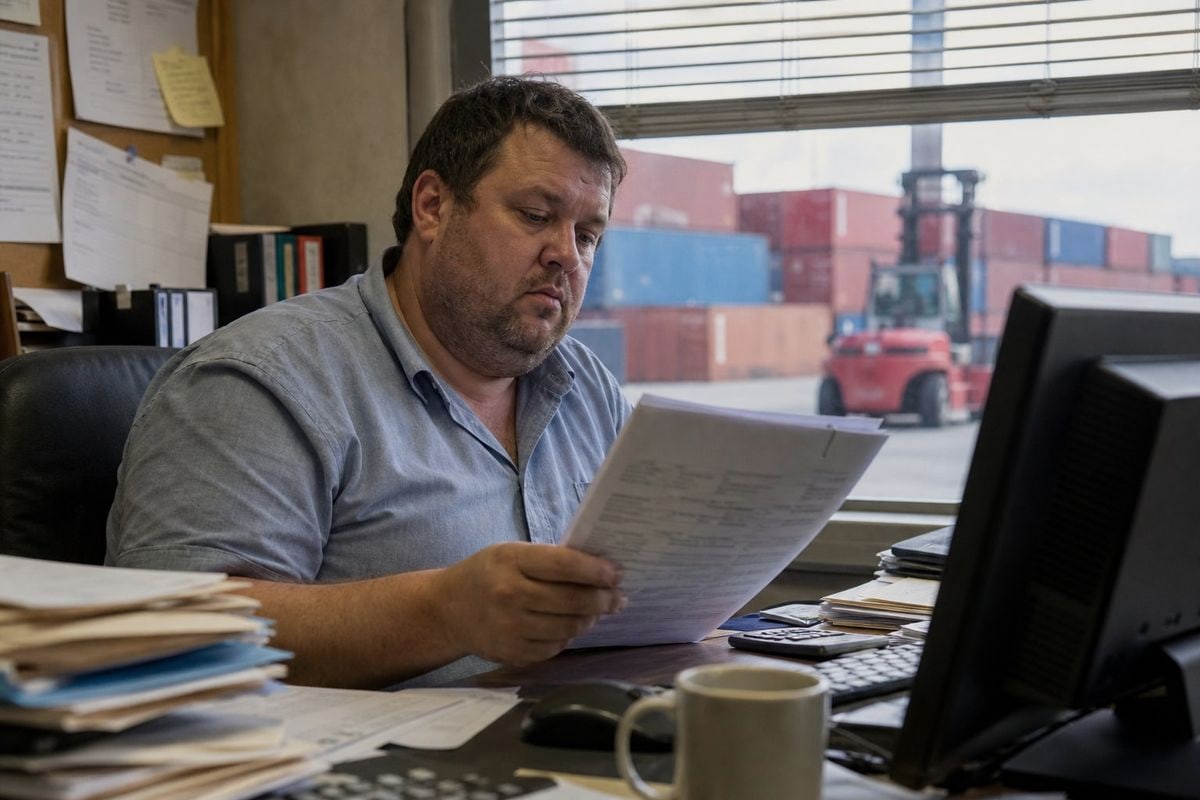
Evrópskir tollgæslumenn vinna fyrst úr pappírum og síðan úr sendingum. Ef skjölin eru fullkomin og samhljóða, þá fara flestar gaffalagríðar í gegnum tollinn án líkamlegrar skoðunar. Ef þau eru ósamhljóða, þá er ílátinu flaggað. Svo markmiðið er ekki bara að hafa skjölin. Það er að tryggja að þau segi öll sömu söguna.
Kjarnatollaskjalasettið
Hér er staðlaða settið sem við staðfestum áður en eitthvert gaffal ílát fer frá Kína:
| Skjal | Tilgangur | Algengur vandamál |
|---|---|---|
| Viðskiptareikningur | Veitir gildi, gerð, magn, lyftugetu, rafhlöðuspennu | Óljós lýsingar eins og "gafl" án sérstakra upplýsinga |
| Pökkunarlisti | Sýnir pakkatölu, þyngdir, stærðir | Þyngdir sem passa ekki við flutningaskjalið |
| Farmbréf | Sönnun um sendingu og móttakanda upplýsingar | Rangt nafn á móttakanda eða tilkynningarskiptin |
| Upprunavottorð | Stuðlar að tollflokkaskiptingu og krafna um fyrirmyndir | Vantar þegar skylda fyrirmynd var vænt |
| SAD (Einstakt stjórnunar skjöl) | Opinber tollaskýrsla fyrir aðflutningsgjaldi og VSK | Skráð með röngum HS kóða |
| EORI númer 2 | Identifíkar innflutningsaðila í Evrópusambandinu | Innflutningsaðili aldrei skráð áður en aflýsing fór fram |
Af hverju skiptir HS númer svo miklu máli
Rafmagns gaffalhjól falla venjulega undir HS númer 8427.10 3 — sjálfknúnar vörubílar drifnir af rafmótor. Innflutningsgjaldið og VSK eru reiknuð út frá þessari flokkun. Þegar við undirbúum útflutningsyfirlýsingar í Kína, samhæfum við númerið okkar við það sem innflutningsumboðsmaðurinn mun skrá í ESB. Ósamræmi milli beggja aðila er ein af hraðvirkustu leiðunum til að fá tollspurningu.
Fellibaldið með EORI númerinu
Hinn EORI númer er ein verður að gleyma, því að það er alls ekki flutningaskjal. Það er skráning. Fyrstgangandi EU innflytjendur uppgötva stundum við ákvörðun að þeir geta ekki einu sinni skilað yfirlýsingu. Við biðjum nú alla nýja evrópska viðskiptavini um EORI númer þeirra áður en við bókum skipið.
Hvernig fer ég að því að meðhöndla skjalavinnslu fyrir lítíum rafgeymana fyrir evrópska toll?
Viðskiptafórn sem við metum við hverja bókun á líþíum gaffalargerð er hraði á móti samþykki flutningsaðila. Það er gott að bóka hratt. En að bóka áður en pappírar um rafhlöðuna eru staðfestir er hvernig sendingar verða tefldar á uppruni.
Líþíum-rafhlöðugafflar þurfa UN38.3 prófunarskýrslu sem sannað er að rafhlaðan hafi staðist öryggisprófanir við flutning, öryggisgagnaskjal (SDS/MSDS), IMDG hættulegra efna skýrsla fyrir sjóflutninga þar sem við á, og skjalfert ástand rafhlöðunnar sem er eða undir 30% við hleðslu.
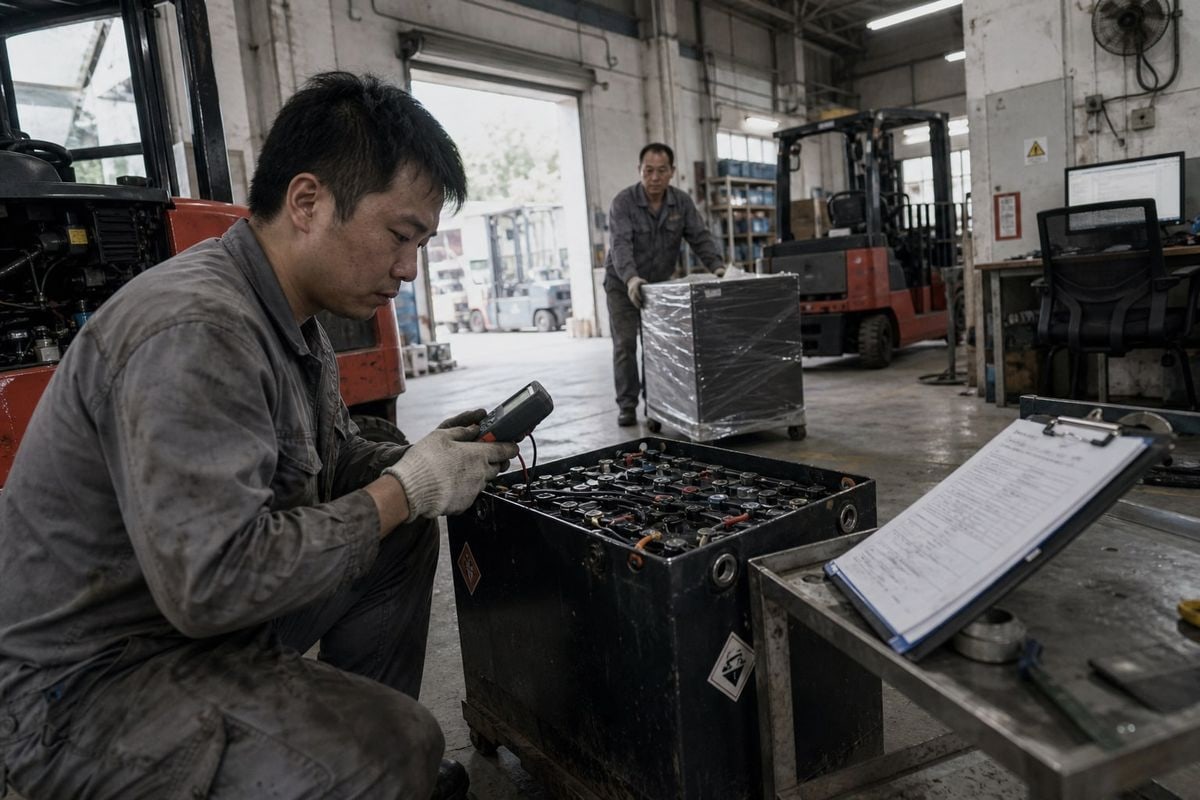
Rafhlöðuskjöl sitja við skörun tveggja regla kerfa. Flutningsreglur stjórna hvernig rafhlaðan fer. Vöru reglur stjórna hvort hún geti verið seld. Evrópskir tollar og flutningsaðilar veita báðum gaumur, svo skjal þitt þarf að uppfylla báðar kröfur.
Fjórir rafhlöðuskjøl sem flutningsaðilar og tollar búast við
| Skjal | Hvað það sanna | Hver spyr um það |
|---|---|---|
| UN38.3 prófunarskýrsla/ferill | Batterían hlaut hæðar-, titrings-, áfalls- og hitaprófanir fyrir flutning | Sjóflutningsfyrirtæki, tollar, tryggingar |
| SDS / MSDS | Chemical composition and emergency handling information | Carriers, port authorities |
| IMDG DG Declaration | The cargo is properly declared as dangerous goods by sea | Ocean carriers, port operators |
| State of Charge record | The battery was at or below 30% charge at loading | Carriers, per current logistics guidance |
Get the Documents Before the Cargo Moves
In our experience handling lithium battery cargo from Chinese factories, the biggest risk is timing. Some suppliers only produce the UN38.3 summary after you ask. Others send a report for a different battery model than the one installed. We request battery specifications — chemistry, voltage, watt-hours — from the factory at the quotation stage, then match the UN38.3 report against the actual battery nameplate before the forklift is loaded. That single check has saved clients from port rejections more than once.
Watch the EU Battery Regulation Timeline
There is an emerging development worth flagging. Industry sources report that the EU Battery Regulation will bring new obligations for rechargeable industrial batteries above 2kWh from August 18, 2026 — a threshold most lithium forklift packs exceed. Treat this as a development to verify against the official regulation text, but if you import regularly, start asking your battery suppliers now what compliance evidence they can provide.
Hvaða vottanir þarf rafknúna gaffalhjörðin mín að hafa til að hreinsa evrópska toll?
A German buyer once asked us why customs questioned his shipment when the supplier had "already sent the CE certificate." We reviewed it together. It was a one-page reseller statement with no technical file behind it. That is not compliance.
Your electric forklift needs CE Marking backed by an EU Declaration of Conformity issued by the manufacturer, a complete technical file with risk assessments and test reports under the Machinery Directive 2006/42/EC framework, and an operator manual in the destination country's official language.
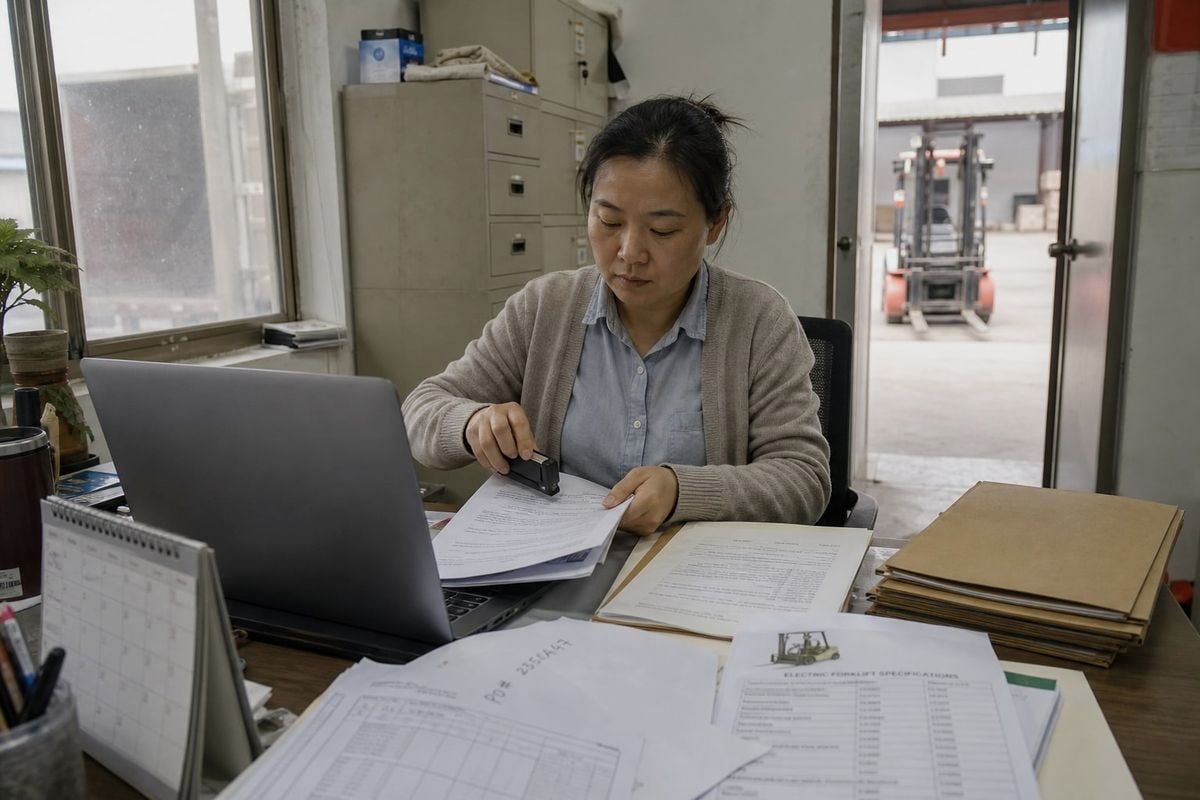
The EU treats forklifts as industrial machinery. That means market-access compliance is driven by the Machinery Directive 2006/42/EC 4 and its successor framework, plus related requirements like EMC. Customs officers and market surveillance authorities can both ask for proof. Here is what that proof actually looks like.
The Compliance Package, Layer by Layer
- CE Marking on the machine itself. The physical mark on the forklift, applied by the manufacturer, signaling declared conformity with applicable EU rules.
- EU Declaration of Conformity. A signed document from the manufacturer — not a trading company — listing the machine, the directives applied, the standards used, and the manufacturer's details, plus an EU authorized representative where applicable.
- Technical File. The evidence behind the declaration: design drawings, calculations, risk assessments, and test reports. Authorities can demand it. If it does not exist, the CE mark is effectively hollow.
- Instruction handbook in the local language. The operator manual must be available in the official language of the destination country. This is one of the easiest requirements to miss in a cross-border deal — a manual in English does not satisfy a French or Polish authority.
Why the Manufacturer Must Stand Behind the Paperwork
Here is the point we push hardest with clients sourcing from Chinese factories: the Declaration of Conformity must trace back to the actual manufacturer and a real technical file. A reseller's photocopied "CE certificate" carries little weight if surveillance authorities investigate. Before we accept a booking, we ask the factory who issued the declaration and whether the technical file exists. It takes one email. It can prevent a seized shipment.
Emerging Documentation Layers to Watch
Beyond the machinery core, newer EU frameworks are starting to touch advanced forklifts. Forklifts with autonomous navigation may fall under AI Act technical documentation requirements. Connected "smart" fleet units may face Cyber Resilience Act software transparency expectations. REACH obligations, including SCIP database notification for substances of very high concern, can also apply. These are not yet routine customs asks for standard electric forklifts, but importers building long-term programs should track them.
Hvaða pappírsmistök gætu seinkað sendingu gaffalhjólarans míns í Evrópu?
The hardest lesson from our early years forwarding machinery was this: documents are rarely missing entirely. They are inconsistent. And inconsistency is what customs systems are built to catch.
The costliest mistakes are mismatched values or weights across documents, wrong HS code classification, relying on a reseller's CE statement without a technical file, missing or mismatched UN38.3 battery reports, no EORI registration, and manuals not translated into the destination language.
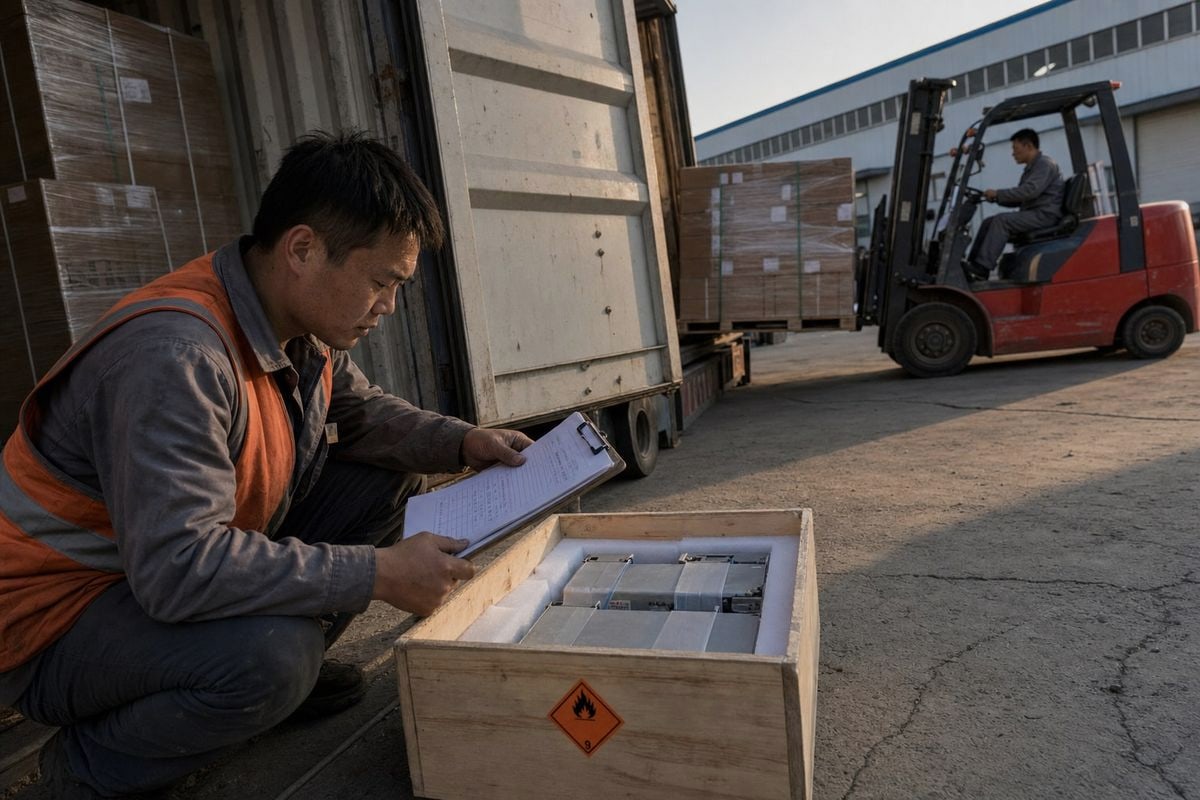
Every one of these mistakes is preventable before the vessel sails. Once the container reaches a European port, fixing paperwork means storage charges, demurrage, and missed delivery promises to your own customers. Here is how we rank the risks based on what we see in real shipments.
Mistake Severity and Prevention
| Mistake | Typical Consequence | Forvarnarskref |
|---|---|---|
| Invoice, packing list, and Bill of Lading don't match | Customs query, possible inspection | Cross-check all three before departure |
| Wrong HS code (not 8427.10 for electric units) | Reassessed Import Duty and VAT, penalties | Confirm classification with the EU broker early |
| CE declaration from a reseller, no technical file | Detention or refusal at market surveillance | Demand the manufacturer's Declaration of Conformity |
| UN38.3 report for a different battery model | Carrier rejection or port hold | Match report to the battery nameplate |
| No EORI number registered | Clearance cannot start | Register weeks before arrival |
| Manual only in English | Non-compliance flagged after import | Request local-language manuals at purchase |
A Pre-Departure Checklist Beats a Post-Arrival Scramble
We run document checks at three stages: before purchase confirmation, before container loading, and before the export declaration is filed. At the purchase stage, we verify the factory can produce the EU Declaration of Conformity and battery reports. At loading, we photograph nameplates and record the battery state of charge. Before departure, we reconcile the invoice, packing list, Certificate of Origin, and Bill of Lading line by line. It is unglamorous work. It is also why most of our European forklift shipments clear without a single customs question.
Budget Time, Not Just Money
One more practical note. Fixing a missing Certificate of Origin or re-issuing a Declaration of Conformity from China can take one to two weeks with courier time and factory response delays. If your forklift is already sitting at Hamburg or Rotterdam during that period, storage costs stack up daily. Building a document buffer into your schedule is cheaper than any port storage invoice you will ever pay.
Niðurstaða
Importing electric forklifts into Europe demands customs documents, CE compliance papers, and lithium battery evidence. Verify everything before departure — our team checks each file so your forklifts clear without delays.
Athugasemdir
1. International Maritime Organization page detailing the framework for transporting dangerous goods like lithium batteries. ↩︎
2. Official EU guidance on the mandatory registration number required for all importers of record. ↩︎
3. The EU Access2Markets portal provides official tariff and classification data for specific product codes. ↩︎
4. European Commission site outlining the safety and compliance requirements for industrial machinery. ↩︎




