

Il trasporto porta a porta per carrelli elevatori elettrici dalla Cina sembra semplice finché una spedizione non si ferma al porto. Nel nostro ufficio logistico di Zhengzhou, vedo casi di carico arenati ogni mese.
Il trasporto porta a porta per carrelli elevatori elettrici dalla Cina significa che un'unica agenzia di spedizioni gestisce il ritiro in fabbrica, le dogane per l'esportazione, il trasporto marittimo, lo sdoganamento all'importazione, i dazi e le tasse, e la consegna finale con camion al tuo magazzino. Firmi un contratto, ricevi un preventivo e segui un'unica parte responsabile dall'inizio alla fine.
Questa è la risposta breve. Ma i dettagli contano, soprattutto con batterie al litio 1 coinvolte. Lasciami guidarti attraverso l'intero processo, i costi e i rischi passo dopo passo.
Quali Passi Sono Coinvolti nel Trasporto Porta a Porta per il Mio Ordine di Carrelli Elevatori Elettrici?
Nell'ultimo trimestre, il nostro team ha coordinato una spedizione di sei carrelli elevatori elettrici da una fabbrica in Anhui a un magazzino di un distributore in Texas. Ogni fase ha seguito una sequenza fissa, e saltare qualsiasi passaggio crea ritardi.
La spedizione porta a porta segue sei passaggi principali: confermare le specifiche del carrello elevatore e i documenti della batteria, concordare l'Incoterm e il preventivo, organizzare il ritiro dalla fabbrica e il caricamento del container, completare la dichiarazione di esportazione dalla Cina, spedire via nave, quindi gestire lo sdoganamento a destinazione e la consegna dell'ultimo miglio al tuo sito.
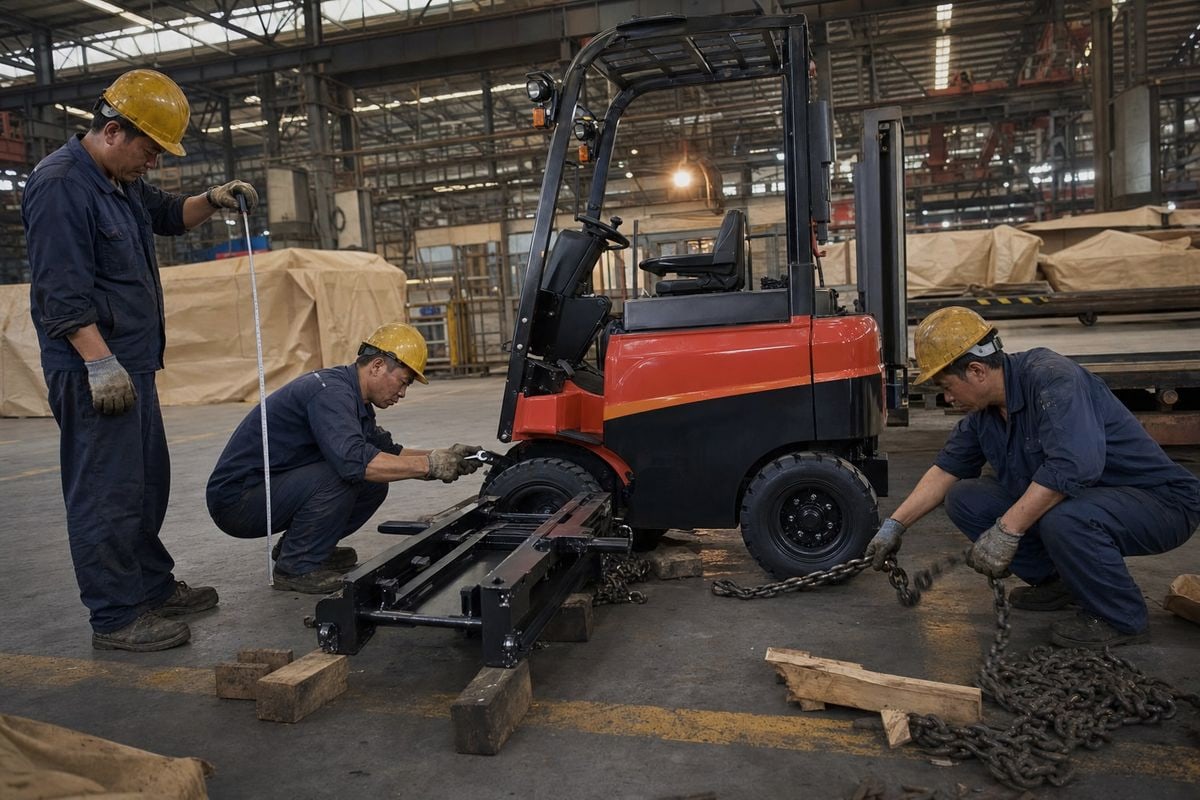
Il flusso di lavoro inizia prima che qualsiasi camion si muova. Innanzitutto, confermiamo il modello del carrello elevatore, le dimensioni, il peso e la capacità di sollevamento. Un carrello elevatore elettrico da 3 tonnellate con il braccio sollevato non entrerà in un container standard, quindi controlliamo le altezze in anticipo. Poi verifichiamo il tipo di batteria, la capacità, la tensione del caricabatterie e la documentazione richiesta come il riepilogo del test UN38.3 e le schede SDS/MSDS.
Successivamente, concordiamo il termine commerciale. Per un vero servizio porta a porta, ciò significa solitamente Incoterms DAP o DDP 2. Una volta confermato, programmiamo il ritiro dalla fabbrica cinese e coordiniamo il caricamento con strumenti di bloccaggio, rinforzi, catene e materiali di copertura. Il serraggio pesante è importante qui. Il contrappeso e il braccio devono essere assicurati contro le G-forze del transito marittimo, altrimenti l'unità si sposterà e si danneggerà.
Le Sei Fasi in Ordine
| Fase | Cosa Succede | Chi Se Ne Occupava |
|---|---|---|
| 1. Controllo pre-quotazione | Conferma dimensioni, peso, specifiche della batteria, UN38.3, SDS | Spedizioniere + fabbrica |
| 2. Quotazione e Incoterm | Accordo sul campo DAP o DDP, dettagliare le spese | Spedizioniere + acquirente |
| 3. Ritiro e carico | Ritiro in fabbrica, piegatura del braccio se necessario, bloccaggio del container | Spedizioniere |
| 4. Dichiarazione di esportazione | Procedura doganale in Cina, Documento di Trasporto emesso | Spedizioniere |
| 5. Transito marittimo | FCL trasporto marittimo al porto di destinazione | Vettore |
| 6. Importazione e consegna | Sdoganamento, dazi, trasporto pesante fino a casa tua | Spedizioniere + intermediario doganale |
Un consiglio pratico dalla nostra esperienza di carico: un approccio Semi-Knocked Down (SKD), dove stacchiamo o pieghiamo il palo e la protezione superiore, consente spesso a un carrello elevatore di adattarsi a un container standard invece di un costoso container high-cube o flat rack. Questa singola decisione può far risparmiare soldi reali.
Dopo il carico, presentiamo la dichiarazione di esportazione cinese. I veicoli industriali a motore elettrico possono anche beneficiare della priorità di esportazione "Green Channel" della Cina nell'ambito delle iniziative nazionali di esportazione "New Three", che velocizzano il processo doganale. Poi il container salpa, sgranchiamo le dogane di destinazione e un camion pesante completa la consegna dell'ultima miglio.
Quanto Costa il Trasporto Porta a Porta per Carrelli Elevatori Elettrici dalla Cina?
Un acquirente mi ha raccontato che il suo preventivo per il carrello elevatore sembrava ottimo finché le spese di destinazione non hanno raddoppiato il suo budget. Questa conversazione è il motivo per cui itemizziamo ogni voce di costo prima che un cliente confermi un ordine con la fabbrica.
Il costo porta a porta combina il ritiro in fabbrica, la gestione all'export, il trasporto marittimo, le spese portuali, la sdoganamento, le tasse e dazi d'importazione, l'assicurazione e il trasporto finale. Il costo totale a destinazione dipende dalle dimensioni del carrello elevatore, dal tipo di batteria, dalla scelta del container, dalla rotta e dalle tariffe di destinazione, quindi richiedi sempre un preventivo DDP dettagliato.
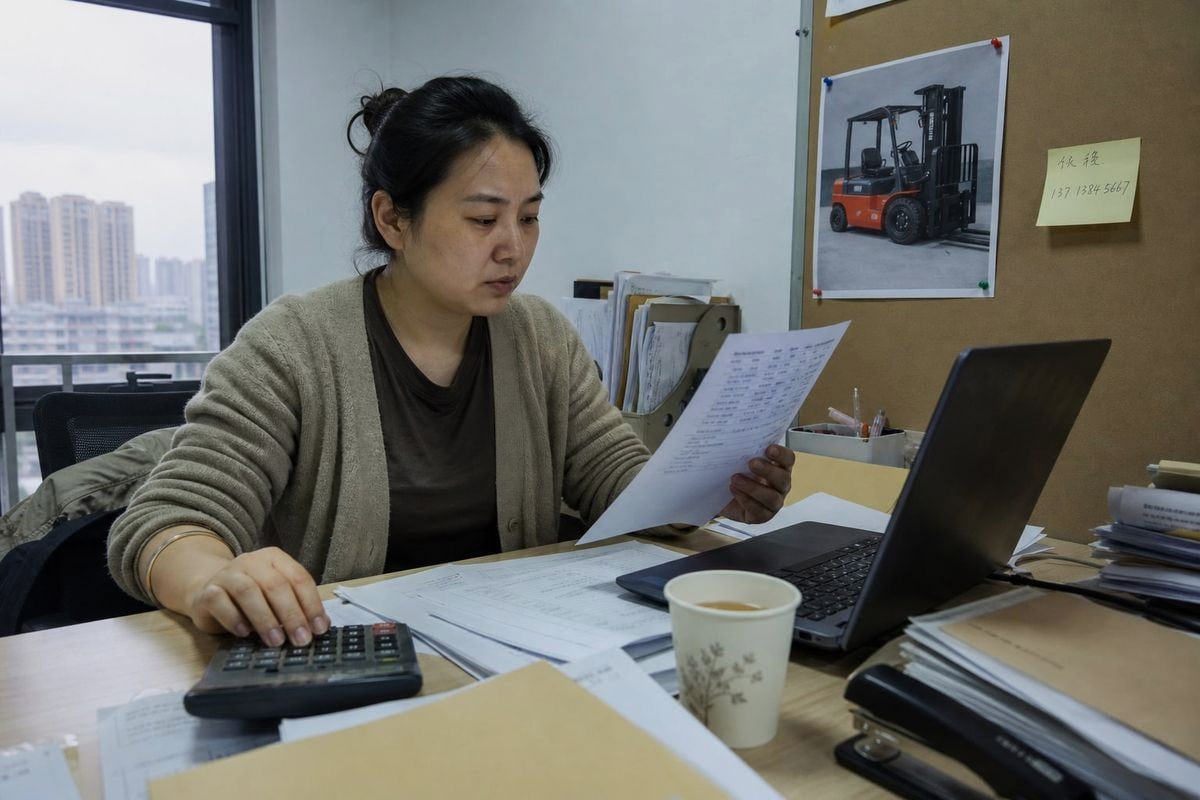
Non esiste un prezzo globale unico, e chiunque fornisca un numero senza chiedere le specifiche del tuo carrello elevatore sta facendo una supposizione. Ciò che posso darti è la struttura dei costi completa in modo che nulla ti sorprenda in seguito.
Le Principali Voci di Costo
| Componente di costo | Descrizione | Impatto Tipico |
|---|---|---|
| Ritiro interno in Cina | Trasporto dalla fabbrica al magazzino di carico o al porto | Basso a moderato |
| Export handling | Documentation, export declaration, terminal fees | Basso |
| trasporto marittimo | FCL container rate on your route | Largest single item |
| Destination port charges | Terminal handling, container release fees | Moderato |
| Customs clearance services | Broker filing and entry processing | Basso |
| Dazi e tasse di importazione | Based on Codice HS 3 and origin | Can be significant |
| Marine insurance coverage | Protects high-value cargo in transit | Small, worth it |
| Consegna dell'ultimo miglio | Heavy-haul trucking to your warehouse | Moderato |
Duty calculation starts with correct classification. The HS Code for forklifts is typically 8427.10 for self-propelled electric units. For US-bound shipments, that code also determines whether Tariffe della Sezione 301 4 apply, which can materially raise the landed cost. Getting the code wrong risks both overpayment and customs penalties.
Container utilization is the other big lever. When we plan loadings, we compare 20FT, 40FT, and 40HQ options against the forklift count and dimensions. Filling unused space with chargers, batteries, and spare parts from other suppliers through multi-supplier consolidation drops the per-unit freight cost noticeably. FCL and LCL shipping both exist as options, but for complete forklifts, FCL is almost always safer and often cheaper per unit once you ship two or more machines.
Finally, watch quote scope. A "door-to-door" quote is not automatically DDP. Some quotes exclude duties, port surcharges, or delivery fees. Ask directly: does this price include import duties and taxes, or not?
Il Trasporto Porta a Porta Può Gestire Carrelli Elevatori con Batteria al Litio in Sicurezza e Legalità?
Battery paperwork is where I see the most shipments go wrong. Before we book any lithium battery forklift, our team collects the battery documents from the factory and confirms carrier acceptance in writing, because a rejected container at port is expensive for everyone.
Yes, lithium battery forklifts ship legally door-to-door when handled correctly. The battery needs a UN38.3 test summary and SDS/MSDS documents, possible Class 9 dangerous goods procedures, written carrier acceptance before loading, and often a maximum 30% state of charge for transit.
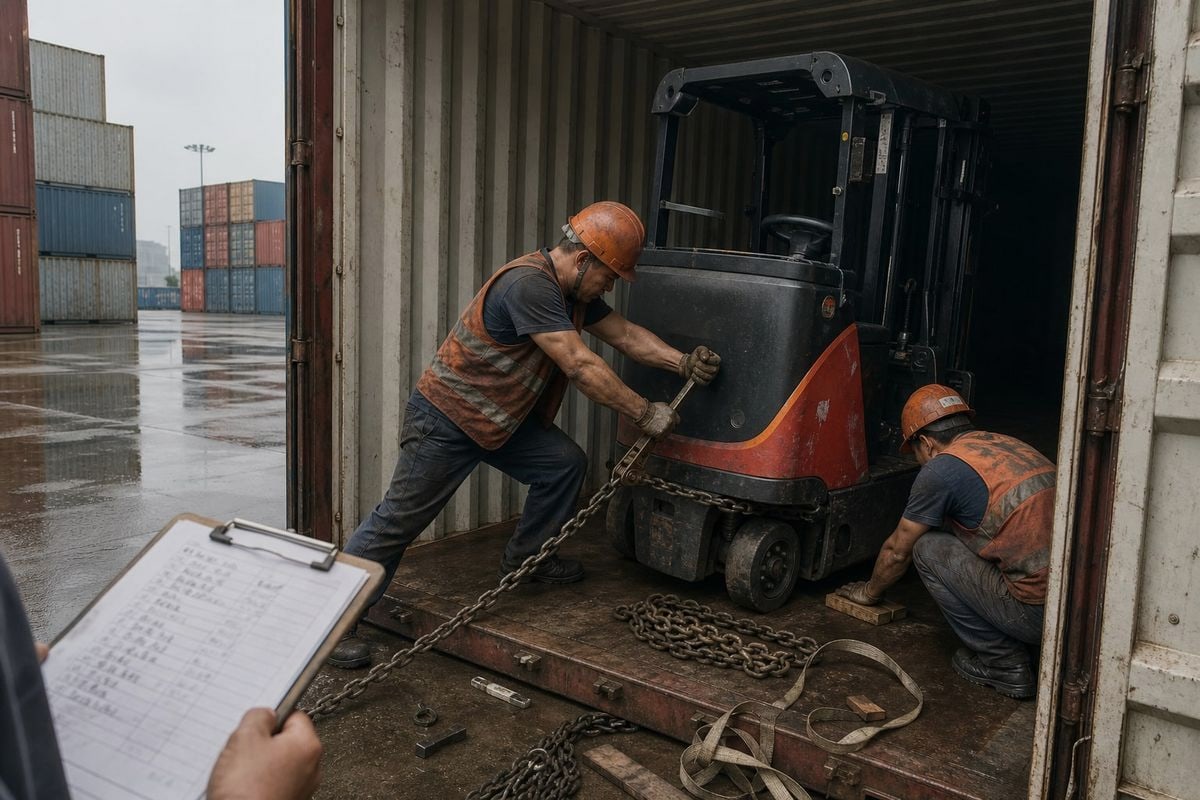
Lithium battery shipping regulations exist because these batteries carry fire risk under international maritime rules. An electric forklift with an integrated lithium pack may be treated as Class 9 dangerous goods, which triggers extra declarations, labeling, and carrier checks. Not every vessel or route accepts DG cargo, so we secure written confirmation from the carrier that the specific vessel and route accept the shipment before the container is loaded. Skipping this step is how containers get rolled at port.
The Documents You Need
- riepilogo del test UN38.3 — proves the battery pack passed the required transport safety tests. No serious carrier accepts lithium cargo without it.
- SDS/MSDS — the safety data sheet describing the battery chemistry and handling requirements.
- Dichiarazione DG — filed when the shipment falls under Class 9 dangerous goods rules.
- Destination certifications — CE marking for EU-bound forklifts, and UL-certified chargers for US-bound units.
Preparation Before Sealing the Container
State of charge matters. Shipping safety protocols often mandate a maximum 30% SoC for lithium batteries during ocean transit. Plan for this: the forklift will arrive with a low battery, so you need industrial-grade charging infrastructure ready at your warehouse on delivery day. We also confirm charger voltage matches your local grid before shipment, because a mismatched charger makes the forklift unusable on arrival, and replacing it later by air freight is costly.
Lead-acid battery forklifts follow a simpler path, but they still need proper securing and electrolyte-safety checks. Either way, a freight forwarder China buyers can rely on should raise every battery question before cargo leaves the factory, not after it reaches the port.
Perché Dovrei Scegliere il Trasporto Porta a Porta Invece di Gestire Io Stesso il Trasporto?
The trade-off I discuss most often with US forklift dealers is control versus convenience. Managing FOB freight yourself gives cost visibility. Handing the whole chain to one forwarder gives simplicity. Which one wins depends on your experience and your team.
Door-to-door shipping consolidates six or more logistics parties into one accountable provider, reducing coordination burden, customs risk, and timeline surprises. First-time and small-team importers usually benefit most, while experienced importers with established brokers may prefer FOB and their own forwarder.
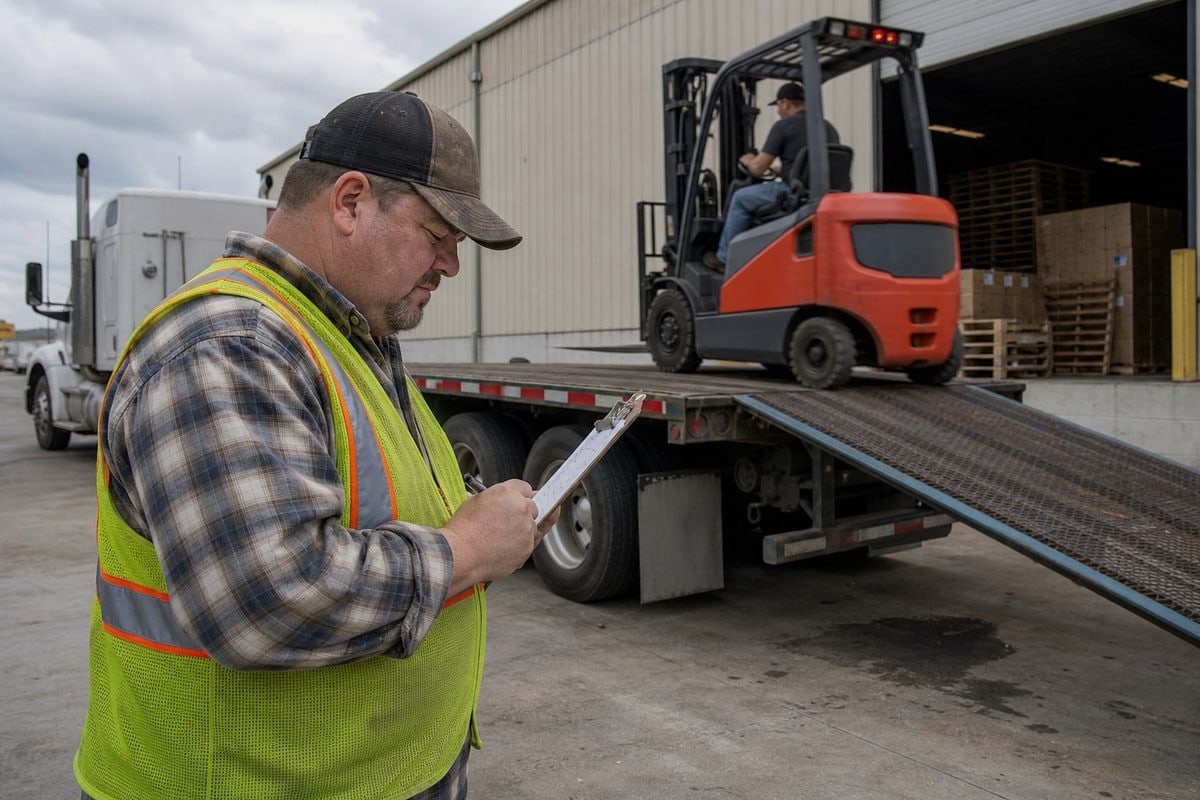
Managing freight yourself under EXW or FOB means you separately coordinate a Chinese trucker, a loading warehouse, an ocean carrier or forwarder, a customs broker, and a destination trucking company. Each handoff is a gap where things get dropped. If your forklift sits at port because the broker never received the Bill of Lading or the battery documents, storage and demurrage charges accumulate daily, and every party points at the other.
How Each Incoterm Shifts Responsibility
| Incoterm | Seller/Forwarder Covers | Buyer Covers |
|---|---|---|
| EXW | Nothing beyond factory gate | Everything, including China pickup and export |
| FOB | Delivery to Chinese port, export clearance | Ocean freight, insurance, import, delivery |
| CIF | Freight and insurance to destination port | Import clearance, duties, local trucking |
| DAP | Everything to your named address | Import duties and taxes only |
| DDP | Everything, including duties and taxes | Unloading at your dock |
DDP Incoterms come closest to a genuinely hands-off import. You receive one quote, and the forwarder absorbs the compliance work: export declaration, DG handling, customs clearance services at destination, duty payment, and delivery scheduling. The honest trade-off is visibility. A bundled price can hide individual cost components, so I always advise buyers to demand an itemized quote even on DDP terms. A forwarder that refuses to itemize is telling you something.
There is also a market context worth noting. More buyers now import electric forklifts factory-direct from China, driven by sustainability demand and price pressure. That trend pulls in first-time importers without logistics teams, and it is exactly where end-to-end coordination adds the most value. Our own door-to-door customers are often dealers buying forklifts from Factory A, batteries from Factory B, and chargers from Factory C; consolidating everything into one container through one provider is far simpler than juggling three shipments.
One last step matters after delivery. Ocean transit exposes the machine to salt air for weeks. Before first operation, have a technician inspect the electronic contactors and hydraulic seals as part of post-delivery commissioning. It takes an hour and prevents warranty disputes later.
Conclusione
Door-to-door shipping turns a complex forklift import into one managed project. Verify battery documents, demand itemized DDP quotes, and choose a forwarder experienced with heavy, battery-powered equipment.
Note a piè di pagina
1. Official UN body regulating the international transport of dangerous goods, including lithium battery safety standards. ↩︎
2. The International Chamber of Commerce is the official authority defining global Incoterms for international trade. ↩︎
3. The World Customs Organization manages the Harmonized System used globally for product classification and duty calculation. ↩︎
4. Official USTR resource regarding trade enforcement and tariffs applied to goods imported from China. ↩︎




