

저희 운영팀은 매주 여러 국가에서 수십 개의 세관 신고서를 제출합니다. 한 번의 기한을 놓치거나 잘못된 HS 코드 하나로 전체 화물이 지연될 수 있습니다. 북미와 유럽의 세관 시스템 간의 차이는 경험이 많은 수입업자조차도 혼란스럽게 합니다.
AMS와 ISF5는 CBP에 의해 요구되는 미국 전용 사전 화물 보안 신고이며, ENS는 유럽 연합의 도착 전 신고와 동일하며, eManifest는 캐나다의 전자 도착 전 시스템입니다. 각 시스템은 서로 다른 신고자, 기한, 데이터 요소 및 처벌을 가지고 있으므로 운송업체는 비용이 많이 드는 지연 및 벌금을 피하기 위해 모든 요구 사항을 이해해야 합니다.
아래에서 우리는 각 시스템을 나란히 나누어 설명합니다. 누가 무엇을 신고하는지, 언제 기한이 도래하는지, 어떤 데이터가 필요한지, 잘못 신고했을 경우 어떤 일이 발생하는지 다룹니다. 각 항목을 함께 살펴보며 자신 있게 배송할 수 있도록 안내하겠습니다.
내 미국 주문의 AMS와 유럽 배송의 ENS를 어떻게 구분하나요?
저희가 정저우 창고에서 두 대륙의 항구로 화물을 조정할 때 신고 요건은 완전히 다르게 나타납니다. AMS와 ENS를 혼동하는 것은 화물이 부두에 갇히는 가장 빠른 방법 중 하나입니다.
AMS는 외국 항구에서 선박 로딩 24시간 전에 운송업체나 화물 운송업체가 제출하는 미국 자동 명세서 시스템이며, ENS는 모든 상품이 EU 항구에 들어오거나 통과할 때 제출되는 EU의 입항 요약 선언서입니다. 이들은 유사한 보안 목적을 가지고 있지만 신고자, 데이터 요구 사항, 기한 및 처벌 구조가 다릅니다.
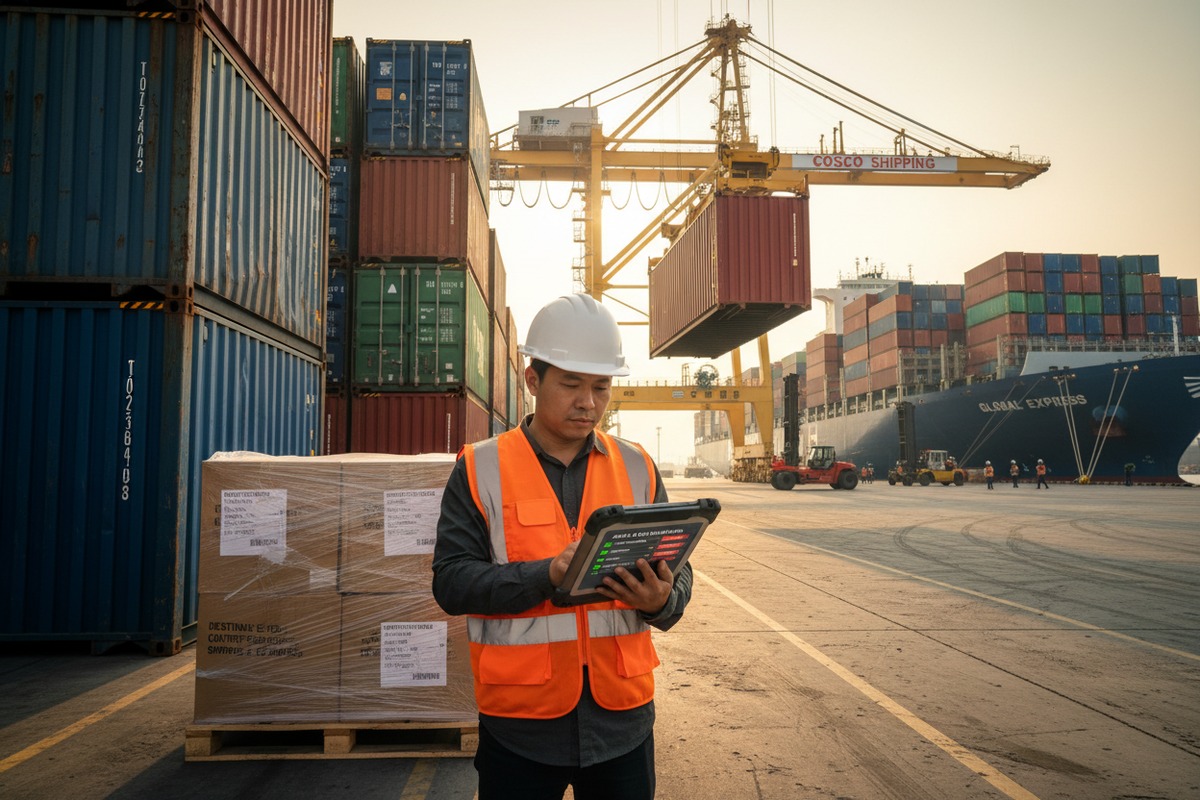
AMS란 무엇인가?
AMS는 자동화된 적하목록 시스템을 의미합니다. 미국의 반테러 적하목록이라고도 합니다. 미국 세관 및 국경 보호국 1 (CBP)는 미국으로 또는 미국을 경유하여 운송되는 모든 화물이 이 시스템에 신고되어야 한다고 요구합니다. 운송업체, NVOCC 2, 또는 포워더가 전자 적하목록을 제출합니다. 외국 항구에서 선박이 화물을 실기 전에 최소 24시간 전에 CBP에 의해 제출되고 확인되어야 합니다. CBP에서 확인하지 않으면 화물을 선박에 실을 수 없습니다. 각 AMS 제출비용은 선하증권 당 약 25–45 달러입니다.
일상 운영을 통해 우리는 늦거나 누락된 AMS 제출이 즉각적인 결과를 초래한다는 것을 알고 있습니다. CBP는 "적재 금지" 메시지를 발송할 수 있습니다. 화물이 남겨집니다. 선박이 귀하의 화물 없이 출항하면, 재예약 수수료, 창고 비용, 그리고 CBP 벌금 가능성에 직면하게 됩니다. 이러한 모든 비용은 화물 소유자에게 발생합니다.
ENS란 무엇인가?
ENS는 입국 요약 선언 3. EU 버전의 반테러리즘 manifest로 생각하십시오. 이는 모든 오션 화물이 EU 회원국 항구에 들어오거나 경유할 때 적용됩니다. 직송, 환적 및 통과 화물 모두 ENS가 필요합니다. 선적 전에 24시간 이내에 제출해야 합니다. 단거리 해상 운송의 경우 마감 기한은 도착 2시간 전입니다. 항공 화물의 경우 도착 4시간 전입니다.
EU는 사전 위험 선정을 위해 ENS를 사용합니다. 운송업체 또는 그 대표자는 EU의 수입 통제 시스템(ICS2)을 통해 이를 제출합니다. 필요한 데이터에는 발신자, 수신자, 통지 당사자, HS 코드(최소 6자리), 정확한 물품 설명, 총 중량, 부피, 컨테이너 번호 및 봉인 번호가 포함됩니다. 각 ENS 제출 비용은 선하증권당 약 25–35 USD입니다.
AMS 대 ENS 개요
| 기능 | AMS (미국) | ENS (유럽 연합) |
|---|---|---|
| 전체 이름 | 자동화된 목록 시스템 | 입국 요약 선언 |
| 제출자 | 운송업체 / NVOCC / 화물 포워더 | 운송업체 / 대표자 |
| 마감일 (해상) | 적재 24시간 전 | 적재 24시간 전(심해); 도착 2시간 전(근해) |
| 범위 | 미국으로 가는 모든 화물 또는 미국을 경유하는 화물. | EU 항구로 가는 모든 화물 또는 EU를 경유하는 화물 |
| 주요 데이터 | 발송인, 수취인, 선박, 컨테이너, 화물 설명 | 송하인, 수취인, 통지 당사자, HS 코드, 중량, 부피, 컨테이너/봉인 번호 |
| 신고당 비용 | USD 25–45 | USD 25–35 |
| 비준수에 대한 벌칙 | 적재 금지, CBP 벌금, 화물 억류 | 적재 거부, 벌금, 화물 억류 |
| IT 시스템 | CBP ACE | EU ICS2 |
핵심 차이는 구조적입니다. 미국은 사전 제출을 운송업체 측(AMS)과 수입업체 측(ISF) 요구 사항으로 나누고, 유럽연합은 모든 것을 ENS로 통합합니다. 고객의 화물을 처리할 때, 우리는 항상 어떤 목적지가 어떤 제출을 필요로 하는지 명확히 하여 아무것도 빠지지 않도록 합니다.
우리는 고객이 선박 출항 최소 72시간 전에 완전하고 정확한 발송인, 수취인, 물품 설명 및 HS 코드 정보를 제공할 것을 권장합니다. 이 여유 시간은 우리가 제출하고, 검토하고, 필수 24시간 마감 이전에 문제를 수정할 수 있도록 줍니다.
중국에서 미국으로 배송할 때 ISF5 및 AMS에 대한 특정 신고 요건은 무엇인가요?
Our team processes China-to-USA shipments daily. Many clients ask us why they need both AMS and ISF, and what exactly ISF5 means compared to the standard ISF10+2. The answer depends on whether the cargo stays in the U.S. or just passes through.
When shipping from China to the USA, AMS must be filed by the carrier 24 hours before loading, while ISF5 applies specifically to cargo transiting through the U.S. without being imported. ISF5 requires five data elements—booking party, consignee, HS code (first 6 digits), foreign unloading port, and place of delivery—and must be filed alongside AMS before vessel loading.
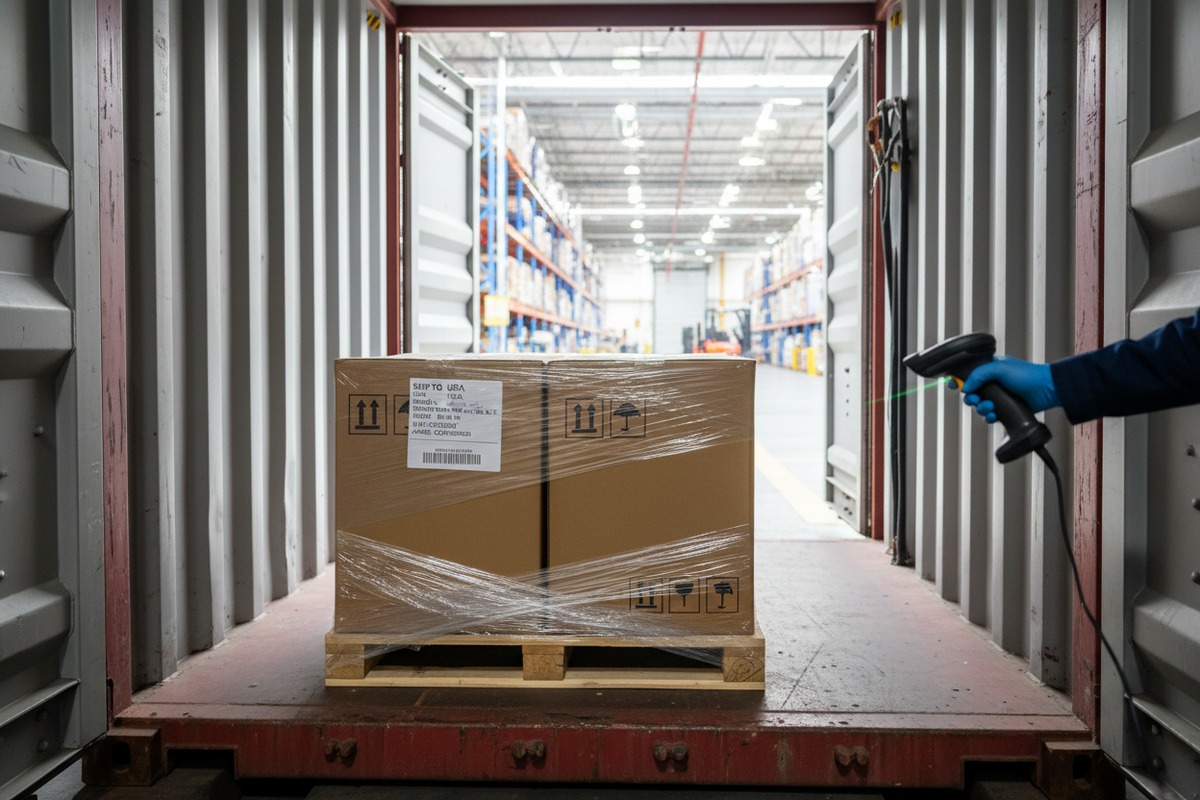
AMS Filing for China-to-USA Shipments
Every ocean shipment from China to the United States needs an AMS filing. Our operations team submits the electronic manifest through the CBP system. The data includes the shipper's full name and address, the consignee's full name and address, the vessel name, voyage number, container numbers, seal numbers, cargo description, weight, and quantity.
CBP reviews the data and either confirms or rejects it. A confirmed AMS allows the cargo to load. A rejected AMS means the cargo stays on the dock. There is no workaround. The filing fee runs USD 25–45 per bill of lading.
ISF5: The Transit Version
ISF5 is the simplified 수입자 보안 신고 4 for cargo that transits through U.S. territory without being imported. Common examples include shipments from China to Canada that pass through a U.S. port, or cargo that remains on board the vessel (FROB—Freight Remaining On Board 5). ISF5 requires only five data elements:
- Booking party — who booked the ocean freight
- Consignee — the party receiving the goods at the final destination
- HS code — the first 6 digits of the Harmonized System code 6
- Foreign port of unloading — where the cargo will be discharged outside the U.S.
- Place of delivery — the final delivery address
ISF5 must be filed at the same time as AMS, at least 24 hours before the vessel loads at the Chinese port. The filing fee is USD 25–40 per bill of lading. If it is late or missing, CBP can issue fines, block loading, or cause clearance problems at the U.S. transit port.
ISF5 vs. ISF10+2
Many clients confuse ISF5 with the full ISF10+2. Here is the difference:
| 기능 | ISF5 (Transit/FROB) | ISF10+2 (U.S. Import) |
|---|---|---|
| 적용 대상 | Cargo transiting through the U.S. | Cargo imported into the U.S. |
| Data Elements | 5 elements | 10 importer elements + 2 carrier elements |
| 제출자 | Booking party or agent | Importer or customs broker |
| Deadline | 적재 24시간 전 | 적재 24시간 전 |
| 비용 | USD 25–40 per filing | USD 35–100 per filing |
| Penalty | CBP fines up to $5,000, loading refusal | CBP fines up to $5,000 per violation, cargo holds |
A Common Scenario: China to Canada via the USA
One of our most frequent shipping routes is China to Canada, where the vessel stops at a U.S. port before continuing to a Canadian port. In this case, the cargo needs three filings: AMS, ISF5, and the Canadian eManifest 7 (EMF). We handle all three for our clients. The key is getting accurate information early. We ask clients to provide all required data at least 72 hours before sailing. This gives us time to file, receive CBP confirmation, and correct any errors.
The shipper and consignee information must be real. The goods description and HS code must be accurate. Under-declaring or misrepresenting cargo is a fast path to fines, inspections, and blacklisting. CBP cross-references AMS and ISF data. If they do not match, your shipment gets flagged.
유럽의 ENS 프로세스는 북미의 eManifest 시스템과 어떻게 다릅니까?
In our experience shipping to both European and Canadian destinations, we have seen firsthand how different these two systems are in structure and timing. Clients who ship to multiple regions often assume one filing process fits all. It does not.
The EU's ENS system uses tiered deadlines based on transport mode and voyage type, filed through the ICS2 platform, while Canada's eManifest requires pre-arrival cargo data submitted to CBSA across all transport modes with deadlines ranging from 24 to 96 hours depending on the mode. ENS focuses on EU-wide risk screening; eManifest focuses on Canadian border security with tighter integration with U.S. systems.
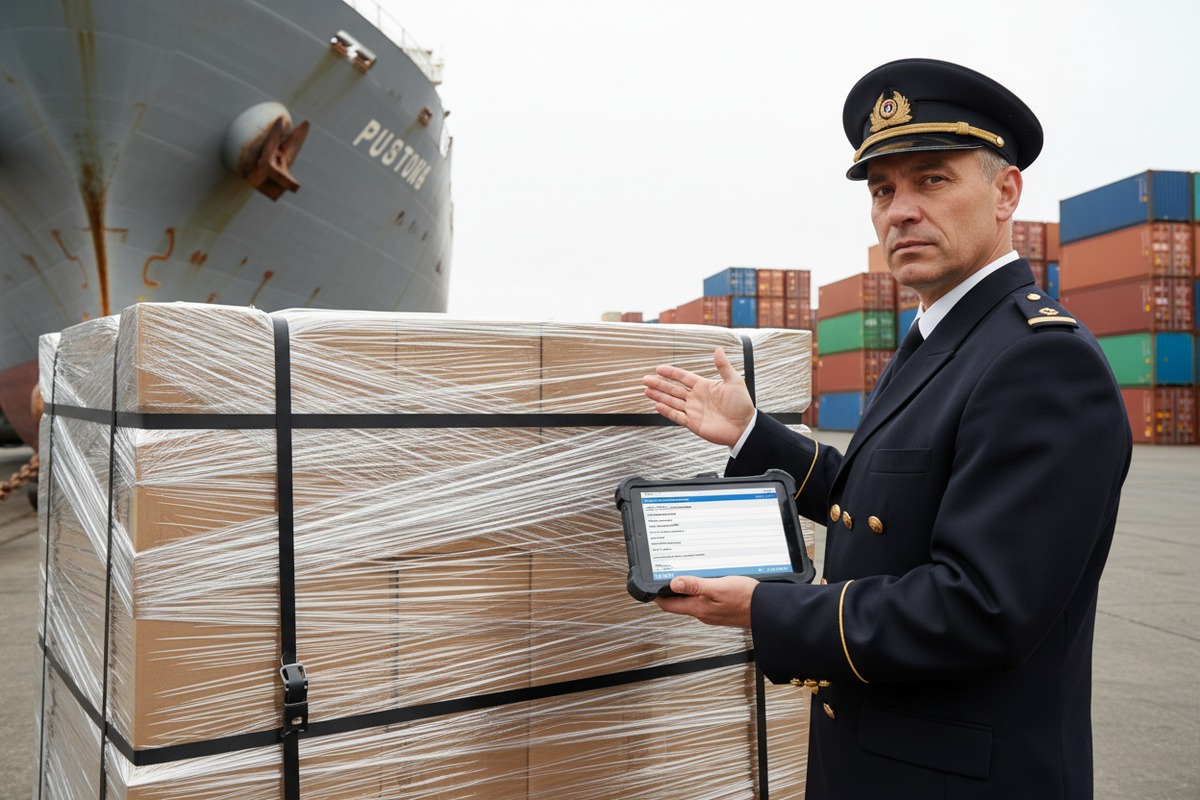
ENS: The EU Approach
The European Union requires ENS for all unaccompanied goods entering or passing through EU customs territory. This includes direct imports, transshipments, and transit cargo. The filing goes through the Import Control System 2 8 (ICS2), which the EU has been rolling out in phases. By 2025, ICS2 requires more granular data than before, bringing it closer to the level of detail the U.S. ISF demands.
ENS deadlines vary by transport mode:
- Deep-sea ocean freight: 24 hours before loading at the port of departure
- Short-sea shipping: 2 hours before arrival at the EU port
- Air cargo: 4 hours before arrival (or before loading for certain routes)
- Rail and road: 1–2 hours before arrival, depending on the route
The carrier or their authorized representative files ENS. The required data includes consignor, consignee, notify party, HS code, goods description, gross weight, volume, container number, and seal number. If the filing is late or missing, the EU can refuse to load the cargo, impose fines, or detain goods at the port.
eManifest: The Canadian Approach
Canada's eManifest system is managed by the Canada Border Services Agency 9 (CBSA). It applies to all transport modes—ocean, air, rail, and highway. Carriers must submit cargo, conveyance, and crew data electronically before the goods arrive in Canada.
Deadlines depend on the mode:
- 해상 화물: 24 hours before loading at the foreign port
- Air cargo: Before departure or upon arrival, depending on the flight
- Rail: 2 hours before arrival at the Canadian border
- Highway (truck): 1 hour before arrival at the border, or 30 minutes in some cases
Canada's system integrates closely with U.S. customs through the Beyond the Border initiative. Shippers who participate in trusted trader programs like C-TPAT 10 (U.S.) or PIP (Canada) can benefit from expedited processing.
ENS vs. eManifest Comparison
| 기능 | ENS (유럽 연합) | eManifest (Canada) |
|---|---|---|
| Authority | EU Customs (via ICS2) | CBSA (via ACI/eManifest portal) |
| Transport Modes | All modes for unaccompanied goods | All modes (ocean, air, rail, highway) |
| Ocean Deadline | 24 hours before loading (deep-sea) | 적재 24시간 전 |
| Short-Sea / Highway Deadline | 2 hours before arrival | 30 min–1 hour before arrival |
| 제출자 | Carrier or representative | 캐리어 |
| 주요 데이터 | Consignor, consignee, HS code, weight, container/seal numbers | Cargo, conveyance, crew details |
| Penalty | Fines, refusal to load, detention | Fines, delays, seizures |
| 신뢰할 수 있는 트레이더 프로그램 | AEO (Authorized Economic Operator) | PIP (Partners in Protection) / C-TPAT |
| IT Platform | ICS2 | ACI / eManifest portal |
Why This Matters for Multi-Destination Shippers
If you ship from China to both Europe and Canada, you need to manage two completely separate filing systems with different deadlines, data formats, and IT platforms. We handle this complexity for our clients daily. The biggest risk is applying EU rules to a Canadian shipment or vice versa. Each system has its own logic. Treating them as interchangeable leads to missed deadlines and penalties.
The EU's ICS2 expansion is also adding complexity. As the system moves toward requiring item-level data, shippers need to provide more detailed product information than ever before. We advise all our clients to prepare complete documentation well in advance, regardless of the destination.
이러한 서로 다른 명세서 기한을 정확하게 관리하여 세관 지연 및 벌금을 피하려면 어떻게 해야 하나요?
We have seen clients lose thousands of dollars because they submitted filing data one day late or used the wrong HS code. The penalties are real and they add up fast. Managing multiple filing deadlines across different countries requires a system, not guesswork.
To avoid customs delays and fines, submit complete and accurate filing data at least 72 hours before vessel departure, ensure shipper and consignee details are real, use correct HS codes, and work with a logistics partner experienced in AMS, ISF5, ENS, and eManifest filings. Proactive preparation is the single most effective compliance strategy.
The Real Cost of Non-Compliance
Missing a filing deadline is not just an inconvenience. Here is what actually happens:
- CBP (U.S.): Fines up to $5,000 per violation for ISF non-compliance. AMS rejection means a "Do Not Load" order. Your cargo stays at the origin port. You pay for rebooking, warehousing, and possibly a new AMS filing.
- EU Customs: Late or missing ENS can result in refusal to load at the origin port. Fines vary by member state. Detained cargo at the EU port incurs storage fees and inspection costs.
- CBSA (Canada): Late eManifest filings cause delays at the border. Repeat non-compliance can lead to seizures and elevated risk scores that slow down all your future shipments.
In all cases, the cargo owner bears the cost. Fines, storage, rebooking, and delay-related losses all fall on you.
The 72-Hour Rule We Follow
Our internal rule is simple: we ask clients to provide all filing data 72 hours before the vessel sails. The legal deadline is 24 hours before loading, but 72 hours gives us a safety margin. Here is why this matters:
- Data review: We check every field for accuracy—names, addresses, HS codes, weights, container numbers.
- Error correction: If something is wrong, we have time to go back to the client, get the right information, and refile.
- CBP/EU confirmation: We submit early and wait for confirmation. If there is a problem, we address it before the cutoff.
Practical Steps to Stay Compliant
- Use accurate HS codes. Do not guess. Get the correct 6-digit (or 10-digit for the U.S.) code from your supplier or a customs professional. Wrong codes trigger inspections and fines.
- Provide real shipper and consignee details. Customs authorities cross-check names and addresses. Fake or incomplete information is a red flag.
- Match your documents. The data on your commercial invoice, packing list, bill of lading, AMS, ISF, and ENS must all align. Mismatches cause holds.
- Know which filings apply. Shipping from China to Canada via the U.S.? You need AMS + ISF5 + eManifest. Shipping to the EU? You need ENS. Shipping directly to the U.S.? You need AMS + ISF10+2.
- Work with one logistics partner. When you split responsibilities across multiple agents, communication gaps appear. We manage all filings under one roof so nothing gets missed.
Common Mistakes We See
Many clients make the same errors repeatedly. Under-reporting cargo weight to save on freight costs backfires during customs inspection. Using generic goods descriptions like "general merchandise" triggers red flags. Waiting until the last minute to provide filing data leaves no room for correction.
Another common mistake is assuming that a freight forwarder automatically handles all filings. Not all forwarders file ISF or ENS. You need to confirm exactly which filings your logistics partner covers. At MBMLOG, we handle AMS, ISF5, ISF10+2, ENS, and Canadian eManifest filings as part of our service. We confirm every filing and share the CBP or customs receipt with our clients.
The bottom line is straightforward: early, accurate, and complete data prevents nearly every customs problem we encounter. Invest 30 minutes in getting your documentation right, and you save days of delays and thousands in fines.
결론
North American and European customs systems each have unique filing requirements, deadlines, and penalties. Understanding the differences between AMS, ISF5, ENS, and eManifest is essential for any business shipping internationally. Prepare your data early, keep it accurate, and work with a logistics partner who handles every filing. Reach out to our team at MBMLOG if you need help managing these customs declarations across any destination.
각주
1. Official website for U.S. Customs and Border Protection. ↩︎
2. Comprehensive guide defining NVOCC from a reputable logistics information source. ↩︎
3. Explains the EU's pre-arrival safety and security declaration (ENS). ↩︎
4. Official U.S. Customs and Border Protection information on ISF. ↩︎
5. Official Federal Register document providing the definition of Foreign Cargo Remaining On Board (FROB) in customs regulations. ↩︎
6. Official source for the international Harmonized System for goods classification. ↩︎
7. Provides information on Canada's electronic pre-arrival cargo system. ↩︎
8. Official European Union page detailing the ICS2 system. ↩︎
9. Official website for Canada's national border control agency. ↩︎
10. Official U.S. Customs and Border Protection program for supply chain security. ↩︎




