- +8618603825129
- [email protected]


Every week, our operations team files dozens of customs declarations across multiple countries. One missed deadline or one wrong HS code can ground an entire shipment. The differences between North American and European customs systems trip up even experienced importers.
AMS and ISF5 are U.S.-specific advance cargo security filings required by CBP, while ENS is the European Union's equivalent pre-arrival declaration, and eManifest is Canada's electronic pre-arrival system. Each system has distinct filing parties, deadlines, data elements, and penalties, so shippers must understand every requirement to avoid costly delays and fines.
Below, we break down each system side by side. We cover who files what, when it is due, what data you need, and what happens if you get it wrong. Let us walk through each one so you can ship with confidence.
When we coordinate shipments from our Zhengzhou warehouse to ports across two continents, the filing requirements look completely different. Confusing AMS with ENS is one of the fastest ways to get cargo stuck at the dock.
AMS is the U.S. Automated Manifest System filed by carriers or freight forwarders 24 hours before vessel loading at the foreign port, while ENS is the EU's Entry Summary Declaration filed for all goods entering or transiting EU ports. They serve similar security purposes but differ in filing parties, data requirements, deadlines, and penalty structures.
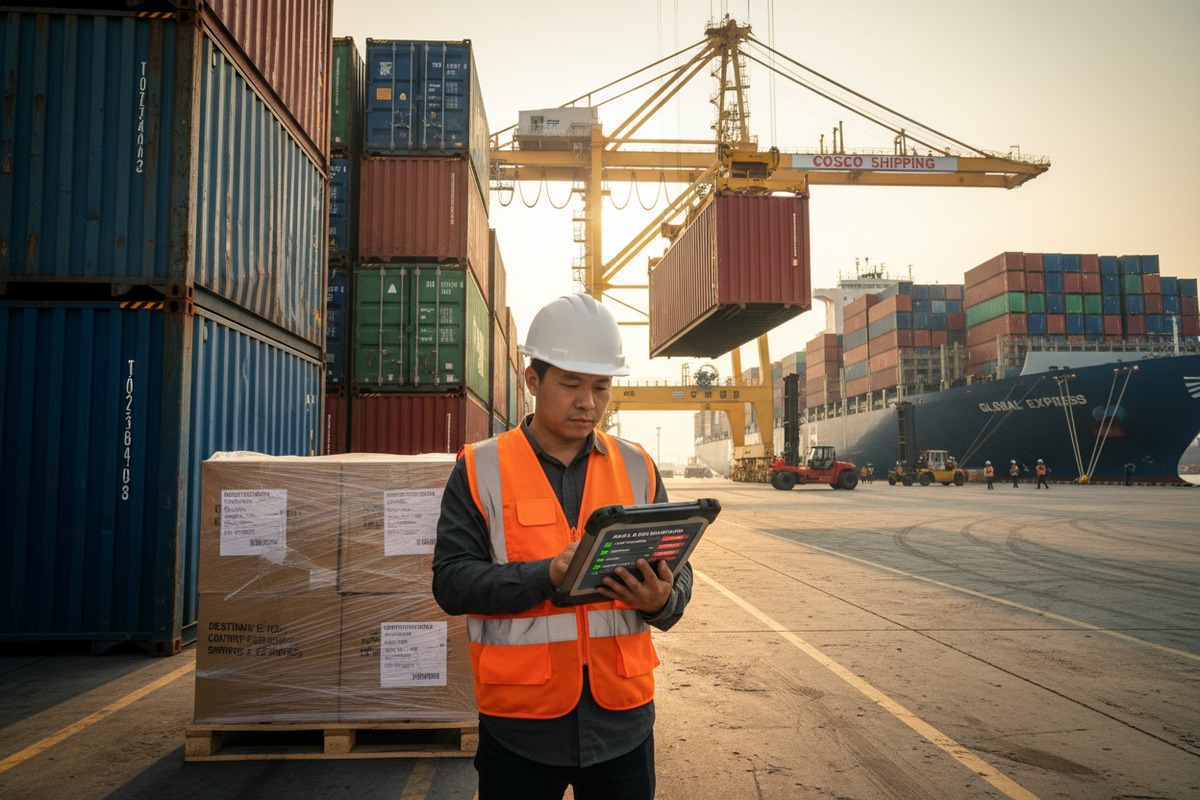
AMS stands for Automated Manifest System. It is also called the U.S. anti-terrorism manifest. U.S. Customs and Border Protection 1 (CBP) requires all cargo shipped to or through the United States to be declared in this system. The carrier, NVOCC 2, or freight forwarder submits the electronic manifest. It must be filed and confirmed by CBP at least 24 hours before the vessel loads cargo at the foreign port. If CBP does not confirm, the cargo cannot be loaded onto the ship. Each AMS filing costs approximately USD 25–45 per bill of lading.
From our daily operations, we see that late or missing AMS filings trigger immediate consequences. CBP can issue a "Do Not Load" message. The cargo gets left behind. Once the ship sails without your goods, you face rebooking fees, warehousing costs, and potential CBP fines. All of these costs fall on the cargo owner.
ENS stands for Entry Summary Declaration 3. Think of it as the EU version of the anti-terrorism manifest. It applies to all ocean cargo entering or transiting through any EU member state port. Direct shipments, transshipments, and transit cargo all require ENS. The filing must also be completed 24 hours before loading for deep-sea vessels. For short-sea shipping, the deadline is 2 hours before arrival. For air cargo, it is 4 hours before arrival.
The EU uses ENS for advance risk screening. The carrier or their representative files it through the EU's Import Control System (ICS2). Required data includes consignor, consignee, notify party, HS code (at least 6 digits), accurate goods description, gross weight, volume, container number, and seal number. Each ENS filing costs approximately USD 25–35 per bill of lading.
| Feature | AMS (United States) | ENS (European Union) |
|---|---|---|
| Full Name | Automated Manifest System | Entry Summary Declaration |
| Filed By | Carrier / NVOCC / Freight Forwarder | Carrier / Representative |
| Deadline (Ocean) | 24 hours before loading | 24 hours before loading (deep-sea); 2 hours before arrival (short-sea) |
| Scope | All cargo to or through the U.S. | All cargo to or through EU ports |
| Key Data | Shipper, consignee, vessel, container, cargo description | Consignor, consignee, notify party, HS code, weight, volume, container/seal numbers |
| Cost Per Filing | USD 25–45 | USD 25–35 |
| Penalty for Non-Compliance | Do Not Load, CBP fines, cargo detention | Refusal to load, fines, cargo detention |
| IT System | CBP ACE | EU ICS2 |
The core difference is structural. The U.S. splits its advance filing into carrier-side (AMS) and importer-side (ISF) requirements. The EU consolidates everything into ENS. When we handle shipments for our clients, we always clarify which destination requires which filing so nothing falls through the cracks.
We recommend that clients provide complete and accurate shipper, consignee, goods description, and HS code information at least 72 hours before the vessel sails. This buffer gives us time to file, review, and correct any issues before the mandatory 24-hour cutoff.
Our team processes China-to-USA shipments daily. Many clients ask us why they need both AMS and ISF, and what exactly ISF5 means compared to the standard ISF10+2. The answer depends on whether the cargo stays in the U.S. or just passes through.
When shipping from China to the USA, AMS must be filed by the carrier 24 hours before loading, while ISF5 applies specifically to cargo transiting through the U.S. without being imported. ISF5 requires five data elements—booking party, consignee, HS code (first 6 digits), foreign unloading port, and place of delivery—and must be filed alongside AMS before vessel loading.
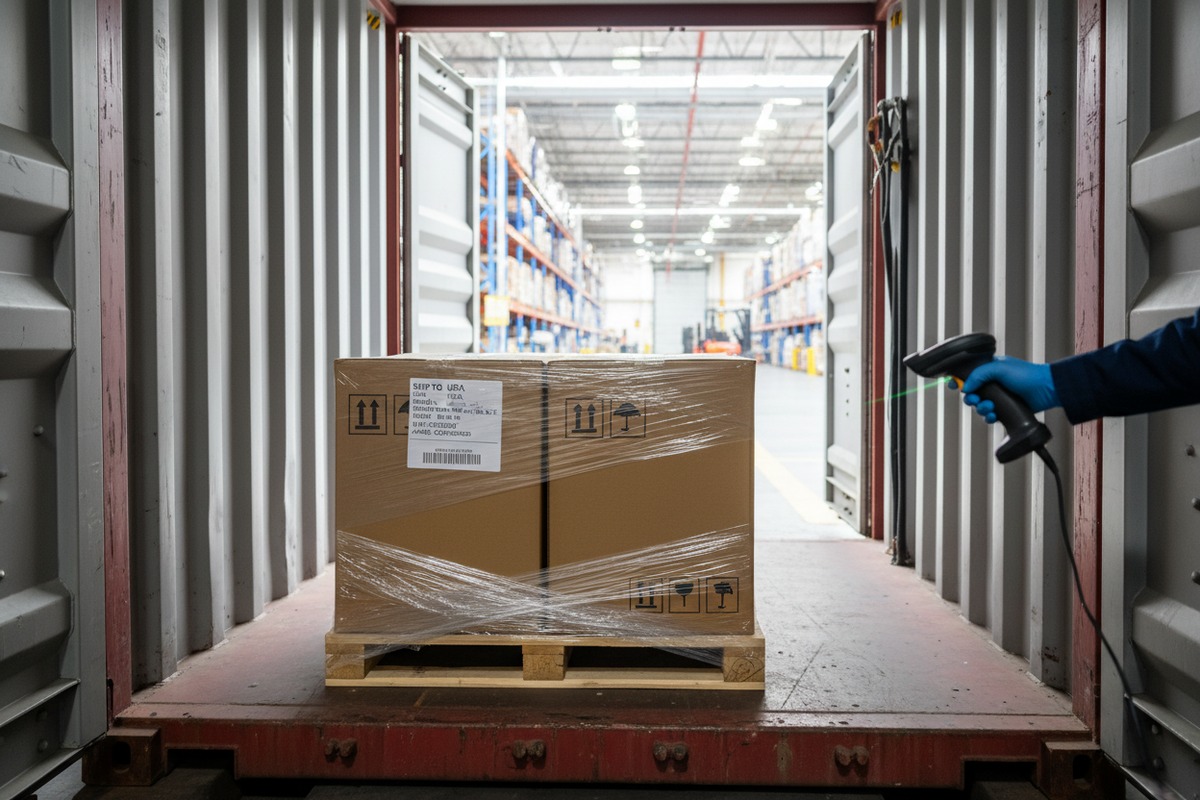
Every ocean shipment from China to the United States needs an AMS filing. Our operations team submits the electronic manifest through the CBP system. The data includes the shipper's full name and address, the consignee's full name and address, the vessel name, voyage number, container numbers, seal numbers, cargo description, weight, and quantity.
CBP reviews the data and either confirms or rejects it. A confirmed AMS allows the cargo to load. A rejected AMS means the cargo stays on the dock. There is no workaround. The filing fee runs USD 25–45 per bill of lading.
ISF5 is the simplified Importer Security Filing 4 for cargo that transits through U.S. territory without being imported. Common examples include shipments from China to Canada that pass through a U.S. port, or cargo that remains on board the vessel (FROB—Freight Remaining On Board 5). ISF5 requires only five data elements:
ISF5 must be filed at the same time as AMS, at least 24 hours before the vessel loads at the Chinese port. The filing fee is USD 25–40 per bill of lading. If it is late or missing, CBP can issue fines, block loading, or cause clearance problems at the U.S. transit port.
Many clients confuse ISF5 with the full ISF10+2. Here is the difference:
| Feature | ISF5 (Transit/FROB) | ISF10+2 (U.S. Import) |
|---|---|---|
| Applies To | Cargo transiting through the U.S. | Cargo imported into the U.S. |
| Data Elements | 5 elements | 10 importer elements + 2 carrier elements |
| Filed By | Booking party or agent | Importer or customs broker |
| Deadline | 24 hours before loading | 24 hours before loading |
| Cost | USD 25–40 per filing | USD 35–100 per filing |
| Penalty | CBP fines up to $5,000, loading refusal | CBP fines up to $5,000 per violation, cargo holds |
One of our most frequent shipping routes is China to Canada, where the vessel stops at a U.S. port before continuing to a Canadian port. In this case, the cargo needs three filings: AMS, ISF5, and the Canadian eManifest 7 (EMF). We handle all three for our clients. The key is getting accurate information early. We ask clients to provide all required data at least 72 hours before sailing. This gives us time to file, receive CBP confirmation, and correct any errors.
The shipper and consignee information must be real. The goods description and HS code must be accurate. Under-declaring or misrepresenting cargo is a fast path to fines, inspections, and blacklisting. CBP cross-references AMS and ISF data. If they do not match, your shipment gets flagged.
In our experience shipping to both European and Canadian destinations, we have seen firsthand how different these two systems are in structure and timing. Clients who ship to multiple regions often assume one filing process fits all. It does not.
The EU's ENS system uses tiered deadlines based on transport mode and voyage type, filed through the ICS2 platform, while Canada's eManifest requires pre-arrival cargo data submitted to CBSA across all transport modes with deadlines ranging from 24 to 96 hours depending on the mode. ENS focuses on EU-wide risk screening; eManifest focuses on Canadian border security with tighter integration with U.S. systems.
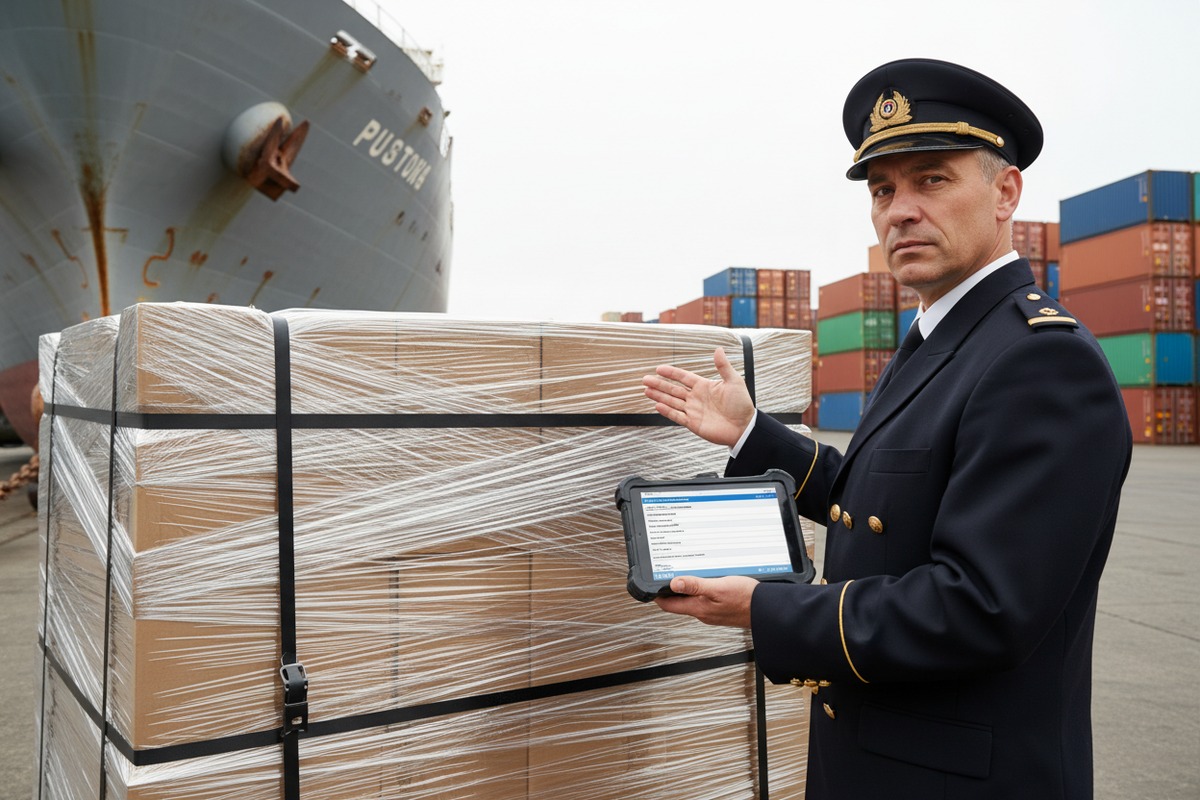
The European Union requires ENS for all unaccompanied goods entering or passing through EU customs territory. This includes direct imports, transshipments, and transit cargo. The filing goes through the Import Control System 2 8 (ICS2), which the EU has been rolling out in phases. By 2025, ICS2 requires more granular data than before, bringing it closer to the level of detail the U.S. ISF demands.
ENS deadlines vary by transport mode:
The carrier or their authorized representative files ENS. The required data includes consignor, consignee, notify party, HS code, goods description, gross weight, volume, container number, and seal number. If the filing is late or missing, the EU can refuse to load the cargo, impose fines, or detain goods at the port.
Canada's eManifest system is managed by the Canada Border Services Agency 9 (CBSA). It applies to all transport modes—ocean, air, rail, and highway. Carriers must submit cargo, conveyance, and crew data electronically before the goods arrive in Canada.
Deadlines depend on the mode:
Canada's system integrates closely with U.S. customs through the Beyond the Border initiative. Shippers who participate in trusted trader programs like C-TPAT 10 (U.S.) or PIP (Canada) can benefit from expedited processing.
| Feature | ENS (European Union) | eManifest (Canada) |
|---|---|---|
| Authority | EU Customs (via ICS2) | CBSA (via ACI/eManifest portal) |
| Transport Modes | All modes for unaccompanied goods | All modes (ocean, air, rail, highway) |
| Ocean Deadline | 24 hours before loading (deep-sea) | 24 hours before loading |
| Short-Sea / Highway Deadline | 2 hours before arrival | 30 min–1 hour before arrival |
| Filed By | Carrier or representative | Carrier |
| Key Data | Consignor, consignee, HS code, weight, container/seal numbers | Cargo, conveyance, crew details |
| Penalty | Fines, refusal to load, detention | Fines, delays, seizures |
| Trusted Trader Programs | AEO (Authorized Economic Operator) | PIP (Partners in Protection) / C-TPAT |
| IT Platform | ICS2 | ACI / eManifest portal |
If you ship from China to both Europe and Canada, you need to manage two completely separate filing systems with different deadlines, data formats, and IT platforms. We handle this complexity for our clients daily. The biggest risk is applying EU rules to a Canadian shipment or vice versa. Each system has its own logic. Treating them as interchangeable leads to missed deadlines and penalties.
The EU's ICS2 expansion is also adding complexity. As the system moves toward requiring item-level data, shippers need to provide more detailed product information than ever before. We advise all our clients to prepare complete documentation well in advance, regardless of the destination.
We have seen clients lose thousands of dollars because they submitted filing data one day late or used the wrong HS code. The penalties are real and they add up fast. Managing multiple filing deadlines across different countries requires a system, not guesswork.
To avoid customs delays and fines, submit complete and accurate filing data at least 72 hours before vessel departure, ensure shipper and consignee details are real, use correct HS codes, and work with a logistics partner experienced in AMS, ISF5, ENS, and eManifest filings. Proactive preparation is the single most effective compliance strategy.
Missing a filing deadline is not just an inconvenience. Here is what actually happens:
In all cases, the cargo owner bears the cost. Fines, storage, rebooking, and delay-related losses all fall on you.
Our internal rule is simple: we ask clients to provide all filing data 72 hours before the vessel sails. The legal deadline is 24 hours before loading, but 72 hours gives us a safety margin. Here is why this matters:
Many clients make the same errors repeatedly. Under-reporting cargo weight to save on freight costs backfires during customs inspection. Using generic goods descriptions like "general merchandise" triggers red flags. Waiting until the last minute to provide filing data leaves no room for correction.
Another common mistake is assuming that a freight forwarder automatically handles all filings. Not all forwarders file ISF or ENS. You need to confirm exactly which filings your logistics partner covers. At MBMLOG, we handle AMS, ISF5, ISF10+2, ENS, and Canadian eManifest filings as part of our service. We confirm every filing and share the CBP or customs receipt with our clients.
The bottom line is straightforward: early, accurate, and complete data prevents nearly every customs problem we encounter. Invest 30 minutes in getting your documentation right, and you save days of delays and thousands in fines.
North American and European customs systems each have unique filing requirements, deadlines, and penalties. Understanding the differences between AMS, ISF5, ENS, and eManifest is essential for any business shipping internationally. Prepare your data early, keep it accurate, and work with a logistics partner who handles every filing. Reach out to our team at MBMLOG if you need help managing these customs declarations across any destination.
1. Official website for U.S. Customs and Border Protection. ↩︎
2. Comprehensive guide defining NVOCC from a reputable logistics information source. ↩︎
3. Explains the EU's pre-arrival safety and security declaration (ENS). ↩︎
4. Official U.S. Customs and Border Protection information on ISF. ↩︎
5. Official Federal Register document providing the definition of Foreign Cargo Remaining On Board (FROB) in customs regulations. ↩︎
6. Official source for the international Harmonized System for goods classification. ↩︎
7. Provides information on Canada's electronic pre-arrival cargo system. ↩︎
8. Official European Union page detailing the ICS2 system. ↩︎
9. Official website for Canada's national border control agency. ↩︎
10. Official U.S. Customs and Border Protection program for supply chain security. ↩︎