

Vsak teden v naši pisarni v Zhengzhouju nas uvozniki sprašujejo, kako poslati kontrabalančne viličarje iz Kitajske. Večina se prepozno spozna, da je cena viličarja enostavni del.
Za pošiljanje kontrabalančnih viličarjev iz Kitajske potrdite težo enote, dimenzije in tip baterije, izberite FCL, ravno paleto ali RoRo pošiljanje, pripravite komercialno fakturo, packing list, tovorni lista in UN38.3 dokumente za litijske modele, nato sprostite carinjenje in uredite končno dostavo.
To je kratka različica. Dolga različica odloča, ali vaš viličar prispe pravočasno in brez poškodb, ali pa čaka v pristanišču in nabira stroške skladiščenja. Pustite, da vas vodim skozi vsak korak, resnične stroške, matematiko nalaganja kontejnerjev, dokumentacijo in kako litijske baterije vse spremenijo.
Koliko stane pošiljanje kontrabalančnega viličarja iz Kitajske v ZDA?
Lansko leto mi je trgovec iz Teksasa pokazal "estimat brezplačne dostave" dobavitelja, ki je v celoti spregledal stroške destinacije. Njegovi dejanski stroški so bili tisoče višji. Naša ekipa je njegovo ponudbo obnovila vrstico za vrstico.
Pošiljanje kontrabalansnega viličarja iz Kitajske v ZDA običajno stane med $1,500 in $6,000 na enoto, odvisno od vrste kontejnerja, teže viličarja, pristanišča nalaganja, stroškov destinacije, uvoznih dajatev in davkov, zavarovanja ter notranjega transporta. FCL pošiljanje z več enotami bistveno zniža stroške na enoto.

Iskren odgovor je, da ne obstaja ena sama številka, ki bi ustrezala vsaki pošiljki. Kar vam lahko ponudim, je struktura stroška, saj ko razumete strukturo, lahko preizkusite vsak ponudbo, ki vam jo pošlje špediter na Kitajskem.
Glavne komponente stroškov
Vsaka pošiljka s vilicnim viličarjem, ki jo obravnavamo, se razdeli v iste kategorije. Tukaj je, kako tipična pošiljka enote iz kitajske tovarne v ameriško skladišče izgleda:
| Stroškovna komponenta | Tipičen razpon (USD) | Opombe |
|---|---|---|
| Prevzem v tovarni in notranji transport na Kitajskem | $200 – $600 | Odvisno od razdalje do odpremnega pristanišča |
| Izvozna deklaracija in obravnava v pristanišču | $150 – $350 | Vključuje izvozne carine na Kitajskem |
| Morski prevoz (FCL, 20FT/40FT) | $1,000 – $3,500 | Odvisno od poti in sezone |
| DG doplačilo (enote litij-ionskih baterij) | $200 – $800 | Velja za rezervacijo tovorov razreda 9 |
| Pomorsko zavarovanje (vsa tveganja) | 0.2% – 0.5% vrednosti tovora | Močno priporočljivo za težko opremo |
| Takti dejavniki v ZDA | $400 – $900 | Pristaniške takse, ISF, ravnanje |
| Uvozne dajatve in davki | Varira glede na HS kodo | 8427.10 električni / 8427.20 IC motor |
| Konačno dostavljajoča tovornjaštvo | $300 – $1,500 | Odvisno od razdalje in opreme za razkladanje |
Zakaj lahko nizka FOB cena še vedno stane več
Tukaj je past, ki jo pogosto opažam. Dobavitelj ponudi zelo nizko FOB ceno na enoto. A vilice so nekoliko preširoke, zato potrebujejo plosko kontejner za prevoz namesto standardne škatle. Plosko pošiljanje sproži stroške za izven standardne dimenzije, ki lahko podvojijo oceanske stroške prevoza. Nenadoma ima "cenejša" vilica najvišje stroške dostave.
Za ameriške uvoznike je ena izmed možnosti, o kateri se splača razpravljati z vašim carinski posrednik 1 je pravilo o vrednotenju prve prodaje. To lahko omogoči, da se dajatve izračunajo na podlagi cene proizvajalca namesto na osnovi povišanega računa distributerja, kar je pomembno, kadar med vami in tovarno sedi trgovska družba.
Moj nasvet: nikoli ne primerjajte ponudb vilic samo na podlagi cene na enoto. Vprašajte za popolna ocena stroškov dostave kristalno čista od tovarne do vrat, preden podpišete naročilnico.
Koliko kontrabalansnih viličarjev lahko spravim v 40FT ali 40HQ kontejner?
Matematika kontejnerjev je področje, kjer naš ekipa za natovarjanje dosega rezultate. Enkrat smo predelali naložbeni načrt tovarne za ameriškega distributerja in v isti 40HQ vključili dodatno zložljivo ter dve paleti rezervnih delov.
Kontejner 40FT ali 40HQ običajno sprejme od dva do štiri kontrabalansne viličarje, odvisno od razreda nosilnosti. Dve enoti teže 3–3.5 tone se udobno prilegata; tri do štiri enote teže 1.5–2 tone se prilegajo s nagibom mast ali delno razstavljene. Kontejner 20FT drži eno enoto teže 3 tone.
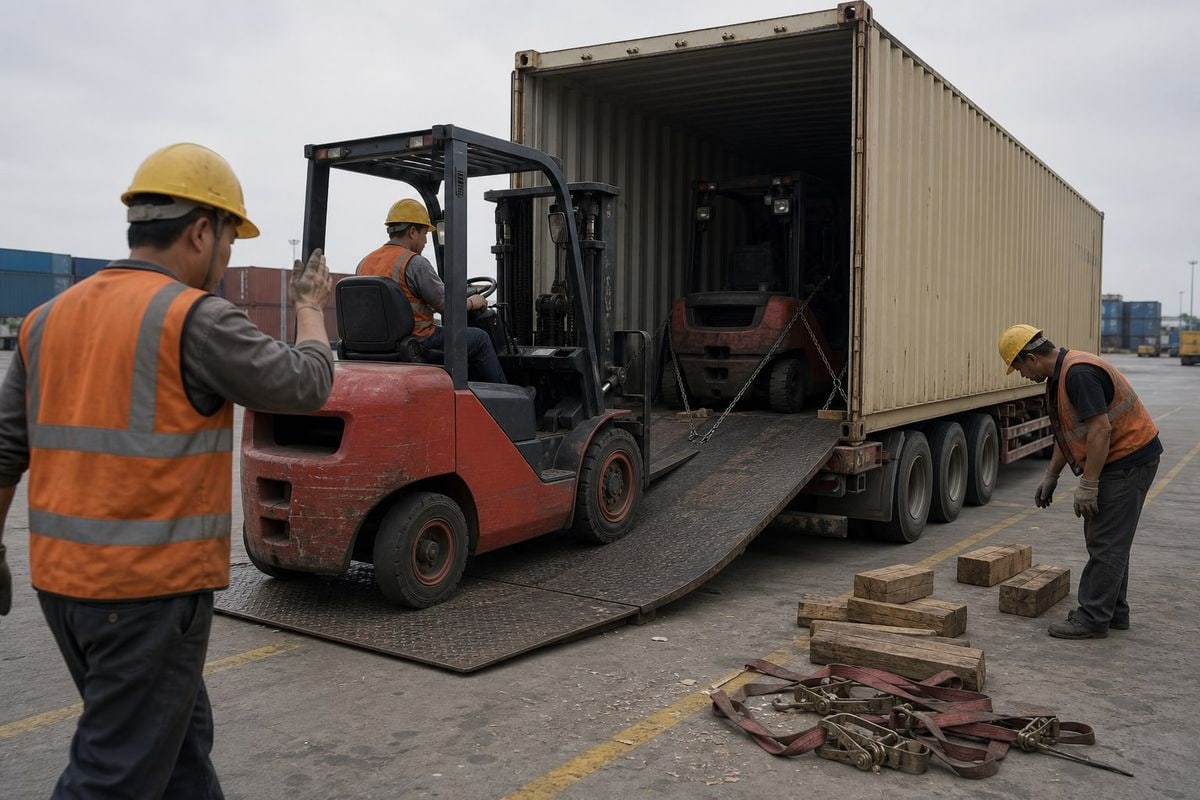
Omejujoči dejavnik redko predstavlja samo površina tal. To je kombinacija višine mast, teže naprave in omejitve nosilnosti kontejnerja. Pustite, da vam razložim, kako načrtujemo pravo natovarjanje.
Ustreznost kontejnerja glede na razred viličarja
| Container | Internal Dimensions (approx.) | Typical Loading | Key Constraint |
|---|---|---|---|
| 20FT | 5.9m × 2.35m × 2.39m | 1 × 3-ton counterbalance unit | Length and payload |
| 40FT | 12.03m × 2.35m × 2.39m | 2 × 3–3.5 ton units, or 3 × smaller units | Door height for mast |
| 40HQ | 12.03m × 2.35m × 2.69m | 2–4 units depending on class, plus parts | Weight distribution |
| Ploski kontejner | Open top/sides | 1 oversized or overweight unit | OOG surcharges apply |
Disassembly Is Not Just About Fit
A standard counterbalance mast often exceeds container door height. So factories lower the mast, tilt it back, or remove it entirely along with the overhead guard. In our experience coordinating FCL container shipping, partial disassembly does three jobs at once. It gets the machine through the door. It lowers the center of gravity, which reduces shifting damage at sea. And it frees vertical space for chargers, batteries, or spare parts.
We also run loading plans before booking. Some forwarders now use 3D volumetric loading simulations for mixed forklift models, and the gains are real — often reclaiming 10–15% more container space compared with a factory's manual loading plan. When a customer buys forklifts from Factory A and chargers from Factory B, we consolidate everything at our warehouse first, then load once.
A Quick Loading Checklist
- Confirm exact machine dimensions with mast lowered.
- Verify total weight against container payload limits.
- Check the forklift's center of gravity for positioning.
- Confirm tie-down points and lashing materials.
- Photograph the machine from all angles before doors close.
- Plan reassembly of masts and guards at destination.
Katere dokumente in carinske zahteve potrebujem za pošiljanje kontrabalansnega viličarja?
A single wrong digit in an HS code once held a customer's forklifts at a US port for over a week. Since then, our documentation team cross-checks every file against the Bill of Lading before departure.
You need a commercial invoice, packing list, Bill of Lading, certificate of origin, and China export declaration. Classify electric forklifts under HS code 8427.10 and internal combustion units under 8427.20. Lithium battery models also require UN38.3 test summaries, MSDS, and a dangerous goods declaration.
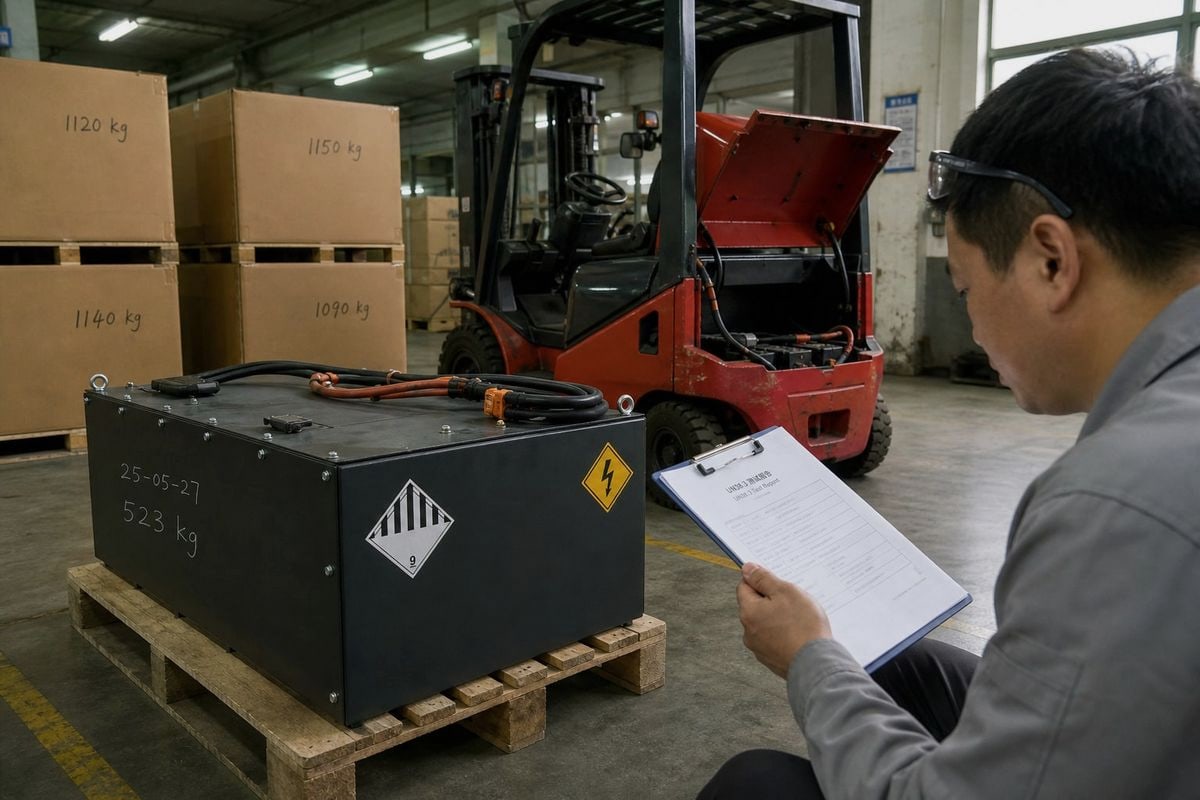
Documentation is where forklift shipments most often go wrong, and the frustrating part is that the errors are almost always avoidable. Let me explain what each document does and where importers stumble.
Core Document Set
| Dokument | Namen | Pogosta napaka |
|---|---|---|
| Komercialni račun | Declares value for duties | Value inconsistent with contract |
| Seznam za pakiranje | Details weight, dimensions, quantity | Missing disassembled parts |
| Nakladnica | Title and carriage contract | Consignee details wrong |
| Potrdilo o poreklu | Duty treatment at destination | Not requested before departure |
| Izvozna deklaracija | China customs clearance | Filed with wrong HS code |
| Povzetek testa UN38.3 | Lithium battery safety proof | Missing for installed batteries |
| MSDS/SDS | Battery chemical data | Outdated version supplied |
Why the HS Code for Forklifts Matters So Much
The HS code drives everything downstream: your duty rate 2, regulatory treatment, and whether customs flags the shipment for inspection. Self-propelled electric forklifts fall under 8427.10, while internal combustion counterbalance units fall under 8427.20. Verify the code with your customs broker before the export declaration is filed, because inconsistency between the invoice, the export declaration, and the import entry is a classic trigger for holds and penalties.
Destination-Specific Compliance
Customs requirements vary by market. For the US, EPA compliance can apply to internal combustion engines. For Europe, CE marking is expected, and emerging EU rules are pushing toward battery traceability — some carriers and importers are already integrating Digital Battery Passports into shipping records to prepare. Under normal conditions, customs clearance takes roughly 3–7 business days, but incomplete paperwork stretches that fast. Our rule at MBMLOG: no container leaves the port of loading until every document has been checked against every other document.
Kako lahko varno in brez zamud pošljem kontrabalansni viličar z litijem?
The trade-off we weigh most often with buyers is this: lithium forklifts sell better, but they ship harder. One missing test summary can get a booking rejected days before the vessel cuts off.
Ship a lithium battery counterbalance forklift by booking it as Class 9 dangerous goods, providing the UN38.3 test summary and MSDS to the carrier before booking, securing and disconnecting the battery, applying proper DG labels, and confirming charger voltage matches the destination market.
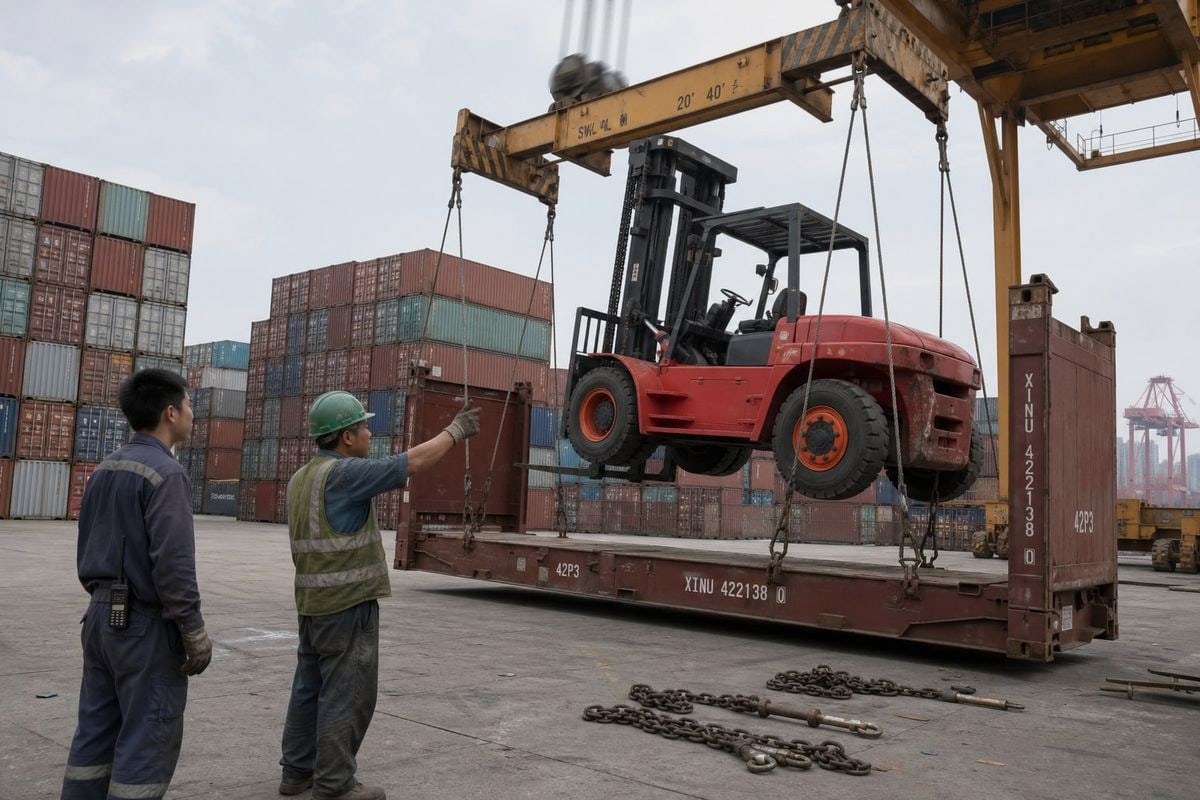
Battery shipping regulations are the single biggest difference between shipping an electric counterbalance forklift and a diesel or LPG unit. Get this wrong and the problem is not a surcharge — it is a rejected booking or a cargo hold at the port.
Why Lithium Changes the Booking Process
A forklift with an installed lithium battery is classified as Class 9 dangerous goods 3 under maritime rules. That means the ocean carrier must formally accept the cargo before booking is confirmed. Carriers will not accept it without a valid UN38.3 test summary proving the battery passed transport safety testing, plus an MSDS describing the battery chemistry. In our experience handling lithium battery cargo, the fatal mistake is booking first and gathering documents later. We collect battery documentation from the factory before we even request carrier space.
Our Pre-Shipment Battery Workflow
- Request UN38.3 test summary and MSDS from the supplier at order confirmation, not at shipment time.
- Confirm battery specifications match the nameplate on the actual machine.
- Verify charger voltage suits the destination country's grid.
- Check for destination conformity documents such as CE or UL-related certification where required.
- Submit the DG declaration to the carrier and wait for written acceptance.
- Ensure the battery is secured, disconnected where required, and the unit is properly labeled before loading.
Lead-Acid and Internal Combustion Units Are Simpler — But Not Effortless
Traditional lead-acid electric units and diesel or LPG forklifts avoid most lithium scrutiny. For internal combustion models, the focus shifts to fuel residue removal, fluid draining documentation, and engine emissions compliance at destination. Simpler, yes. Paperwork-free, no.
One more planning note: build the DG acceptance step into your timeline. Ocean transit runs roughly 18–40 days port to port, but total factory-to-door time is typically 4–10 weeks once pickup, DG booking, customs, and delivery are included. Lithium units sit at the longer end when documents arrive late.
Zaključek
Shipping counterbalance forklifts from China is manageable when you control four things: cost structure, container loading, documentation, and battery compliance. Get those right, and your machines arrive safely, legally, and on schedule.
Opombe
1. Official U.S. Customs and Border Protection page explaining the role and licensing of customs brokers. ↩︎
2. Official government guidance on how import duty rates are determined and applied to cargo. ↩︎
3. International Maritime Organization page regarding the IMDG Code and classification of dangerous goods. ↩︎




