

Shipping electric forklifts from China to Chile looks simple until the battery paperwork stalls your booking. I have watched our Zhengzhou team rescue shipments stuck at port for exactly that reason. One missing document can freeze a five-figure machine for weeks. The good news: with the right process, the whole route becomes predictable.
To ship electric forklifts from China to Chile, book FCL sea freight to San Antonio or Valparaíso, prepare UN38.3 and MSDS battery documents, secure the machine with steel lashing, and use a Form F Certificate of Origin to cut the 6% duty to 0% under the China-Chile FTA.
That is the short version. Below, I will walk through each step in detail: shipping methods, real costs, Chilean customs documents, and the lithium battery rules that trip up most first-time importers.
What Are the Best Shipping Methods for Sending Electric Forklifts from China to Chile?
A buyer in Santiago once asked our team to quote air freight for a 3-ton counterbalance forklift. We priced it anyway. He chose sea freight within an hour of seeing the numbers.
Sea freight in a full container (FCL) is the best method for shipping electric forklifts from China to Chile. FCL protects the machine from handling damage, suits its concentrated weight, and takes roughly 25–35 days. Air freight and Ro-Ro are exceptions, not defaults.
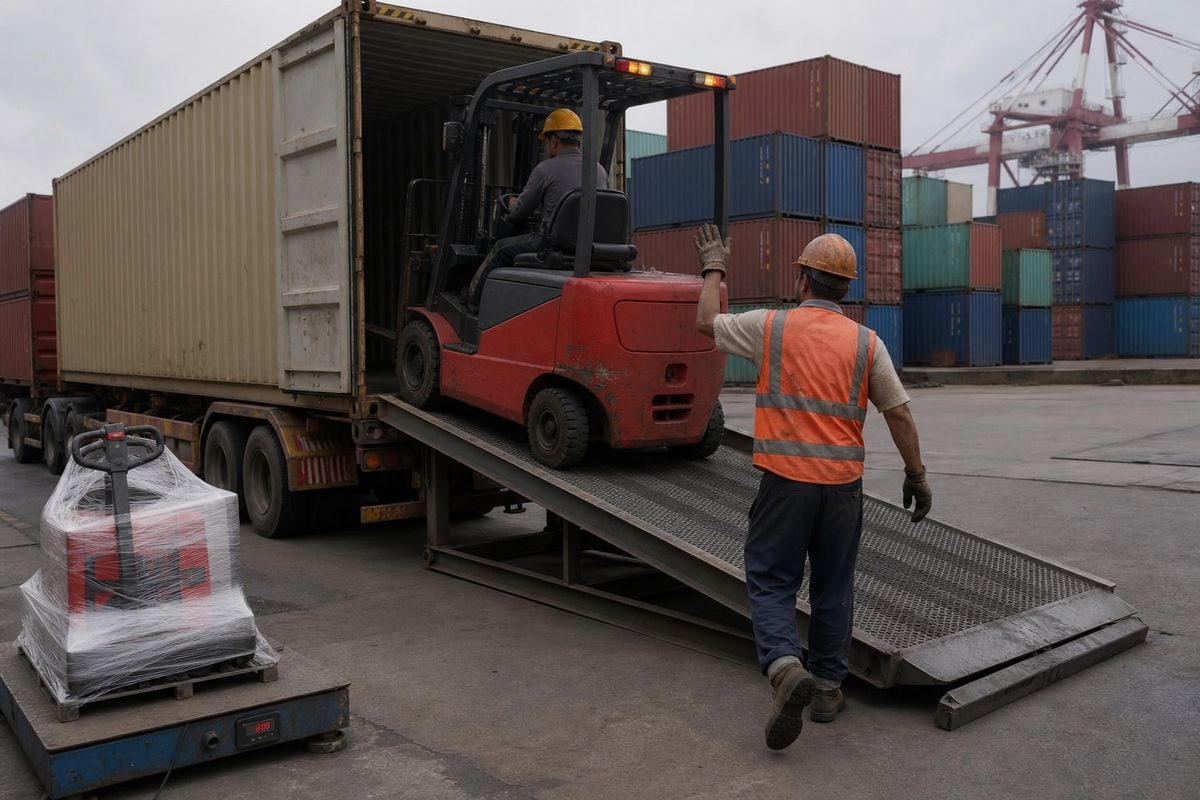
The choice of shipping mode drives everything else: cost, transit time, packing plan, and risk. Here is how the options compare for a typical electric counterbalance forklift or reach truck.
| Phương pháp | Tốt nhất cho | Typical Transit | Cấp độ rủi ro |
|---|---|---|---|
| Vận tải biển FCL | 1–4 full-size forklifts | 25–35 ngày | Low, cargo is dedicated |
| LCL sea freight | Single compact unit or parts | 30–40 days | Higher, shared handling |
| Ro-Ro shipping services | Oversized or self-driving machines | Route-dependent | Moderate, limited sailings |
| Vận tải hàng không | Urgent small pallet trucks or spare parts | 3–7 ngày | Low damage risk, high cost and battery limits |
FCL vs LCL Shipping: Which One Fits Your Forklift?
For the FCL vs LCL shipping decision, I push most clients toward FCL. A forklift is heavy, concentrated weight. In an LCL consolidation, that weight sits next to other people's cargo, and every extra handling touchpoint adds damage risk on a Pacific crossing that can run 35–45 days door to door. LCL only makes sense for one compact stacker or pallet truck where the freight saving genuinely outweighs the risk.
Watch the Mast Height
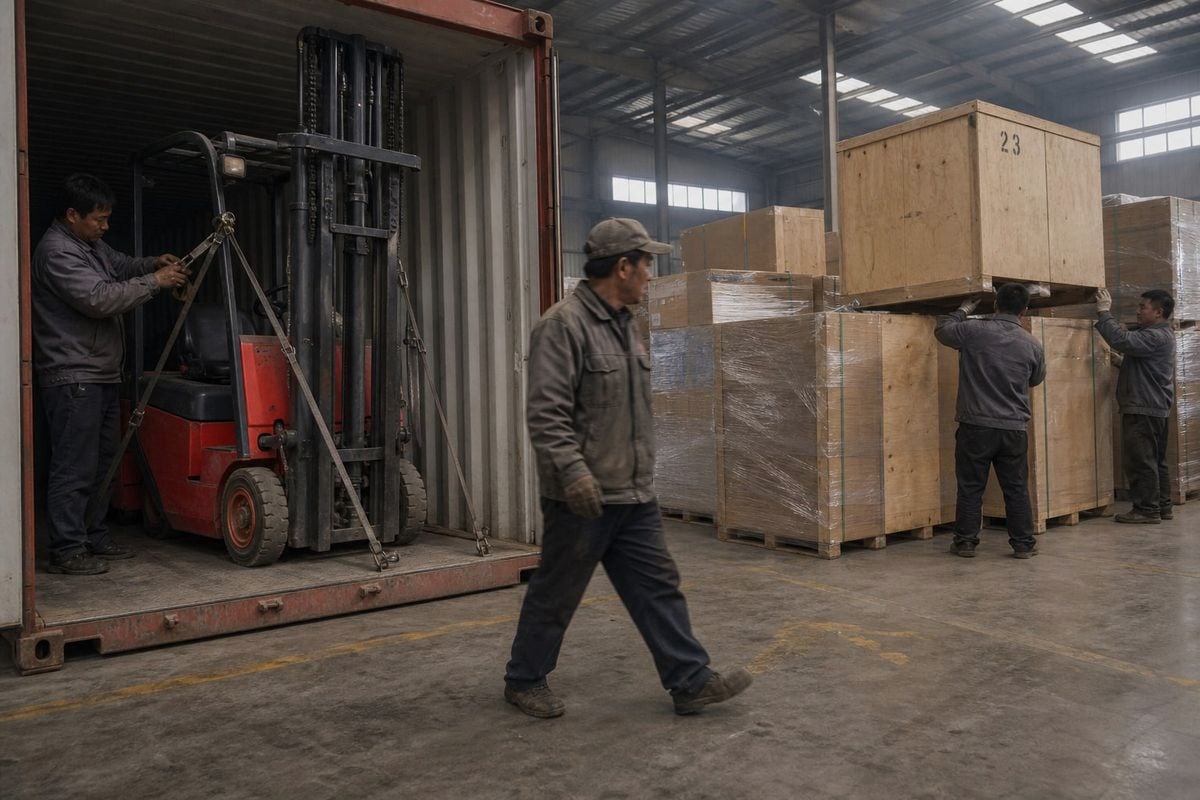
Container fit is the other big variable. A standard 20GP or 40HC works for most compact models, like the medium-duty red units we regularly load for South American dealers. But high-mast machines may need partial mast disassembly, a tilted mast, or an Open Top container. We measure every unit at the factory before booking, because guessing wrong means re-booking at the port.
Loading and Securing
Chile-bound vessels cross open Pacific water. We insist on heavy-duty steel wire lashing, wooden chocks under the wheels, and blocking and bracing against the container walls. A forklift that shifts mid-voyage can destroy itself and the container doors.
How Much Does It Cost to Ship an Electric Forklift from China to Chile?
The trade-off I explain most often is this: the cheapest ocean quote is rarely the cheapest landed cost. Our team builds full landed-cost estimates for exactly that reason.
Total cost includes ocean freight for a 20GP or 40HC container, China inland trucking, export declaration, marine insurance, Chilean port charges, customs brokerage, and 19% IVA on CIF value. With a Form F Certificate of Origin, the 6% import duty drops to 0%.
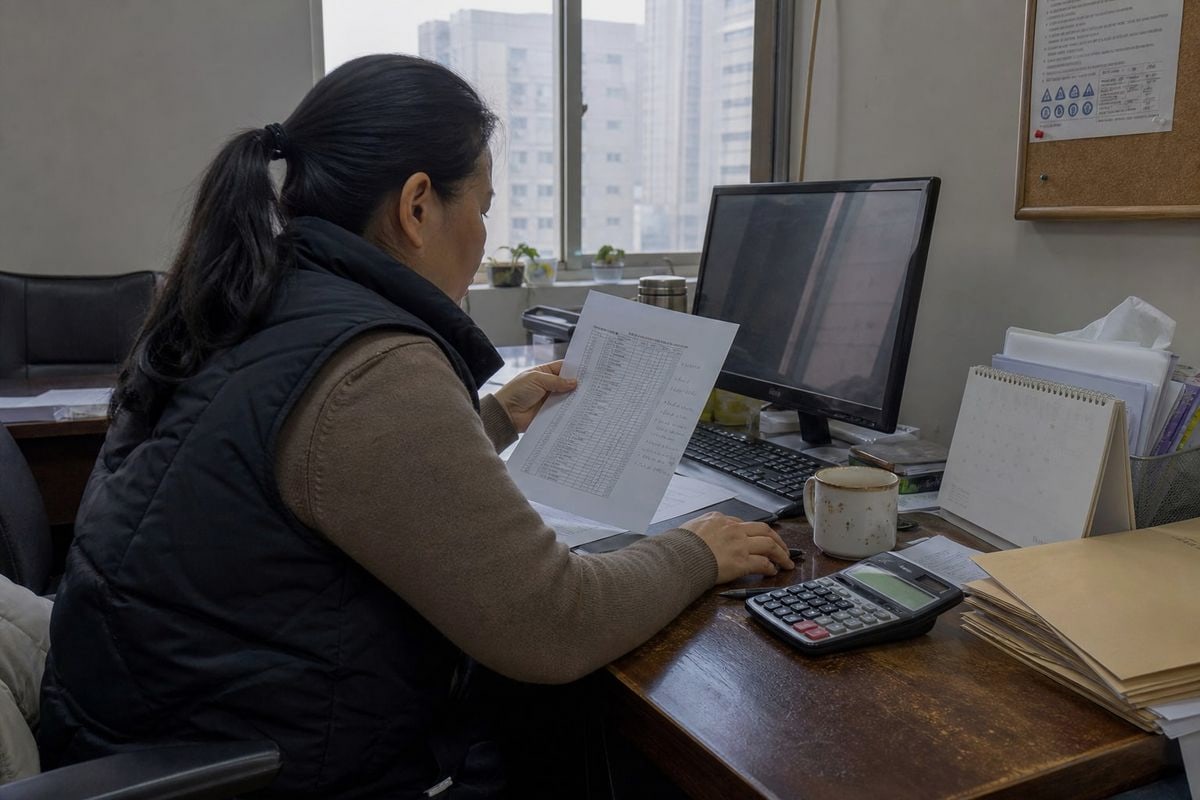
Buyers who compare only ex-factory prices get surprised later. So let me break the landed cost into its real components. The exact numbers move with fuel surcharges and season, but the structure stays the same.
| Thành phần chi phí | Who Typically Pays (FOB) | Ghi chú |
|---|---|---|
| Vận tải nội địa Trung Quốc | Nhà cung cấp | Factory to load port |
| Tờ khai xuất khẩu | Supplier or forwarder | Included in FOB in most quotes |
| Cước vận chuyển biển | Người mua | 20GP fits 1–2 compact units; 40HC fits more |
| Bảo hiểm hàng hải | Người mua | Cực kỳ được khuyến nghị cho máy móc có giá trị cao |
| Chile port and terminal charges | Người mua | At San Antonio or Valparaíso |
| Thuế và phí nhập khẩu | Người mua | 0% duty with FTA Form F; 19% IVA on CIF applies regardless |
| Thủ tục hải quan | Người mua | A Chilean broker confirms the final classification |
| Local delivery in Chile | Người mua | Port to warehouse, plus offloading equipment |
Incoterms Decide Who Pays What
Your Incoterm choice reshapes this table. Experienced importers usually buy FOB: the supplier delivers to the Chinese port, and the buyer controls freight, insurance, and the customs clearance process in Chile. That control means transparency. DDP flips it: one all-in price, less visibility, and less ability to audit each cost line. EXW pushes everything onto the buyer, including China inland logistics, which I do not recommend without a China-based partner. CIF sits in the middle, with the seller booking freight and basic insurance.
Here is the objection I hear: "DDP is simpler, so why not always use it?" Simpler, yes. But DDP quotes can hide margins inside customs and destination handling. If you plan to import forklifts repeatedly, FOB with your own international freight forwarder 1 gives you repeatable, auditable costs. For a true first-time import, a transparent door-to-door DDP or DAP arrangement is a fair compromise, provided every cost line is itemized.
Squeeze More Value from the Container
One practical tip from our loading warehouse: fill the dead space. Spare forks, chargers, batteries, and parts from multiple suppliers can consolidate into the same container, cutting the average logistics cost per unit significantly.
What Documents and Customs Requirements Do I Need to Import Electric Forklifts into Chile?
A lesson our documentation team learned early: Chilean customs cares less about how nice your forklift is and more about whether your invoice, packing list, and HS code all tell the same story.
Importing electric forklifts into Chile requires a commercial invoice, packing list, bill of lading, Form F Certificate of Origin under the China-Chile FTA, UN38.3 test summary, and MSDS for the battery. Classify under HS Code 8427.10 and clear through a licensed Chilean customs broker.
Documentation is where shipments succeed or fail. Let me lay out the full set, then explain the two items that matter most for Chile specifically.
| Tài liệu | Phát hành bởi | Mục đích |
|---|---|---|
| Hóa đơn thương mại | Nhà cung cấp | Declared value for duties and IVA |
| Danh sách đồ cần đóng gói | Nhà cung cấp | Weights, dimensions, contents |
| Vận đơn | Carrier or forwarder | Transport document and title |
| Certificate of Origin Form F | Chinese authority (CCPIT/customs) | Activates 0% duty under the FTA |
| Tóm tắt thử nghiệm UN38.3 | Battery manufacturer or lab | Proves lithium battery transport safety |
| Bảng dữ liệu an toàn vật liệu | Nhà sản xuất pin | Dữ liệu an toàn hóa chất cho pin |
| DG declaration (if applicable) | Shipper | Required for regulated battery cargo |
The Form F Advantage
The China-Chile Free Trade Agreement is one of the most valuable tools available to Chilean importers. With a correctly issued Certificate of Origin Form F, the standard 6% Chilean import duty falls to 0%. The 19% IVA on the CIF value still applies, but eliminating the duty is real money on a machinery shipment. We verify the Form F details against the invoice and bill of lading before departure, because a mismatch can void the preference.
HS Classification and the Red Channel
Electric forklifts generally classify under HS heading 8427 2, specifically 8427.10 for self-propelled trucks powered by an electric motor. Accurate classification matters at ports like San Antonio and Valparaíso: inconsistent declarations raise the odds of a red channel physical inspection, which means delays, storage charges, and possible demurrage. Even so, I always tell buyers to confirm the final code and any applicable rates with their Chilean customs broker 3 for their exact model and battery configuration. Do not hard-code someone else's tariff assumption into your budget.
Looking Ahead: The REP Law
One emerging requirement worth planning for: Chile's Extended Producer Responsibility (REP) Law increasingly asks importers of industrial batteries to show an end-of-life management plan or a partnership with a local recycling entity. Building this into your import setup now avoids scrambling later.
How Do I Handle Lithium Battery Shipping Regulations When Shipping Forklifts to Chile?
Before any battery-powered machine leaves our consolidation warehouse, we run one non-negotiable check: is the battery paperwork complete? Carriers refuse bookings over this more than any other issue.
Lithium battery forklifts fall under IMDG Class 9 dangerous goods rules. You must provide a UN38.3 test summary and MSDS before booking, declare the cargo correctly to the carrier, reduce the battery to around 30% state of charge, and secure the unit against short circuits and movement.
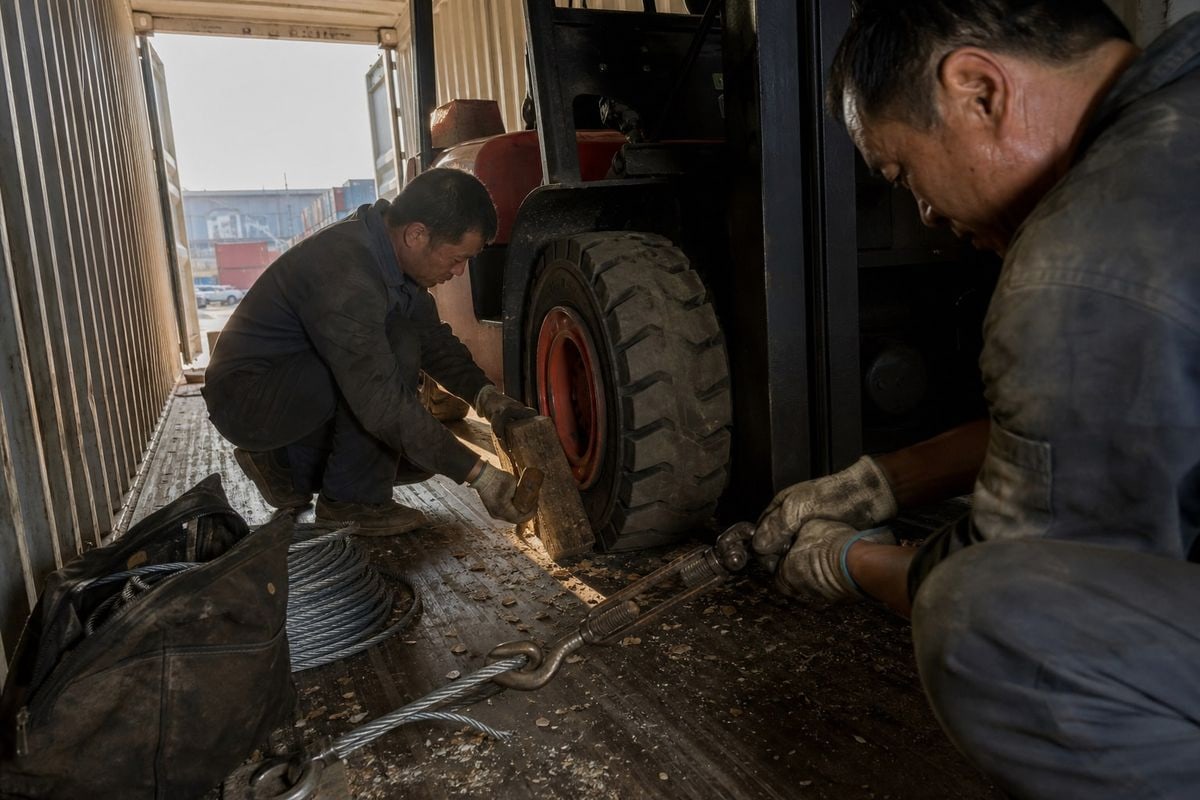
Lithium battery shipping regulations are the single biggest difference between shipping an electric forklift and shipping ordinary machinery. Here is the process we follow, step by step.
- Confirm the battery type early. Lead-acid and lithium batteries follow different rules. Lithium units trigger IMDG Code compliance requirements 4; the battery chemistry and capacity determine whether the carrier accepts the cargo as general freight or requires full dangerous goods handling.
- Collect UN38.3 certification. This test summary proves the battery passed altitude, vibration, shock, and thermal tests for safe transport. No UN38.3, no legitimate booking. We ask suppliers for the actual test summary with certificate numbers, not a logo on a brochure.
- Obtain the Material Safety Data Sheet. The MSDS (or SDS) describes the battery chemistry and emergency handling. Carriers and Chilean authorities can both request it.
- Declare correctly to the carrier. Installed lithium batteries in vehicles are typically handled under Class 9 provisions. Misdeclaring battery cargo to save money is the fastest route to fines, offloading, and blacklisting.
- Manage the state of charge. An emerging safety practice is shipping lithium units at roughly 30% state of charge. Plan for this: your forklifts will arrive nearly depleted, so charging infrastructure must be ready at the destination warehouse on day one.
- Verify charger compatibility. Chile runs industrial three-phase 380V/50Hz power. Confirm the charger voltage, frequency, and plug type before the factory ships, because electrical retrofitting in Chile is expensive and slow.
A Chile-Specific Detail: Altitude
If your forklifts are headed to northern mining regions, ask the factory whether the Battery Management System is calibrated for high-altitude operation. Thin air affects heat dissipation and discharge behavior, and a BMS tuned for sea level can underperform at elevation.
Phần kết luận
Shipping electric forklifts from China to Chile is predictable when you control four things: battery compliance, FCL container planning, the Form F duty preference, and complete customs documents. Get those right, and the Pacific crossing becomes routine.
Chú thích
1. The International Chamber of Commerce defines Incoterms like FOB, which govern shipping responsibilities. ↩︎
2. The World Customs Organization maintains the Harmonized System used for classifying international trade products. ↩︎
3. Official site for Chile's National Customs Service, essential for import regulations and duty information. ↩︎
4. The International Maritime Organization sets the global standards for shipping dangerous goods like lithium batteries. ↩︎




