- +8618603825129
- [email protected]


Last spring, our booking team watched a competitor's forklift container get rejected at Shanghai port over one wrong UN number. The UN 3171 vs [UN 3556](https://mbmlog.com/?p=11645) question is no longer academic. Get it wrong, and your cargo sits on the dock while storage fees pile up. Get it right, and your electric forklifts sail without a hitch.
UN 3556 is the mandatory classification for lithium-ion battery-powered forklifts under IMDG Amendment 42-24, effective January 1, 2026. UN 3171 now applies only to vehicles powered by wet lead-acid, sodium-metal, or sodium-alloy batteries. Importers must verify battery chemistry before booking to avoid rejection.
This shift affects every electric forklift moving by sea. Below, I walk through classification, cost, documentation, and the customs risks of getting it wrong.
A buyer in Texas recently sent me a spec sheet and asked one question: which UN number applies? We checked the battery chemistry first, because everything else flows from it.
Check the battery chemistry on the forklift's Safety Data Sheet. If the forklift runs on a lithium-ion battery, it falls under UN 3556. If it uses a wet lead-acid, sodium-metal, or sodium-alloy battery installed in the unit, it remains under UN 3171.
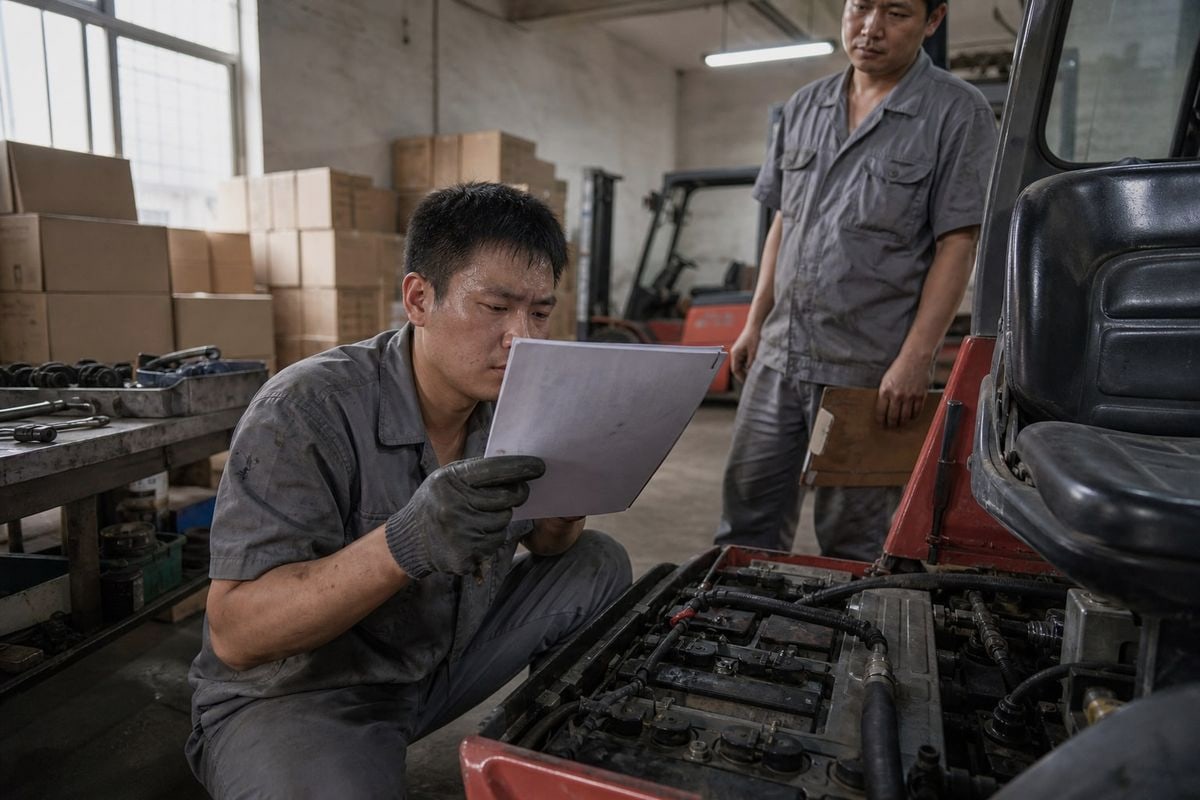
The old system treated nearly every battery-powered vehicle as UN 3171. That catch-all era is over. IMDG Amendment 42-24 split battery-powered vehicles into separate entries by chemistry, because a lithium ion battery powered vehicle carries different fire risks than a lead-acid unit. Here is the quick comparison every importer should keep on hand:
| Factor | UN 3171 | UN 3556 |
|---|---|---|
| Battery type | Wet (lead-acid), sodium-metal, sodium-alloy | Lithium-ion |
| Proper shipping name | Battery-powered vehicle or equipment | Vehicle, lithium-ion battery 1 powered |
| Status after Jan 1, 2026 | Restricted to non-lithium chemistries | Mandatory for lithium-ion vehicles by sea |
| Typical forklift examples | Traditional lead-acid electric forklifts | Modern lithium-ion forklifts, pallet trucks, stackers |
| Hazard label | Standard Class 9 | Class 9A lithium battery label |
Watch for edge cases. A hybrid forklift with both a combustion engine and a lithium-ion battery falls under UN 3166, not UN 3556. A spare, uninstalled lithium battery shipped alongside the forklift needs its own declaration as UN 3480. When we consolidate forklifts and spare batteries for US-bound clients, we always split these declarations. One line item does not cover both.
There is a real trade-off we weigh on every lithium forklift booking: the carrier with the cheapest rate is not always the carrier that accepts UN 3556 cargo smoothly.
Correct dangerous goods classification determines which carriers will accept your booking, what DG surcharges apply, and how insurers price the risk. UN 3556 shipments face chemistry-specific premiums and stricter acceptance rules, so misclassification can trigger rebooking costs, relabeling fees, and lost vessel space.

Ocean carriers screen dangerous goods bookings before confirming space. A booking filed under the wrong lithium battery hazard class gets flagged, questioned, or rejected outright. That costs you time, and time on a fixed delivery schedule costs money. In our experience exporting electric forklifts to the United States, DG acceptance is a chain, not a single approval. The origin carrier, any transshipment port, and the destination terminal all review the classification. One weak link stops the whole shipment.
| Cost item | Correct UN 3556 filing | Misclassified as UN 3171 |
|---|---|---|
| DG surcharge | Quoted upfront, predictable | Requoted after correction, often higher |
| Booking acceptance | Confirmed on first submission | Rejected or held for review |
| Labels and marks | Class 9A applied once at origin | Relabeling fees at port or warehouse |
| Insurance | Chemistry-specific premium, transparent | Possible claim disputes over misdeclaration |
| Schedule | Sails as planned | Rolled to a later vessel |
The insurance angle deserves attention. The move to UN 3556 lets maritime insurers 3 apply more granular, chemistry-specific risk premiums. Some importers see this as a pure cost increase, and I understand the objection. But there is an upside: accurate classification means your coverage actually holds up. A misdeclared shipment gives an insurer grounds to dispute a claim, and a disputed claim on a container of forklifts hurts far more than a modest surcharge. When we quote door-to-door DDP shipments, we build the correct DG surcharge into the landed cost from day one, so our clients never discover a surprise fee at destination.
I learned early in this business that documentation problems rarely surface at origin. They surface three weeks later, at a destination port, where fixing them is slow and expensive.
For UN 3556 you need a dangerous goods declaration citing UN 3556, a UN 38.3 Test Summary for the installed battery, an updated Safety Data Sheet, Class 9A labels, and consistent booking references. UN 3171 shipments need a matching DG declaration, battery specs, and standard Class 9 labeling.
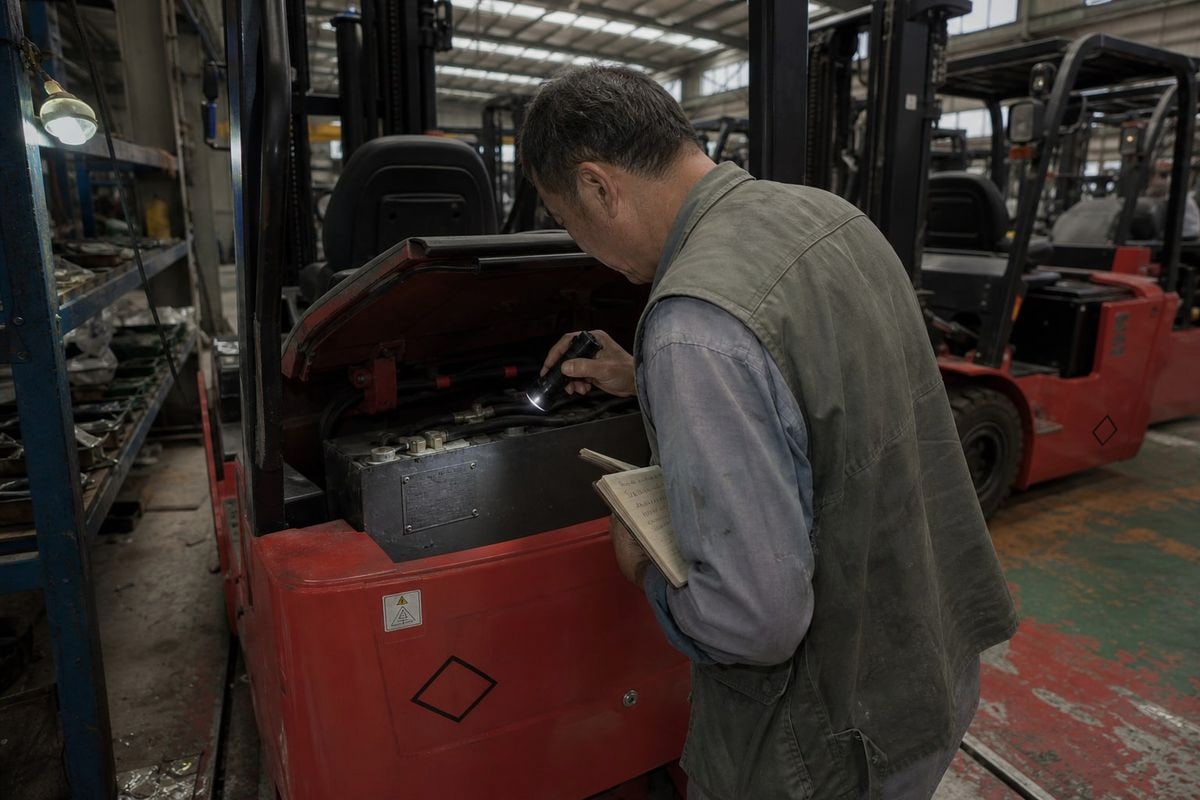
Paperwork is where most classification errors become visible. Every document in the chain must tell the same story. If your commercial invoice says lithium-ion but your DG declaration says UN 3171, someone in the chain will notice, and the shipment stops.
| Document | UN 3556 (lithium-ion) | UN 3171 (wet/sodium battery) |
|---|---|---|
| Dangerous Goods Declaration | Required, must cite UN 3556 | Required, must cite UN 3171 |
| UN 38.3 Test Summary 4 | Required for the specific battery model | Not applicable |
| Safety Data Sheet | Must match battery chemistry | Must match battery chemistry |
| Hazard label | Class 9A with battery symbol and stripes | Standard Class 9 |
| Booking reference | Updated to UN 3556 wording | UN 3171 wording |
Carriers now expect digital proof of the UN 38.3 Test Summary at booking approval, tied to the exact battery model installed in the forklift. A generic summary for a similar battery does not work. We request this document from the factory during production, not after the forklift arrives at our consolidation warehouse, because chasing it later delays loading.
Two mixed-cargo traps also deserve mention. Retrofit kits shipped in the same container as a forklift frame for destination assembly cannot ride under UN 3556; they must be declared as UN 3481 and packed to Packing Instruction P903. And note that Special Provision 388 governs how vehicle entries align with battery type, which is exactly why chemistry drives the paperwork. Safety Data Sheet compliance ties it all together: if the SDS, the declaration, and the label disagree, expect questions. For our multi-supplier consolidation clients, we cross-check every document set before the container gate-in, so Material Handling Equipment shipping stays predictable.
A distributor once called us in a panic after his previous forwarder declared lithium-ion forklifts under the old catch-all code. His container was held at a transshipment hub for eleven days. That call is why we double-check chemistry on every file.
Yes. Misclassifying a lithium-ion forklift as UN 3171 after January 1, 2026 can trigger immediate cargo rejection at ports, administrative fines, mandatory relabeling or re-export, and extended customs holds. Terminals treat misdeclared dangerous goods as a safety violation, not a clerical error.
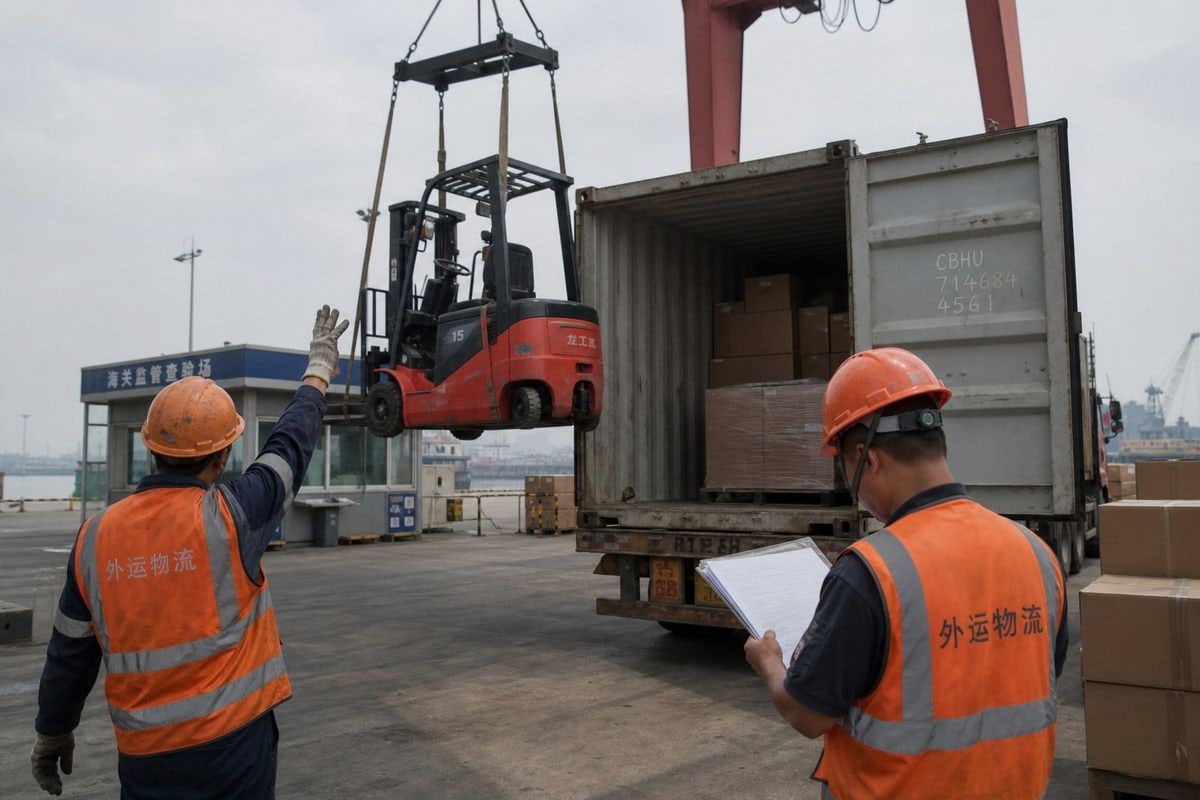
Port authorities and customs officers treat battery misdeclaration seriously because the underlying risk is real. A lithium-ion fire in a container stack behaves differently from a lead-acid incident, and responders rely on the UN number to know what they are dealing with. That is the whole point of splitting the entries.
Some importers push back and say a short grace period still protects them. It does not. The maritime transition period has ended, and UN 3556 is mandatory for applicable lithium-ion shipments from January 1, 2026. Outdated guidance from 2025 still circulates online, which is exactly why mixed advice from agents and datasheets confuses buyers. Electric forklift import regulations at the destination add another layer: US customs brokers cross-reference the DG classification against the entry documents, so an origin error follows the cargo all the way to your warehouse. Air freight raises the bar further. Under the IATA Dangerous Goods Regulations, a UN 3556 vehicle with a battery over 100 Wh must ship at a state of charge no higher than 30%, and sea shipments follow their own stowage rules under Packing Instruction 952. Our pre-departure document review exists precisely to catch these mismatches while they are still cheap to fix.
Wrong UN numbers now mean rejected containers, fines, and blown delivery dates. Confirm your forklift's battery chemistry, file UN 3556 for lithium-ion units, and align every document before sailing.
1. Comprehensive technical overview of lithium-ion battery chemistry, safety, and common industrial applications. ↩︎
2. Official IATA page for regulations governing the air transport of dangerous goods. ↩︎
3. IMO regulations directly influence how maritime insurers assess and price dangerous goods risks. ↩︎
4. The UN body providing the regulatory framework for the UN 38.3 battery testing standards. ↩︎