

每周,我们在郑州的物流团队处理数百个运往 亚马逊FBA仓库 1 美国的纸箱。一件反复出现的头痛问题?因缺少或错误的"团队搬运"标签而在码头被拒收的货物 团队搬运标签标准 2. 这听起来是一个小细节,但在一个55磅的箱子上缺少贴纸可能会引发拒收、昂贵的重新包装费用和数周的延误。如果您从中国向美国运输重型产品,这是一个您无法忽视的问题。.
FBA 团队提升标签标准要求卖家在超过特定重量阈值的纸箱上贴上警告标签——北美为 50 磅,欧洲为 15 公斤——提醒仓库工作人员使用双人或机械处理。未能遵守将面临拒收、罚款或在亚马逊履约中心的运送禁令。.
在本指南中,我们分解了您需要了解的每一条规则:按地区划分的重量阈值、确切的标签放置、未遵守的后果,以及您的货运代理如何保持您的货物清洁。 欧洲站点 3. 让我们开始吧。.
我如何确定我的纸箱重量是否需要亚马逊 FBA 的 "团队提升" 标签?
当我们在整合仓库打包纸箱时,我们团队检查的第一件事是每个箱子的毛重。 卖家中心账户 4. 很多卖家忽视了这一步骤。他们专注于产品标签和 FNSKU 条形码 5 但请不要忘记亚马逊接收团队首先要寻找的安全标签。一个超重的、未标记的纸箱可能会阻碍整托盘的处理。.
如果您的纸箱重量在 50 到 100 磅(22.7–45.4 公斤)之间,针对美国 FBA,需要贴上 "Team Lift" 标签。超过 100 磅的纸箱需要贴上 "Mechanical Lift" 标签。欧洲站点在仅 15 公斤时就会触发 "Heavy Package" 标签,30 公斤时需要 "Mech Lift" 标签。.
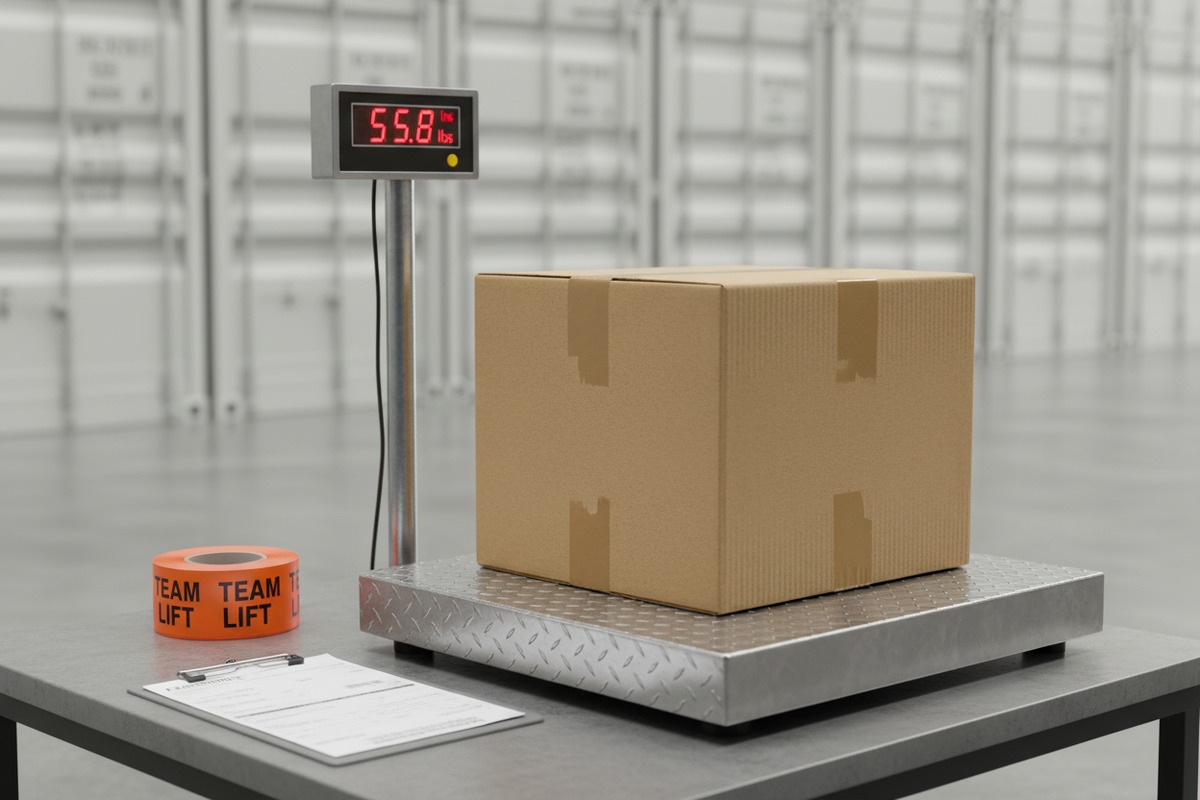
各个亚马逊市场的重量阈值
规则并不是 everywhere 一样。触发标签的重量取决于您要发货的国家。以下是一个明确的分解:
| 区域 / 市场 | 无需标签 | 团队搬运 / 重型包裹 | 机械升降 |
|---|---|---|---|
| 美国与加拿大(北美) | 低于 50 磅 (≈22.7 千克) | 50–100 磅 (≈22.7–45.4 千克) | 超过 100 磅 (≈45.4 千克) |
| 欧洲 (英国, 德国, 法国, 意大利, 西班牙) | 低于 15 千克 (≈33 磅) | 15–30 公斤 (≈33–66 磅) | 超过 30 公斤 |
| 日本 | 少于 15 公斤 | 15–30 公斤(需要日文文本) | 超过 30 公斤(必须托盘化) |
| 一般国际货运 | 30公斤以下 | 30–50公斤 | 超过50公斤 |
了解标准最大值
亚马逊的 标准最大纸箱重量 6 在美国的FBA中为50磅。这意味着如果您内部所有物品的总重量低于50磅,则不需要团队搬运标签。但卖家在这里常常感到困惑:这个50磅的限制也是多SKU或混合纸箱允许的最大重量。只有当纸箱包含一个单一的超大单位且其本身重量超过时,您才能超过50磅。.
公制与英制陷阱
我们经常看到这个错误。美国的一位卖家以磅为单位测量纸箱重量,一切看起来都很好。然后他们将其运送到德国,在那里阈值为15千克——大约33磅。那个在美国不需要标签的40磅纸箱现在在欧洲仓库需要在五个面上贴上"重包裹"标签。在包装之前,务必确认目的市场的规则。.
您需要知道的常见标签文本
- 北美洲: "团队提升"(两人搬运)或 "机械提升"(需要机械搬运)
- 欧洲: "注意:重包裹" 加上重量(kg)
- 日本: Equivalent warnings in Japanese
At our facility, we generate printable labels automatically based on the destination. If you are shipping to the US, you get the imperial-weight Team Lift sticker. If you are going to the EU, you get the metric Heavy Package version. This removes guesswork and prevents mislabeling.
When a Single Item Exceeds the Limit
If one product unit weighs over 50 lbs by itself, you must still box it and label it. Amazon does not waive the labeling requirement just because the product cannot be split into lighter cartons. The label alerts the warehouse team to bring a partner or a forklift before attempting to move it.
我必须遵循的 "团队提升" 标签的具体尺寸和放置规则是什么?
Our quality control team has a saying: "A label in the wrong spot is the same as no label at all." We have seen shipments delayed because a Team Lift sticker was placed on a seam, or only applied to the top of the box. Amazon's rules on placement are strict and specific.
Team Lift and Heavy Package labels must be placed on at least the top and all four sides of the carton — five labels total for cartons over 15 kg in the EU or over 50 lbs in the US. Labels must sit on flat surfaces, away from seams, edges, and curves, and must not cover FNSKU or shipping barcodes.
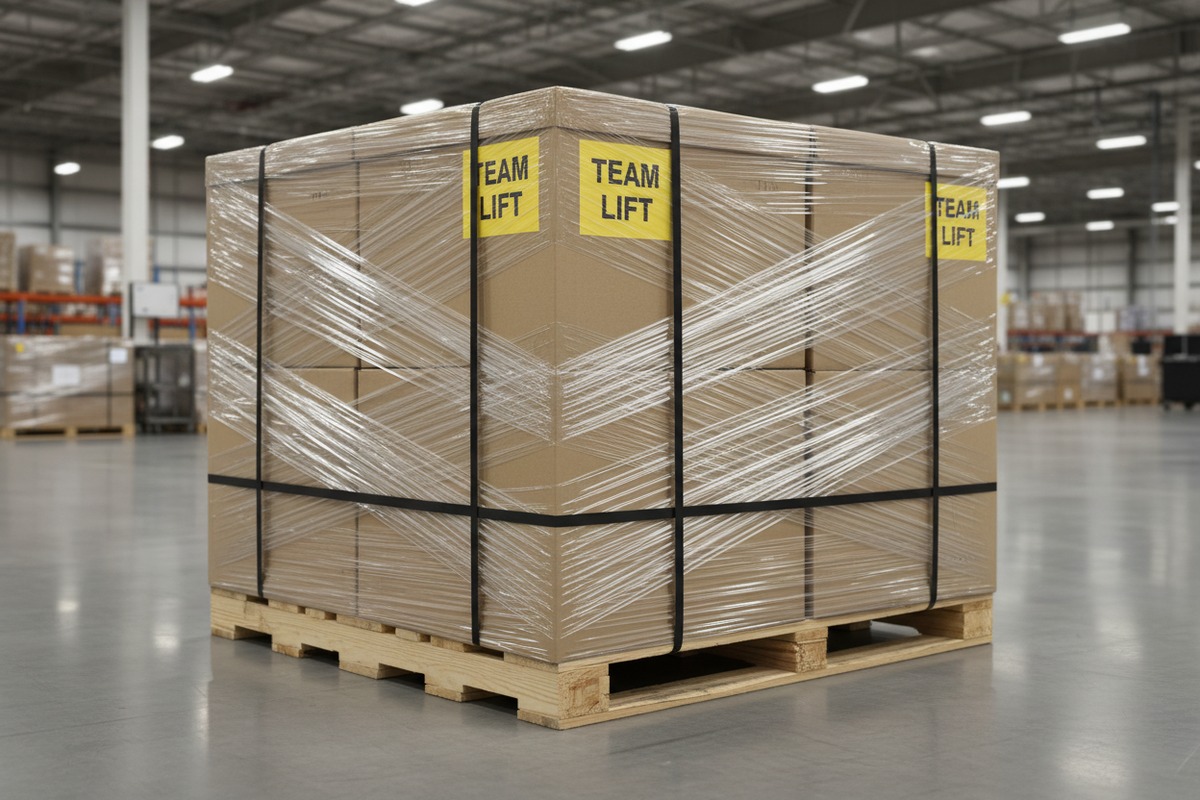
标签放置规则
Here is exactly where each label goes:
| 标签类型 | Placement Location | Number of Labels | Surface Requirement |
|---|---|---|---|
| Team Lift (US/CA) | Top + 4 sides | 5 minimum | Flat, non-seam area |
| Heavy Package (EU) | Top + 4 sides | 5 minimum | Flat, non-seam area |
| 机械升降 | Top + 4 sides | 5 minimum | Flat, non-seam area |
| FNSKU Barcode | Flat exterior surface | 1 per unit (visible) | Away from seams, ≥50×30mm |
| Box ID / Shipping Label | Exterior side | As required per shipment plan | Flat, scannable surface |
Why Five Sides?
Think about how boxes are stacked in a warehouse or container. When a pallet arrives, workers may approach from any angle. A label only on top is useless when the carton is at the bottom of a stack. By placing labels on all five accessible surfaces (top and four sides), any worker who encounters the box will see the warning immediately — regardless of orientation.
Size and Readability
Amazon does not publish an exact minimum dimension for Team Lift labels the way it does for FNSKU barcodes (which must be at least 50×30mm). However, the label must be clearly visible and legible from a reasonable distance. In practice, most compliant labels are at least 3×5 inches. The text "TEAM LIFT" or "Caution: Heavy Package" should be bold and printed in a contrasting color — black text on a bright yellow or orange background is the industry standard.
What Not to Cover
Your Team Lift labels must not overlap or obscure:
- FNSKU 条形码
- Amazon shipment ID labels (FBA box ID)
- Any other required shipping labels
If your carton is small and surface space is tight, plan your label layout before printing. We typically design a label map for each carton size we handle so that every sticker has a designated zone.
Packaging Material Standards
Beyond labels, Amazon also enforces packaging specifications for heavy cartons. Boxes over 50 lbs should use double-wall or triple-wall corrugated cardboard 7 (at least 5mm thick). Single-wall cardboard is too weak for heavy loads and can collapse during transit or stacking. For bulky and heavy items like furniture or appliances, reinforced edges and corner protectors are recommended. No single side of a standard carton should exceed 25 inches (63.5 cm) unless the box contains one oversized unit.
Pallet-Level Labels
If you ship via LTL or FTL 8 (less-than-truckload or full truckload), your pallets need their own labels too. Each pallet should display weight, height, and handling instructions 9 on both the center and the side. This is separate from the carton-level Team Lift labels. Both layers of labeling are required.
如果我未能遵守这些海外仓库标签标准,我的货物会发生什么?
We learned this lesson early in our business. A client shipped 200 cartons to an Amazon FBA warehouse in California. Every box weighed 52 lbs. Not one had a Team Lift label. The entire shipment was flagged at receiving. The result? A two-week delay, repackaging fees, and an inbound performance defect on the seller's account. It was an expensive lesson.
Non-compliance with FBA labeling standards can result in shipment refusal at the fulfillment center, mandatory repackaging at the seller's expense, inbound performance defects on your Seller Central account, and in repeated cases, suspension of your ability to send future inbound shipments.
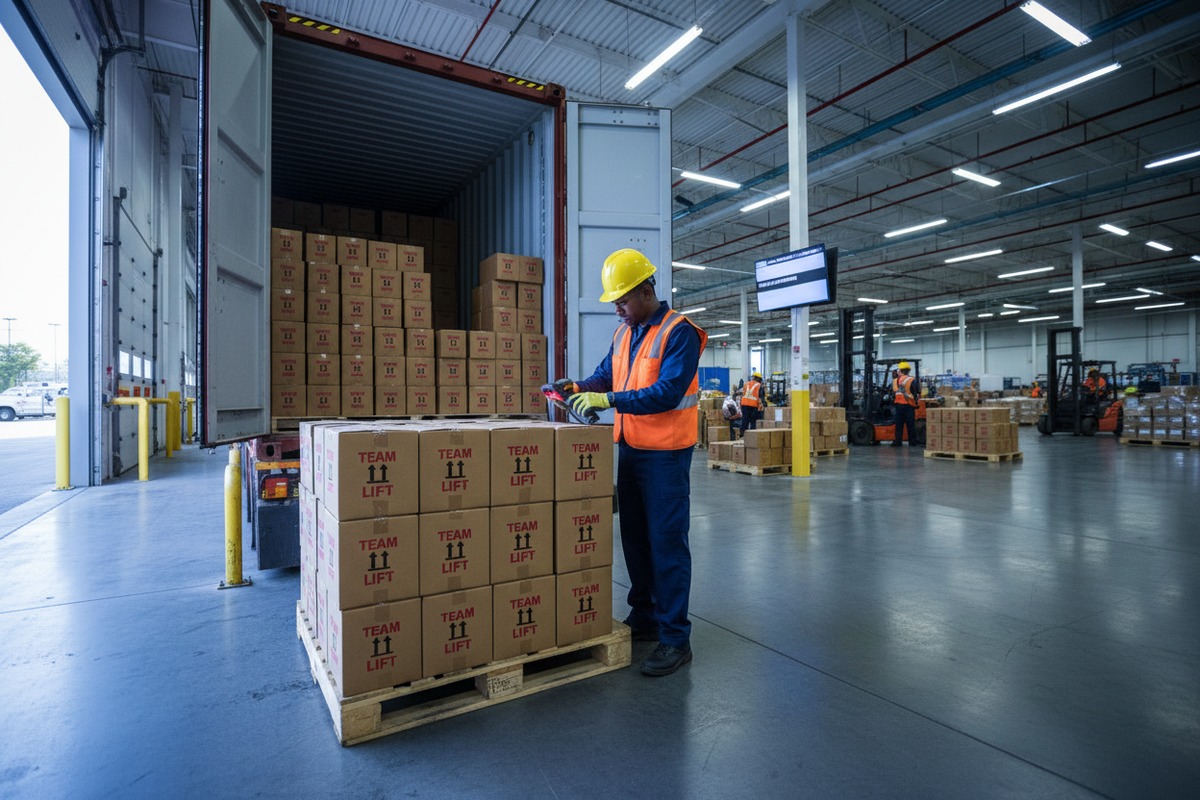
The 2026 Zero-Tolerance Environment
Amazon has been tightening enforcement steadily. As of 2026, the company has phased out its own FBA prep services. This means Amazon no longer fixes your labeling mistakes for a fee. If your cartons arrive mislabeled, they are rejected outright. There is no safety net.
The consequences escalate:
- First offense: Your shipment is flagged. You receive an inbound performance defect notification. The cartons may be held at the dock.
- Repeated issues: Amazon may charge repackaging or relabeling fees — or refuse the shipment entirely and return it at your cost.
- Chronic non-compliance: Your inbound shipping privileges can be suspended. This means you cannot send any new inventory to FBA until the issue is resolved.
Financial Impact
Let's put real numbers on this. Suppose you ship a 40-foot container of goods from China to a US FBA warehouse. The freight cost alone might be $4,000–$8,000. If that container is rejected at the Amazon dock because of missing Team Lift labels, you now face:
- Re-delivery fees: $500–$1,500 to reroute to a 3PL warehouse
- Relabeling costs: $0.50–$2.00 per carton × hundreds of cartons
- Storage fees: Daily charges at the 3PL while you fix the problem
- Lost sales: Every day your inventory is delayed is a day you are out of stock on Amazon
The total cost of a labeling mistake can easily exceed $3,000–$5,000 — far more than the cost of doing it right the first time.
Customs and Transit Risks
Labeling issues do not only cause problems at Amazon. If your cartons lack proper handling labels, customs officials in the destination country may flag them for additional inspection. In the US, CBP (Customs and Border Protection 10) can hold shipments that appear improperly marked. In Europe, local health and safety regulations treat missing heavy-load warnings as a compliance violation. This can add days or even weeks to your transit time.
Account Health Consequences
Amazon tracks inbound performance metrics closely. Every defect — whether it is a missing label, an overweight unlabeled carton, or an oversized box — counts against your account. Too many defects and you lose access to certain shipping methods or FBA features. For high-volume sellers, this is a serious operational risk.
我的货运代理怎样才能确保我的中美货物满足所有FBA重量和标签要求?
In our Zhengzhou consolidation warehouse, we treat FBA compliance as a built-in step — not an afterthought. Every carton that passes through our facility is weighed, measured, and checked for the correct labels before it is loaded into a container. This is not optional. It is part of our standard operating procedure for every Amazon-bound shipment.
Your freight forwarder should verify carton weights, generate marketplace-specific labels (Team Lift, Heavy Package, or Mech Lift), confirm box dimensions, and perform pre-shipment quality inspections — all before cargo leaves the origin country. This prevents rejections, customs delays, and costly corrections at the destination.
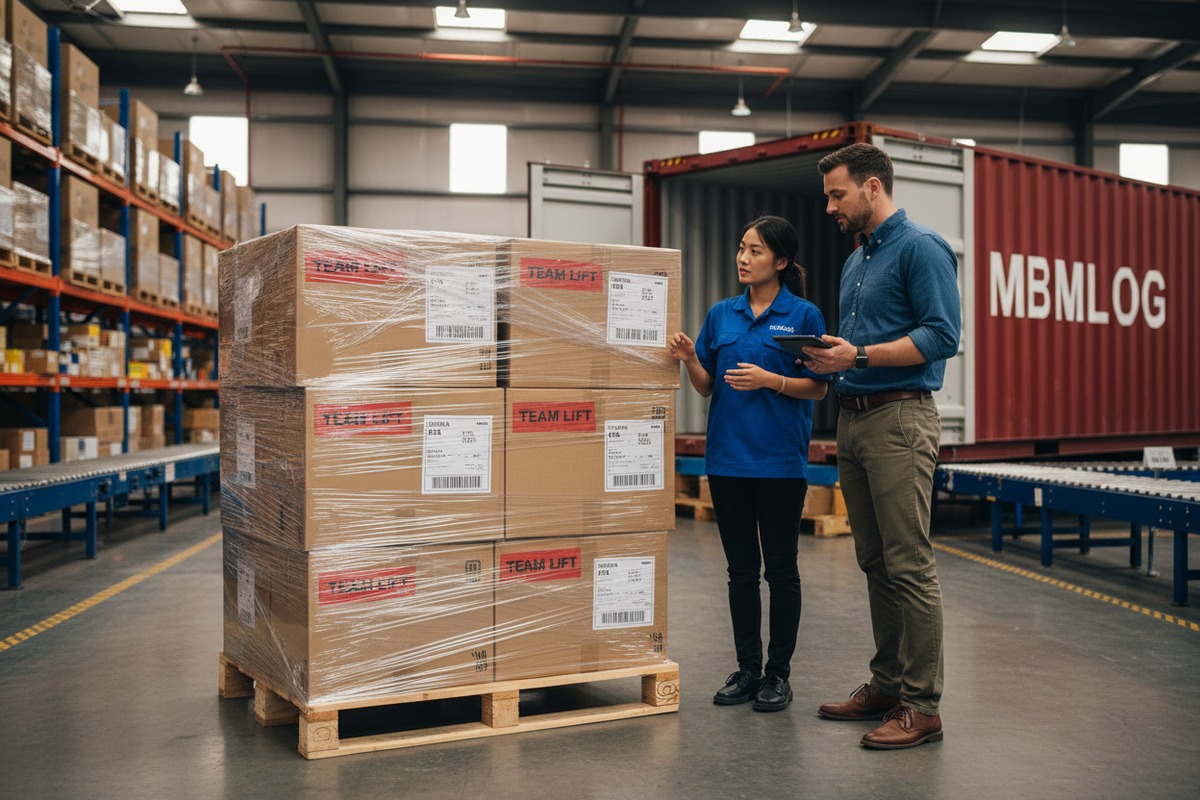
Pre-Shipment Compliance Checklist
The key principle is simple: fix everything in China before the container ships. Correcting a labeling error in Zhengzhou costs a few cents. Correcting it in Los Angeles costs hundreds of dollars. Here is the checklist we use:
| Compliance Step | What We Check | Action If Non-Compliant |
|---|---|---|
| Carton gross weight | Weigh every carton on calibrated scale | Repack to stay under 50 lbs or apply Team Lift label |
| Carton dimensions | Measure all three sides | Repack if any side exceeds 25 inches (for standard) |
| Team Lift / Heavy labels | Verify presence on 5 sides if over threshold | Print and apply correct labels for destination market |
| FNSKU 条形码 | Scan each barcode for readability | Reprint and reapply if damaged or unreadable |
| Box ID / Shipment labels | Match to Amazon shipment plan | Regenerate from Seller Central if mismatched |
| Packaging integrity | Check for double-wall cardboard, sealing quality | Reinforce or rebox weak cartons |
| Pallet labels (LTL/FTL) | Weight, height, handling labels on center and side | Add pallet-level labels before loading |
Communicate Before Production
The most effective way to prevent compliance issues is communication. Before your Chinese supplier even starts production, share your Amazon marketplace's labeling and weight requirements with them. Send them the exact label templates. Specify the maximum carton weight. Tell them which side of the box to leave clear for FNSKU placement. Many factories are willing to print labels directly onto cartons during production — but only if they receive the specifications early.
Use Automated Label Generation
We use logistics management software that automatically generates the correct labels based on the shipment destination. When a seller tells us they are shipping to FBA US, the system knows to check for the 50-lb Team Lift threshold. When the destination is FBA Germany, it switches to the 15-kg Heavy Package standard and prints labels in the correct format. This eliminates human error and speeds up the process.
AQL Inspections Before Loading
For high-value or high-volume shipments, we recommend AQL Level II sampling inspections. This means we randomly select a statistically significant number of cartons from the shipment and inspect them for:
- Correct weight
- Correct labels (Team Lift, FNSKU, Box ID)
- Packaging condition (no dents, tears, or crushed corners)
- Barcode scannability
If defects are found in the sample, we flag the entire batch for re-inspection. This catches problems before they leave China — not after they arrive at an Amazon dock in the US.
Working With a Specialized FBA Forwarder
Not all freight forwarders understand Amazon's requirements. A general cargo forwarder might ship your container safely from port to port but will not check whether your Team Lift labels are in the right place. That is why working with a forwarder who specializes in FBA shipments makes a real difference. We handle the entire process — from warehouse pickup in China, through consolidation and compliance checks, to DDP delivery at the Amazon fulfillment center in the US. Every step includes built-in compliance verification.
Sustainability and Efficiency
One additional benefit of proper carton weight management: it reduces packaging waste. When you optimize carton sizes and weights to stay under thresholds, you use less void fill, fewer oversized boxes, and less corrugated material. This aligns with Amazon's evolving environmental initiatives and can also reduce your dimensional weight charges on shipping.
结论
FBA Team Lift labeling is a small detail with big consequences. Know your weight thresholds, label all five sides, and work with a freight forwarder who checks compliance before your cargo leaves China. Getting it right at the source saves you time, money, and your Amazon account health.
脚注
1. Explains FBA warehouses and their function. ↩︎
2. Found authoritative Amazon Seller Central page detailing FBA shipping and routing requirements, including Team Lift labels. ↩︎
3. Details FBA heavy package labeling requirements for Europe. ↩︎
4. Official portal for Amazon sellers to manage their business. ↩︎
5. Explains what FNSKU barcodes are and their necessity for FBA. ↩︎
6. Provides official Amazon FBA standard weight limits. ↩︎
7. Explains different types and construction of corrugated fiberboard. ↩︎
8. Defines and differentiates Less-than-Truckload (LTL) and Full Truckload (FTL) shipping. ↩︎
9. Provides guidelines for safe pallet handling and loading. ↩︎
10. Official government agency responsible for border security and trade. ↩︎




