- +8618603825129
- [email protected]


Learning how to ship Chinese forklifts internationally can make or break your margin. Our Zhengzhou logistics team sees great factory prices erased by shipping mistakes every month.
To ship Chinese forklifts internationally, confirm the machine's dimensions, weight, and power source, choose FCL container, RoRo, or flat rack shipping, prepare the invoice, packing list, Bill of Lading, and Certificate of Origin, secure UN38.3 and DG paperwork for lithium models, then clear customs under HS Code 8427.
That is the short version. The details matter more. Below, I walk through cost, documents, battery rules, and container choices step by step.
Last quarter, a US dealer asked us to rescue a shipment quoted at half our price. The "cheap" quote excluded destination charges. His landed cost doubled at the port.
Shipping a forklift from China typically costs $1,500–$5,000 per unit by FCL container to major ports, depending on size, route, and season. Add import duties, destination handling, customs clearance fees, and inland trucking. Oversized machines needing flat rack or RoRo shipping cost significantly more.
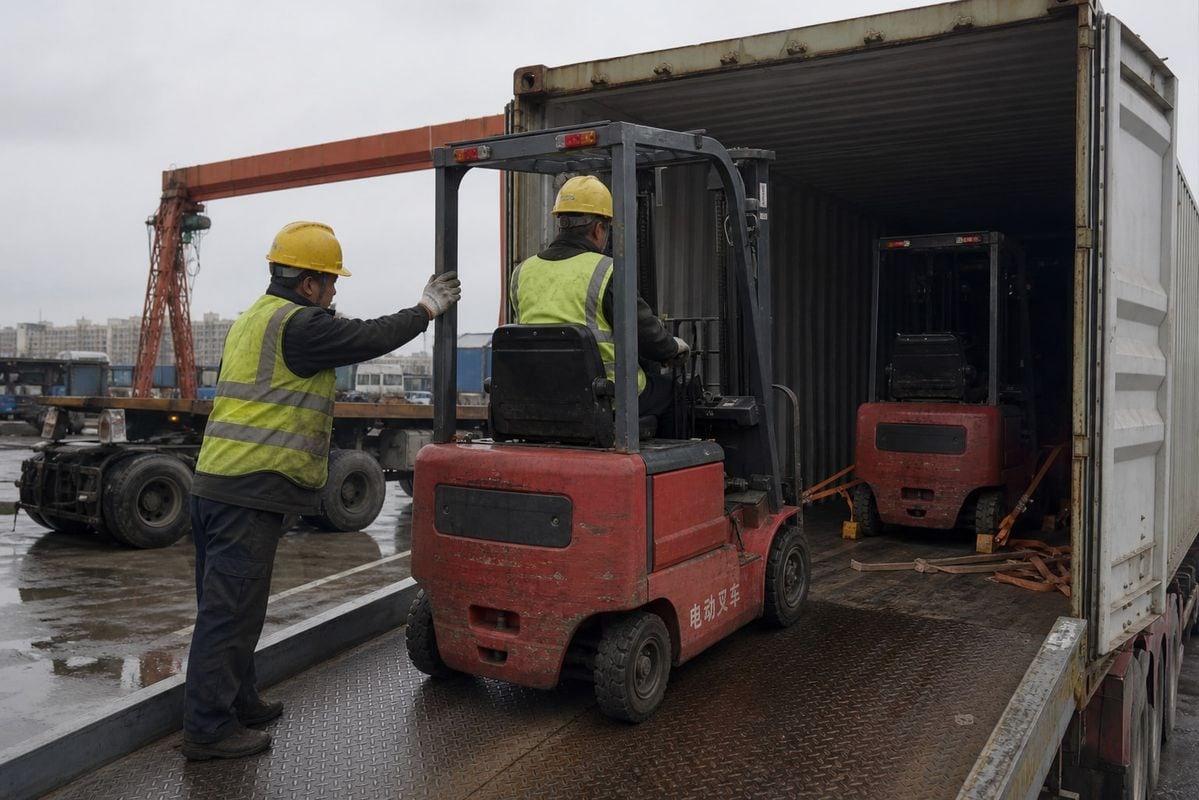
The biggest mistake I see importers make is comparing freight quotes line by line without checking what each quote actually includes. A low ocean rate means nothing if the forwarder hides destination fees. Landed cost is the only number that matters.
Your total cost breaks into five buckets. Factory-to-port trucking in China. Export declaration and origin handling. Ocean freight. Destination charges and customs clearance. Final delivery to your warehouse. When we quote door-to-door, we put all five on one sheet. That way, our customers can calculate their landed cost per unit before they sign the purchase order.
| Cost Item | Typical Range | Who Usually Pays (FOB) |
|---|---|---|
| China inland trucking | $200–$600 | Supplier |
| Export clearance & port fees | $150–$400 | Supplier |
| Ocean freight (20GP/40HQ) | $1,000–$4,000 | Buyer |
| Destination handling & clearance | $400–$900 | Buyer |
| Import duties & taxes | Varies by HS code and country | Buyer |
| Final delivery trucking | $300–$1,500 | Buyer |
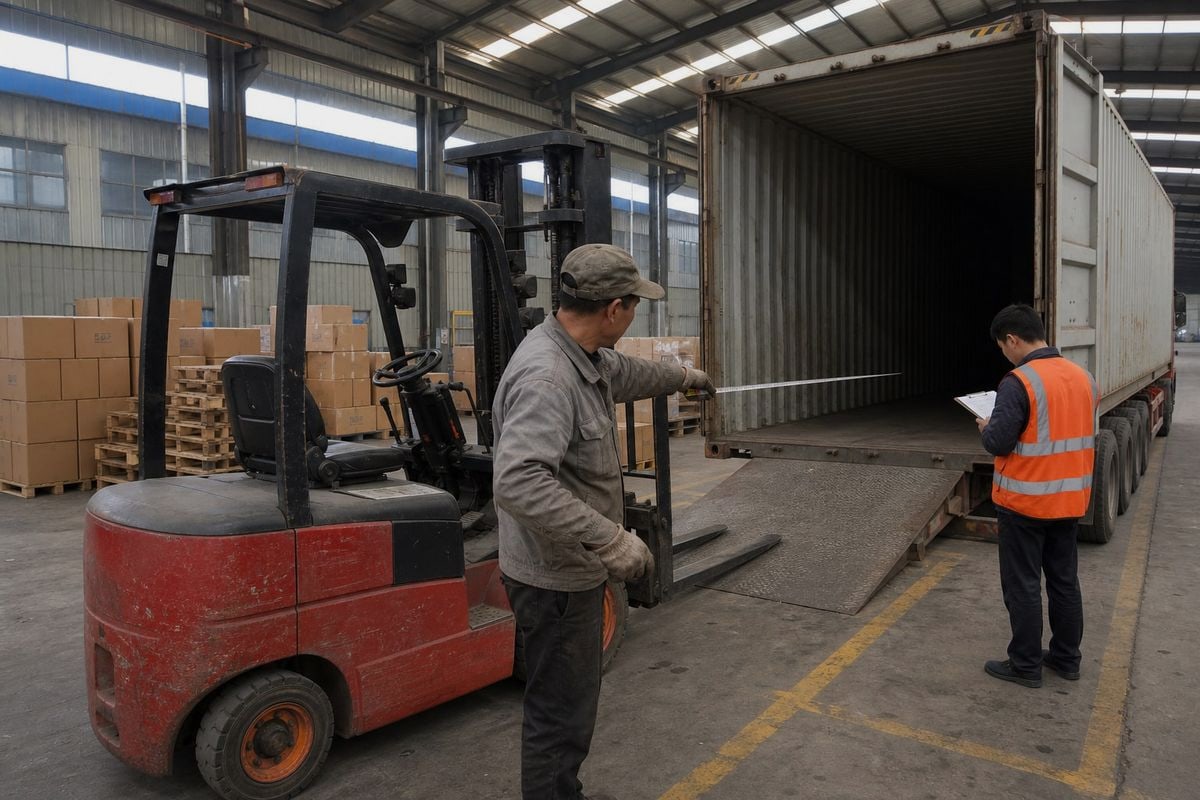
Container utilization is the biggest lever you control. A 20GP container can fit a 3-ton forklift, and standard containers often hold one to four smaller units. Shipping one machine in a 40HQ wastes money. Shipping four splits the freight cost four ways. We also help customers fill unused space with chargers, spare parts, and batteries from other suppliers through multi-supplier consolidation. Out-of-gauge machines that need flat rack shipping 1 face surcharges and longer handling, with transit windows stretching from 15 to 40 days depending on routing. Marine cargo insurance adds a small percentage but protects a machine worth tens of thousands of dollars.
Documentation review is the first thing our team does after booking. One inconsistent weight figure between the invoice and packing list can hold a container at customs for days.
Importing an electric forklift from China requires a commercial invoice, packing list, Bill of Lading, and Certificate of Origin as the core set. Electric models also need a UN38.3 test report, MSDS/SDS, and a dangerous goods declaration, plus destination certifications like CE or EPA compliance.
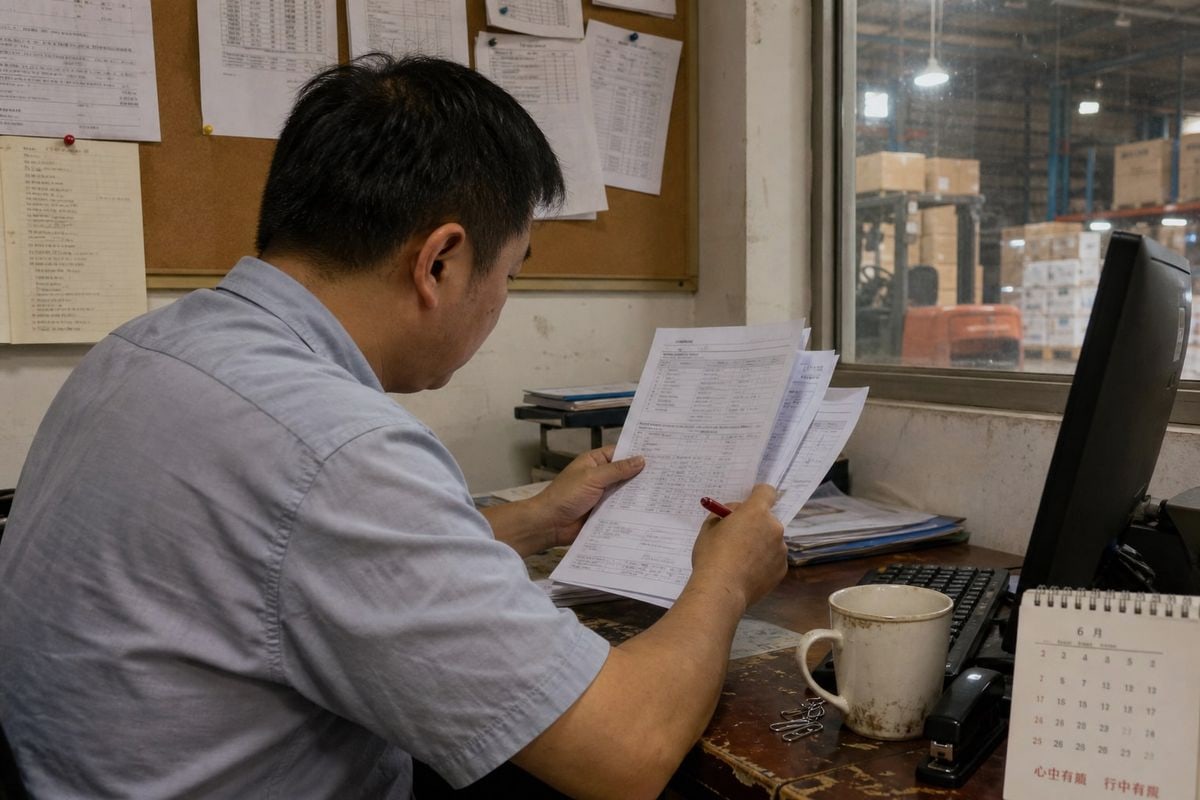
Customs officers do not inspect your forklift first. They inspect your paperwork first. If the papers are clean and consistent, most shipments clear without physical examination. If the papers conflict, you invite inspection, storage fees, and demurrage. So I tell every new importer the same thing: treat documents as seriously as the machine itself.
| Document | Purpose | Common Error We Catch |
|---|---|---|
| Commercial Invoice | Declares value for duties | Value mismatch with payment records |
| Packing List | Details weight and dimensions | Weights differ from Bill of Lading |
| Bill of Lading | Contract of carriage and title | Wrong consignee or notify party |
| Certificate of Origin | Confirms Chinese origin for tariff treatment | Missing chamber stamp |
| UN38.3 Test Report | Proves lithium battery transport safety | Report covers wrong battery model |
| MSDS/SDS | Battery chemical safety data | Outdated format rejected by carrier |
| DG Declaration | Required for Class 9 lithium cargo | Filed late, missing vessel cutoff |
Every forklift falls under the HS Code 8427 2 series. Classification within that series affects your import duties, so misclassification triggers penalties and reassessment. Confirm the exact code with your customs broker before the vessel sails, not after arrival. Destination compliance is separate from shipping paperwork. US-bound units need EPA compliance for combustion engines and UL-certified chargers for electric models. EU-bound units need CE marking with the physical plate attached to the machine. We check for these plates during factory pickup because customs officers look for them during inspection. A missing plate cannot be fixed once the container is on the water.
Two years ago, a customer's lithium forklift sat at a Chinese port for three weeks because the carrier rejected the DG booking. Since then, we verify battery paperwork before cargo ever leaves the factory.
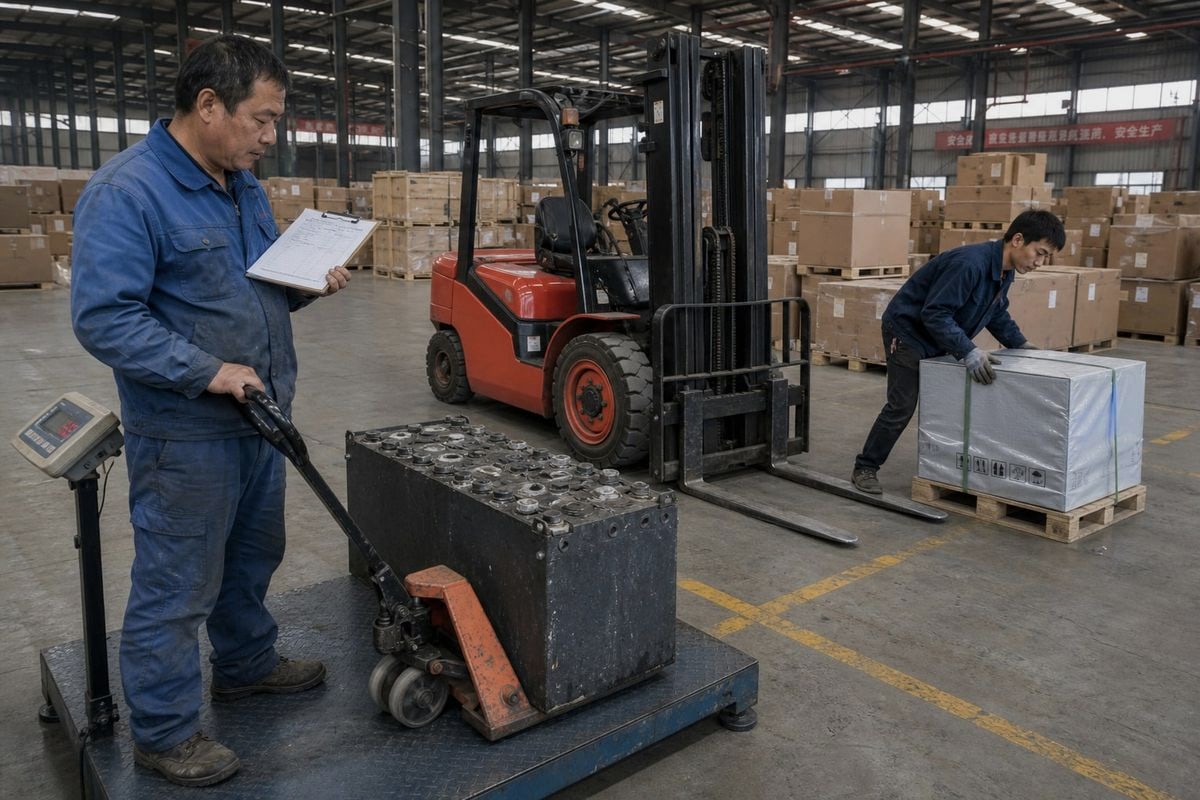
Ship lithium battery forklifts as Class 9 dangerous goods. Obtain the UN38.3 test report and MSDS from the battery maker, book DG acceptance with the carrier in advance, secure the battery against movement, and file the IMDG dangerous goods declaration before the vessel cutoff.
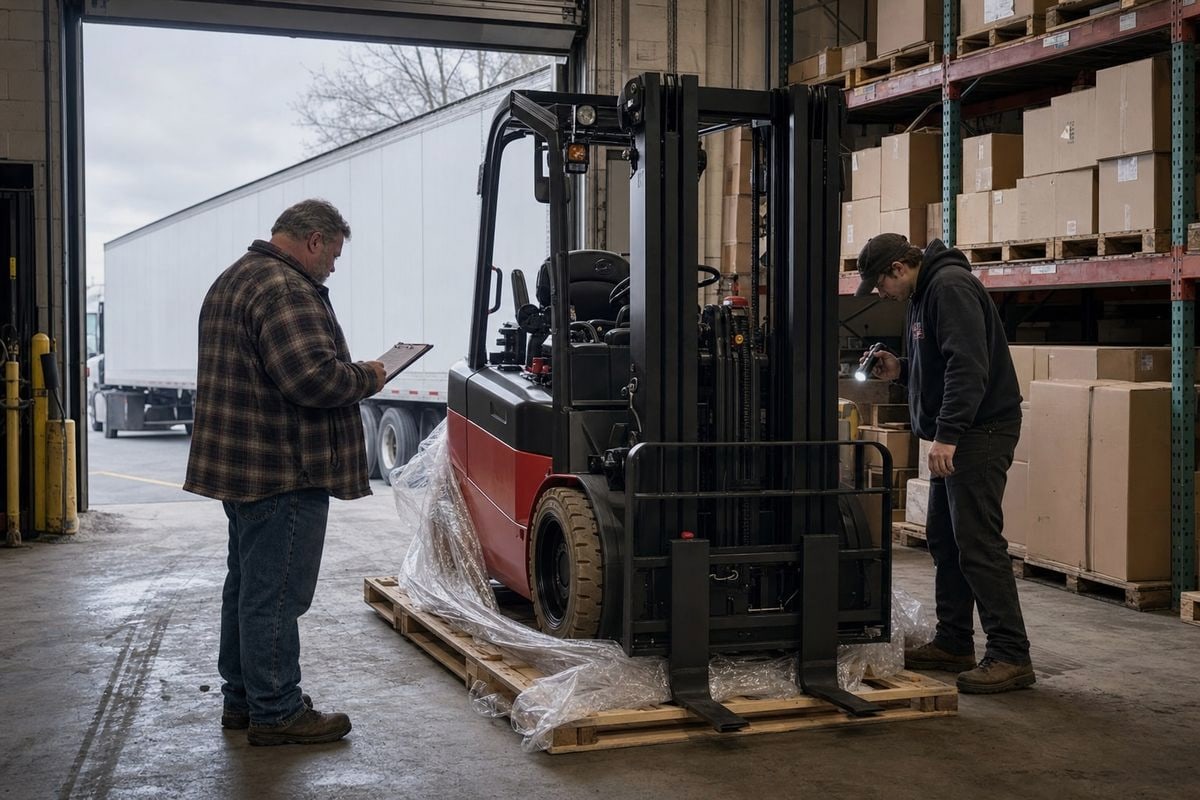
Lithium batteries are the single biggest cause of forklift shipping delays that I see. The rules exist for good reasons. A damaged lithium cell can enter thermal runaway at sea, where no fire department can respond. Carriers know this, so they screen DG bookings hard. Your job is to make acceptance easy.
The rules are getting stricter, not looser. Digital battery passports are emerging in international markets, requiring lifecycle and material data for lithium-ion batteries. European buyers should also start collecting embedded emissions data from Chinese manufacturers now, because CBAM-style carbon reporting mandates are coming. Some of our customers already deploy independent IoT sensors inside containers to track tilt and G-force impacts on sensitive masts and control boards during the long sea transit. For high-value electric units, that data settles insurance claims fast.
Container planning is where we spend the most time with new forklift buyers. The right answer depends on unit count, dimensions, and how much handling risk you can accept.
Choose FCL container shipping for one to four forklifts; it offers lower damage risk, better cost per unit, and full control of loading. Use LCL only for a single compact unit when budget is tight, and accept the higher handling and damage risk that comes with shared containers.
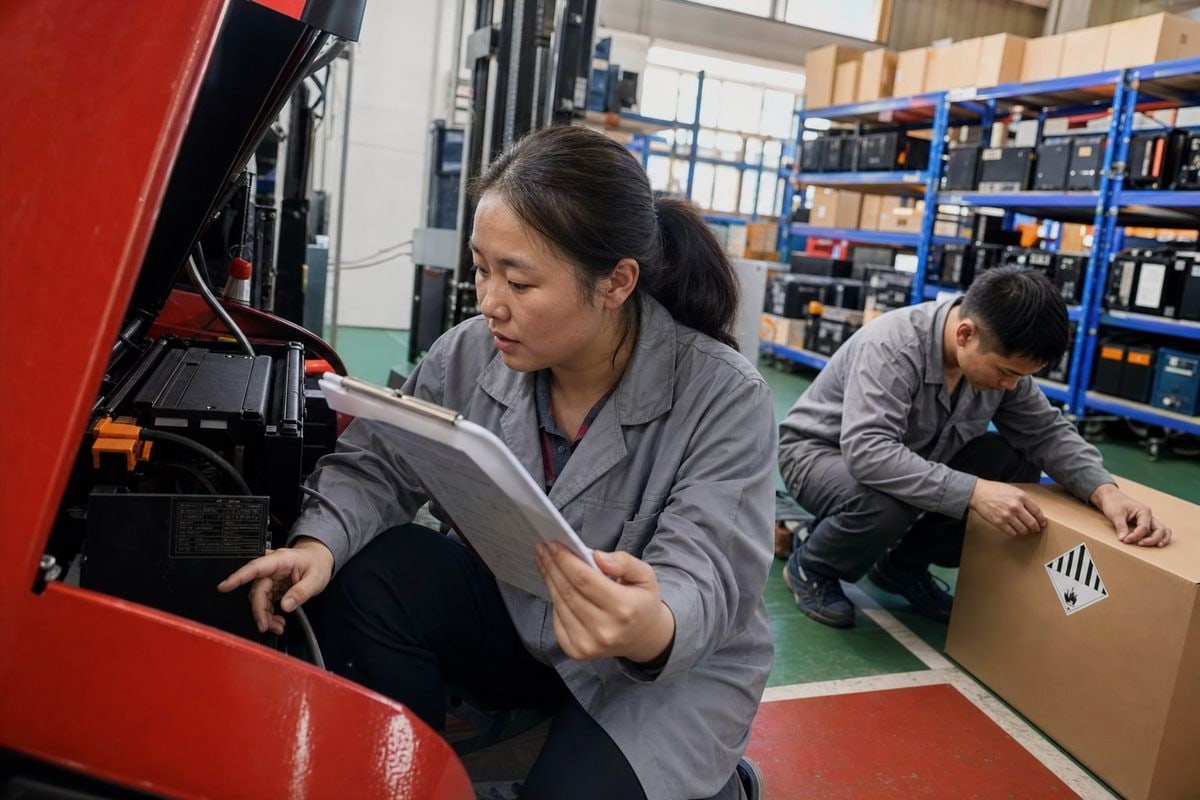
Here is the honest trade-off. LCL looks cheaper on paper for one machine. But a forklift in a shared container gets handled more times, sits next to unknown cargo, and passes through consolidation warehouses at both ends. Every extra touch is a damage opportunity on a machine with a precision mast and electronic control boards.
| Factor | FCL | LCL | RoRo / Flat Rack |
|---|---|---|---|
| Best for | 1–4 units | Single compact unit | Oversized or very heavy machines |
| Damage risk | Low | Higher | Low to moderate |
| Cost per unit | Lowest when full | Cheapest for one small unit | Highest, with OOG surcharges |
| Handling touches | Loaded once, sealed | Multiple transfers | Driven or lifted on |
| Consolidation option | Yes, add parts and chargers | Limited | No |
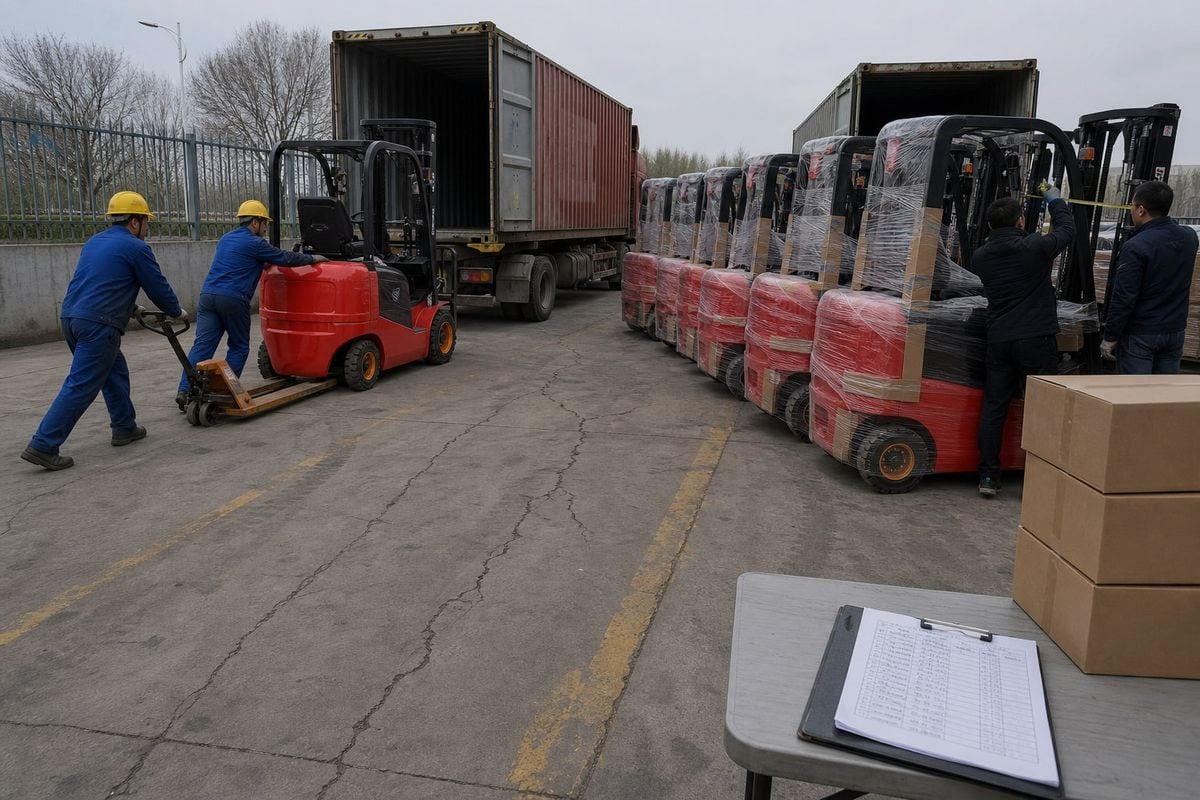
FCL container shipping wins in most cases. You control the loading. The container seals at the factory or our warehouse and opens at your door. We coordinate blocking, bracing, and lashing so the machine cannot shift, and we manage weight distribution across the container floor. Masts and counterweights can be partially disassembled to fit standard 20GP or 40HQ containers 3, which also cuts freight cost. Unused space takes spare parts, batteries, and chargers.
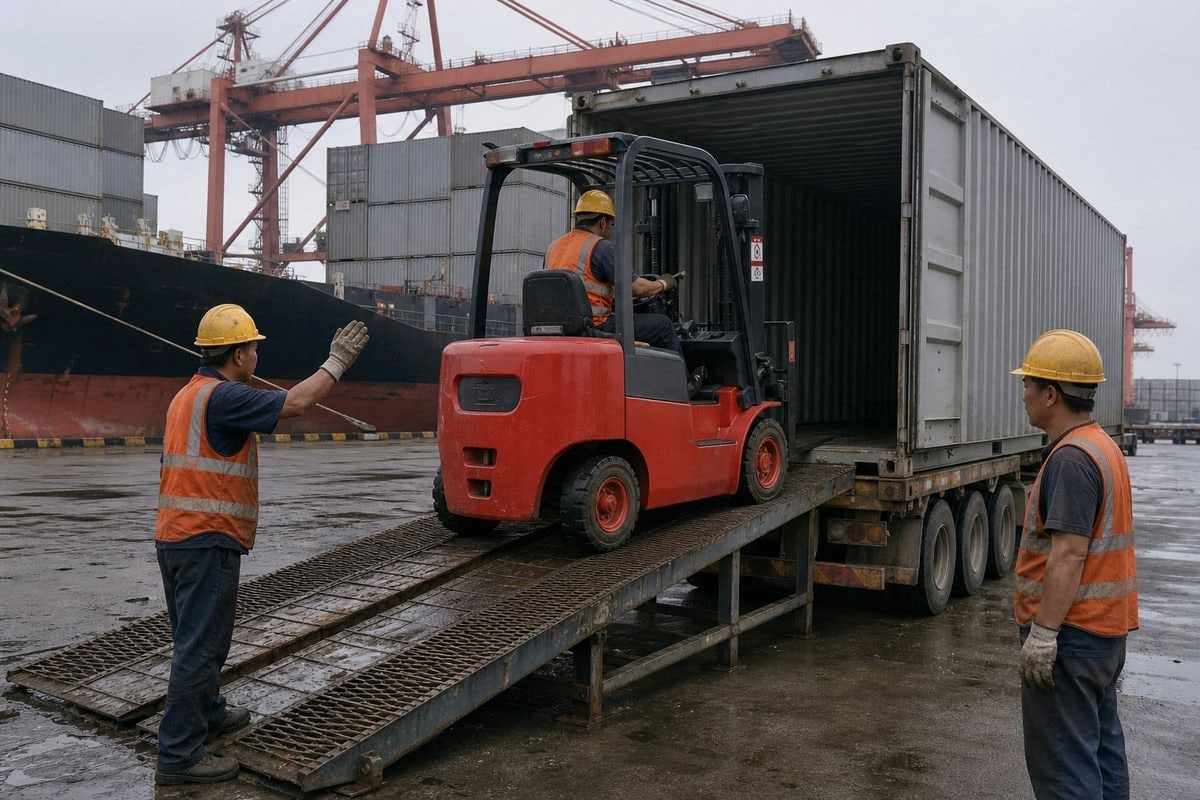
For heavy-duty machines that exceed container dimensions even after disassembly, RoRo shipping avoids teardown entirely. The machine is driven aboard. The catch is limited port coverage and exposure during handling, so confirm your port pair supports RoRo before assuming it works. Flat rack covers the out-of-gauge middle ground but carries surcharges. Whatever mode you pick, your Incoterms 2020 4 choice decides who manages each leg. Experienced importers often prefer FOB for control and pricing transparency. First-time buyers frequently choose DDP so one freight forwarder handles everything from factory floor to warehouse door, including import duties. Neither is wrong. It is a control-versus-simplicity decision, and we run both daily.
Shipping Chinese forklifts internationally rewards preparation. Confirm specs, verify documents, respect lithium battery rules, and pick the right container strategy. Get help early, and your savings stay intact.
1. UNCTAD provides research and standards for specialized maritime transport methods and out-of-gauge cargo handling. ↩︎
2. Official US Harmonized Tariff Schedule for classifying forklifts and determining applicable import duties. ↩︎
3. The International Organization for Standardization provides the global specifications for freight container dimensions and safety. ↩︎
4. The International Chamber of Commerce's official guide to international commercial terms for global trade. ↩︎