

叉车集装箱装载看起来很简单,直到一个叉臂撞上集装箱顶部。我在我们郑州的合并仓库亲眼目睹过这一幕,维修费用让买家感到不安。一批匆忙的货物可以在到达港口之前毁掉一台价值$10,000的机器。这正是我们MBMLOG团队将装载视为一个计划过程的原因,而不是五分钟内的快速处理工作。.
中国仓库的叉车集装箱装载意味着将电动叉车驱动或装入一个出口集装箱,通过集装箱装载坡道,将其根据装载计划定位,用绑带、阻挡物和填充物固定,然后称重、封闭并记录集装箱以备海运。.
这个简短的回答掩盖了很多步骤。下面,我将按照我们实际运作的方式逐步介绍每个阶段。我将涉及单元数量、固定方法、合并以及我们在集装箱离开仓库之前的检查。.
在装载过程中我可以将多少电动叉车装入一个集装箱?
去年春天,美国经销商让我报价六台2吨电动叉车装在一个40HQ集装箱里。我们进行了测量,运行了负载计划优化软件,安全地放下了五台。第六台会挡住门。在这里,数字比希望更重要。.
大多数标准的2至3吨电动叉车可以在20FT集装箱中装入两到三台,在40FT或40HQ集装箱中装入四到六台,具体取决于叉杆高度、配重长度、顶棚保护高度,以及电池和备件是否共享空间。.
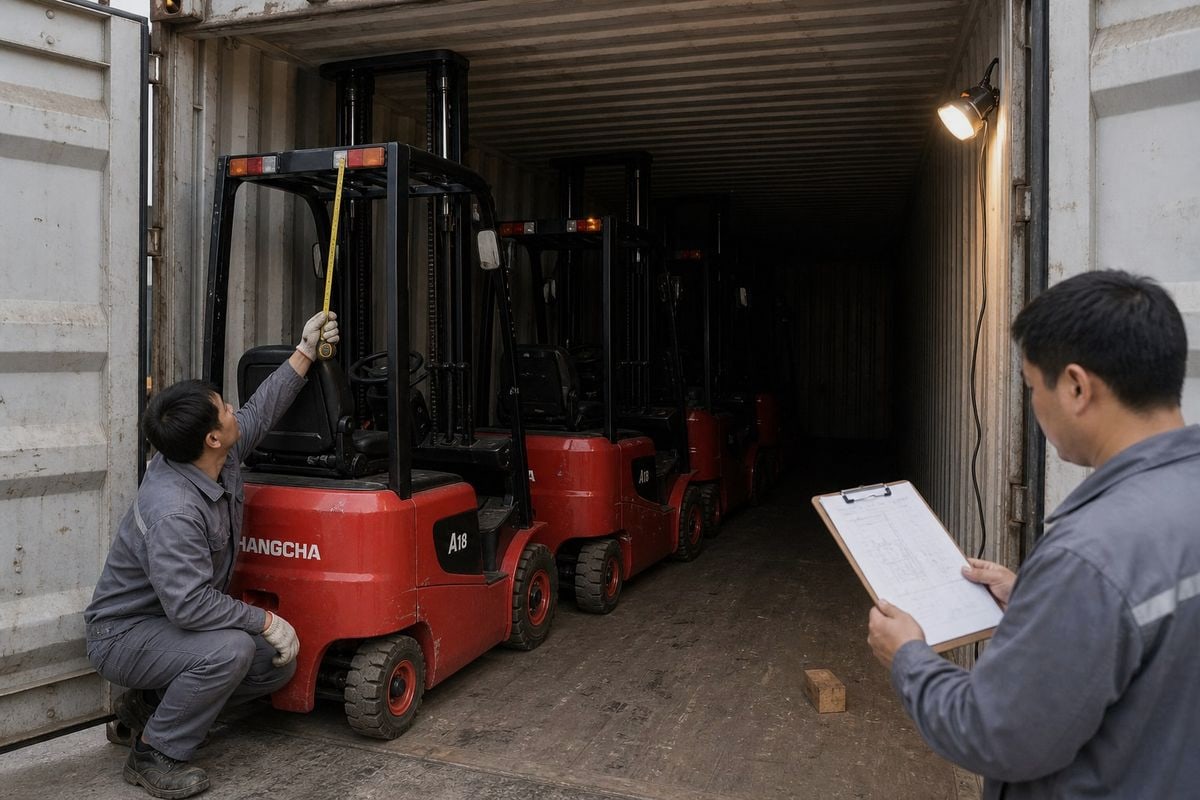
对"可以容纳多少"的诚实回答总是:这取决于尺寸,而不是市场宣传册。当我们计划一个 整箱货物 1 (FCL) 用于叉车时,我们在任何其他事情之前会向工厂询问三个数字:总体长度(包括叉),宽度和到顶棚护罩的高度。一个标准40尺集装箱的门口高度约为2.28米。许多带固定顶棚护罩的电动叉车高度在2.1到2.2米之间。这只留出几厘米的间隙,因此有时我们会要求工厂在提货前移除或降低护罩。.
不同集装箱类型的典型容量
| 集装箱 | 内部长度 | 典型电动叉车(2–3吨级) | 说明 |
|---|---|---|---|
| 20英尺 | ~5.9米 | 2–3台 | 最佳用于小订单;重地面载荷 |
| 40尺 | 约12.0米 | 4–5个单位 | 良好的单位成本平衡 |
| 40HQ | ~12.0 米,额外高度 | 4–6 单元 | 额外高度有助于更高的桅杆和堆叠的零件纸箱 |
紧凑型托盘叉车和电动堆垛机完全改变了这个计算。我们在一个 40HQ 的集装箱里装载了十几台电动托盘叉车,因为它们短小,可以排列成头对尾。另一方面,叉载机通常有高桅杆,无法降到足够低,因此每个集装箱的数量会减少。.
重量和空间一样重要。一台 3 吨的电动叉车可能重达 4000 到 4500 公斤,加上电池。将五台这样的叉车堆放在一个 40FT 的集装箱中,地板空间用尽之前,你就接近了集装箱的载重限制。我们的装载计划优化始终首先检查重量分布,然后是体积。根据在中国出口仓库中普遍遵循的规则,总货物重量约60% 应该放在集装箱长度前 40% 内,以保持负载的平衡,以确保船只稳定性和公路运输的安全。.
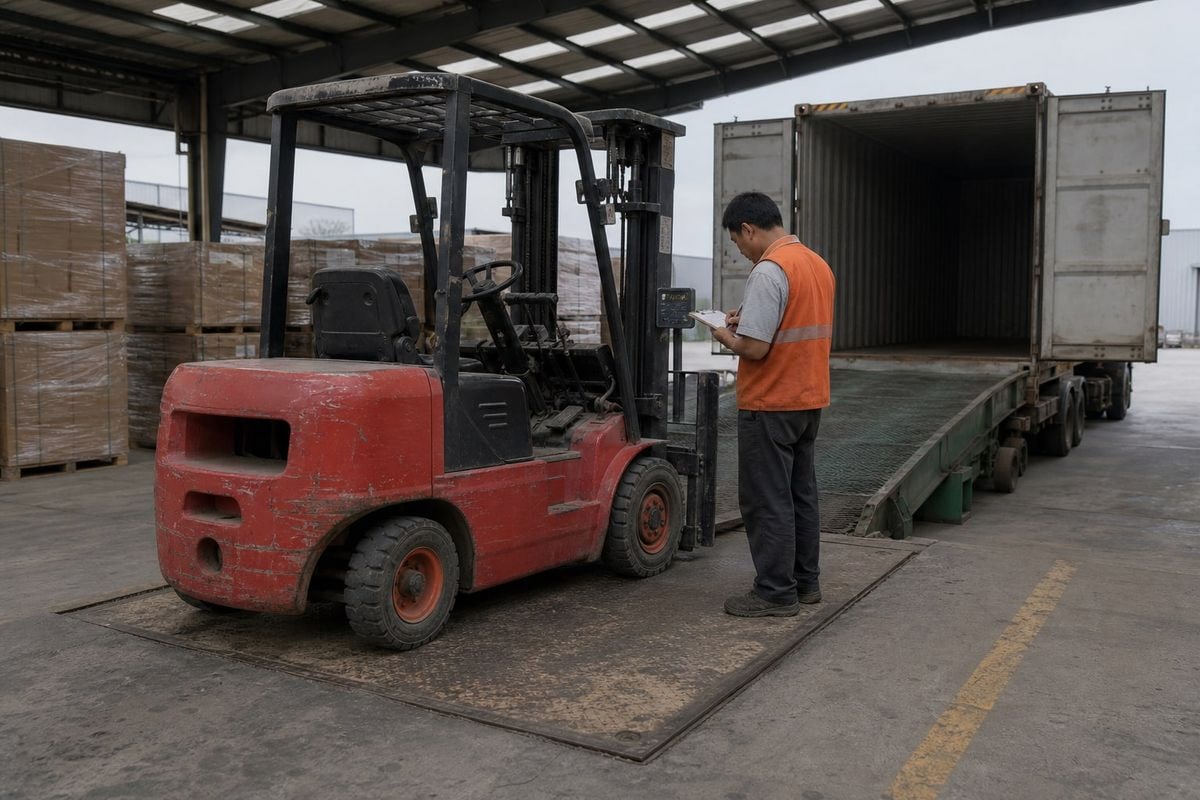
另一个因素: 集装箱装卸坡道. 。我们的仓库使用 移动式院子坡道 2 来弥补地面和集装箱底部之间的空隙,以便叉车可以直接在其自身动力下驶入,或者由更大的仓库叉车搬入。自行驶入节省时间,但每台机器仍然需要转向和定位空间,这稍微降低了理论最大数量。.
在集装箱装载期间,使用了哪些安全措施来保护我的叉车?
我督导过的最紧密的捆绑工作是因为对别人货物的索赔:一台叉车在太平洋中途发生位移,压坏了自己的充电器纸箱。从那时起,我们的装载团队默认会过度加固,我对此不感到抱歉。.
叉车使用重型货物固定带和支撑装置进行固定:车轮用钉在集装箱地板上的木材楔住和阻挡,拉紧带将底盘锚定在固定环上,叉臂平放,电池断开,垫块气囊填充剩余的空隙。.
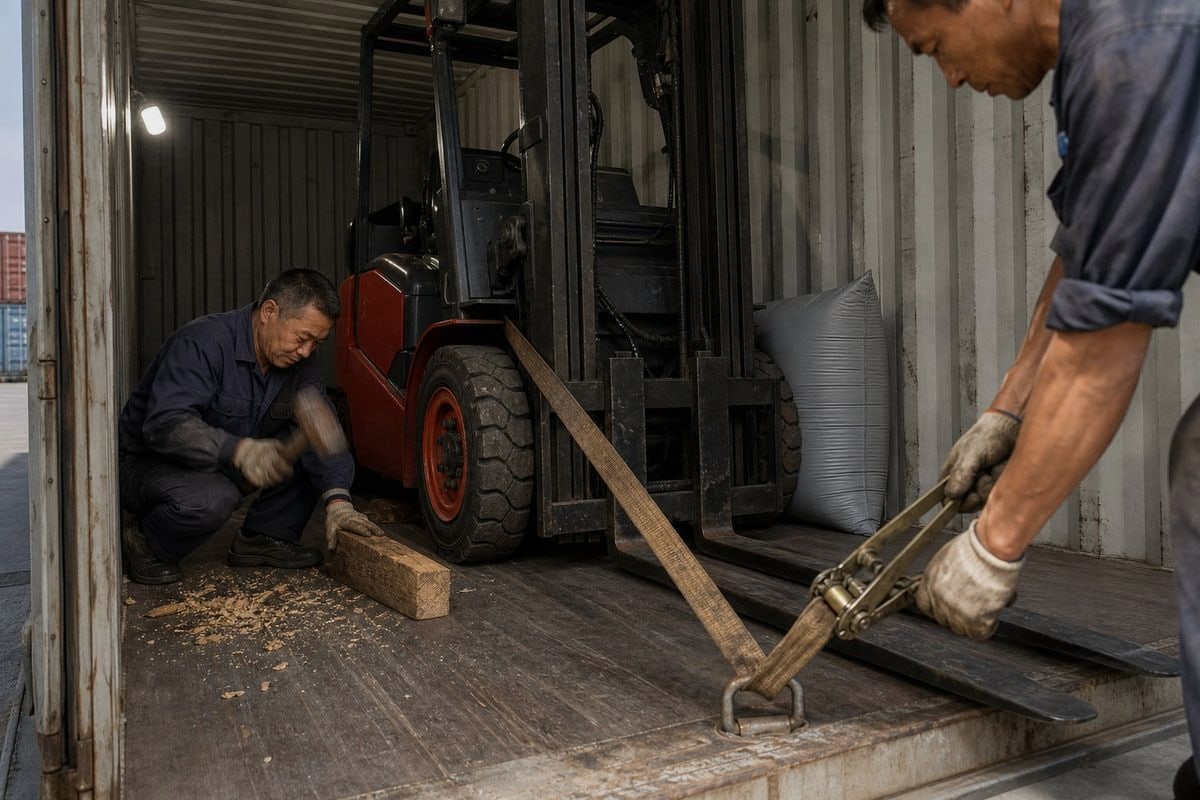
海运运输非常剧烈。一艘集装箱船在两到五周内会出现滚动、颠簸和猛撞。一个未固定的4吨机器会变成撞击工具。因此,固定不是一个动作;而是一个分层系统,每一层覆盖不同的失效模式。.
我们遵循的固定顺序
- 装载前集装箱检查。. 在任何东西进入之前,操作员走进集装箱,关上门,并进行灯光测试。任何微小的光线洼地意味着集装箱漏水,潮湿会在航程中腐蚀电气组件。我们会拒绝那个集装箱。.
- 根据配载计划定位。. 每台叉车根据重量分配计划通过坡道行驶或被搬运并停放,较重的配重应保持较低并在地面上平衡分布。.
- 固定机器。. 停车制动器已打开,叉臂平放在地面上,钥匙已移除,电池已断开。对于 锂电池叉车, 我们还验证充电状态和端子保护是否符合运输要求。.
- 阻挡和垫块。. 木块钉在每个轮子前后木质集装箱地板上。这可以防止前后滑动,这是最常见的运输移动方式。.
- 拉紧底盘。. 棘轮带或钢丝从叉车框架延伸到集装箱的拉紧环,采用多角度布置。交叉拉紧可以抵抗滑动和倾倒。.
- 填补空隙。. 填充气囊和木材支撑填补了叉车无法物理占据的空隙,从而防止任何物品积聚动能。.
- 保护表面和货物邻近物品。. 泡沫、纸板或塑料薄膜可以保护喷漆面板,并将机器与同一集装箱中的任何纸箱隔开。.
常见运输风险及其对策
| 海洋运输中的风险 | 主要对策 |
|---|---|
| 前后滑动 | 钉在地板上的木轮阻挡 |
| 船舶滚动时倾斜 | 交叉棘轮绑带连接到地面环 |
| 震动松动组件 | 降低叉车,断开电池,收紧带子 |
| 空隙影响 | 填充气囊和木材支撑 |
| 湿气和冷凝 | 经过光照测试的容器、干燥剂、塑料覆盖物 |
我坦诚地向买家提出的一个权衡是:激进的立方利用率可能会影响安全。有时再挤进一个单位意味着较弱的捆绑角度。当这两个目标冲突时,我们会牺牲额外的单位,因为损坏索赔的成本远高于运输费用的节省。.
我可以在同一个集装箱装载过程中合并叉车、电池和备件吗?
德克萨斯州的一个经销商曾从一个工厂收到叉车,从另一个工厂收到充电器,从第三个工厂收到附件。他被报价了三笔单独的拼箱运输。我们在仓库中将所有物品整合为一个40HQ集装箱,显著降低了他的每单位物流成本。.
是的。中国的拼箱仓库可以将来自多个供应商的叉车、备用电池、充电器、附件和备件合并到一个集装箱中,前提是锂电池得到适当申报和记录,部件分别打托,且没有东西堆放在机器上。.
多供应商出口整合 是叉车进口商可以使用的最大成本杠杆之一,也是中国任何严肃的第三方物流(3PL)供应商的核心服务。仅用于叉车的集装箱几乎总会留有可用空间:降下的桅杆上方的空隙、靠近门的走廊、平衡块之间的空隙。用托盘化的零部件填补这些空间,将死空气转化为已装运库存。经济学原理很简单:无论装满70%还是95%,集装箱的成本都是一样的。.
我们如何进行整合
这一过程在集装箱到达之前就开始了。来自各个工厂的货物被提取,接收到我们的仓库,按照装箱单进行检查,并标记。随后 进行托盘化标准, 松散的零备件箱被收缩包裹在标准托盘上,叉车开口朝向门的方向,以便于后续的卸货。在主要的出口枢纽,仓库使用预装整合区按密度对混合供应商货物进行分类,以确保重物不会堆放在轻箱上——我们也采用相同的逻辑:重物放在低处和前方,轻物放在高处和后方。.
| 货物类型 | 可以合并吗? | 关键条件 |
|---|---|---|
| 电动叉车 | 是的 | 单独保管;叉车放下,电池断开 |
| 锂电池 3 (已安装) | 是的 | 正确的DG分类、UN38.3支持文件、承运人接受 |
| 备用锂电池 | 是的,小心处理 | 单独申报;包装和文件必须符合危险品规则 |
| 充电器和电子产品 | 是的 | 成垛,若存在潮湿风险则应离地存放 |
| 附件(侧移器、夹具) | 是的 | 重型叉车附件像机器一样被固定和支撑 |
| Spare parts cartons | 是的 | Palletized, never stacked directly on forklift bodies |
The one objection I hear often: "Won't mixing batteries with machines cause customs trouble?" It can — if the paperwork is sloppy. Lithium battery cargo demands correct classification and documents before the container reaches the port. In our experience shipping electric forklifts to the US, the shipments that get stuck are the ones where battery details surfaced late. We collect battery specifications from every supplier during pickup coordination, precisely so nothing surprises the carrier at booking.
One genuine limitation: some fragile or contaminating cargo should not share a box with machinery. Anything leaking oil, or anything odor-sensitive, gets partitioned or excluded. Consolidation saves money only when it does not create claims.
在叉车集装箱离开中国仓库之前,如何确认它已正确装载?
Buyers sitting in the US cannot stand at our loading bay in Zhengzhou. I learned early that the fix is simple: document everything, timestamp everything, and send it before the buyer has to ask. Our loading reports now go out the same day the seal goes on.
A correctly loaded container is verified through a photo and video loading report, a tally of every unit and carton against the packing list, confirmation of lashing and bracing, a recorded seal number, and a Verified Gross Mass (VGM) weight submitted before the container enters the port.
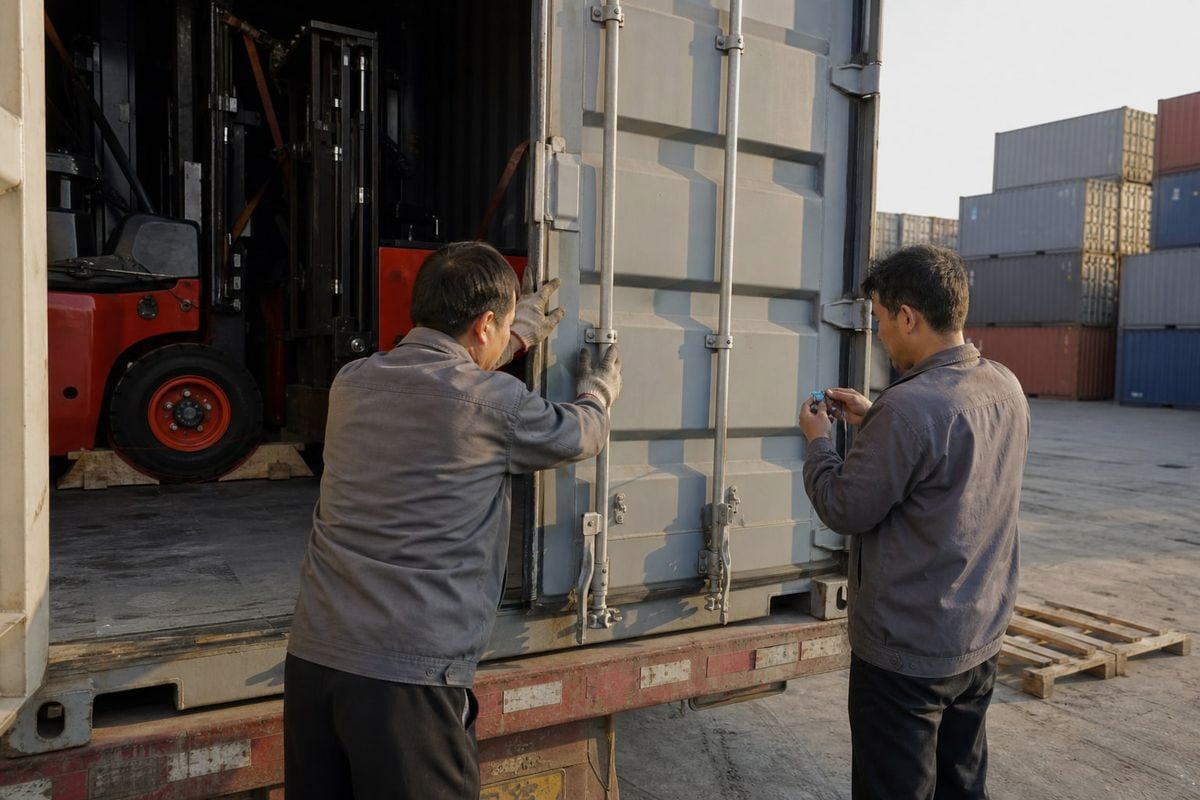
Trust here should never rest on a promise. It should rest on evidence, and a professional China warehouse produces that evidence as a standard part of the stuffing workflow. Here is the verification chain we build for every forklift container, and what each piece proves to you.
The Evidence Trail, Step by Step
Photos before loading. You should receive images of the empty container interior — floor condition, walls, and door seals. This proves the box passed inspection, including the light test for pinholes, before your equipment went in.
Photos and video during loading. Each forklift entering over the ramp, each pallet placed, each strap tensioned. These images later become your proof of condition at origin if a damage claim ever arises. Some advanced Chinese logistics hubs go further, integrating forklift telemetry with the WMS to log the time and placement of every pallet — a digital audit trail insurers love. Our own standard is a WMS-tracked tally sheet plus full photo documentation.
The tally against the packing list. Every serial number, every carton count, checked and signed before the doors close. If you consolidated from five suppliers, this is the moment all five packing lists reconcile into one container manifest.
The seal. After the final photo of the loaded container, a high-security bolt seal 4 is applied and its number is photographed and recorded on the bill of lading instructions. If the seal number at destination matches, nobody opened the box in transit.
The VGM. Under international maritime safety rules, every packed container must have its Verified Gross Mass 5 weighed and submitted before the port will accept it. This is mandatory in China, not optional. It also protects you: an accurate VGM confirms the load plan's weight distribution assumptions were real, not estimated.
The document handoff. Packing list, commercial invoice, battery documentation, and export declaration all cross-checked before departure. Documentation errors cause more destination delays than storms do, so we treat this final check as part of loading, not an afterthought.
If a warehouse cannot show you this trail, that itself is your answer.
结论
Forklift container stuffing at a China warehouse is planning, loading, securing, weighing, sealing, and proving — in that order. Skip a step and you risk damage, delays, or claims. Do it properly, and your forklifts arrive exactly as they left. If you want one team managing that whole chain from factory pickup to your door, that is precisely what we do at MBMLOG.
脚注
1. Industry definition of FCL shipping logistics. ↩︎
2. OSHA standards for powered industrial trucks and related loading equipment like ramps. ↩︎
3. US DOT safety regulations for the transport of lithium batteries. ↩︎
4. US Customs guidance on ISO 17712 standards for high-security container seals. ↩︎
5. Cites the international maritime safety authority mandating VGM submission for containers. ↩︎




