- +8618603825129
- [email protected]


Fumigation-stamped wood pallets confuse almost every shipper I work with at our Zhengzhou freight office International Plant Protection Convention 1. One wrong assumption here can get an entire container returned or destroyed at a US port.
Fumigation-stamped wood pallets do not always need a separate export fumigation certificate. The IPPC stamp alone clears customs in the EU, Japan, and most of Asia. However, the US, Canada, Australia, New Zealand, Brazil, and Chile typically require both the stamp and a paper certificate.
The answer depends on where your cargo is going and what your buyer's customs broker demands. Let me break down exactly when the stamp is enough and when it is not.
A client shipping machine parts to Chicago once told me his pallets were "already stamped, so we're covered." We pulled his booking and added a fumigation certificate just in time.
Yes, for certain destinations. The IPPC wheat stamp proves ISPM 15 compliance, but countries like the USA, Canada, Australia, New Zealand, Brazil, and South Africa still demand an official paper fumigation certificate at customs clearance. Relying on the stamp alone for these routes risks forced return or destruction.
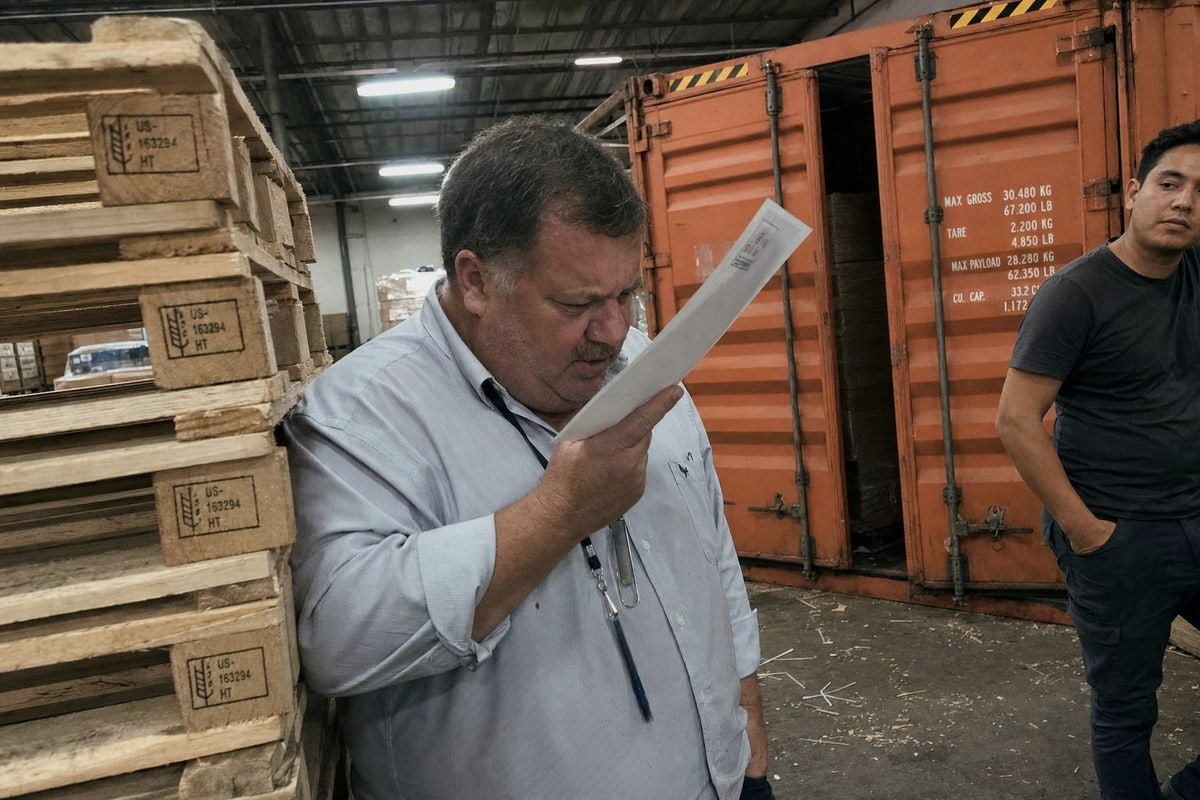
The confusion comes from mixing up two different things. The IPPC stamp and the fumigation certificate serve related but separate purposes. Let me untangle them.
The IPPC wheat stamp is a heat-branded mark applied under ISPM 15 2, the global standard set by the International Plant Protection Convention. It proves that solid wood pallets were officially treated. Treatment is either heat treatment (HT) or methyl bromide treatment 3 (MB). A compliant mark must include four elements: the IPPC logo, the CN country code, the official facility number issued by the National Plant Protection Organization 4 (NPPO), and the HT or MB treatment code. The brand must be burned in, permanent, and legible. Spray-painted or smudged marks fail.
The fumigation certificate is issued by a customs-recognized fumigation agency. It travels with your export documentation and gets submitted during customs clearance. Some import regimes treat it as mandatory. Others never ask for it.
| Item | IPPC Stamp | Fumigation Certificate |
|---|---|---|
| Format | Permanent branded mark on wood | Official paper or scanned document |
| Issued by | NPPO-approved treatment facility | Customs-recognized fumigation agency |
| Proves | Pallet was treated (HT/MB) | Treatment date, method, dosage, cargo details |
| Validity | Life of the pallet (if intact) | Must ship within 21 days of treatment |
| Required in EU/Japan/Korea | Yes | Usually no |
| Required in US/Canada/Australia | Yes | Yes, in most cases |
Here is one detail many shippers miss. In our routine handling of China-to-USA containers, we always flag the 21-day rule. A fumigation certificate is only valid if the cargo loads onto the vessel within 21 days of treatment. Miss that window, and the goods must be re-fumigated, re-stamped, and issued a fresh certificate. We build that timeline into every booking we manage.
Last year, one of our Amazon FBA clients had a container flagged at Long Beach. The pallets carried valid stamps. The problem was bark left on two boards.
Yes. Customs can reject stamped pallets if the mark is illegible, spray-painted, missing a facility number, or fraudulent, or if the wood shows bark, insect holes, mold, or signs of post-treatment infestation. Missing paperwork in certificate-mandatory countries also triggers holds, re-fumigation fees, or forced return.
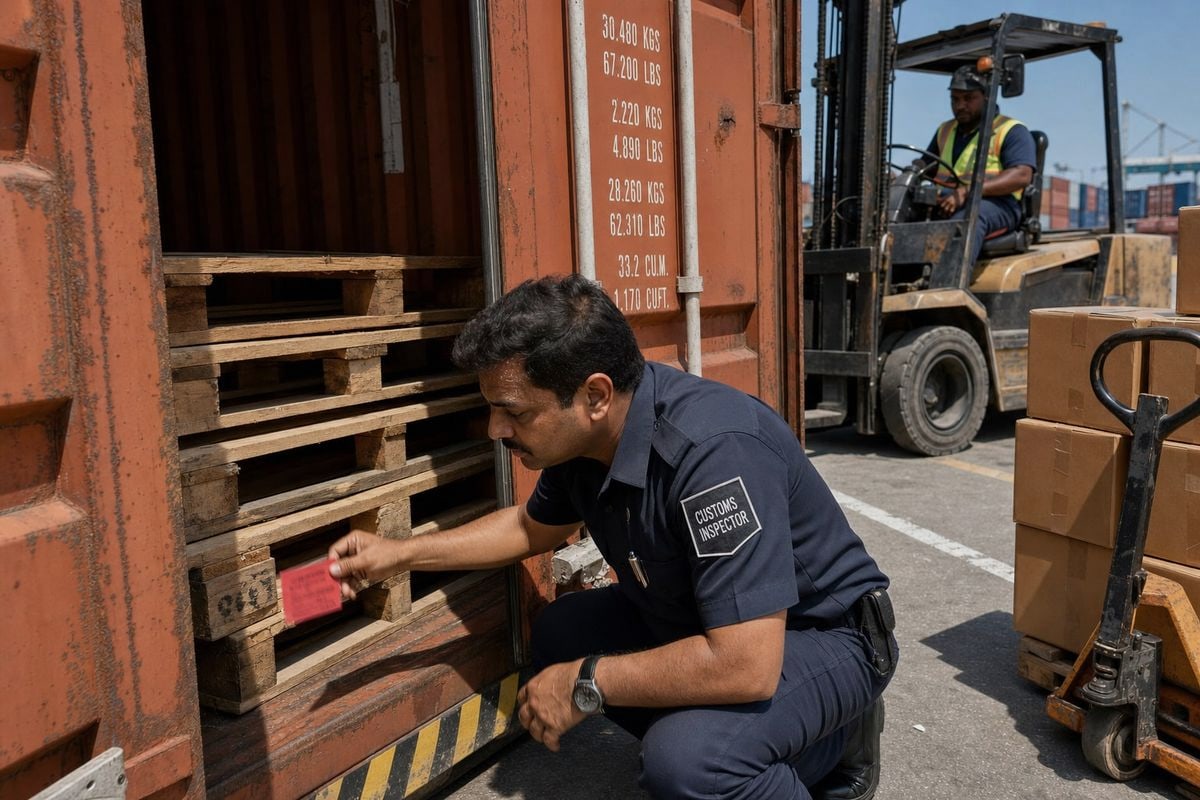
A stamp is necessary, but it is not bulletproof. Customs officers inspect the physical condition of wood packaging material (WPM), not just the mark. In our experience clearing containers on the China-to-USA route, rejections usually fall into four buckets.
Some factories buy cheap pallets with privately applied fake IPPC marks. This is stamp fraud, and it is more common than buyers realize. If the mark is spray-painted, blurred, or missing the official facility number, customs will treat the pallet as untreated. Even a valid fumigation certificate cannot save cargo sitting on fake-stamped wood. A genuine mark is a high-temperature brand that cannot be wiped off.
Bark, soil, and visible insect holes invalidate ISPM 15 compliance in the eyes of an inspector. Before every departure, we remind factories to check both faces of every pallet for a complete, clear brand, and to confirm the wood is debarked and clean.
A clean stamp does not guarantee entry if the pallet was stored badly afterward. Mold growth or fresh pest activity can invalidate the ISPM 15 status. Customs may then demand a fresh treatment and certificate on the spot.
Australia and New Zealand strictly verify paper fumigation certificates. No certificate means dockside container unpacking and forced fumigation, with heavy fines and demurrage. Oceania also runs seasonal Brown Marmorated Stink Bug 5 (BMSB) measures, which require valid treatment documents during specific months regardless of pallet status.
If a stamped pallet is repaired or modified, the original mark becomes invalid. The whole unit must be re-treated and re-stamped by a certified facility.
Photos save shipments. Before we book any US-bound container from our consolidation warehouse, we ask factories for close-up pictures of the pallet stamps. It takes five minutes and prevents five-figure losses.
Check four elements: the IPPC wheat logo, the CN country code, an official NPPO-registered facility number, and an HT or MB treatment code. The mark must be heat-branded, permanent, and legible on two opposite sides. Then confirm a valid fumigation certificate exists, dated within 21 days of loading.
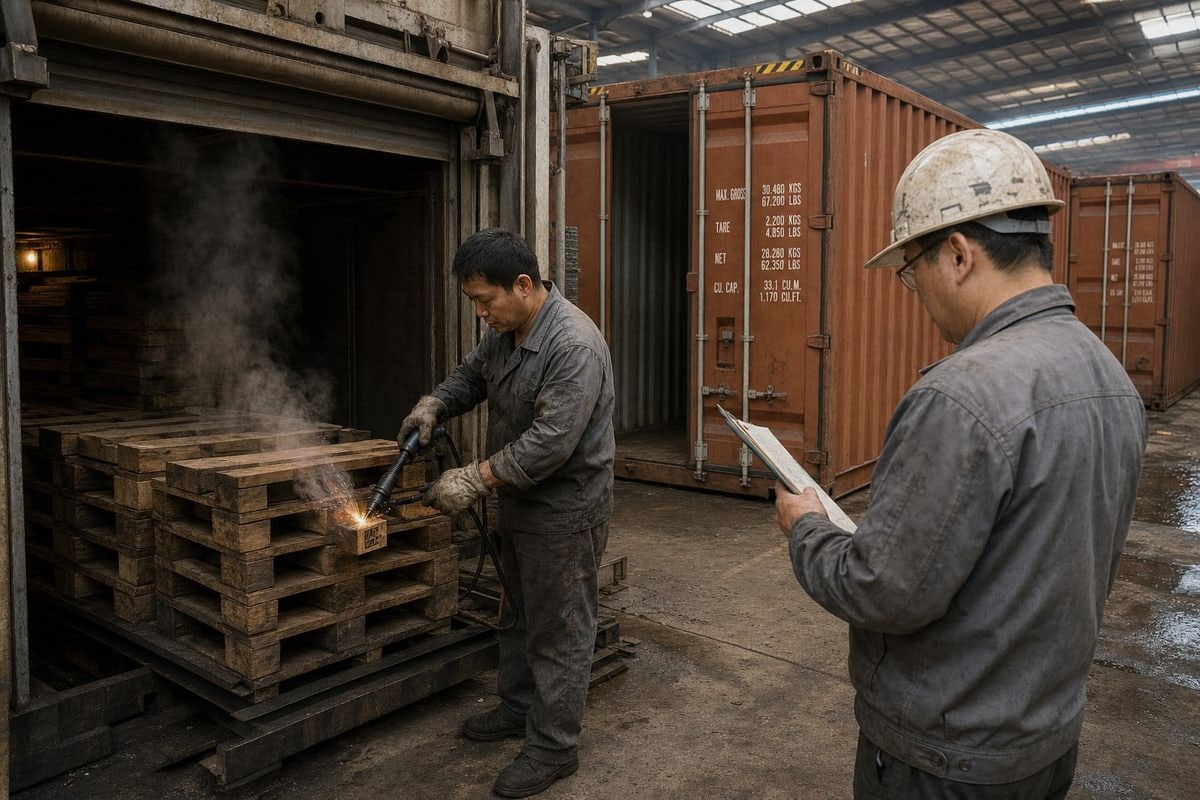
The US and Canada are the strictest pairing in my daily work. For these markets, you must arrange fumigation in China before departure and obtain the official certificate. Relying on the IPPC stamp alone will most likely fail clearance, and US Customs and Border Protection 6 can order the pallets returned or destroyed. Here is the verification process we run for every client shipment.
| Red Flag on Stamp | What It Means | Action |
|---|---|---|
| Spray-painted or ink mark | Likely fake or non-compliant | Replace pallets before loading |
| Missing facility number | Cannot trace to an NPPO-approved plant | Reject and source certified pallets |
| Blurred or partial brand | Illegible to inspectors | Re-stamp at a certified facility |
| Mark on one side only | May fail visibility checks | Ask factory to use dual-sided pallets |
| Bark strips on boards | Violates ISPM 15 debarking rule | Trim or swap the pallet |
One more practical point. When we quote DDP shipping to the USA, we always ask the client whether their broker wants the original certificate or a scanned copy. Some US brokers accept scans attached to the entry file. Others want the original couriered ahead. Confirming this early keeps customs clearance smooth and avoids last-minute panic at the port.
There is a real trade-off I weigh with clients every week: pay a bit more per pallet upfront, or accept documentation risk on every future shipment. Plastic pallets often win that math for FBA sellers.
Mostly, yes. Plastic, metal, and processed-wood pallets like plywood or OSB are exempt from ISPM 15 rules, so no stamp or fumigation certificate is needed for the pallet itself. However, cargo-level requirements, such as seasonal BMSB treatment for Oceania, can still apply regardless of pallet material.

Switching pallet material is the cleanest way to sidestep wood packaging headaches. ISPM 15 only regulates raw solid wood. Processed wood products, like plywood, particleboard, OSB, and veneer, are exempt because the heat and pressure used in manufacturing kill all pests. Plastic and metal are outside the rule entirely. This is why so many of our Amazon FBA clients load cartons on blue plastic pallets, shrink-wrapped and strapped, straight into the container.
| Pallet Type | ISPM 15 Stamp Needed? | Fumigation Certificate Needed? | Best For |
|---|---|---|---|
| Solid wood (untreated) | Must be treated and stamped | Yes, for US/CA/AU/NZ/BR | Not recommended for export |
| Solid wood (HT/MB treated) | Already stamped | Depends on destination | Heavy cargo, low pallet cost |
| Plywood / OSB / particleboard | Exempt | Not for the pallet | Light-to-medium loads |
| Plastic | Exempt | Not for the pallet | Amazon FBA, repeat lanes |
| Metal | Exempt | Not for the pallet | Very heavy or high-value cargo |
Do not assume non-wood pallets erase every treatment question. Three caveats matter. First, if your cargo itself needs fumigation, such as under BMSB seasonal rules for Australia and New Zealand, that certificate is about the goods, not the pallet. Second, dunnage, wooden crates, and wood blocking inside the container still count as WPM and must comply. One overlooked wooden brace can flag an otherwise clean container. Third, at customs entry you should still declare the packaging material correctly. When we file for EU, Japan, or Korea shipments on stamped wood, we simply note compliant IPPC-marked wood packaging on the declaration. With plastic pallets, we declare non-wood packaging, which usually speeds up review.
Emerging tools may simplify this further. ePhyto electronic phytosanitary certificate 7 systems are building a digital passport for treated wood, and some high-security supply chains now use QR-coded smart pallets linked to digital treatment logs to fight stamp fraud. Until those are universal, material choice remains your strongest shortcut.
A compliant IPPC stamp clears most of the world, but the US, Canada, Australia, and New Zealand demand paper certificates too. Verify stamps, respect the 21-day rule, and confirm destination requirements before loading.
1. Official body that sets the ISPM 15 wood treatment standard discussed in the article. ↩︎
2. Explains the international wood packaging standard governing fumigation stamps referenced throughout the article. ↩︎
3. Updated EPA resource for methyl bromide usage and ozone layer protection regulations. ↩︎
4. Authoritative IPPC directory for National Plant Protection Organizations globally. ↩︎
5. Background on the invasive pest driving Oceania's seasonal fumigation certificate requirements. ↩︎
6. Official agency enforcing US wood packaging fumigation and certificate requirements described in the article. ↩︎
7. Official IPPC program digitizing phytosanitary certificates, directly relevant to the emerging tools mentioned. ↩︎